
Why You Should Visit Mosjøen on Your Norwegian Road-trip
Here’s a guide to everything I love about Mosjøen!

Located just below the Arctic Circle, Mo i Rana is a major administrative centre for the region and transportation hub on the E6 highway running the entire length of Norway. Mo i Rana is also the third-largest city in Northern Norway.
Latitude: 61.4 degrees north
Population: 2,211
Rana Municipality
Here’s an overview of some of the best things to see and do in Mo i Rana
Havmannen is one of northern Norway’s most recognisable public artworks, created by British sculptor Antony Gormley. The granite sculpture rises from the waters of the Ranfjord just outside the town centre and has become a symbol of Mo i Rana. Visitors can walk along the waterfront promenade for excellent views of both the sculpture and surrounding mountains. During winter, the combination of snow, fjord scenery and northern lights creates a particularly atmospheric setting.
Vitensenter Nordland is an interactive science centre designed for both children and adults, focusing on technology, energy and northern Norwegian innovation. Exhibitions encourage hands-on exploration through experiments, games and multimedia installations. The centre also highlights the region’s industrial and environmental development. It is one of the city’s most family-friendly attractions and a great indoor activity year-round.
Rana Museum offers insight into the industrial, cultural and Sami history of the Helgeland region. Exhibits explore mining, iron production and the rapid growth of Mo i Rana during the 20th century. Historical photographs, traditional artefacts and local stories help visitors understand how industry shaped the town. The museum also highlights the cultural diversity and natural environment of northern Norway.
Hauknesstranda is a peaceful beach area located along the Ranfjord just outside the town centre. Visitors come here to swim, relax and enjoy panoramic fjord and mountain views during summer months. The area also offers walking paths and picnic spots surrounded by nature. During calm evenings, the reflections across the fjord create especially beautiful scenery.
Looking to go for a hike or take part in a unique experience? Here are my recommendations!
Svartisensen is Norway’s second-largest glacier and one of the region’s most spectacular natural attractions. Visitors can take boat trips across glacial lakes before hiking towards the ice formations and dramatic mountain scenery. Guided glacier walks are available during summer for those seeking more adventurous experiences. The surrounding landscapes combine waterfalls, forests and rugged Arctic terrain.
Marmorslottet, or “The Marble Castle”, is a stunning natural formation carved by water from white marble over thousands of years. Wooden walkways and viewing platforms allow visitors to safely explore the swirling marble patterns and turquoise river below. The site is especially beautiful during summer and autumn when water levels and colours are at their most dramatic. It remains one of the Helgeland region’s hidden natural gems.
Follow my road-trip guides for scenic trips around Mo i Rana
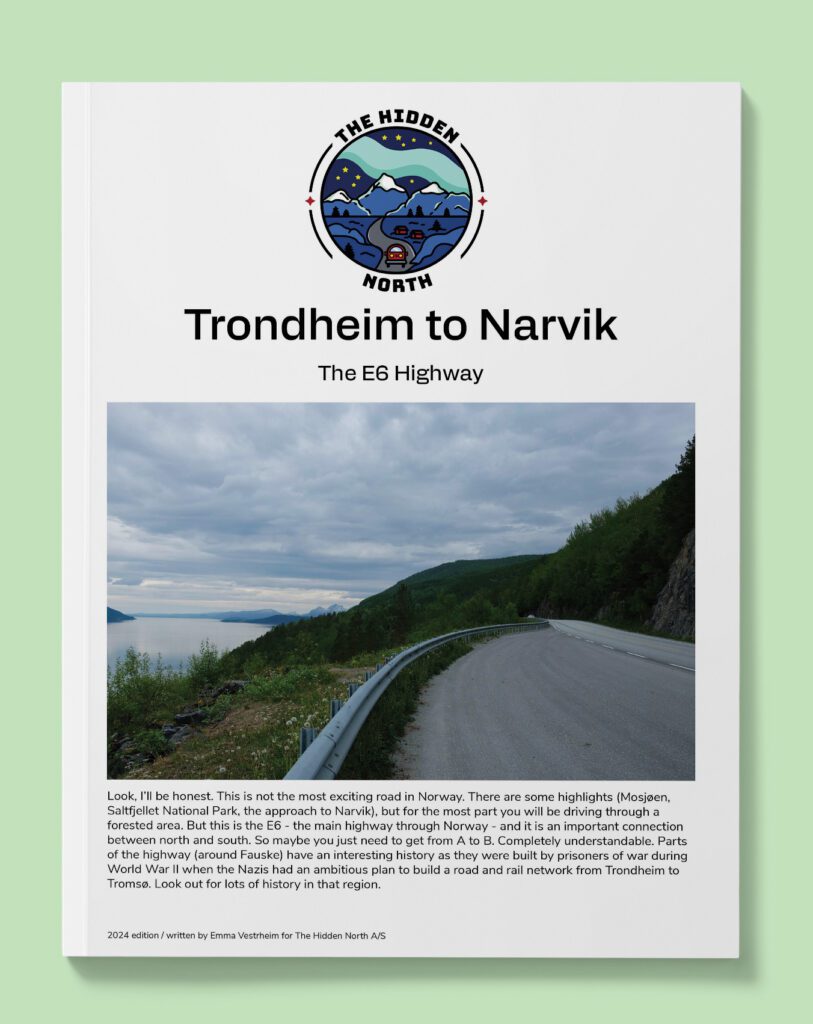
The E6 highway is the longest highway running through Norway, beginning south of Oslo and ending at Kirkenes. This stretch of the E6 covers the long, skinny part of Norway in the middle of the country – the region of central Norway and the lower part of Northern Norway.
No self-guided walks are currently available for Mo i Rana
Watch my YouTube videos featuring Mo i Rana
This drives follows the E6 south from Mo i Rana to Trondheim
Mo i Rana developed as a trading and industrial settlement due to its strategic location along the Ranfjord and nearby mineral resources. Early communities relied on fishing, farming, hunting and trade routes connecting Norway and Sweden. During the 18th and 19th centuries, the town became increasingly important for regional commerce, especially through mining and cross-border trade. Several historic mountain trails originally used by traders are still accessible as hiking routes today. Industry changed dramatically after World War II with the establishment of Norsk Jernverk, Norway’s state-owned ironworks. Industrial expansion caused the population to grow rapidly, transforming Mo i Rana into one of northern Norway’s major industrial centres. Workers from across Norway and abroad moved to the city, shaping its multicultural and working-class identity. Industry remains deeply connected to the city’s character and development today. In recent years, Mo i Rana has focused increasingly on sustainability, renewable energy, and technological innovation. The city continues to evolve while balancing industrial heritage with access to nature and outdoor culture.
Modern life in Mo i Rana combines industry, education and outdoor living beneath the Arctic Circle. The city is the largest urban centre in the Helgeland region and offers a mix of cultural activities, shopping, restaurants, and nature experiences. Residents enjoy easy access to mountains, fjords and wilderness while still benefiting from modern infrastructure and services. The pace of life is generally more relaxed than in larger Norwegian cities. try still plays a major role in the local economy, particularly through Mo Industripark and growing green technology initiatives. Renewable energy, recycling and sustainable industrial projects are increasingly important to the city’s future development. Educational and research opportunities are also expanding, attracting new residents and businesses to the area. Cultural life includes festivals, theatre, concerts and museums, while outdoor recreation remains central throughout the year. Hiking, skiing, fishing and kayaking are deeply woven into the local lifestyle and identity. The combination of urban convenience and Arctic nature gives Mo i Rana a distinctive character within northern Norway.
Fly: Mo i Rana Airport, Røssvoll regional flights connecting with larger Norwegian cities. A new airport project is also under development to improve future accessibility.
Drive: Mo i Rana lies directly along the E6 highway, making it accessible by car from both northern and southern Norway. The scenic E12 route also connects the city with Sweden and Finland. Driving through Helgeland offers dramatic fjords, mountains, and Arctic landscapes throughout the journey.
Train: Mo i Rana is a stop on the Nordland Line running between Trondheim and Bodo.
Ferry: No ferry access
Mo i Rana has a compact city centre that is easy to explore on foot. Local buses connect residential areas, shopping centres and nearby attractions throughout the municipality. Rental cars are useful for exploring Svartisen, Saltfjellet and surrounding wilderness areas. Cycling, hiking and outdoor recreation are also popular ways to experience the region during warmer months.
Cafes & Bakeries
Munin Coffee House is an excellent local spot for coffee.
Meyercafeen is a popular café located in the historic Meyergården area, known for pastries, coffee and relaxed atmosphere. The café combines traditional charm with modern Scandinavian interiors.
Kaffen&Kruse – local café appreciated for quality coffee, homemade food and welcoming atmosphere.
Restaurants
Brasserie 8622 – Mo i Rana’s best-regarded restaurants, offering modern Nordic cuisine with regional ingredients and refined presentation.
Restaurant Sjyen – Stylish waterfront restaurant focusing on seafood, seasonal produce and contemporary Scandinavian flavours.
High End & Unique Eats
All my hotel recommendations are based on research and experience. I don’t recommend somewhere unless I think it is wonderful! The Hidden North focuses on accommodation that provides good quality for price or offer local or unique experiences.
Camping
Chains & Mid-Range
Scandic Meyergården is the nicest hotel in the town.
Click here to view rates & book
Clarion Collection Helma is another good option.
High End & Unique Properties
Sunrise: 10:02am
Sunset: 2:23pm
Average Temperature: -5.9C (21F)
Sunrise: 8:11am
Sunset: 4:24pm
Average Temperature: -4.7C (23F)
Sunrise: 6:24am
Sunset: 6:01pm
Average Temperature: -2.9C (27F)
Sunrise: 5:23am
Sunset: 8:46pm
Average Temperature: 2C (36F)
Sunrise: 3:22am
Sunset: 10:40pm
Average Temperature: 6.9C (44F)
Midnight sun from 9 June
Average Temperature: 11C (52F)
Sunrise: 2:28am
Sunset: 11:45pm
Average Temperature: 14.8C (59F)
Sunrise: 4:37am
Sunset: 9:36pm
Average Temperature: 13C (57F)
Sunrise: 6:21am
Sunset: 7:33pm
Average Temperature: 9.7C (49F)
Sunrise: 7:59am
Sunset: 5:37pm
Average Temperature: 3.5C (38F)
Sunrise: 8:52am
Sunset: 2:42pm
Average Temperature: -0.7C (31F)
Sunrise: 10:38am
Sunset: 1:17pm
Average Temperature: -3.3C (26F)
Here’s a guide to everything I love about Mosjøen!
Explore a scenic section of the European Highway 6 between Mo i Rana and Trondheim
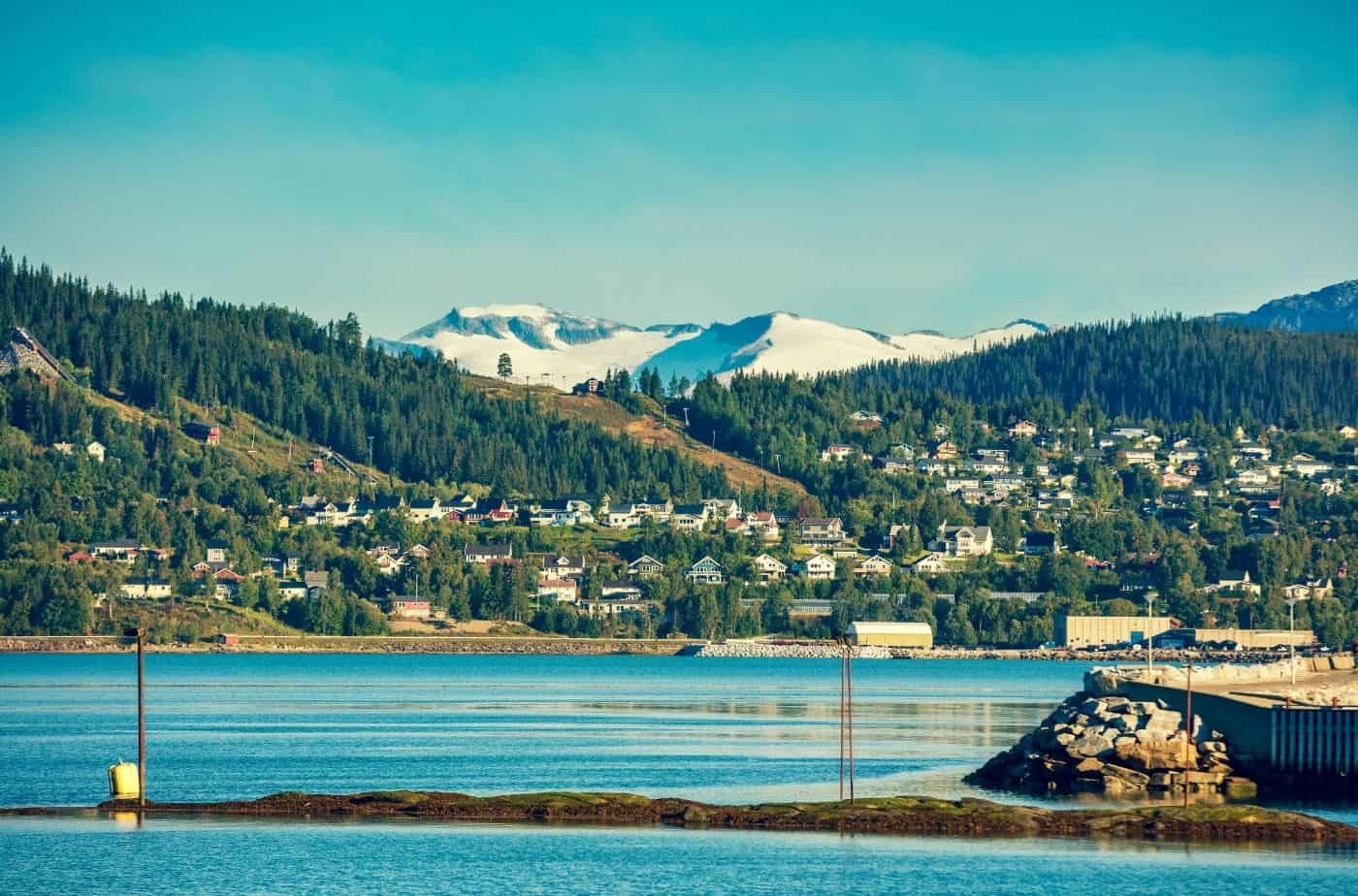
Explore a scenic section of the European Highway 6 between Narvik and Mo i Rana.