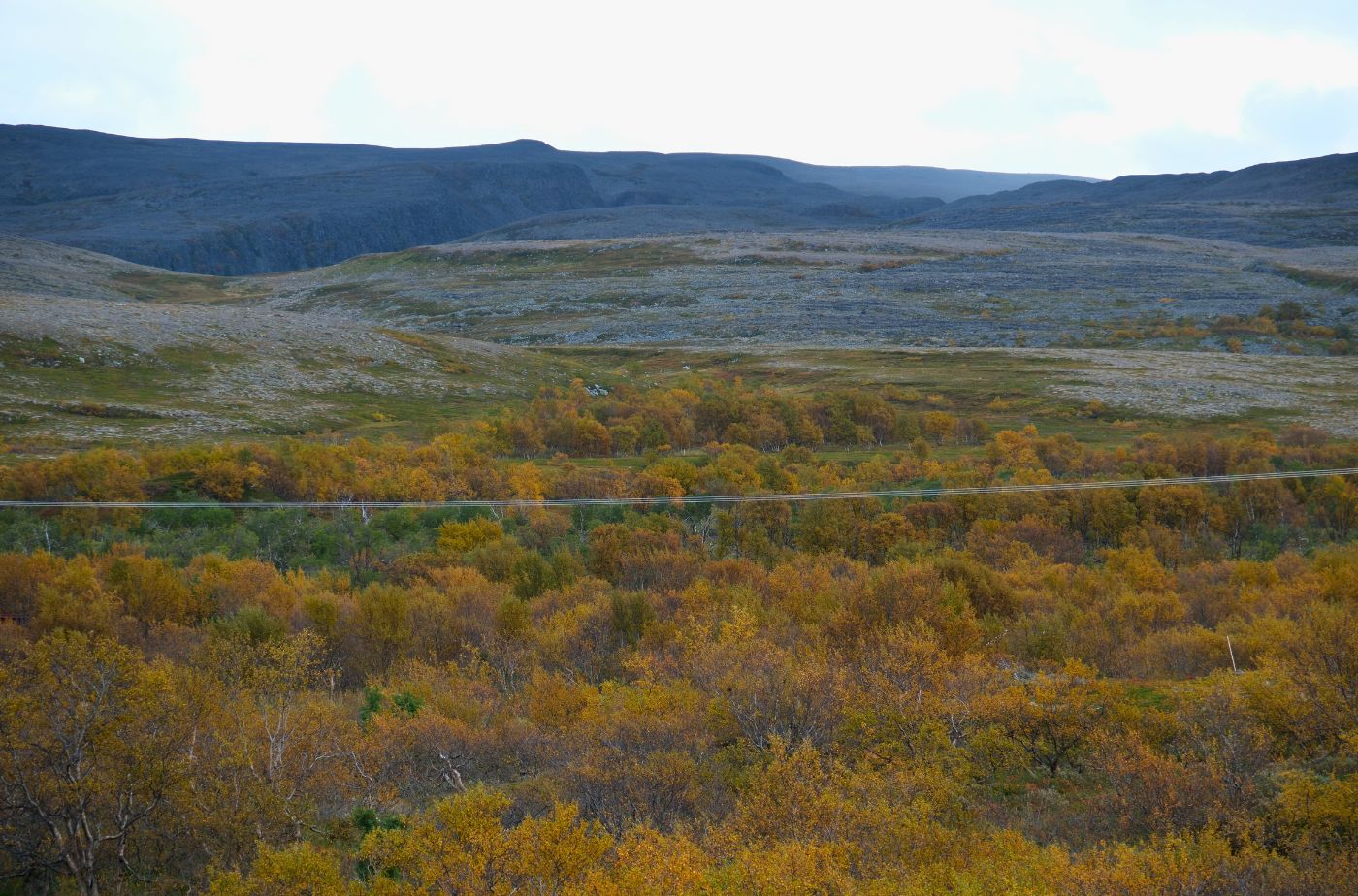
Drive it Yourself: Berlevåg to Båtsfjord
Follow this scenic drive between two relatively isolated fishing communities on the Barents Sea, crossing the Varanger peninsula in between.

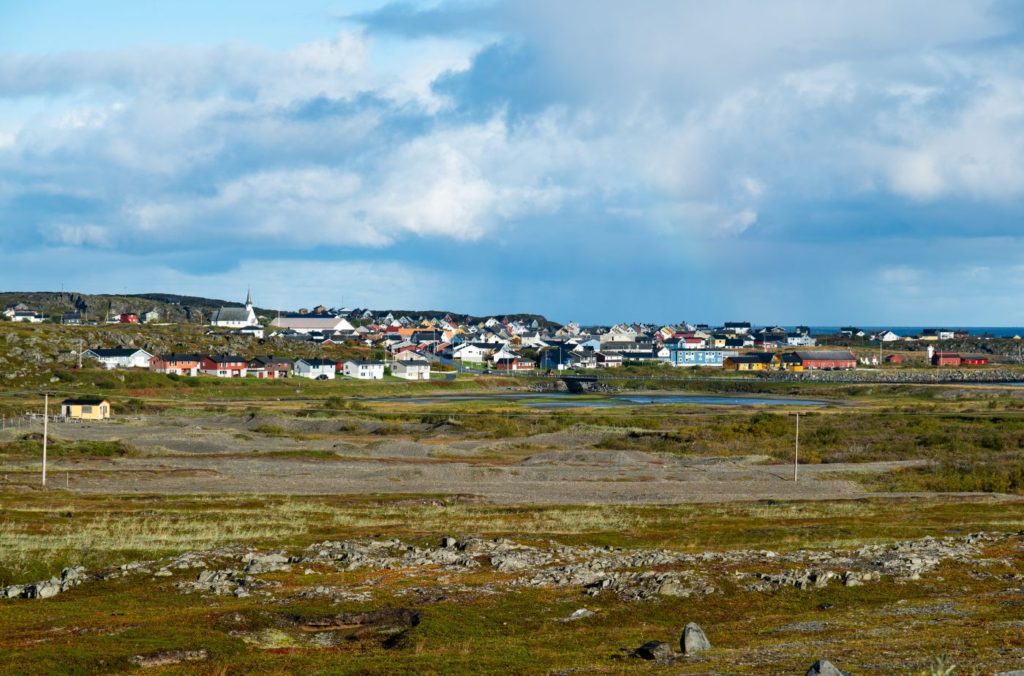
Located on the corner of the Varanger Peninsula facing the Barents Sea, Berlevåg is a truly special place. It is one of the best fishing communities in Norway thanks to its close proximity to the fishing grounds, but it has also had to endure major storms and subsequent rebuilding. Despite a complicated past, Berlevåg is known for its community spirit, stunning nature, and mens choir!
Latitude: 70.5 degrees north
Population: 867
Hottest month: August
Coldest month: February
Wettest month: October
Windiest month: January
Annual precipitation: 575mm
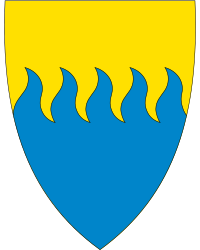
Berlevåg Municipality
Here are some things that you must see and do in Berlevåg
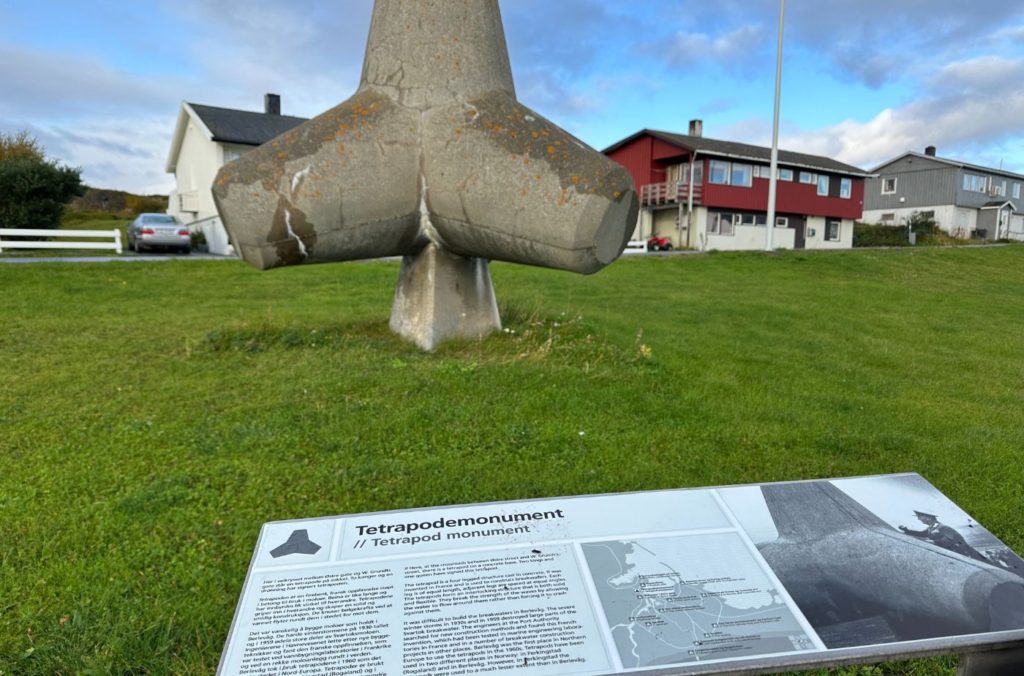
In 1882 the entire fishing fleet in Berlevåg was destroyed by a hurricane, so the village had to come up with breakwaters that could withstand waves of up to 9 metres. The current breakwaters are 10,000 four-armed cast concrete blocks, each weighing 15 tonnes.
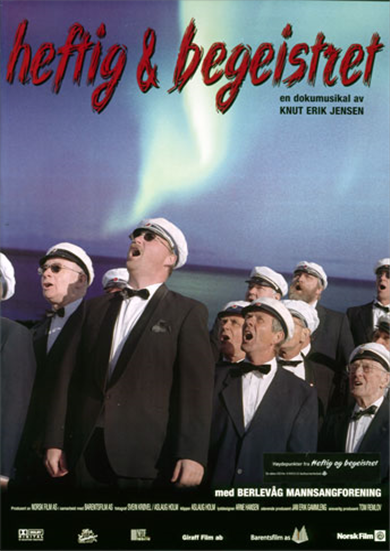
Berlevåg became famous in 2001 after director Knut Jensen released a documentary called Heftig og Begeistret (Cool and Crazy) about the Berlevåg men’s choir. Berlevåg is also known from Karen Blixen’s novel Babette’s Feast.
Here’s an overview of some of the best things to see and do in Berlevåg
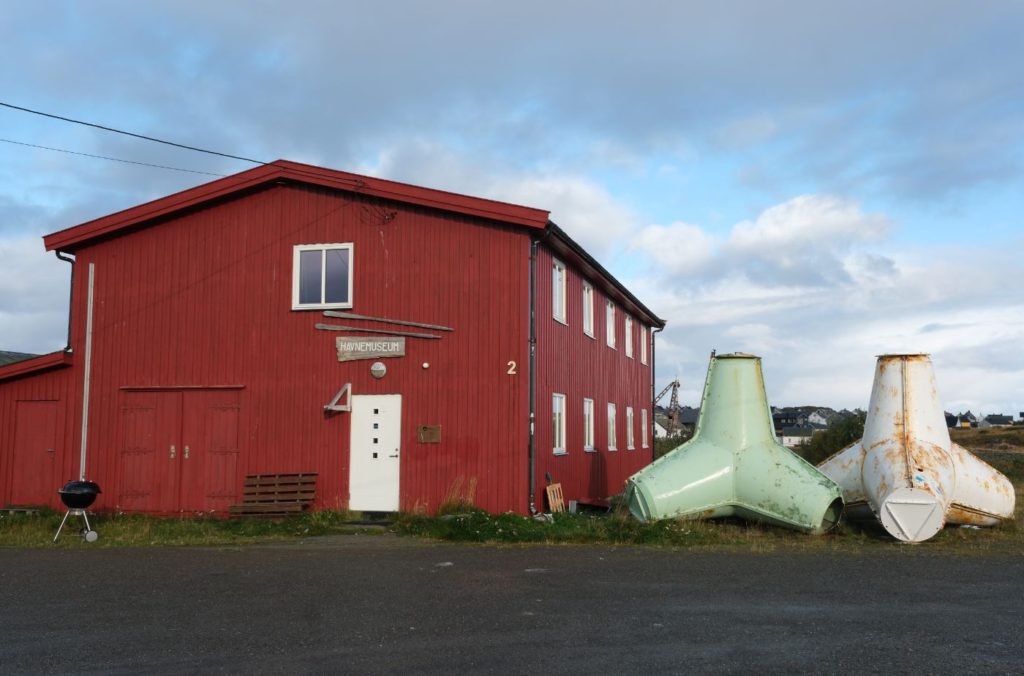
The museum here documents the history of making the harbour safe and shows how difficult it was. The museum is located in a historic part of town.
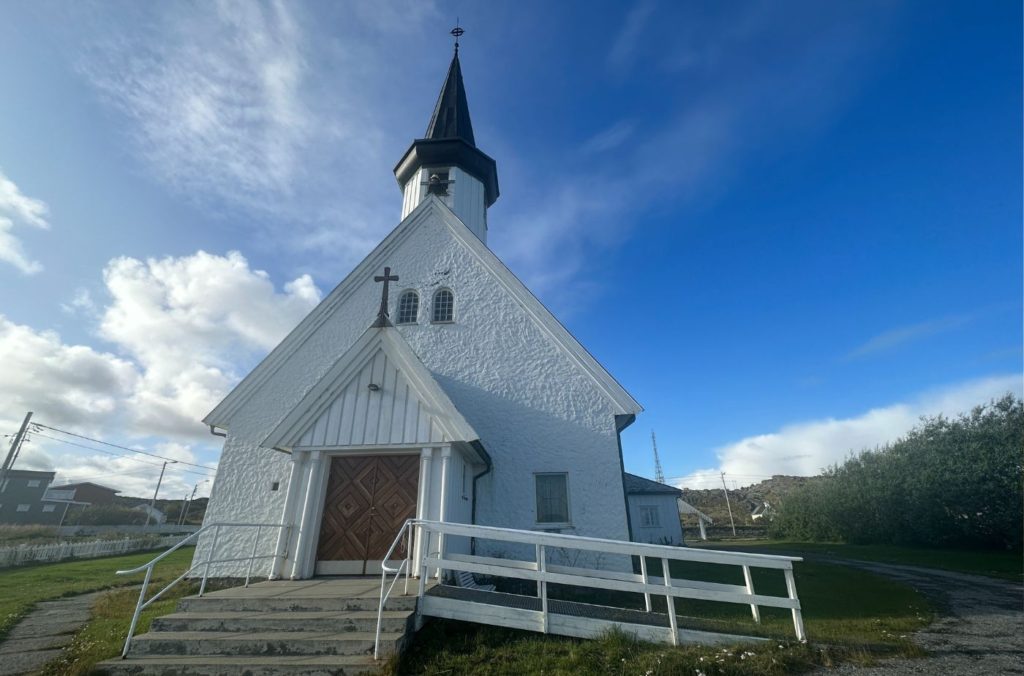
There has been a church here since at least 1877, but the previous church was destroyed during World War II. The current church was completed in 1955.
Visit Kvitbrakka – a bright-yellow historic barracks turned home museum, cultural centre and artist hub. It often hosts art exhibits, workshops and community events (and even contains a vintage second-hand shop). Check their Facebook page for event updates, as opening hours can vary. Even if closed, the building’s creative vibe and colourful facade make it a local curiosity worth seeing.
Looking to go for a hike or take part in a unique experience? Here are our recommendations!
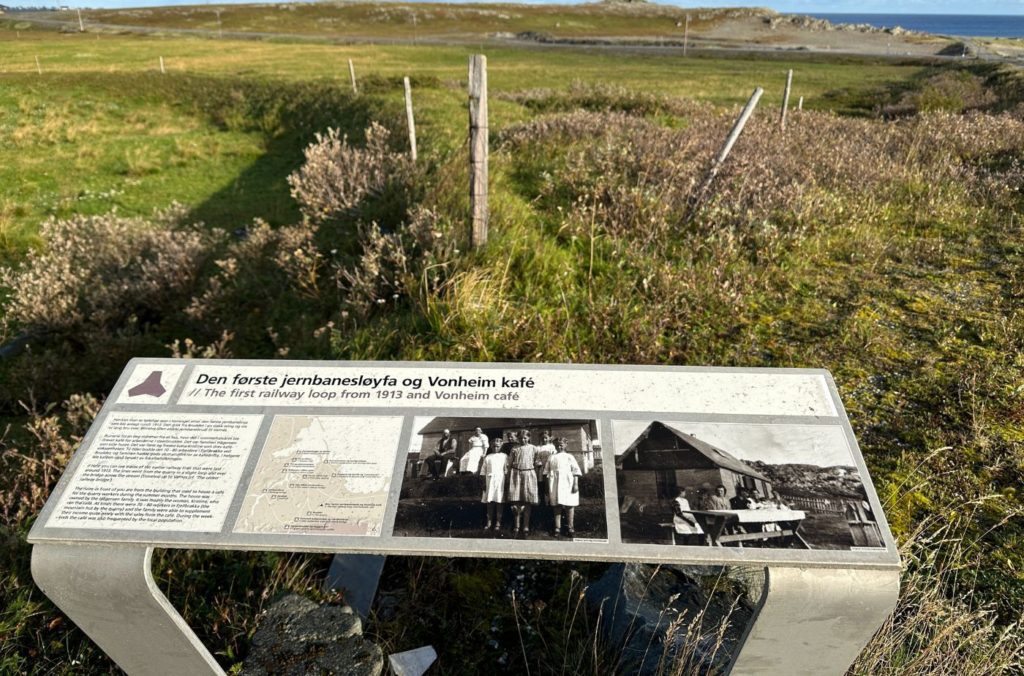
There has been a church here since at least 1877, but the previous church was destroyed during World War II. The current church was completed in 1955.
This hike is located 10km west of the airport. From Skonsvikdalen there’s a 4km path along easy terrain up to Tanahorn, which has excellent views over the Tanafjord.
Just outside the village lies a stunning white-sand Arctic beach. Sandfjorden’s wide bay and dunes are perfect for a breezy walk while watching for seabirds. In summer, the beach is a popular spot to experience the midnight sun dipping over the Barents Sea. A hiking trail (Sandfjordfjellet) begins here, leading to a plateau overlooking the bay. Even if you don’t hike, the scenery is “jaw-dropping” and unexpectedly idyllic for the far north.
A short drive (5 km) east of town, this lighthouse stands lonely against the ocean and is easily accessible year-round. The original 1916 lighthouse was destroyed 1944 and rebuilt in 1949 as a stark white concrete tower. You can drive right up to it, and in summer the midnight sun means the light is off, making for great daylight photos at midnight. If you’re lucky and it’s open, you might climb the tower or visit the old keeper’s house (check locally for opening times).
Follow our road-trip guides for scenic trips around Berlevåg
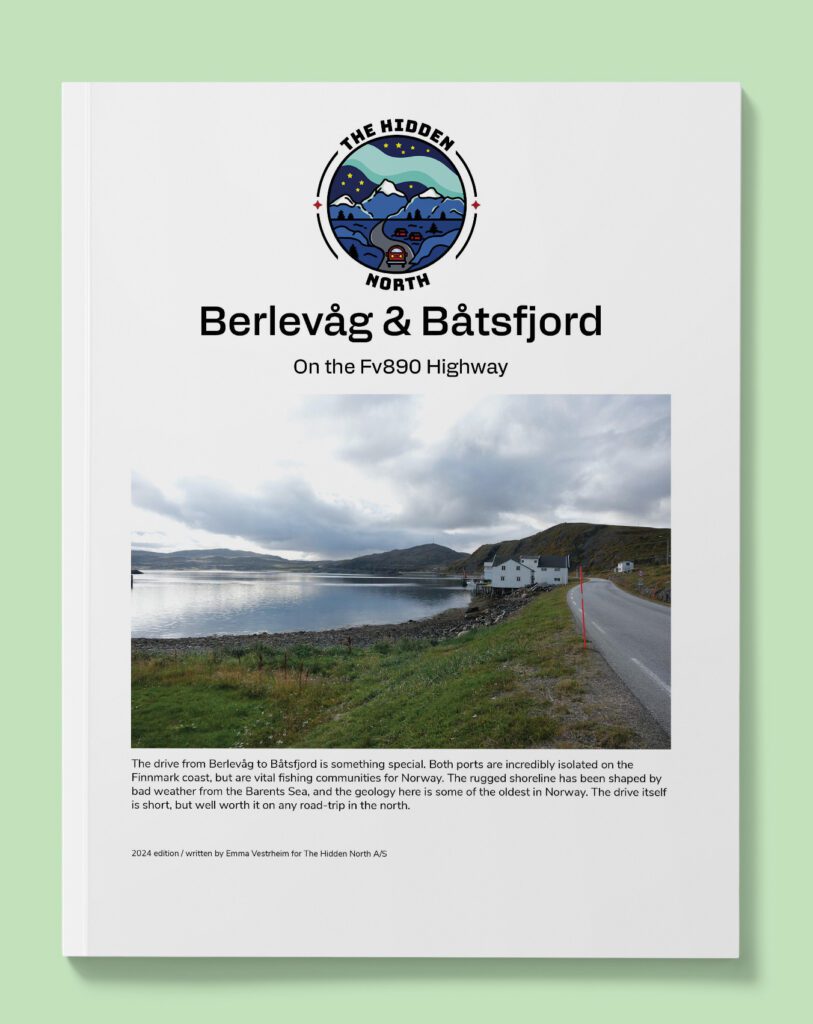
The drive from Berlevåg to Båtsfjord is something special. Both ports are incredibly isolated on the Finnmark coast, but are vital fishing communities for Norway. The rugged shoreline has been shaped by bad weather from the Barents Sea, and the geology here is some of the oldest in Norway. The drive itself is short, but well worth it on any road-trip in the north.
Watch our YouTube videos featuring Berlevåg
The area around Berlevåg has been inhabited since the Stone Age, with some of Norway’s oldest human traces found nearby. The indigenous Sami people traditionally used this coastal region for fishing and seasonal camps. Permanent Norwegian settlement began around the 17th century, as fishermen from the south ventured north following rich cod fisheries.
For centuries, Berlevåg remained a tiny outpost where Norwegians and Sami traded and coexisted, far from any roads or central authority.
Berlevåg as we know it was formally established as a municipality in 1914, after being split off from Tana. The early 20th century saw a surge in commercial fishing and the need for infrastructure. A harbour and community were developed on the exposed Varanger Peninsula coast, despite the brutal weather. By the 1930s, a small village had coalesced around the fishing port. (Interestingly, nearby Kongsfjord, now a hamlet of 30, was one of few places in the region with older wooden houses that survived the coming war intact.
Like most of Finnmark, Berlevåg was caught in WWII’s turmoil. The Germans occupied the area and built fortifications (you can still find bunker ruins on headlands). In late 1944, as German forces retreated, they implemented a scorched-earth policy – berlevågingene (Berlevåg residents) were evacuated and the village was burnt to the ground. Only a few remote houses (such as in Kongsfjord/Veines) escaped the flames.
Berlevåg had to start over from ashes at war’s end, with temporary shelters first, followed by a massive reconstruction effort through the 1950s. The present church (1960) and many older-looking buildings actually date from this post-war rebuilding era.
A safe harbour has always been Berlevåg’s lifeline – and its greatest challenge. The town’s location is completely exposed to the Barents Sea, and fierce storms repeatedly wrecked early piers and breakwaters. Construction of proper moles began in 1913, but progress was literally swept away by waves on multiple occasions. In 1959, a winter storm destroyed half of the nearly finished breakwater. Eventually engineers turned to an innovative solution: tetrapods – four-legged concrete blocks that interlock to absorb wave energy. Over 11,000 tetrapods were cast and placed, finally taming the harbour by the late 1960s.
By 1975, the Hurtigruten ship could dock at Berlevåg’s quay for the first time, sparing locals the dangerous practice of transferring passengers and mail by small boat in open sea. The whole epic is documented in the Harbour Museum, and you’ll see tetrapods proudly displayed around town as symbols of Berlevåg’s hard-won victory over nature.
The late 20th century brought mixed fortunes. The fishing industry modernised, requiring fewer workers; many young people left and population declined. But Berlevåg gained an unexpected boost in morale and fame through its male choir. Formed in the 1950s, the Berlevåg Mannsangforening kept local tradition alive, singing through good times and bad. In 2001, they became stars of the hit documentary “Heftig og Begeistret” (“Cool and Crazy”), which showcased the town and choir’s indomitable spirit. Suddenly, this far-flung village captured hearts worldwide, symbolising community and joy in the face of adversity. Today, visitors still come asking about the choir!
Berlevåg’s history is also intertwined with Sami and Kven (Finnish-Norwegian) cultures of Finnmark. A legacy of this diversity is seen in local place names and traditions. The Varanger Sami Museum in nearby Varangerbotn offers context on 10,000 years of regional history. In Berlevåg itself, sites like the Sami turf hut remains at Devlefjellet or the old Kven bakery oven (marked on the heritage trail) hint at the multicultural layers of the past. This blend of cultures – coastal Norwegian, Sami, Kven – and the dramatic events of war and reconstruction have shaped Berlevåg’s identity as a resilient, tightly-knit community. Every monument, from the anchor in the town square to the memorial plaques on the church, tells a story of survival in the Arctic.
Berlevåg is an important fishing community.
Berlevåg has a fish processing plant. Here they buy all types of fish and king crab, produce fresh and frozen fillets, and also have a technical department. This fish plant is unique because all the energy is used from renewable resources. Even all the trucks and internal equipment run on electricity.
In Berlevåg there are good wind conditions, which makes the Raggovidda wind power plant Norway’s most efficent. It was put into operation in 2014.
The only people who use fossil fuels are the fishermen who deliver fish and king crab to the factory. However, the boats don’t need to drive more than half an hour from the pier and they are at the fishing grounds, whereas elsewhere it is not unusual to drive for several hours.
Sangkraft Berlevåg (the Arctic Centre of Music Theatre) is a foundation that has grown in the last couple of years and aims to put Berlevåg on the map and create increased activity in the region.
Fly: Berlevåg has an airport with daily flights to Hammerfest and Tromsø as well as Vadsø, Kirkenes, Båtsfjord and Vardø.
Drive: Berlevåg is on the Fv890, approximately 1 hour and 50 minutes from the E6 highway at Tana.
Train: No train access
Ferry: Berlevåg is a port of call for the coastal ferry. The northbound ferry docks at around 10pm, while the southbound ferry docks in the middle of the night.
It’s very easy to walk around Berlevåg, but you will need a car if you want to go out exploring.
Attached to the Arctic Glasstudio is a delightful little gallery shop. Here you can buy handmade glass art created on-site – from elegant pendants and earrings to glass panels etched with reindeer or fish motifs. Each piece carries a bit of Varanger’s spirit (some designs feature shapes from the famous Alta rock carvings in Finnmark). Prices range from inexpensive trinkets to pricier art pieces, but it’s all unique and made with love by the resident artists. Even if you’re not buying, it’s worth a browse to appreciate the craftsmanship.
Kvitbrakka isn’t just a museum/gallery; it also houses a second-hand shop and often local craft sales. This is the place to hunt for a quirky vintage Norwegian sweater, old fishing memorabilia, or handmade items like Sami gákti dolls, knitted mittens, and local photography prints. The inventory depends on donations and local artisans, so it’s always a bit of a treasure hunt. If you’re lucky, you might coincide with a flea market day or an art fair hosted there.
Cafes & Bakeries
Kongsfjord Landhandel & Cafe – Technically 30 km away in Kongsfjord, but worth a visit if you’re exploring the area. This summer-only historic general store serves delicious waffles, pastries and coffee in a 1900s atmosphere. Enjoying a treat here feels like stepping back in time – the shelves are lined with vintage goods and local art upstairs. It’s a favourite stop for road trippers between Berlevåg and Båtsfjord.
Pubs & Casual Dining
Neptun Pub (Evensen’s Bar) – Primarily a pub, it offers simple pub grub, especially on event nights. You might find reker (prawn) platters, pizza, or the local favourite “hvalbiff” (whale steak) on the chalkboard when available. Not a fancy spot – it’s the town watering hole with a pool table and occasional live music – but you can get a filling bite and a beer, and the regulars welcome tourists.
High End & Unique Eats
Restaurant Oliver – The main restaurant in Berlevåg, situated on the harbourfront. Oliver’s has a cosy, rustic interior and a menu highlighting local ingredients – think fresh fish soup (fiskesuppe), grilled cod, and hearty meat stews. In summer, they may have lunch service (limited menu) and a more extensive dinner menu. It’s the go-to spot for a sit-down meal; travellers consistently enjoy the quality.
Camping
Berlevåg Pensjonat & Camping – This site doubles as both a camping ground and a guesthouse. For campers, there are grassy areas for tents and several spots for caravans/RVs with hook-ups. Facilities include a communal kitchen, showers, and toilets. The camping area is by a small lake on the edge of town, offering midnight sun views and often visits from wandering reindeer. It’s informal but pleasant, and you can use the guesthouse services (like breakfast, for a fee). A great budget-friendly base for outdoorsy travellers.
Cabins & B&Bs
Chains & Mid-Range
Berlevåg Hotell is the main hotel in town. Often just called “the motel”, this is one of the only hotel-like options in town. It offers straightforward, budget-friendly rooms with private bathrooms. Think clean, warm, and no-frills – perfectly fine for a short stay or if you’re just looking for a place to crash after long days exploring. The motel also manages some cabins and the aforementioned camping ground. There’s Wi-Fi, and sometimes breakfast can be arranged (or just self-cater with the in-room kitchenette, if provided). It’s centrally located (easy walk to the store or pub). Travelers note that options are few, but this motel does the job and the owners are helpful. Book early in peak season as it’s often full due to limited competition.
High End & Unique Properties
Polar night until 20 January
Average Temperature: -4C (24F)
Sunrise: 7:47am
Sunset: 2:49pm
Average Temperature: -5C (23F)
Sunrise: 5:28am
Sunset: 4:58pm
Average Temperature: -3C (2F)
Sunrise: 3:54am
Sunset: 8:16pm
Average Temperature: 0C (32F)
Midnight sun from the 14th of May
Average Temperature: 4C (40F)
Midnight sun
Average Temperature: 8C (46F)
Midnight sun until 31 July
Average Temperature: 10C (50F)
Sunrise: 2:45am
Sunset: 9:26pm
Average Temperature: 10C (51F)
Sunrise: 5:12am
Sunset: 6:43pm
Average Temperature: 8C (46F)
Sunrise: 7:19am
Sunset: 4:17pm
Average Temperature: 3C (37F)
Sunrise: 9:12am
Sunset: 12:22pm
Average Temperature: -1C (31F)
Polar night
Average Temperature: -2C (28F)
Follow this scenic drive between two relatively isolated fishing communities on the Barents Sea, crossing the Varanger peninsula in between.
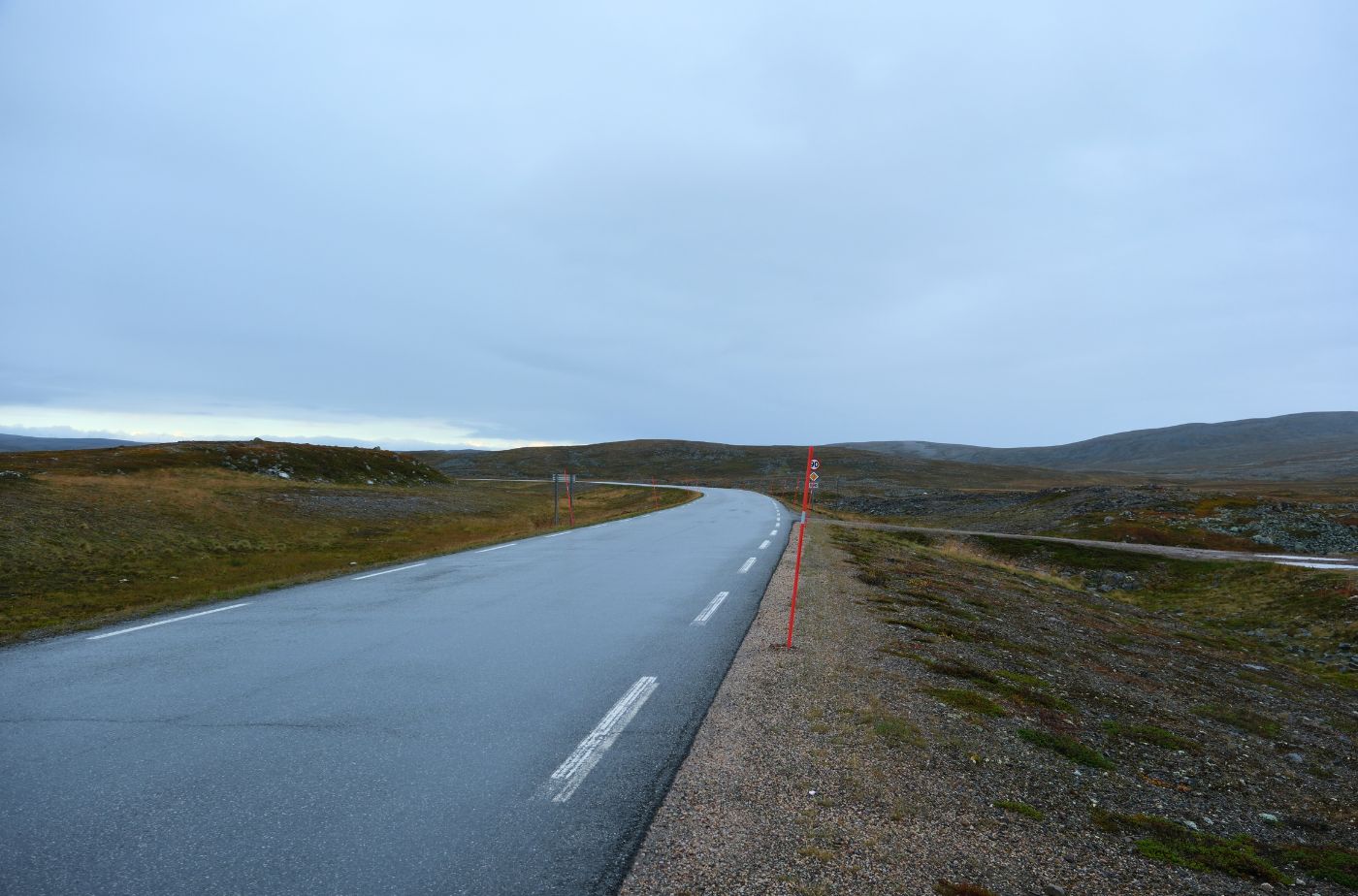
Follow this scenic drive through the rugged Varanger peninsula from Varangerbotn to Berlevåg on the Barents Sea.