Why You Should Visit Mosjøen on Your Norwegian Road-trip
Here’s a guide to everything I love about Mosjøen!
Mosjøen is a historic trading port located along the Helgeland coast. Its main street is one of the most charming in Norway, and this hidden gem makes for a perfect stop on your Norwegian roadtrip.
Latitude: 65.8 degrees north
Population: 9,800
Vefsn Municipality
Here’s an overview of some of the best things to see and do in Mosjøen
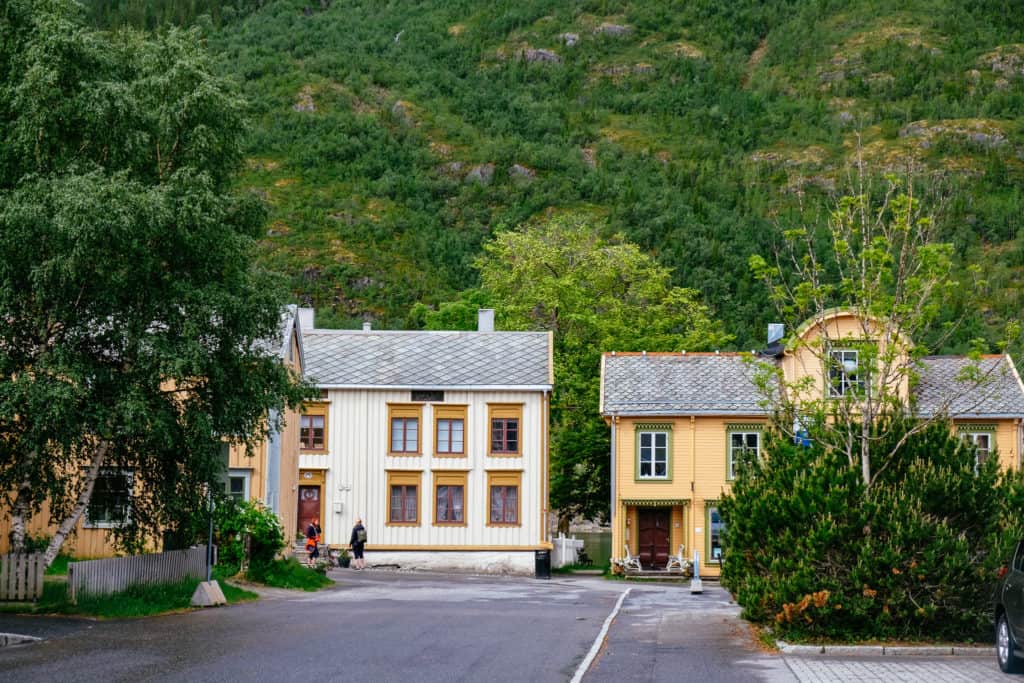
Sjøgata is one of the best-preserved historic wooden streets in northern Norway and the cultural heart of Mosjøen. The charming waterfront district is lined with colourful 19th-century buildings, cafés, galleries and artisan shops that reflect the town’s trading history. Walking through the narrow streets feels like stepping back in time, especially during summer when flowers and outdoor seating fill the area. The riverfront setting beneath Øyfjellet mountain makes the atmosphere especially picturesque.
Vefsn Museum is located in two places in the town. The museum is about the history of Mosjøen and there’s also a small outdoor museum.
Dating back to 1735, Dolstad Church is one of the oldest churches in Helgeland and an important local landmark. The wooden church sits peacefully beside the river and reflects the region’s long religious and cultural history. Visitors can admire the traditional architecture and tranquil surroundings while learning about the role the church played in the local community. The nearby cemetery and riverside paths add to the historic atmosphere.
Looking to go for a hike or take part in a unique experience? Here are my recommendations!
Please note – the links provided are affiliate links. I only recommend experiences that I have researched and/or tested and focus on providing unique, local things to do!
Helgelandstrappa is one of the world’s longest stone staircases, climbing steeply up Øyfjellet above the town. Built by Sherpas from Nepal, the staircase features thousands of carefully laid stone steps that lead hikers to spectacular panoramic viewpoints. Along the route, visitors can enjoy views over the Vefsna river, fjord and surrounding mountains. The trail has become one of Mosjøen’s most iconic attractions for outdoor enthusiasts.
The Mosjøen Via Ferrata route above Mosjøen offers an adventurous way to experience the steep cliffs of Øyfjellet. Climbers are secured to fixed cables while ascending dramatic rock faces overlooking the town and fjord below. The route is suitable for both beginners and experienced climbers, with guides available during the summer. Some tours also include a spectacular zipline descending towards the river and town centre
Join a guided snowmobile safari around the mountains of Mosjøen!
Join a guided mountain hike and zipline tour.
Go searching for the northern lights on a snowmobile safari.
The Helgeland Stairs (Helgelandtrappa) is one of Norway’s longest staircase, with around 4,000 stairs taking you 818 metres above sea level.
Follow our road-trip guides for scenic trips around Mosjøen
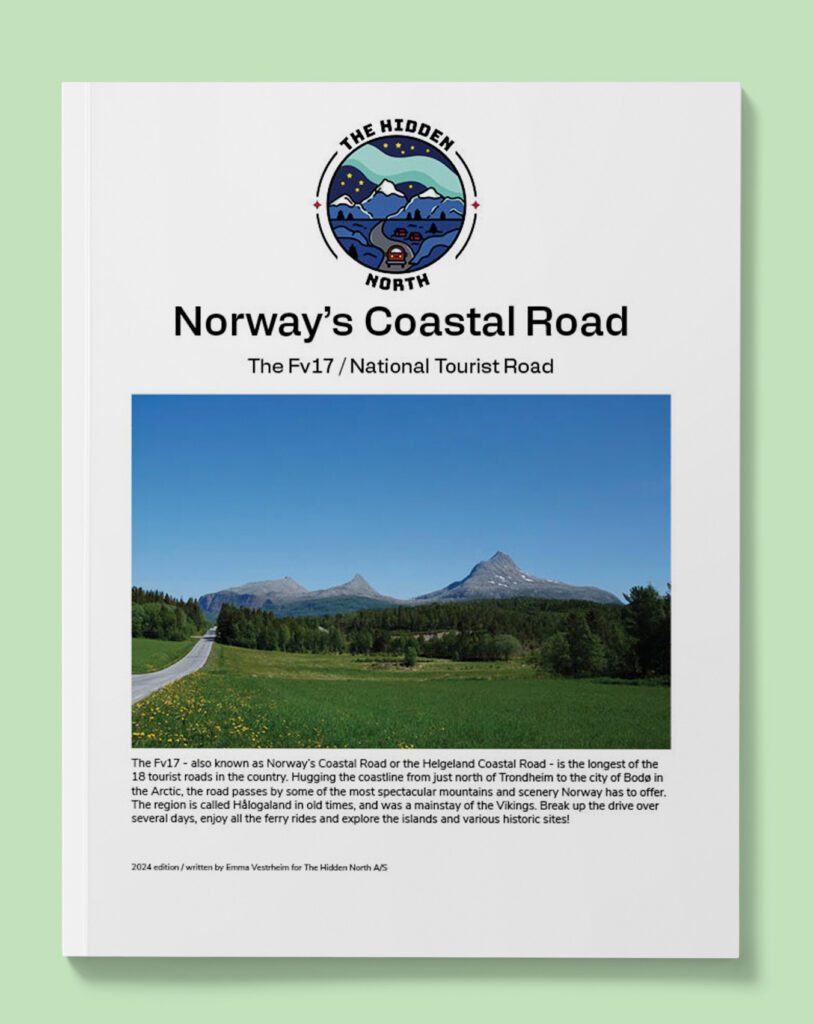
The Coastal Road is the longest of Norway’s 18 national tourist roads, and covers the length from Trondheim to Bodø.
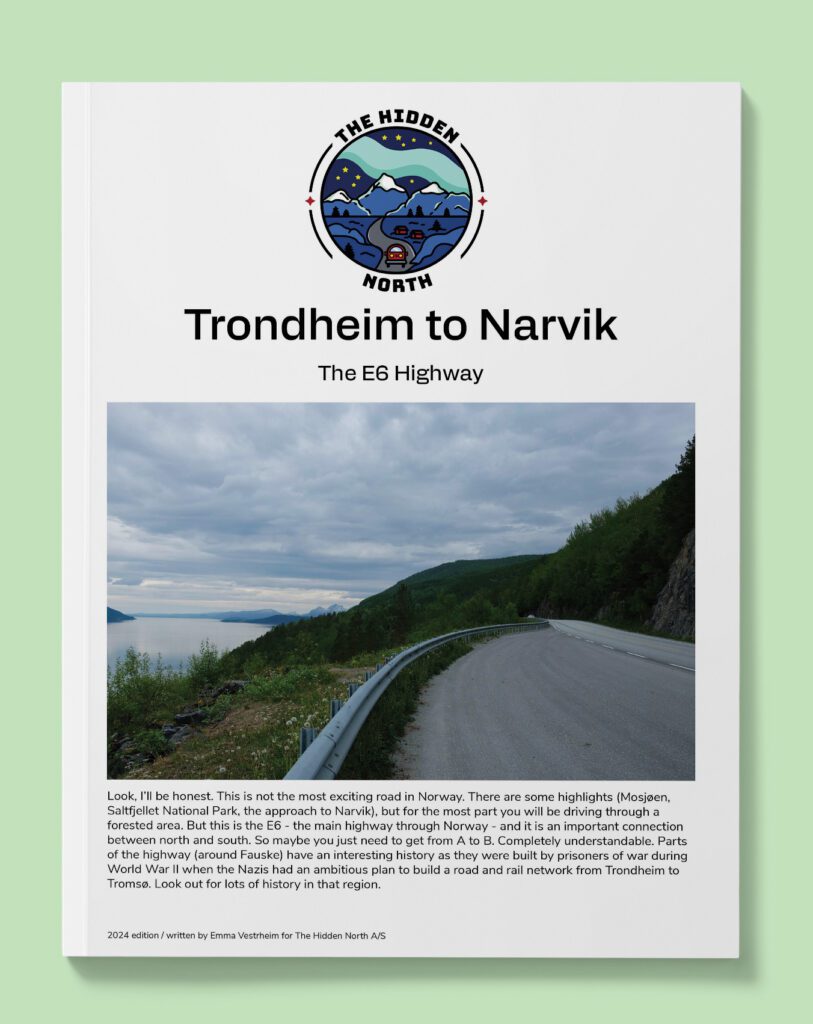
The E6 highway is the longest highway running through Norway, beginning south of Oslo and ending at Kirkenes. This stretch of the E6 covers the long, skinny part of Norway in the middle of the country – the region of central Norway and the lower part of Northern Norway.
No self-guided walks are currently available for Mosjøen
Watch my YouTube videos featuring Mosjøen
The drive includes entering and parking in Mosjoen.
Mosjøen is one of the oldest towns in the Helgeland region and developed as an important trading centre due to its location along the Vefsna River and Vefsnfjord. During the 19th century, the timber industry brought significant growth and prosperity to the town. Merchants, craftsmen and traders established businesses along Sjøgata, some of which still survive today as part of the historic waterfront district. The preserved wooden buildings offer a rare glimpse into northern Norway’s trading history. It also became an important transport and communication hub linking coastal and inland communities throughout Helgeland. Railways, roads and maritime trade all contributed to Mosjøen’s development as a regional centre. Unlike many northern Norwegian towns, Mosjøen avoided large-scale destruction during World War II, helping preserve much of its historic architecture. Mosjøen balances historic preservation with modern development while maintaining strong cultural ties to the surrounding landscapes and traditions of Helgeland.
Modern life in Mosjøen combines small-town atmosphere with strong outdoor and cultural traditions. Residents enjoy close access to hiking, skiing, fishing and mountain activities while living in one of northern Norway’s most scenic river valleys. The town centre remains active with cafés, galleries and local businesses, particularly around the historic Sjøgata district. Summer tourism has grown steadily as more travellers discover Helgeland’s landscapes and quieter pace of life.
Industry and regional services continue to play an important role in the local economy, alongside tourism and cultural events. Mosjøen also serves as an important transport hub with rail, road and air connections linking northern and central Norway. Community life is closely connected to nature, seasonal traditions and outdoor recreation throughout the year.
Despite its relatively small size, Mosjøen offers a lively cultural atmosphere with concerts, festivals and artisan workshops. The combination of preserved history, dramatic scenery and relaxed lifestyle gives the town a distinctive character within northern Norway.
Fly: Mosjøen Airport regional flights connecting with Trondheim, Bodø and other Norwegian destinations. Widerøe operates most routes throughout the region.
Drive: Mosjøen lies directly along the E6 highway and is easily reached by car from Trondheim, Bodø and the wider Helgeland region. Scenic drives through fjords, mountains and forests make the journey especially memorable.
Train: Mosjøen is located on the Nordland Line railway between Trondheim and Bodø. The station provides one of Norway’s most scenic train journeys through forests, mountains and Arctic landscapes.
Ferry: Although Mosjøen itself is inland along the fjord, nearby ferry routes connect coastal islands and communities throughout Helgeland. Many travellers combine ferry travel with road trips along the coast.
Mosjøen’s compact centre is easy to explore on foot, particularly around Sjøgata and the riverfront. Local buses connect residential areas and nearby villages throughout the municipality. Rental cars are recommended for exploring surrounding mountains, fjords and coastal attractions in Helgeland. Cycling and hiking are also popular ways to experience the area during summer.
Cafes & Bakeries
Umami is a popular café in Sjøgata is known for specialty coffee, homemade cakes and a relaxed atmosphere inside one of Mosjøen’s historic wooden buildings
Quick Bites
Reasonable Restaurants
High End & Unique Eats
Huset I Gato – Mosjøen’s most unique dining experiences, combining fine food with historic atmosphere inside Sjøgata’s preserved wooden buildings
All my hotel recommendations are based on research and experience. I don’t recommend somewhere unless I think it is wonderful! The Hidden North focuses on accommodation that provides good quality for price or offer local or unique experiences.
Camping
Topcamp Mosjøen – Helgeland – Popular budget option offering cabins, camping and scenic riverside surroundings close to the town centre.
Cabins & B&Bs
Chains & Mid-Range
High End & Unique Properties
Fru Haugans Hotel is from 1794, making it the oldest hotel in Northern Norway.

Here’s a guide to everything I love about Mosjøen!

Explore a scenic section of the European Highway 6 between Mo i Rana and Trondheim