Northern Lights Driving Guide from Tromsø: Top Locations, Safe Parking and Winter Tips
Visiting Tromsø in winter offers the thrilling chance of witnessing the aurora borealis dancing across the Arctic sky. One way to improve your chances is to drive out of Tromsø to areas with dark skies and clear weather. I’ve been to Tromsø many times over the years as a trip leader and tourist in hopes of seeing the northern lights, and I’ve done exactly what you are probably planning: get a rental car, download some apps, and head out to try and see the northern lights. It’s a lot of fun and adventure, but I’ve also seen so many examples of reckless behaviour. From driving on the wrong side of the road to driving way under the speed limit, it seems that some visitors to Tromsø don’t put safety ahead of capturing the northern lights shot.
However, it’s no use spending an entire article explaining why I think many tourists should not rent a car, as no one will read it. I had a thought and put together an article that shows the safest places to park if you get a vehicle, and also discusses road safety. Hopefully, this will provide a good overview of the realities of driving out of Tromsø during winter, and will help visitors better understand how everything works.
So, this guide will help first-time visitors to Tromsø plan an aurora road trip – highlighting the best regions to drive, safe parking spots to watch the lights, how to use real-time forecasts for aurora and cloud cover, critical winter driving tips, and local etiquette and regulations to follow. By the end, you’ll know where to go and how to stay safe and respectful on your northern lights adventure.
Northern Lights Driving Guide from Tromsø: Top Locations, Safe Parking and Winter Tips
Be sure to read my detailed travel guide for Tromsø, including practical information and things to do.
Why Booking a Northern Lights Tour is the Way to Go
Before we get started, I want to stress the value of a northern lights tour. Are they expensive? Yes. Are they worth it? Also yes.
I took my brother and his wife to Tromsø for three days at the beginning of October, which is not quite ‘high season’. For a mid-size car from Avis, we paid 4,225 NOK for the entire period. On top of that, from all the driving, we spent an extra 1,500 NOK on petrol (in Norway, petrol is costly, currently around 20 NOK a litre). Because we stayed in the city centre, we had to pay for parking. We parked at Fjellet P-Hus, a vast underground parking lot, which was 420 NOK a day (approx 1260 NOK for the entire trip).
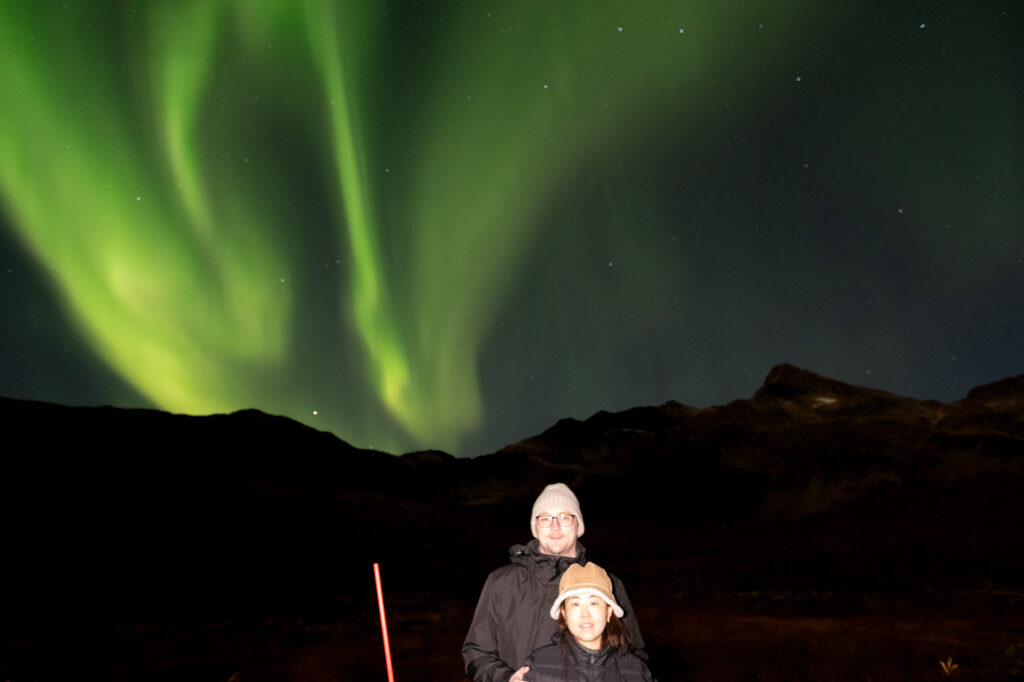
Put all that together, and we paid just under 7,000 NOK to have the car for three days. We only went out looking for the northern lights on two nights, so we spent roughly 3,500 NOK per night. I have a Norwegian driver’s license. I have been chasing northern lights for ten years, so I knew how the game works. Not to mention I took professional-quality photos of my brother and his wife, as well as the northern lights, thanks to the 30,000 NOK (probably more, to be honest) I invested in good camera gear.
So, please take all of this, but apply it to first-time visitors. What’s better – spending all this on a car to have your first experience driving in pitch-black conditions on ice, trying to figure out the apps, trying to figure out where to go, trying to figure out parking, and trying to get a decent photo. Or is it better to spend the money on a guided tour and have someone else handle all the details so you can sit back, relax, and see the northern lights? If I were a first-time visitor, I know what I’d choose.
Anyway, that’s my argument for booking a tour. If you are still convinced you’ll drive yourself, let’s move on to that.
Where to Drive for Northern Lights Tromsø: Best Regions for Aurora Viewing
Tromsø sits in the middle of the Northern Lights oval, but city lights and coastal clouds hinder your view. It’s no secret that if you have access to a greater area for viewing, your chances of seeing the northern lights increase. So, that’s why there are dozens of northern lights tour companies that will drive you out of the city to the spot they believe has the best chances.
While Tromsø’s weather is pretty bad (coastal Norway is not the place to go for northern lights viewing due to the frequent storms), thankfully, there are some excellent viewing areas all within a few hours’ drive of Tromsø. Here are some top regions to consider.
My Northern Lights Parking Map
To make things easier, I made a map! This map contains only safe parking places that you can use when out searching. I will refer to the locations on the map throughout the article.
Sommarøy, Kvaløya & Ringvassøya (west and north of Tromsø)
Heading west from Tromsø, the road to Sommarøy (about an hour’s drive) takes you across Kvaløya island, known for minimal light pollution and expansive views of the sea and sky. Sommarøy is an idyllic island with white beaches and open ocean to the west, making it a prime spot to watch the aurora dance over the water.
The surrounding coastal areas offer wide horizons and reflective fjords that enhance the experience of the lights reflecting off the sea. With mountains behind and an unobstructed northern sky ahead, Sommarøy’s seaside magic is especially rewarding on a clear night when you can park at one of the designated large parking lots and see the aurora over the ocean.
You’ll follow Fv862 towards Sommarøy. This is a narrow road with no street lights, so be very careful when driving. Also, sudden storms can roll in, so be prepared for any weather. As part of the road runs through a valley, it’s likely to have ice on it. Before you turn off to Sommarøy and the Fv862, in Ersfjordsbotn, there’s an excellent parking place with a viewing platform over the fjord. It’s safe, away from city lights, and provides fantastic views. And if you want to be coastal but think Sommarøy will be too crowded, Grøtfjorden has a viewpoint with safe parking and some roadside parking. The road is very narrow, however.
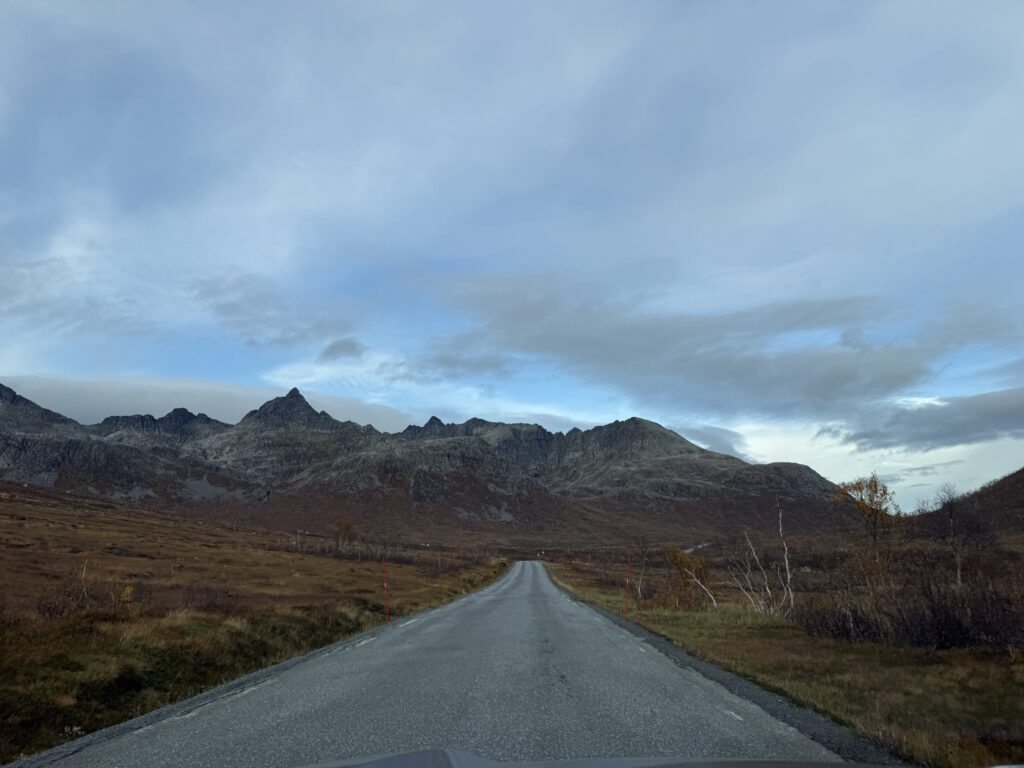
If heading in this direction, I recommend stopping by Kattfjordvatnet or at one of the nearby parking places. These are significant parking places off the road, well-marked and safe to pull off. There are also beautiful mountains here, which make for great photos. The abundance of roadside pull-offs for several kilometres ensures you won’t struggle to find a legal parking spot here.
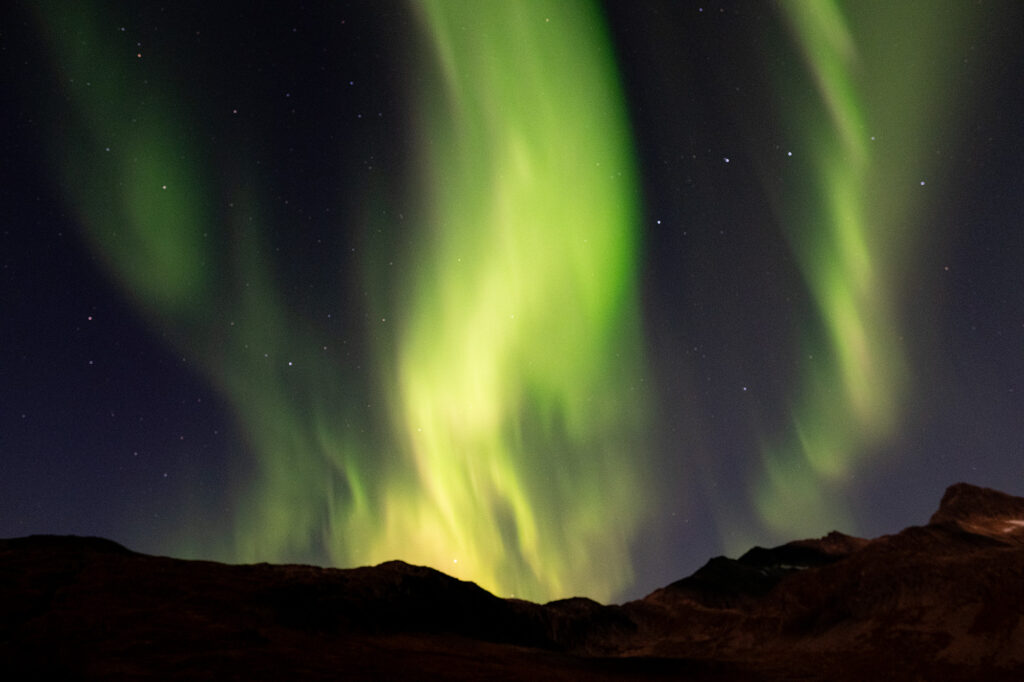
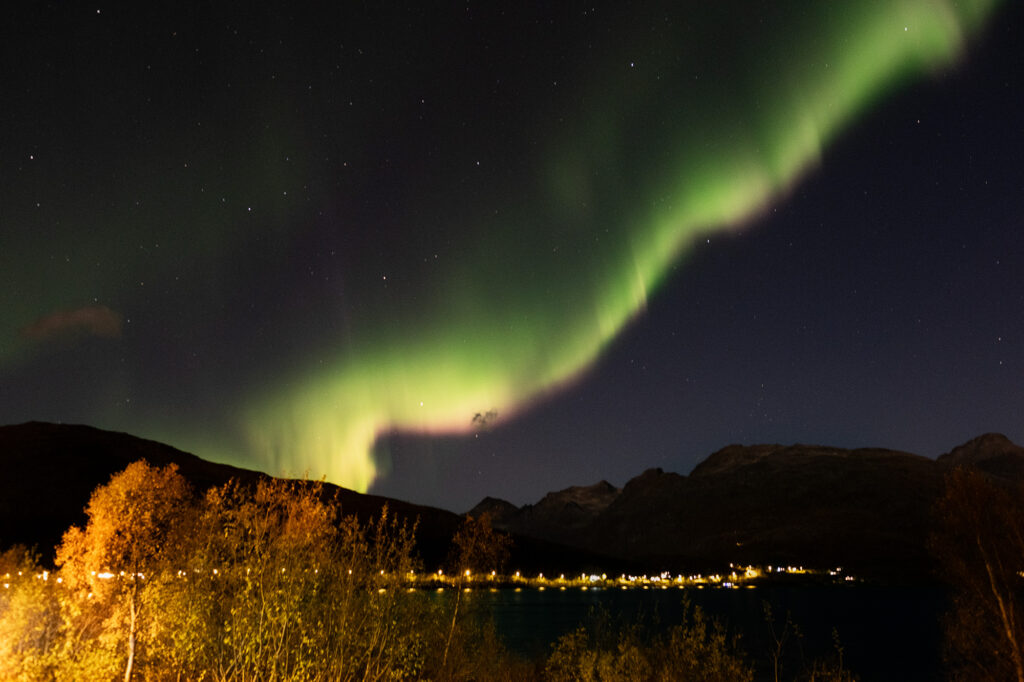
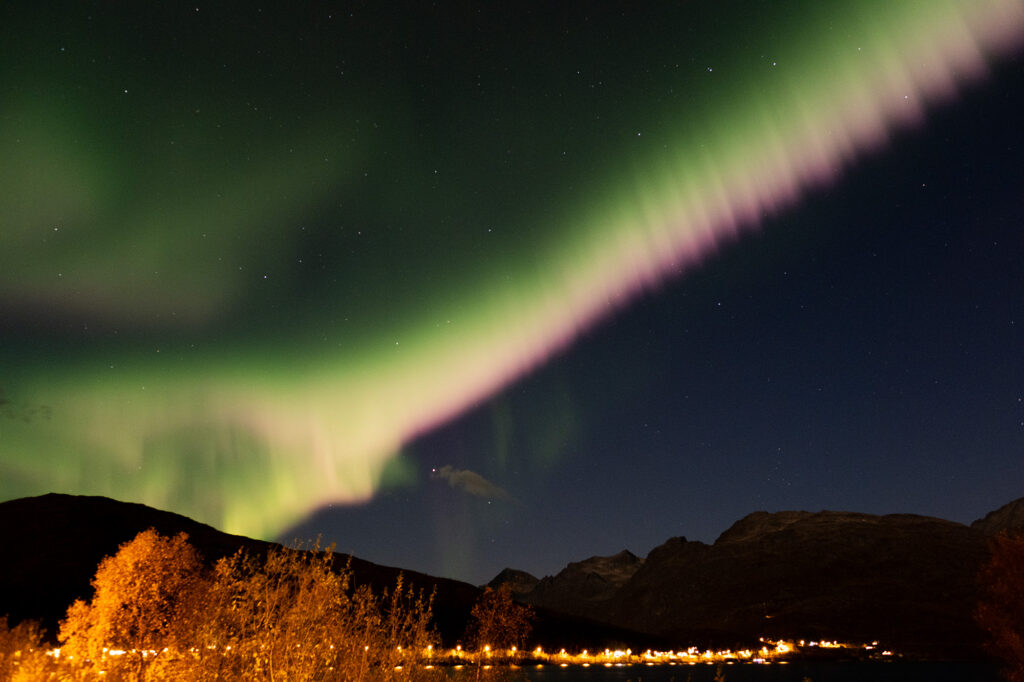
As you approach Sommarøy, there’s a popular parking area just before the bridge to the island. This spot offers a panoramic view over the water towards the beaches and the northward horizon – perfect for aurora gazing. It’s a well-known gathering spot for northern lights tours and self-drivers alike. It’s a very convenient and safe parking spot. I would avoid going much further into Sommarøy – there are hotels, guesthouses, and private homes, and the roads are very narrow. It’s also challenging to turn around. Avoid parking outside people’s homes or on private property – stick to marked parking lots or obvious pull-offs. Be mindful not to drive onto the next island (Hilelsøy) at night, as there are no public stopping places beyond Sommarøy’s village area.
The island north of Tromsø, Ringvassøya, has very narrow roads and no lighting. There are a couple of places to pull over there, but I’d advise against it. The locals there can be unhappy about cars parking along the roads, and the narrow streets are often in poor condition during the winter months. Do your research and check conditions if you are heading here, and have a plan for where to park before you go. Right at the tip of the island is a viewing area with excellent views to the north.
Otherwise, on Kvaløya, you can also drive towards Skulsfjord. The road is very narrow and dark, but there are several viewpoints and safe parking areas where you can pull over. There’s also the village of Kvaløyvågen, with a dedicated aurora parking spot on the way to the town.
Lyngen Alps & Inland Valleys (East of Tromsø)
To the southeast of Tromsø are the Lyngen Alps and adjacent inland valleys. You can get to some parking spots only 30 minutes after leaving Tromsø, while others are a bit further away. This region boasts dramatic, towering peaks and deep fjords, as well as remote valleys with little to no light pollution.
Head out of Tromsø via the E8 highway, and from here you can either take Fv91 from Fagernes towards Breidvik, or follow the E6 all the way to Skibotn, which is known for having clear skies. The Lyngenfjord area offers plenty of parking where you can watch the northern lights arc above calm water and snow-clad mountains. The area’s geography can create pocks of clear sky even when Tromsø is cloudy, and the mountain silhouettes make for incredible photo backdrops.
In Skibotn, where the E8 meets the E6, there’s a known parking lot by the fjord (near an old ferry quay and camping area) that aurora chasers use; it’s called “Skibotndissa” on the map. It’s basically a flat gravel lot right off the road, but it offers a fantastic northward view over the water towards the Lyngen Alps, with no street lights around. You can even walk a short way down to the shoreline to get away from any headlights.
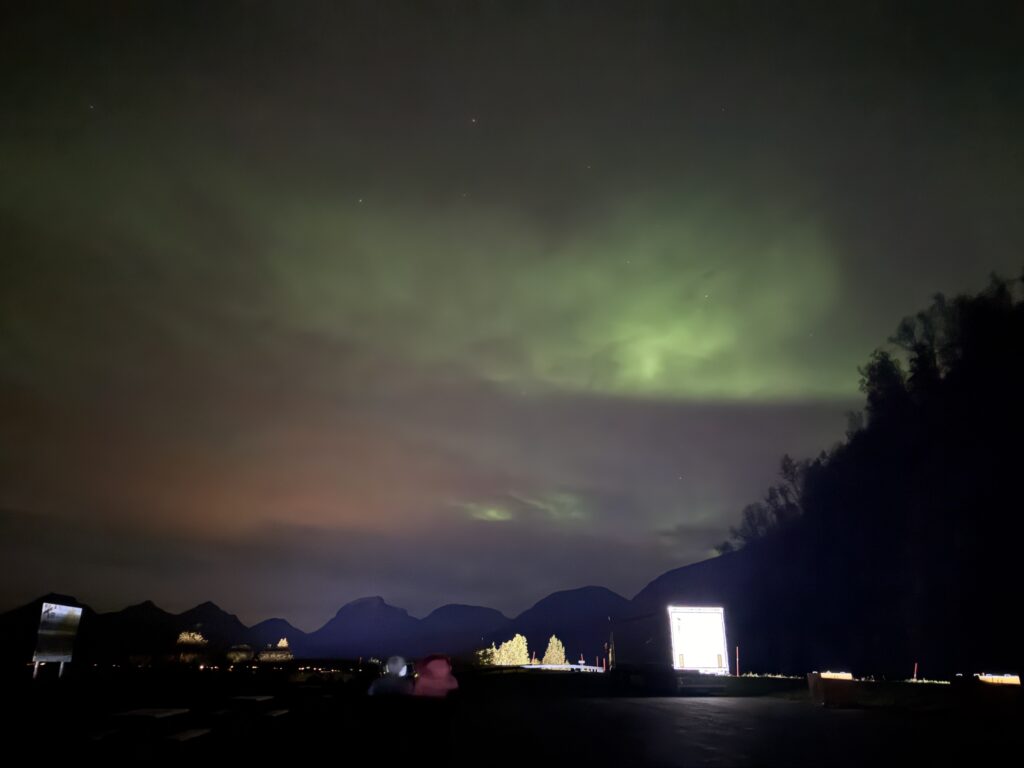
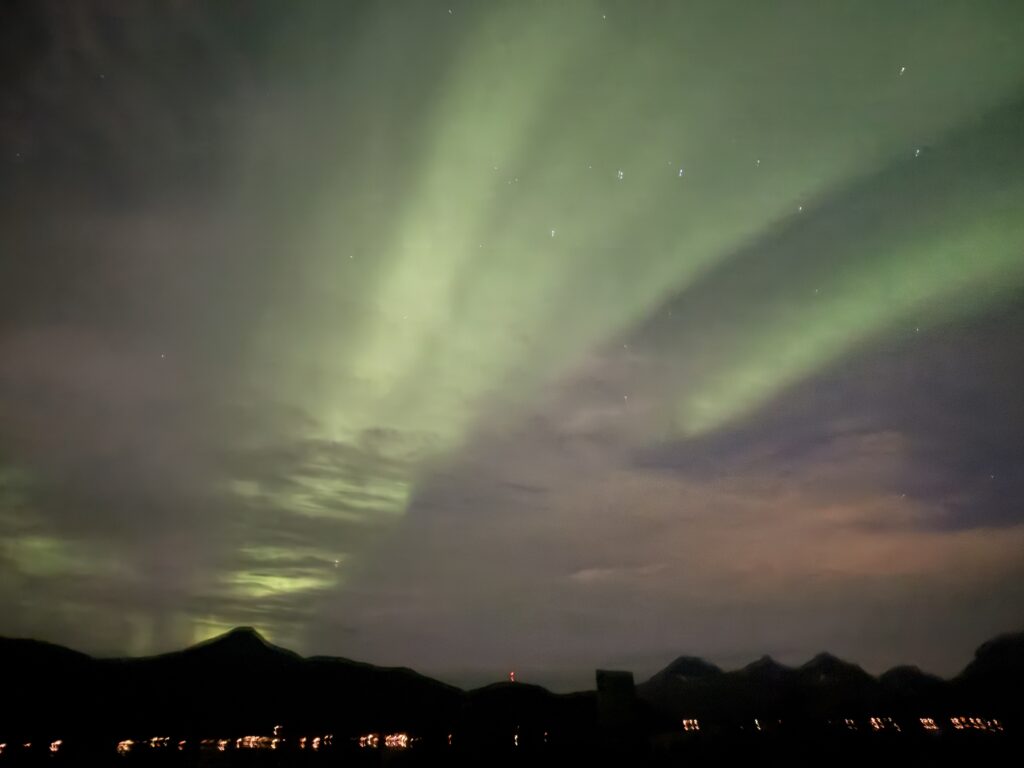
The only downside of following the E8 and E6 highways is that they are major roads, so expect bright street lights; we stopped at one place on the E8 that had these awful orange lights, ruining many photos. However, if you’re not used to driving in winter or on narrow roads, this is by far the safest way of getting around, and I’d recommend sticking to the highways.
One of my favourite spots in this section is at the “Ramfjordmoen Motorstadion” – it’s a racetrack that has a large parking section without streetlights, and it’s only a couple of minutes off the E8 highway. You can also follow the Fv91 all the way to Breidvik for good photo spots. South of Breidvikeidet is a lake called Nakkevatnet, with a good parking place.
Alternatively, you can head north-east from Tromsø on the road towards Oldervik. This is a very narrow road, so care is advised, but you’ll get views out to the north.
South towards Finland or Narvik
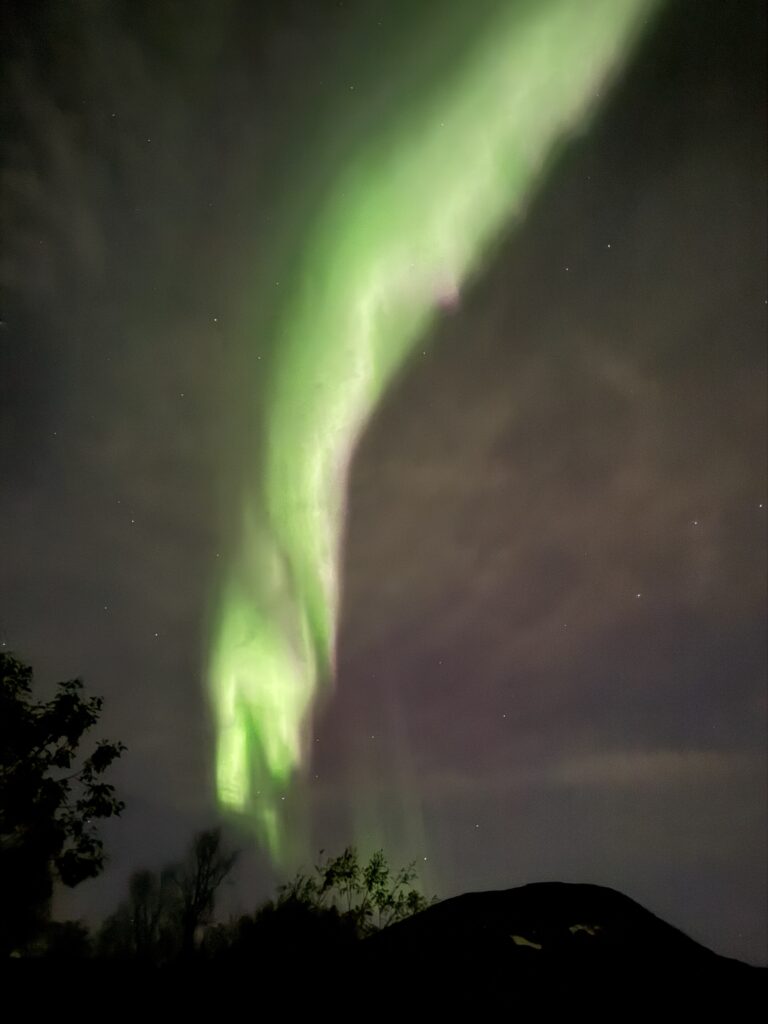
When coastal weather is unfavourable, driving inland towards Finland is a tried-and-true strategy. Take the E8 south from Tromsø all the way to the Finnish border at Kilpisjärvi. This route is often called the “northern lights route,” and there are many designated parking places for northern lights viewing. The climate here is drier thanks to a rain shadow from the surrounding mountains, meaning Skibotn and Kilpisjärvi often have patches of clear skies while Tromsø is cloudy. So, if Tromsø’s weather isn’t cooperating, this long drive to find clear skies inland can increase your chances of seeing the northern lights.
This is a long night, however. Kilpisjärvi is 2.5 hours from Tromsø, provided the conditions are safe for high-speed driving. You don’t have to go as far as Finland; at Overgård, turn onto the Fv87 and follow it for a few minutes to reach a couple of nice parking spots away from highway lights. From the Fv87, you can also turn towards the Øvre Divdal National Park. Be wary of animals and narrow roads, but there are no settlements anywhere here, meaning perfect dark skies. There are excellent parking places close to Dividalsgrotta.
This road has several designated rest stops/parking areas ideal for aurora watching. For example, the Lulleelva rest area is a large turnout along the E8 surrounded by forest and mountains – far from city lights. Pulling into these official rest areas gets you entirely off the highway, ensuring safety from passing cars. Another one near the border is Helligskogen, where the terrain starts to flatten out. These spots are convenient and legal places to park, often marked by signs. One thing to note: some rest stops are used by truck drivers to sleep during mandatory breaks, so if others are present, park courteously and keep noise low so as not to disturb anyone resting.
The E6 highway towards Narvik can also be a good option, as it’s further inland. Driving on the main highway means safer road conditions and more places to pull over. You probably won’t go further than Bardufoss (Narvik is 3.5 hours away one-way), but all the signs will say Narvik. The highway actually goes over mountains, so you’ll be very high up. This can make sightings even better. As you drive towards Narvik, there’s a great parking spot at the Sami Shop Heia. Just after the shop, take the Fv857 road for a minute to reach another nice parking spot.
Driving south to see northern lights isn’t a bad thing at all; the weather can be more favourable further south.
It’s important to note that driving into Finland is usually seamless, but make sure you have your passport/ID just in case.
How to Choose the Right Location
The key to a successful aurora hunt is being in the right place at the right time – under clear, dark skies when the solar activity is high. While the northern lights are unpredictable, you can stack the odds in your favour by using real-time forecasts for aurora activity and cloud cover. For first-timers, here’s how to make sense of the estimates and which apps or websites to trust:
Check the Cloud Cover First
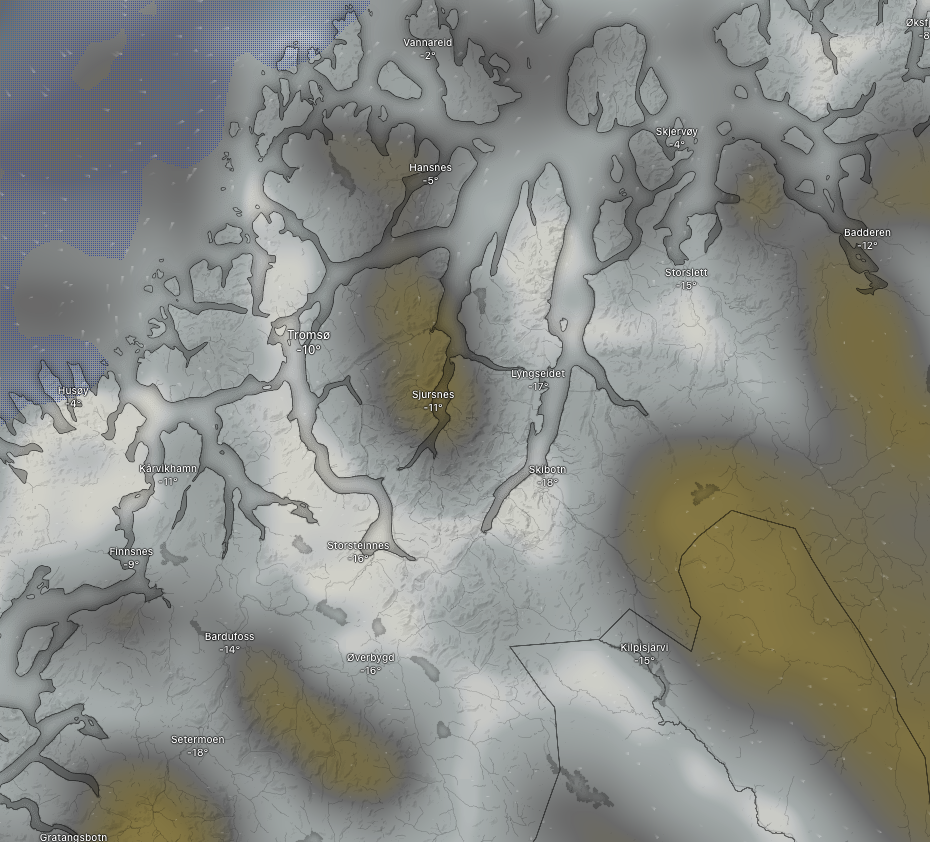
At Tromsø’s latitude, the aurora can be visible almost every clear night regardless of the official Kp index level. The biggest obstacle is clouds. Even an intense aurora won’t be seen if a low blanket of clouds covers the sky. So, your first step is to find where the sky is clear or at least partly transparent. Generally, you need to be able to see stars to see the northern lights.
Use a reliable weather forecast service to track cloud cover in real time. Popular options in Norway include Yr.no (the Norwegian Meteorological Institute’s service) and apps like Windy, which provide detailed cloud cover maps. These let you see if the clouds are hanging over Tromsø and if so, where the nearest gaps might be – for example, you might spot clearer conditions inland around Skibotn or over by Sommarøy on a given night.
Remember that the weather in northern Norway can change rapidly, and forecasts are often inaccurate. Check updates frequently and be prepared to adjust your route.
Use Aurora Forecast Apps
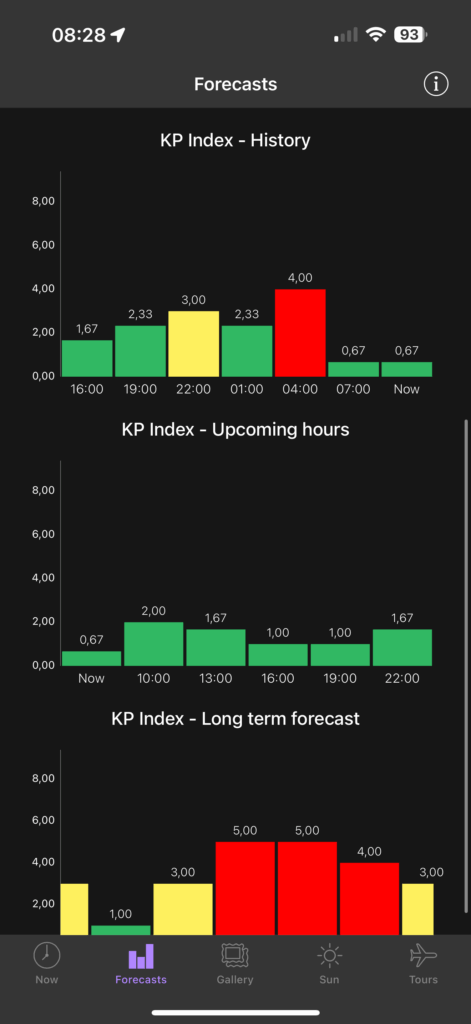
Along with clouds, you’ll want to know if the geomagnetic activity is favourable. Dedicated aurora forecast apps can alert you when the northern lights are likely to be strong. Two user-friendly examples are “Aurora Pro” and “My Aurora Forecast & Alerts” – these apps provide real-time updates on the probability of aurora visibility at your location and an expected Kp index (a measure of geomagnetic activity). They often include short-term forecasts based on satellite data so that you can see a surge in aurora activity should it happen. The “Norway Lights” app by VisitNorway is a simpler option that provides a straightforward “yes/no” forecast for your area and suggests nearby locales with better odds.
Interpret with a Grain of Salt
While these apps are helpful, don’t obsess over the Kp index so much. In high latitudes like Tromsø, even a Kp 1-2 aurora can be overhead and visible, as long as it’s dark and clear. Higher Kp (4, 5, 6+) means the aurora might be visible further south and could indicate a stronger display, but Tromsø doesn’t require a high Kp to get a good show.
What matters more is whether the aurora oval is above you, and whether the “Bz” component of the solar wind is pointing south (a negative Bz often intensifies local auroras)
Check the Webcams
I have the most success by checking webcams. After all, it’s a real-time show of what’s going on. I swear by webcams when going out on aurora hunts, but also when trying to figure out the best parking places. Yr.no has webcams for all areas around Tromsø; search for the location and go to the “Other conditions” section to see them. The app doesn’t update as frequently as the Yr website.
There are also some live cams on YouTube that you can use:
- Tromsø webcam: https://www.youtube.com/watch?v=3y7_fkAzzps
- Kilpisjarvi webcam: https://www.youtube.com/watch?v=ccTVAhJU5lg
Here’s a great website with different aurora webcams all over Finland, Sweden and Norway: https://aurorawebcams.com/
Practice Your Route
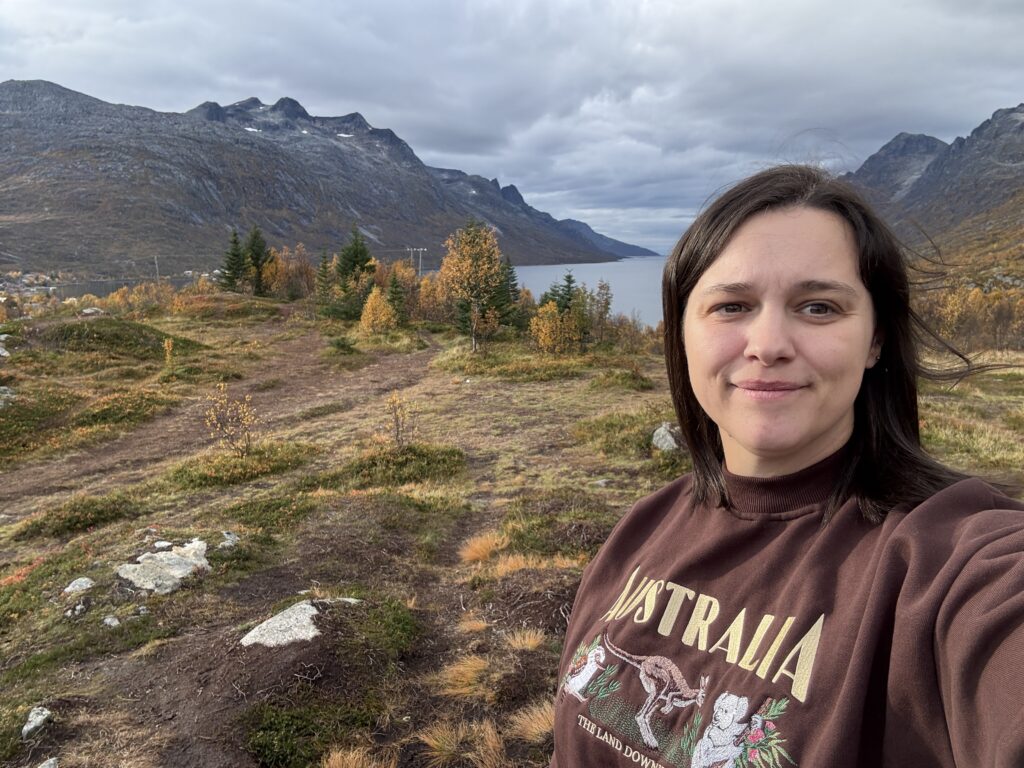
If you know for sure where you are going that night, why not take the car and do a drive out there during the lighter hours? This way, you’ll know exactly what to expect when you drive in the dark. It can also help you practice on snowy roads. I did that when I was planning to drive my brother out to Sommarøy, as I wanted to see exactly what the road looked like!
Northern Lights Companies Know All This!
Friendly reminder: if all this feels overwhelming, the northern lights companies know these places and facts and will constantly check conditions, forecasts, and sightings. Many companies even have contacts living in these locations, and they reach out to them to ask about current conditions. Another reason why booking with a company is the way to go!
Winter Driving Safety in the Tromsø Region
Driving in Arctic winter conditions is no joke – if you’re not experienced with snow and ice, Tromsø’s roads can be challenging. When getting a driver’s licence in Norway, we have to take a lesson on driving on ice. Safety must be your top priority, and many local authorities and tour operators advise against self-driving for travellers with no winter-driving experience, recommending guided tours instead. That said, if you’re well-prepared and cautious (without being in the way of locals), driving can be done safely. Here are some tips for winter driving and for staying safe on the road.
Assess Your Experience Honestly
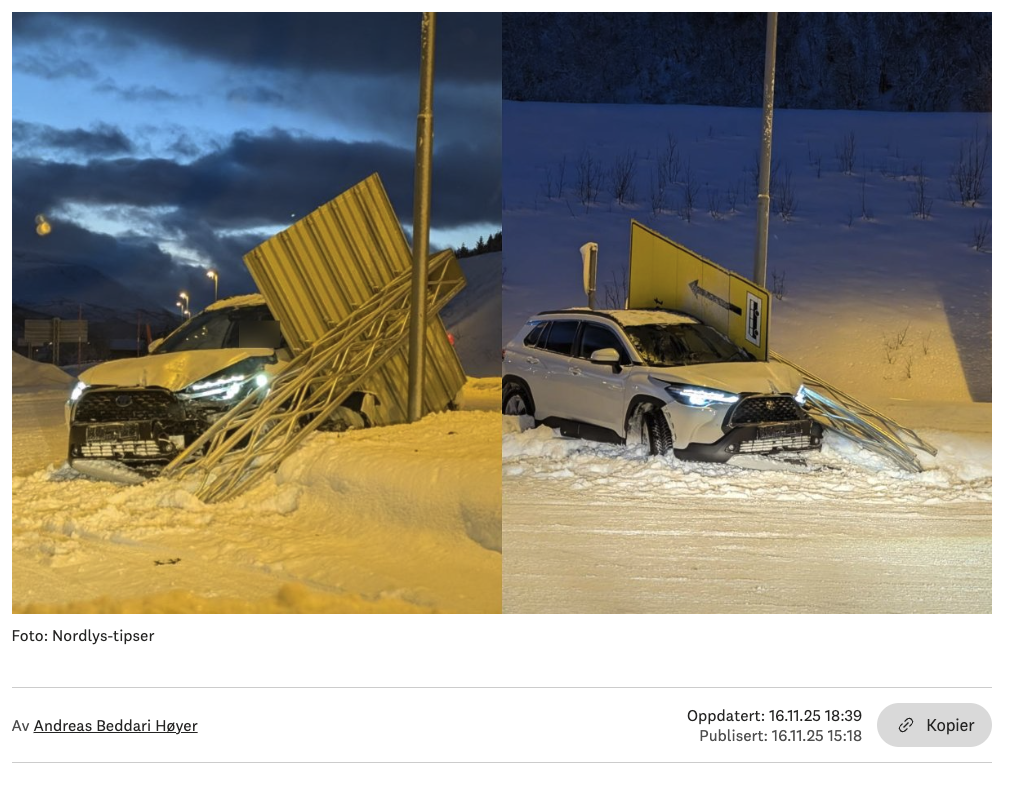
If you have never driven on snow or ice, or in blizzard conditions, in the dark, strongly consider booking a northern lights tour with an expert driver rather than renting a car. The combination of icy roads, darkness, and possibly unfamiliar rental car controls can be dangerous for newbies. Every winter, inexperienced drivers sliding off the road is a common issue in Northern Norway. Remember, even a small mistake on an icy highway can have significant consequences – it’s not worth risking your life or someone else’s to save a bit of money. Tours may cost more upfront, but they provide peace of mind.
Road Conditions & Hazards
Tromsø’s roads are well maintained, but they can still be covered in packed snow or black ice. Temperatures routinely drop well below freezing, and coastal weather can quickly turn to white-out blizzards. High winds are another hazard – in severe conditions, guests can literally push a car across slippery roads or cause drifting snow that obscures the pavement. Always check the road conditions before heading out. The website for Statens Vegvesen provides real-time updates and webcams showing road conditions.
Visit their website here: https://www.vegvesen.no/trafikk/hvaskjer
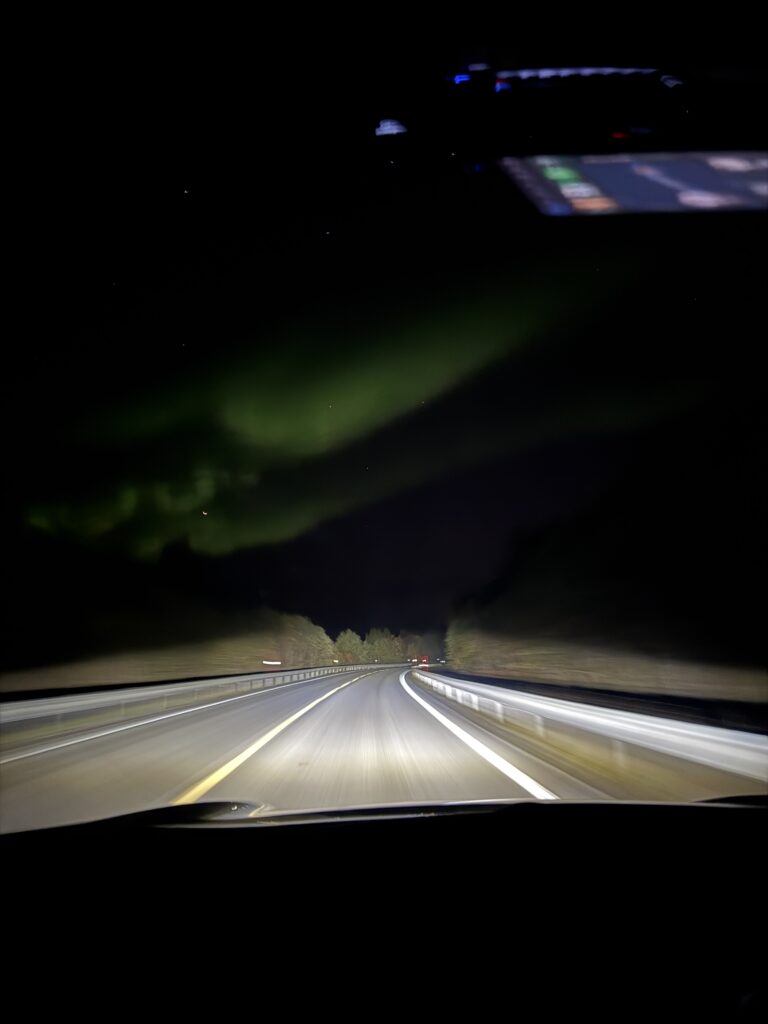
Additionally, wildlife is a genuine concern: moose (elk) and reindeer frequently wander onto roads, especially at night. Hitting a 300kg moose is extremely dangerous. So drive slow enough that you can stop if an animal appears – use high beams on quiet roads to scan far ahead (remember to dip your lights for oncoming cars). In remote areas, carry a mobile phone and note that while coverage is generally good along main routes, there may be dead spots – let someone know your planned route and have a map or instructions offline.
Car Equipment
Any rental car in Tromsø will come with proper winter tyres (often studded tyres for an extra grip) – this is a legal requirement. Still, please double-check that your hire car has winter tyres and that they’re in good condition. Four-wheel drive is helpful but not essential if you drive carefully; front-wheel drive with studs is usually sufficient for ploughed roads. Before setting off, clear all snow and ice from the car to maximise visibility – it’s illegal in Norway to drive with poor visibility or snow flying off your roof. Always keep your headlights on (Norwegian law mandates dipped headlights at all times, day or night). Make sure you have at least half a tank of fuel when heading out of town, since petrol stations can be far apart in rural areas and some may close early.
Norway’s tourism board released this video in 2025 about driving in winter. Highly recommend watching!
Driving Technique
Slow and steady is the rule. Keep plenty of distance from any vehicle in front – on icy roads, you need a much longer braking distance. Brake gently to avoid skids, and if your car has ABS, you’ll feel it pulsate when it activates (that’s normal – don’t pump the brakes, press firmly). Avoid sudden steering moves. On hills or curves, moderate your speed early. If you feel the car slipping, ease off the accelerator and steer gently into the skid until you regain traction – but hopefully you won’t skid if you’re driving conservatively. Stick to main roads as much as possible; they are ploughed and gritted more frequently. Venturing into tiny backroads or mountain passes after heavy snowfall is risky, and some may be closed in winter. Pay attention to road closure signs or barriers.
Daylight
Be prepared for very few hours where it’s somewhat light; much of your driving will be in the darkness or twilight, so plan your timing so that you’re not driving exhausted late at night after standing in the cold for hours.
Gear to Carry
It’s vital to pack emergency and comfort supplies in your car, in case you get stuck or face a long idle period in the cold. Before leaving, equip your vehicle with the following essentials:
- Warm clothing and blankets: Even if you plan to sit in a heated car most of the time, bring extra jackets, hats, gloves, and perhaps a sleeping bag or blanket. If your car breaks down or you need to wait outside, you’ll be glad for the layers.
- Headtorch/flashlight: Useful for walking around in the dark, checking the car, or setting up a tripod. Always have spare batteries. In the polar night, a torch is your best friend
- Shovel and ice scraper: A small foldable shovel can help dig your car out of snow if needed (or clear a parking spot), and an ice scraper/brush is a must for clearing the windshield.
- Safety Equipment: Your rental should include basic safety gear, such as a warning triangle and reflective safety vests – know where they are. It’s smart to carry a first aid kit and some traction aids (sand or traction mats) as well.
- Food and hot drinks: Pack a thermos of a warm beverage and some snacks or energy bars. Aurora chasing can mean hours out in the cold; staying nourished keeps you alert. Plus, if you do get stranded or delayed, you won’t go hungry.
- Chargers and phone: Keep your phone charged and have a car charger. In the cold, phone batteries die faster, so a power bank is useful too. Remember, you can call 112 for emergencies in Norway (works on any network).
General Parking Advice
Norway has strict rules about stopping on main roads – never stop in a traffic lane, at a blind corner, or at a meeting place (marked with an ‘M’ and used on narrow roads for cars to overtake each other). Always use proper pull-outs or parking lots so you’re safely off the roadway.
Make sure your car is visible to others if you’re parked in a dark area; for example, some drivers put on hazard lights or a rear fog light if they are at a particularly hidden pull-off.
Once safely parked, it’s a good idea to turn off your headlights and interior lights while you watch the sky – this preserves your night vision and prevents light pollution for others. Finally, obey any “No Parking” or “No Stopping” signs (blue signs with a red cross or slash). The general rule is to avoid impeding traffic or trespassing – if you stick to obvious parking places and road shoulders well out of the driving lane, you’ll be fine.
If all this sounds daunting, remember that thousands of visitors safely drive around Tromsø each winter, but they do so with respect for the conditions. Never be too proud to turn back or call it a night if the weather turns bad. And if you feel unsure, opt for a guided tour on your first night to learn the ropes, then maybe driving yourself on subsequent nights so you know what to expect. As one local guide put it, “We see far too many accidents each winter as it is – don’t become one of them”
Local Etiquette & Regulations for Aurora Chasers
Respect for the local community and laws is fundamental when you’re chasing the Northern Lights around Tromsø. The region has seen a significant influx of aurora tourists, and authorities have set out guidelines to ensure everyone – visitors and residents alike – stays safe and happy. Here are some etiquette and regulation tips to keep in mind:
- Never block the road or drive unpredictably. If you feel the urge to stop for a sighting, pull over only where it is safe and legal, and use turnouts rather than stopping in the middle of a lane. Driving extremely slowly can frustrate locals commuting; if a car is behind you and wants to go faster, find a safe spot to let them pass. The key is to share the road courteously – local drivers are used to winter conditions and may travel at a confident pace, whereas you might be going slower. That’s okay, as long as you allow them to overtake when possible.
- Respect private property and residences. Northern lights or not, you’re often in someone’s backyard (figuratively). Do not trespass on private land – that means don’t wander into people’s gardens, yards, or driveways without permission. When parking in rural areas, never block someone’s driveway or park on a private farm road. In places like Sommarøy or the villages around Lyngen, locals have reported tourists walking onto their lawns for a better view – this is a big no-no. Essentially, if it looks like a home or cultivated land, keep off.
- Use rest stops and lay-bys considerately: Rest areas (lay-bys) are communal facilities. If you pull into a rest stop at night, be aware of others: truck drivers often use them to sleep, as required by law. Keep noise to a minimum and dim your lights so you don’t disturb someone’s rest. It might be tempting to make a bonfire to warm up, but this can be dangerous near vehicles and is typically not allowed. If you absolutely must have a small fire or cookout, do it in a designated fireplace or grill area (some picnic stops have them) – and never leave any trace (no ashes, and definitely no scorch marks on the ground)
- Leave no litter, leave no trace. This should go without saying: whatever you bring with you, take it back. The Arctic environment is fragile. Don’t drop rubbish – no coffee cups, cigarette butts, film wrappers, nothing. If you stop to enjoy the aurora, the only thing you should leave behind are your footprints in the snow. Also, avoid making excessive noise at night, mainly near quiet villages – sound carries far in the cold air, and people could be sleeping.
- Be mindful of safety when outside your car. If you step out to watch or photograph the aurora, remember you might be on or near a dark road. Wear reflective clothing or at least a reflective armband, and use your torch so that any oncoming cars can see you in the darkness. It’s easy to get lost in gazing upward, so position yourself in a safe spot first. Additionally, keep a 10-metre distance from any roadway if you do decide to light a sparkler or use a stove (and as mentioned, it’s better not to light any open fire at all near roads)
Following these guidelines isn’t just about politeness – it’s often a matter of law and safety. Norwegian traffic laws prohibit stopping where you create a hazard, and trespassing laws protect private land. Moreover, showing respect ensures locals remain welcoming to visitors who come to enjoy the aurora. Northern Norway’s communities are generally friendly and understanding – they know their home is special – but patience can wear thin if tourists routinely ignore basic rules. By driving and behaving considerately, you contribute to sustainable tourism and make it pleasant for everyone.
Driving Guide for Northern Lights Summary
In conclusion, a self-drive Northern Lights trip from Tromsø can be the adventure of a lifetime. By heading to recommended dark-sky regions like Sommarøy’s shores, the Lyngen Alps, or even across to Finland when needed, you maximise your chances of a clear view of the aurora. Just remember that success often means being flexible and going where the sky is clear – use those apps and weather forecasts to guide you on the night. And while chasing nature’s most stunning light show, make safety and respect your constant companions: drive carefully, be prepared for winter conditions, and show courtesy to the locals and the landscape you’re visiting. Do all that, and you’ll not only have a better chance at seeing the Northern Lights, but you’ll enjoy the journey knowing you’re doing it the right way. Happy aurora hunting, and velkommen til Tromsø!
Be sure to read my detailed travel guide for Tromsø, including practical information and things to do.