The Ultimate 7-Day Fjord Road-trip in Norway
Here’s my itinerary for the perfect seven-day Norwegian fjord road-trip.

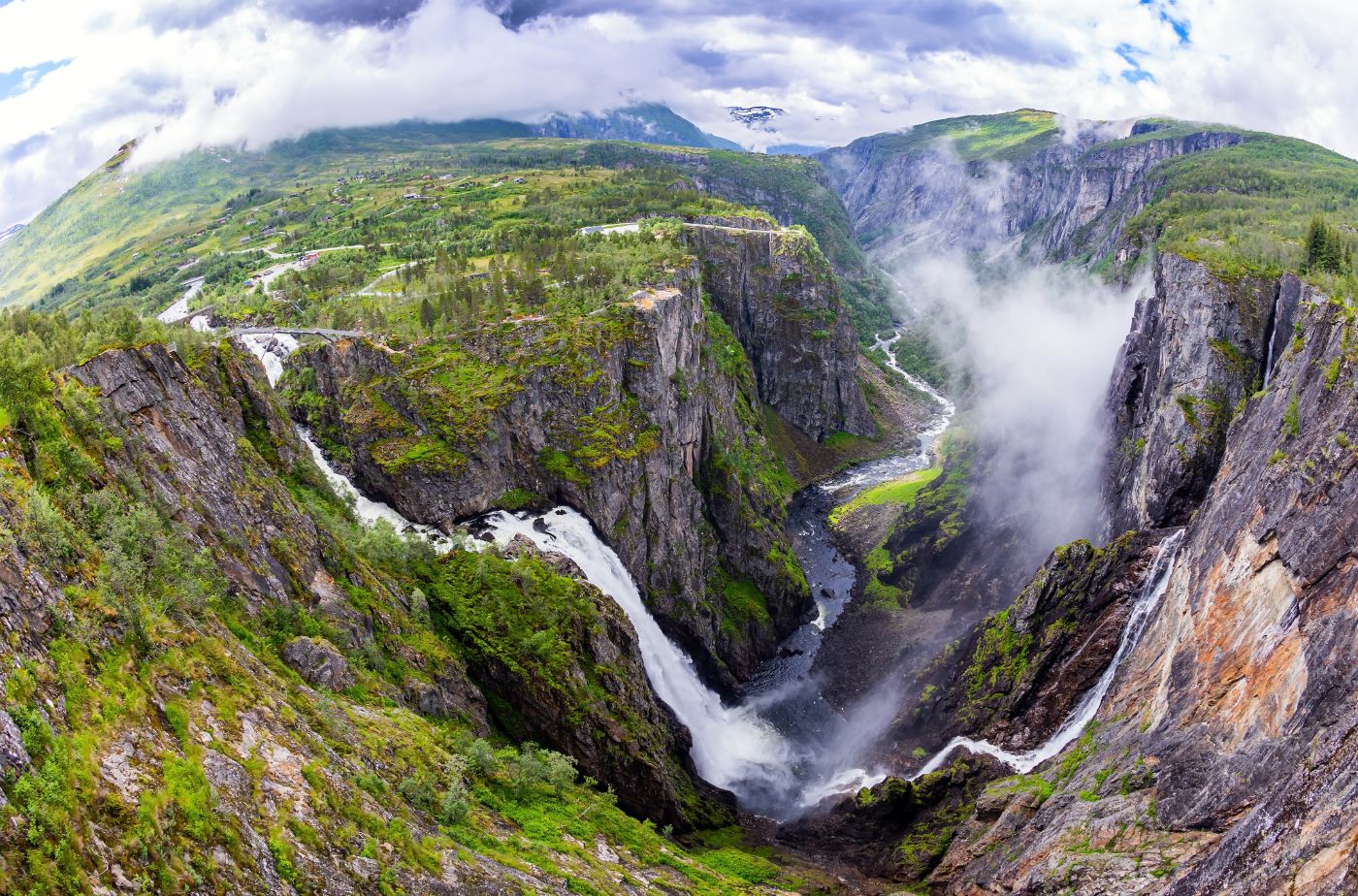
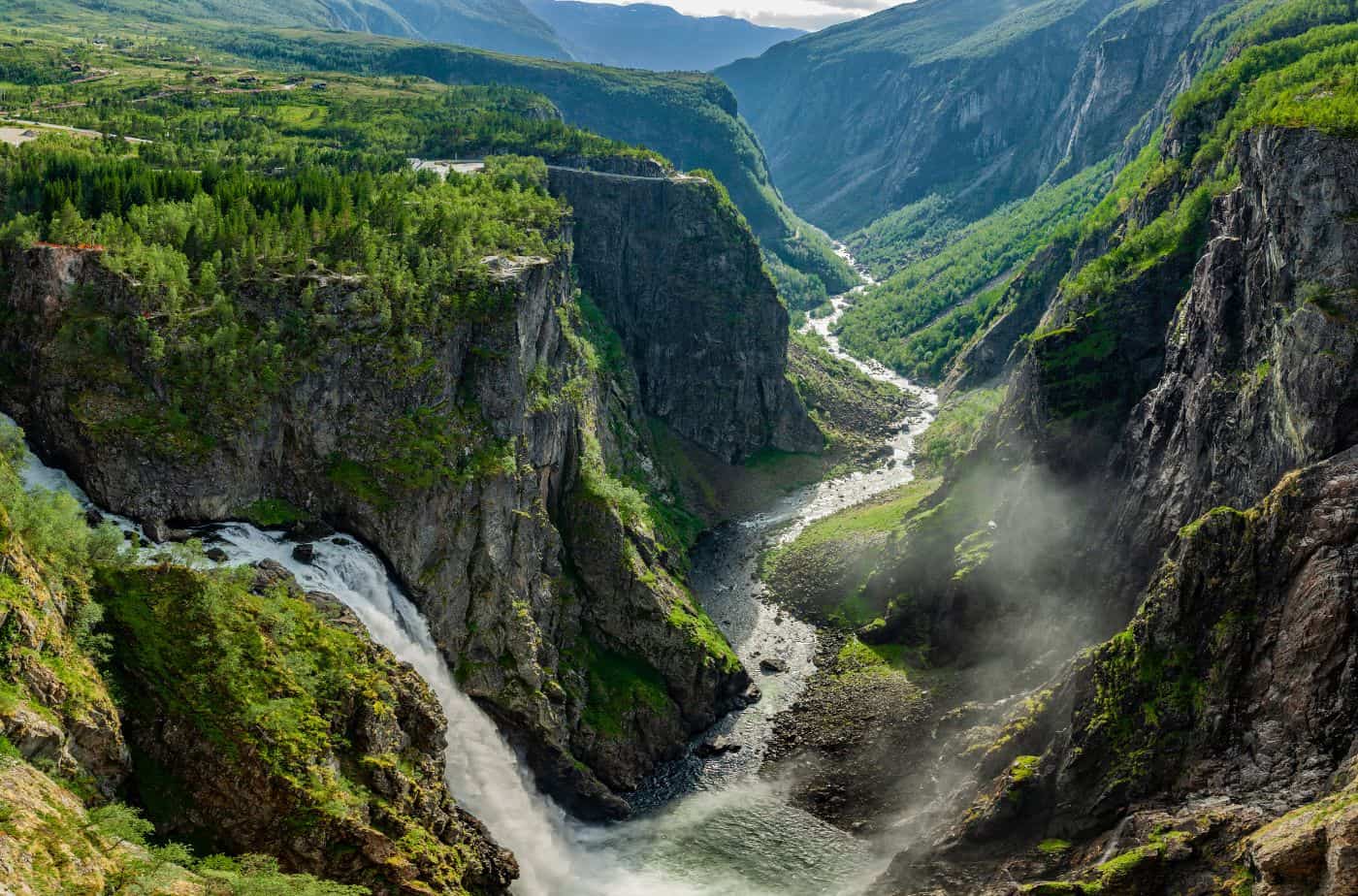
Eidfjord is a tiny village at the end of a quiet fjord arm in Western Norway, ringed by steep mountains and glaciers. Visitors flock here year-round for nature and culture. Eidfjord’s most iconic sight is Vøringsfossen, a 182-metre waterfall spilling off the Hardangervidda plateau. Nearby is the Hardangerfjord sidearm itself, ideal for boat rides, kayaking or cycling; and the vast Hardangervidda National Park (Europe’s largest mountain plateau) looms to the east.
Latitude: 60.2 degrees north
Population: 937
Eidfjord Municipality
Here are some things that you must do and try in Eidfjord
Vøringsfossen is located at the top of the windy road leading from Eidfjord. The best view is from near Fossli Hotel.
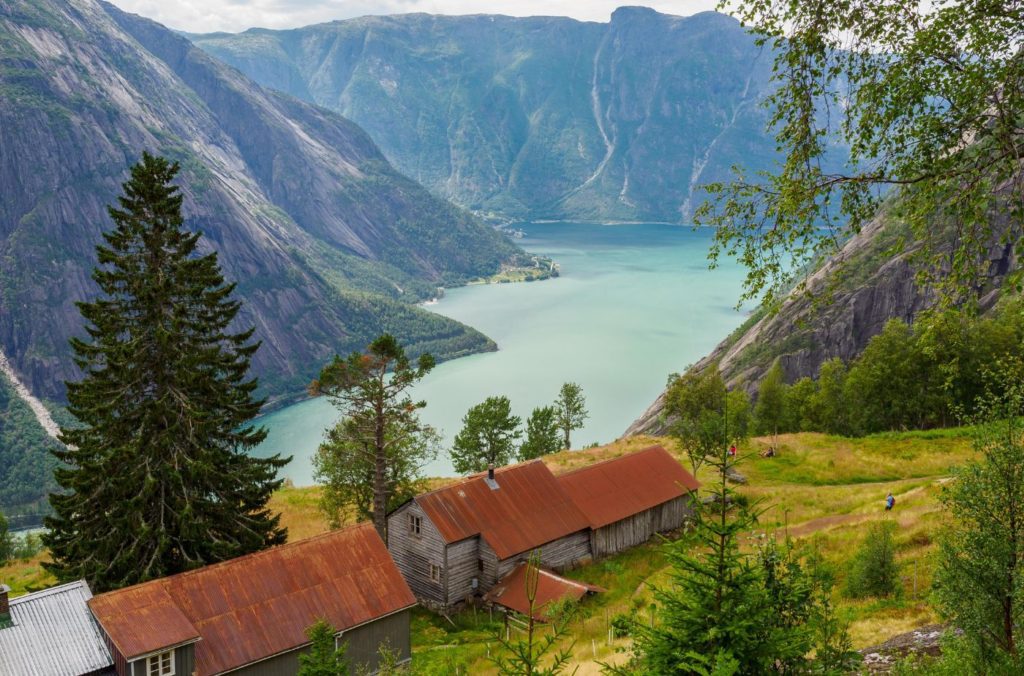
Located 600m above Eidfjord are two farms that you can visit. It is possible to drive up to the farms, or you can opt for a hike instead. The farms are open throughout the summer.
Historically, people did actually live here. The farm was only accessible by a very difficult hike, until 1975 when the road was built.
Here’s an overview of some of the best things to see and do in Eidfjord
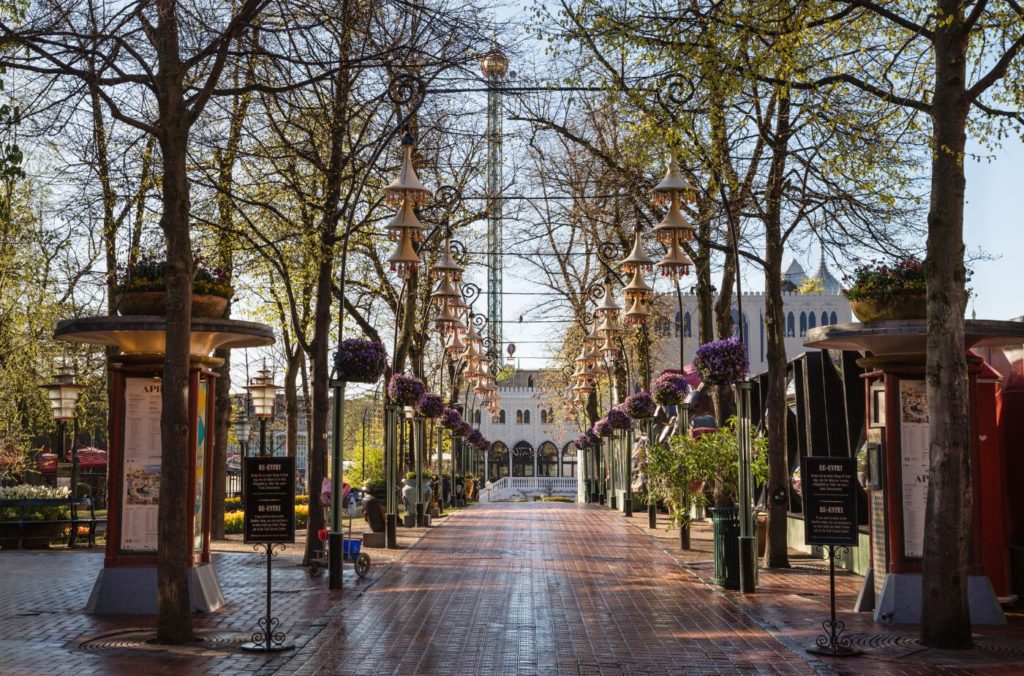
Established in 1843, Tivoli Gardens is a must-see in Copenhagen. It is the second-oldest seasonal amusement park in the world and inspired the likes of Walt Disney.
Located just out of Eidfjord, this is a historic stone church.
Looking to go for a hike or take part in a unique experience? Here are our recommendations!
Eidfjord’s traditions – especially fruit growing – still flourish, so visitors can also tour orchards and cider-makers. For example, the local Tråagarden farm sells “Draopar”, Eidfjord’s first apple cider, and hosts family farm-tours in spring–autumn. All year long the village’s quiet charms shine: in spring and early summer the valley’s fruit blossoms burst into colour, while autumn brings harvest festivals and winter offers snowshoeing or ski touring on Hardangervidda.
There are 350 Viking burial mounds located a short hike away from Eidsfjord town centre. The tourist office can provide you with maps.
A popular hike to get there is the Hæreid Footpath (5.5 km loop, 1–1.5 hrs). Starting in the town centre, it leads past a sandy beach on Lake Eidfjordvatnet and up to the Hæreid terrace, where Iron- and Viking-Age burial mounds await. The route ends at the Hodna hilltop viewpoint overlooking the fjord and village.
Longer hikes begin from Eidfjord or its outskirts. For example, the track from Halne (at the south edge of the plateau) via Krækkja lodge to Fagerheim (12 km, 3 hrs) traverses alpine meadows. This high-route (into Hardangervidda NP) is generally only snow-free in midsummer (July–August).
The waterfall is located just outside of Eidfjord in the Simadalen valley. The hike to the waterfall is approximately 3km and will take about 90 minutes round trip. To get there, drive as far as Tveit.
Join a guided tour to Vøringsfossen that also includes a short walk by a dam and visit to the Nature Centre.
I recommend the tour “Vøringfossen Waterfall Nature Tour with Guide”
Board a RIB (Zodiac) boat for a guided tour around the beautiful Hardangerfjord region.
I recommend the tour “1-Hour Fjord RIB Tour”
Follow our road-trip guides for scenic trips around Eidfjord
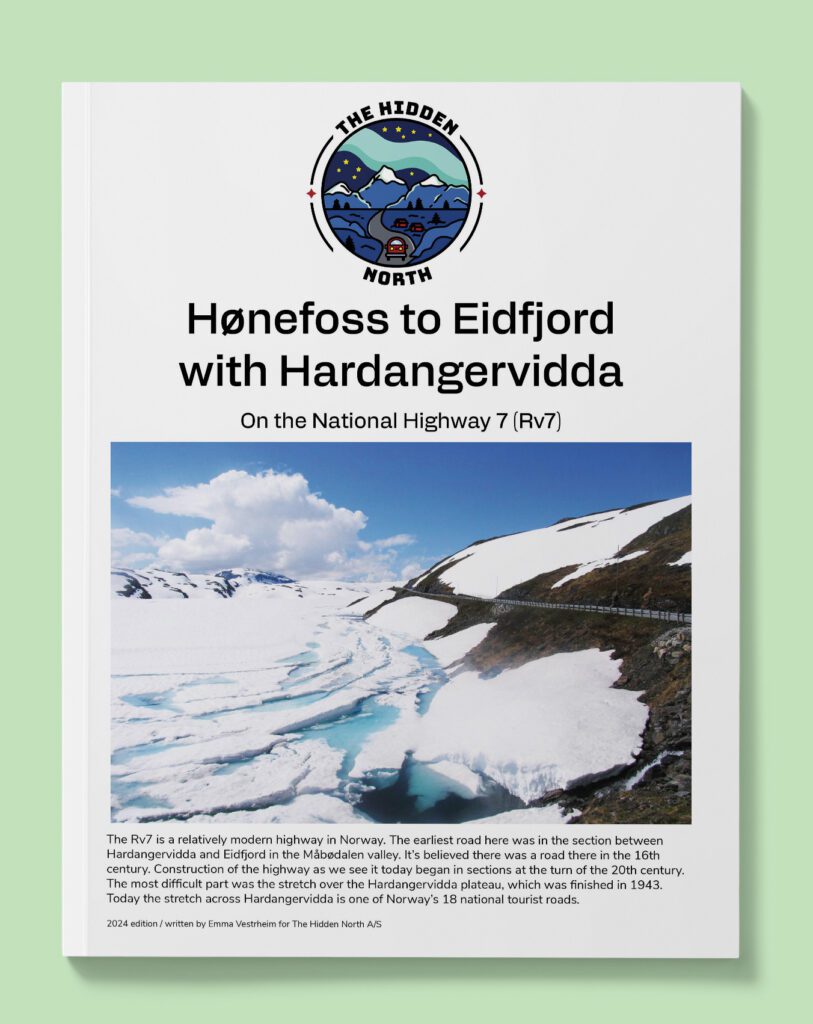
The Rv7 is a relatively modern highway in Norway. The earliest road here was in the section between Hardangervidda and Eidfjord in the Måbødalen valley. It’s believed there was a road there in the 16th century. Construction of the highway as we see it today began in sections at the turn of the 20th century. The most difficult part was the stretch over the Hardangervidda plateau, which was finished in 1943. Today the stretch across Hardangervidda is one of Norway’s 18 national tourist roads.
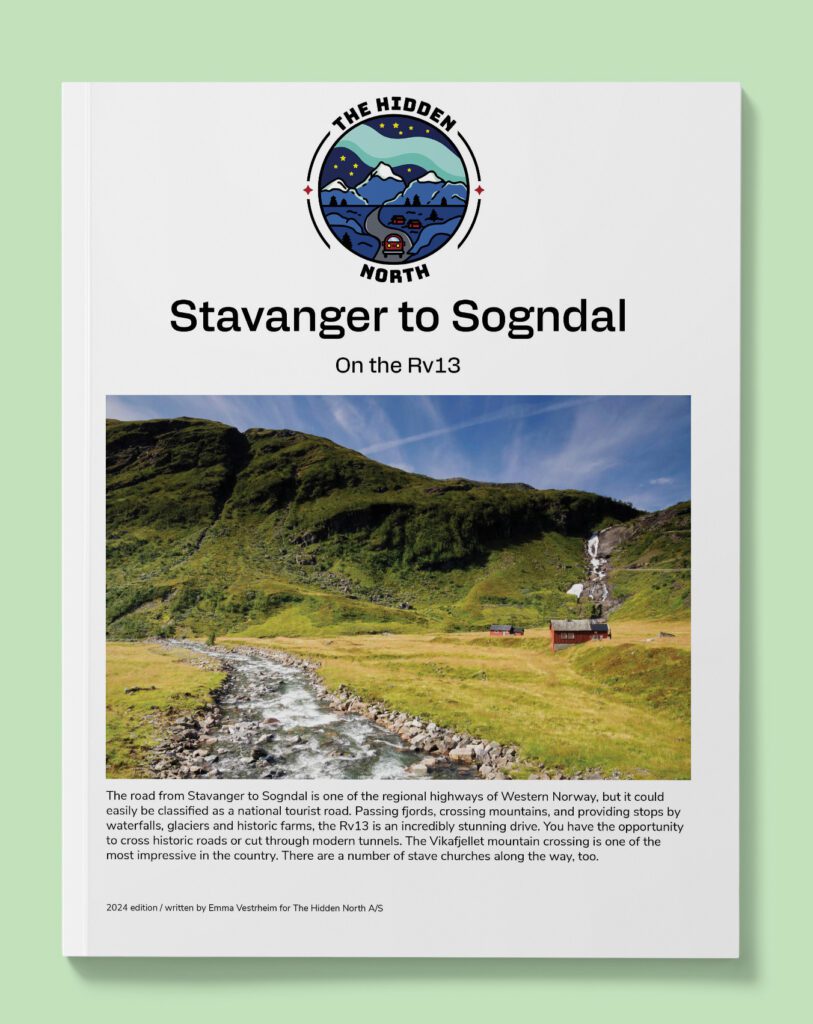
The road from Stavanger to Sogndal is one of the regional highways of Western Norway, but it could easily be classified as a national tourist road. Passing fjords, crossing mountains, and providing stops by waterfalls, glaciers and historic farms, the Rv13 is an incredibly stunning drive. You have the opportunity to cross historic roads or cut through modern tunnels. The Vikafjellet mountain crossing is one of the most impressive in the country. There are a number of stave churches along the way, too
We currently do not have any self-guided walks available in Eidfjord
Watch our YouTube videos featuring Eidfjord
Follow the journey from Voss to Eidfjord, including the Hardanger Bridge.
The Hardangervidda Tourist Road is one of Norway’s 18 national roads and begins just north of Eidfjord.
Eidfjord’s history stretches back millennia, but its medieval and modern heritage shape the town today. Archaeological finds show people here 4,000 years ago, but the village’s written history begins with the 1309 Old Church at Lægreid, built (legend says) by “Rich-Ragna” to atone for her sins. Over centuries, life here revolved around farming, fishing and seasonal fruit-growing in the steep valley. By the 19th century Eidfjord was already known as a scenic destination: in 1891 the classic Fossli Hotel opened above Vøringsfossen. Composer Edvard Grieg stayed there, and its restaurant became a gathering spot.
During the 20th century Eidfjord modernised. The municipality was created in 1977 (split off from Ullensvang). Major hydroelectric projects – notably the Sima and Sysen developments in the 1970s–80s – harnessed the fjord’s waterfalls and lakes. The power plants brought roads and tunnels; it took 30 years to build the fjord road up to Kjeåsen (opened by 1984).
Those projects also provided jobs and economic stability. In parallel, tourism grew as Eidfjord promoted its dramatic scenery. Today the Galleri N. Bergslien (built near the Vøringsfoss Hotel) showcases 19th-century paintings by local artist Nils Bergslien (1853–1930), a Romantic painter inspired by the fjord landscape. The village’s white wooden houses, folk crafts (like rosemaling decoration) and annual festivals (e.g. Hardanger food fairs) keep traditional culture alive. In short, Eidfjord’s past – from Viking-age farms to 19th-century hotel guests – blends with its modern role as a nature destination.
Today Eidfjord remains a small but vibrant community shaped by tourism and energy. The municipality (1,500 km² of mountains, with only ~950 inhabitants) is concentrated in the village. The biggest employer is the local government, with key industries being tourism services, small hydro-power and the remaining farms. Many locals work in hotels, guiding, or at the power plants. Summers are busy: the cruise ship terminal (opened in 2015) now handles large vessels, bringing thousands of visitors for day tours. Seasonal farmers still tend fruit orchards (apple, cherry) and raspberries, sold as jam and brandy at village shops.
Life in Eidfjord is peaceful. The town centre has the essentials (supermarket, petrol station, cafés and craft shops) and a bustling tourist office. Community events mark the year: a blossom festival (Vårblot) in spring celebrates apple trees in bloom, while autumn may feature harvest markets. Outdoor recreation is popular: residents fish and boat on the fjord, hike or mountain-bike in summer, and ski or snowshoe in winter. Cultural life is lively for a small town: there’s a cinema, an indoor gym/hall for events, and a calendar of concerts and exhibitions (notably in the Bergslien Gallery and Folk Museum).
Fly: No airport.
Drive: Eidfjord is reachable by road year-round. By car it lies on Route 7 (“National Tourist Route Hardangervidda”) about 153 km east of Bergen (2.5–3 hours). From Oslo the drive is longer (5–6 hours via RV7), but extremely scenic (lakes, waterfalls). A key link is the Hardanger Bridge (part of Rv13) spanning the fjord, which since 2013 has cut travel time from the west. However, the mountain stretch of Rv7 over Hardangervidda (past Eidfjord towards Geilo) often closes in winter (usually Nov–Apr) due to snow. In that season traffic detours north via Hemsedal, adding hours of driving.
Train: There is no train access. Public transport is limited but functional. There is no direct train to Eidfjord. Most visitors take the Bergen–Voss train, then a bus or taxi for the remaining 45 minutes to Eidfjord.
Ferry: Eidfjord has local ferries connecting the village to other parts of the Hardangerfjord.
Once in Eidfjord, the village is compact and walkable. Taxis and rental cars (and even bicycles) are available in town, but it’s wise to book ahead in peak season. For fjord tours and hiking transfers, local shuttles or guided tour buses can be arranged. Finally, Eidfjord’s cruise port (new deep-water quay) now accommodates large ships, so in summer a short walk from the pier brings you into the village centre
For souvenirs and local crafts, Eidfjord has several boutiques. Wollert’n is a gift shop in the heart of Eidfjord offering handicrafts, woollens, homewares and decorations. Next door, Du & Jeg is a cosy lifestyle shop selling outdoor clothing, art prints by local artists, jewellery and quirky books. Both are open year-round and make fun browsing stops. Rosestova (also called Rosestova Landhandleri) specialises in traditional Rosemaling art and local foods – you’ll find hand-painted wooden bowls, knitted woollens, honey and jam from nearby farms. This quaint store is often open around cruise-ship days and during the main season.
A must-visit is Tråagarden Farm Shop (at Tråagarden just outside town), where one can taste and buy the farm’s products. They sell homemade jams, cured meats and their famous Draopar apple cider (Eidfjord’s first cider) Other local products – such as Hardanger cheese, salted lamb (“pinnekjøtt”) and berries – can be found at markets or gifted at the tourist office. In spring there’s often a small farmers’ market and local producers stand, where you can pick up truly local souvenirs of the fjord. Overall, Eidfjord’s shops reflect its culture: practical groceries side-by-side with artisanal crafts and orchard goods.
Cafes & Bakeries
Vik Bakery in Eidfjord has some of the best cardamom buns in western Norway! Fjell & Fjord Café (in the town centre) is a popular casual spot – part gallery-shop, part coffeehouse – serving sandwiches, soups, homemade cakes and waffles. For sweet treats, Dolce Vidda offers artisanal gelato and sorbet, made in Italian style from local berries and fruits.
Casual Eateries
For mid-range meals, the Hardangerviddahallen Restaurant & Café (at the Hardanger Nature Centre) serves hearty Norwegian dishes (reindeer steaks, trout, porridge) and has a warm stone interior.
High End & Unique Eats
High-end dining includes Restaurant Onen at the fjord-front Vøringfoss Hotel (recently renovated) – it offers à la carte Norwegian cuisine and buffet in a modern setting, with panoramic windows and outdoor seating in summer. The historic Fossli Hotel (cliffside above the falls) has a classic wood-paneled dining room; in summer its restaurant specialises in local fish and shellfish, and visitors often note that Grieg himself dined here. In the centre, the small Eidfjord Hotell runs a cosy restaurant in summer (menus of lamb, salmon, local produce). For a quick bite, the petrol station shop sells sandwiches and local cured meats, while kiosks offer ice-cream. Across the board, ingredients are locally sourced where possible – Hardanger cheese, berries, smoked trout – giving the cuisine a distinct regional flavour.
All my hotel recommendations are based on research and experience. I don’t recommend somewhere unless I think it is wonderful! The Hidden North focuses on accommodation that provides good quality for price or offer local or unique experiences.
Camping
Sæbø Camping (Øvre Eidfjord) is a large, family-run campsite on 45 acres by the lake and river. It has tent/RV pitches and a range of cabins (basic to luxury) and full facilities, making it a comfortable base for Hardangervidda hikes.
Click here to view rates & book
Another small park, Bruheim Camping, sits riverside with only a handful of cabins and pitches. Many also rent private cabins (hytter) scattered around. Generally, campsites and many small cabins open April–October; a few offer winter stays on request. Most hotels and guesthouses close for the deepest winter, though some will open by prior arrangement for snow tourists.
Lodges & B&Bs
Eidfjord Gjestgiveri is a small guesthouse in Øvre Eidfjord.
Click here to view rates & book
Vik Pensjonat & Hytter is a charming 1928 villa with 8 guest rooms and 4 self-catering cottages by the river; it has a cosy café and serves homemade meals.
Click here to view rates & book
Bergslien Turistheim is a simple guesthouse (19 rooms) near the centre; about half the rooms have private baths, and guests share a kitchen. Liseth Pensjonat is a privately run B&B in an old mansion with a homely atmosphere (8 rooms).
Chains & Mid-Range
Eidfjord Hotel is a modern hotel in the town centre of Eidfjord.
High End & Unique Properties
Fossli Hotel is a historic hotel located by the Voringsfossen waterfall. This is where Edvard Grieg stayed when he was travelling through the region!

Here’s my itinerary for the perfect seven-day Norwegian fjord road-trip.
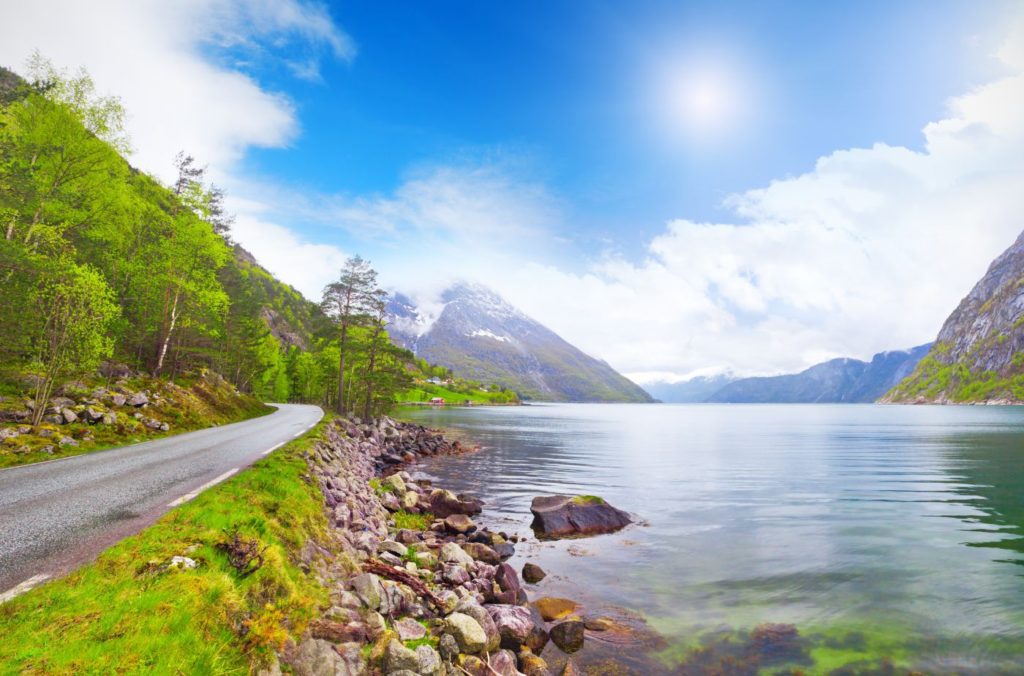
Hidden Secrets at Historic Kinsarvik Church When driving along Highway 13 between Eidfjord and Odda, you’ll pass through the village of Kinsarvik. You wouldn’t really

A practical guide to visiting Vøringsfossen, including the history and what you can do in the area.
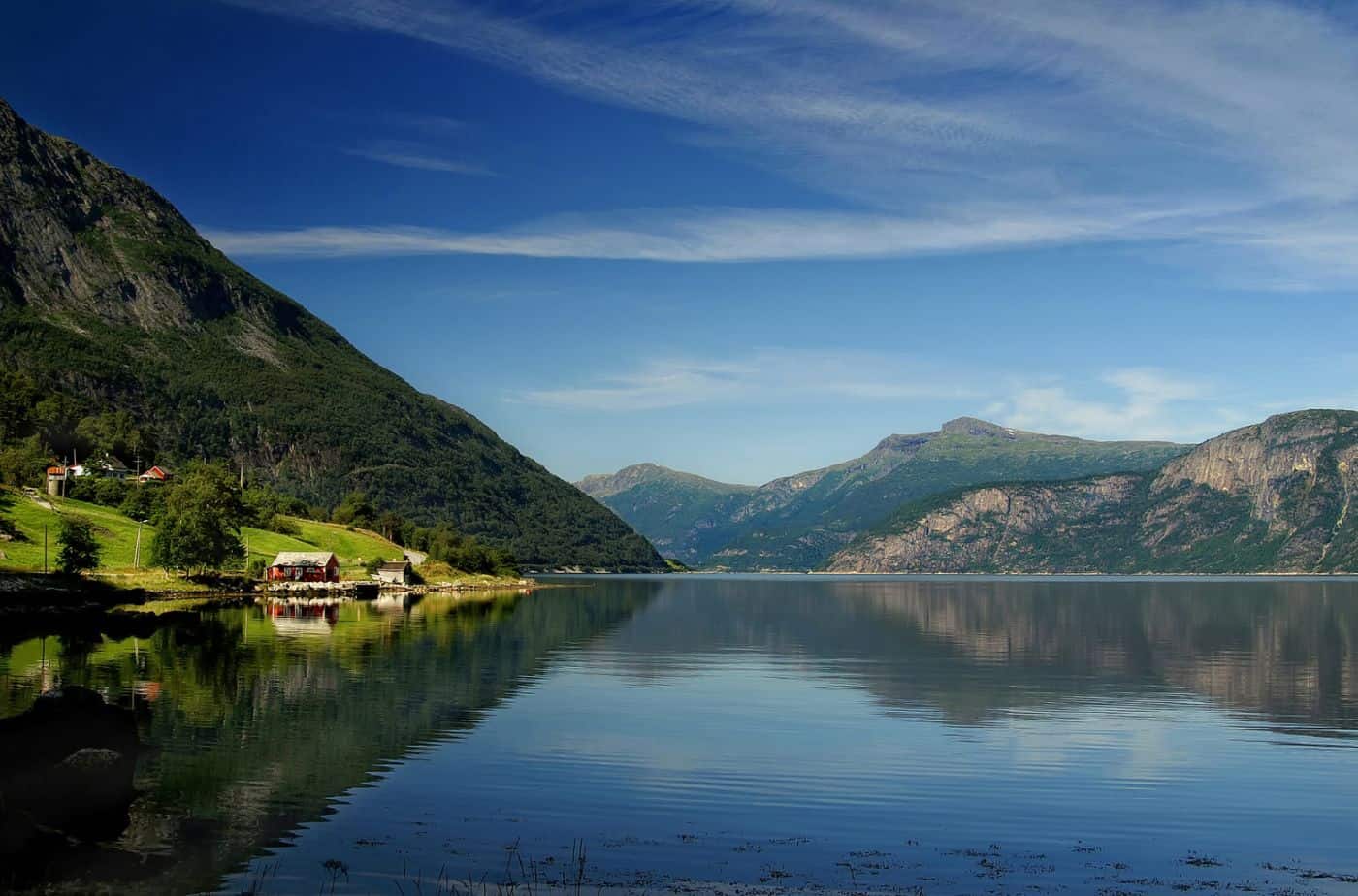
Spending some time in the fjords? Take this scenic drive between Voss and Eidfjord in Hardanger.
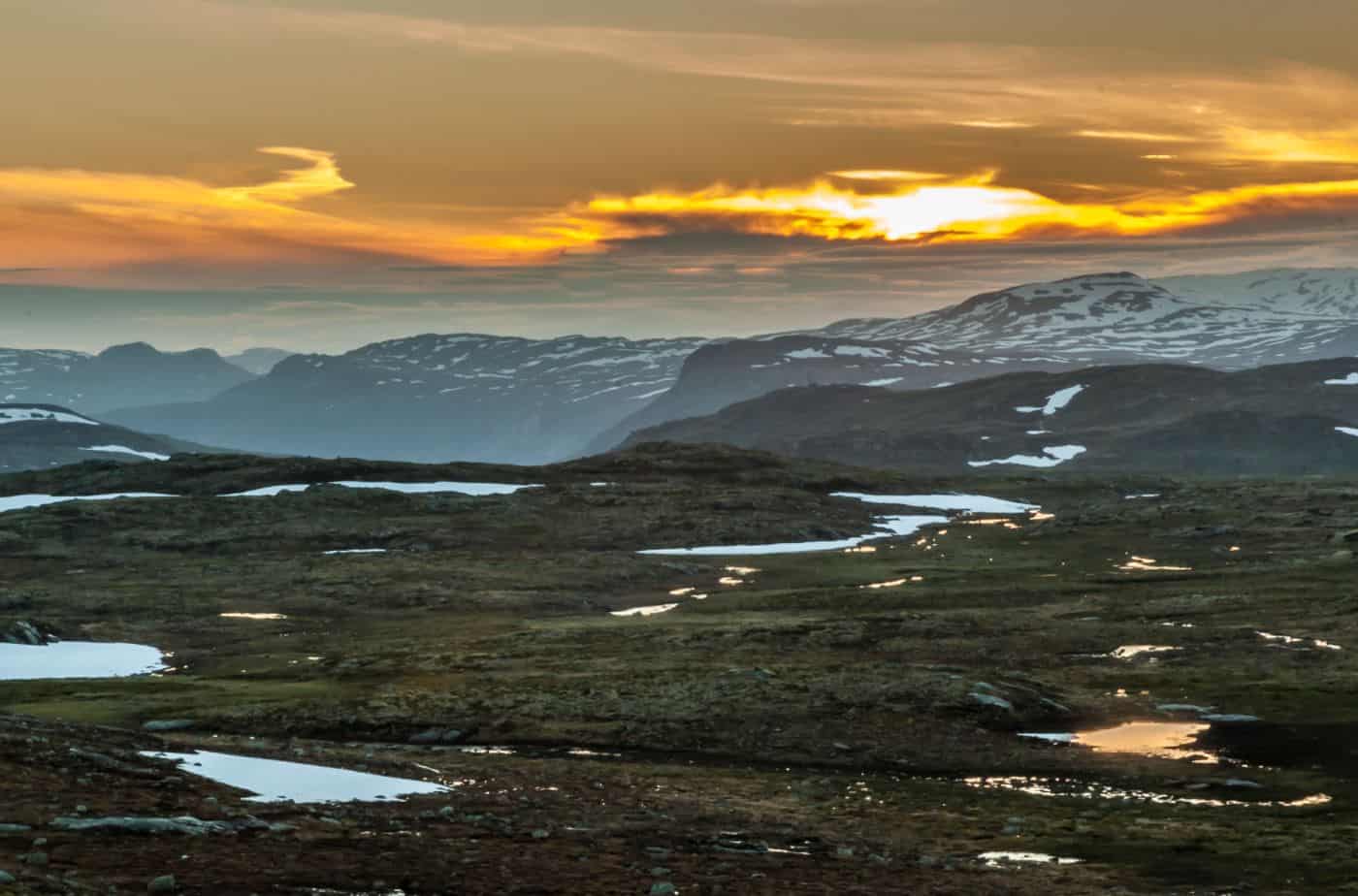
Cross the Hardangervidda Plateau on this scenic mountain pass turned tourist road.