
Visiting the Sibelius Monument in Helsinki: Finland’s Most Famous Modern Sculpture
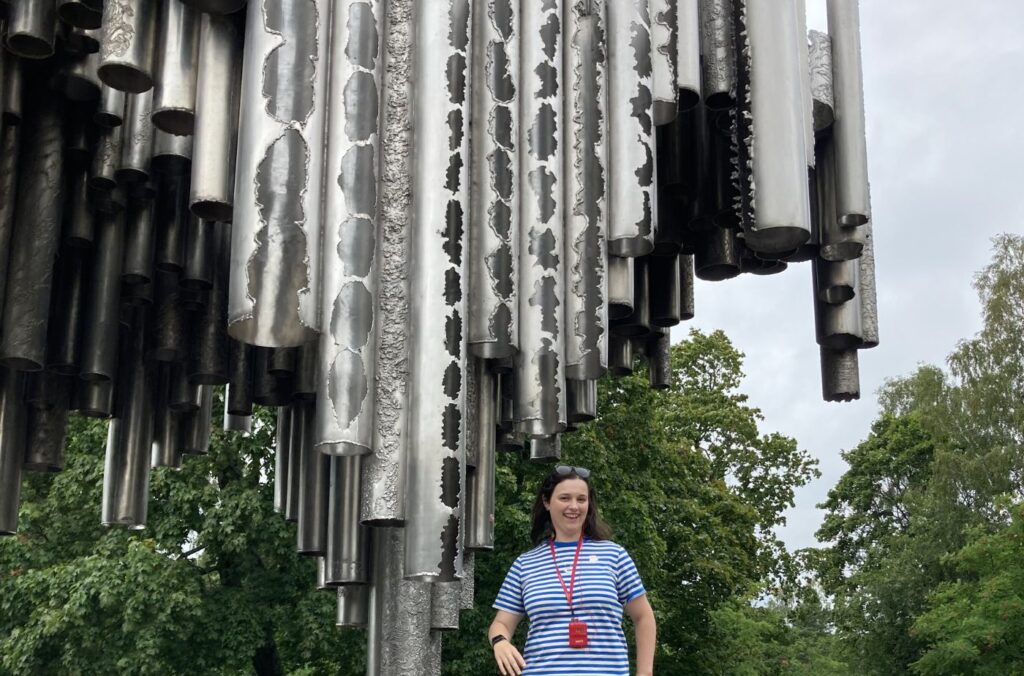
In a quiet seaside park in Helsinki, hundreds of steel pipes rise into the air like a frozen wave of music.
At first glance, the Sibelius Monument looks abstract and unusual — more like experimental architecture than a traditional statue. But over the decades, it has become one of Finland’s most recognisable landmarks and one of Helsinki’s most photographed attractions.
Dedicated to Finnish composer Jean Sibelius, the monument reflects not only his music, but also Finland’s relationship with nature, national identity, and modern art.
For visitors exploring Helsinki, the monument is an easy stop to include in a city itinerary, especially when combined with nearby parks, waterfront walks, and museums.
Here’s everything you need to know before visiting the Sibelius Monument, including the story behind its construction, the controversy it sparked, and practical tips for getting there.
In this article...
Who Was Jean Sibelius?
Jean Sibelius (1865-1957) is widely considered to be Finland’s greatest composer and one of the most important figures in Finnish cultural history. During the first half of his life, Finland was under Russian rule, but a national romantic movement sought to identify what made Finland unique and therefore promote Finnish independence. Sibelius became internationally famous for orchestral works that captured the landscapes, myths, and emotional identity of Finland.
His music often drew inspiration from:
- Finnish forests and lakes
- Nordic nature
- Finnish mythology
- The Kalevala
- National identity and independence
Works such as Finlandia, The Swan of Tuonela, and his seven symphonies helped shape Finland’s cultural image both at home and abroad. For many Finns, Sibelius became more than a composer – he was also a symbol of the nation.
After he died in 1957, Finland quickly began discussing how to honour him with a major national monument.
Construction of the Sibelius Monument
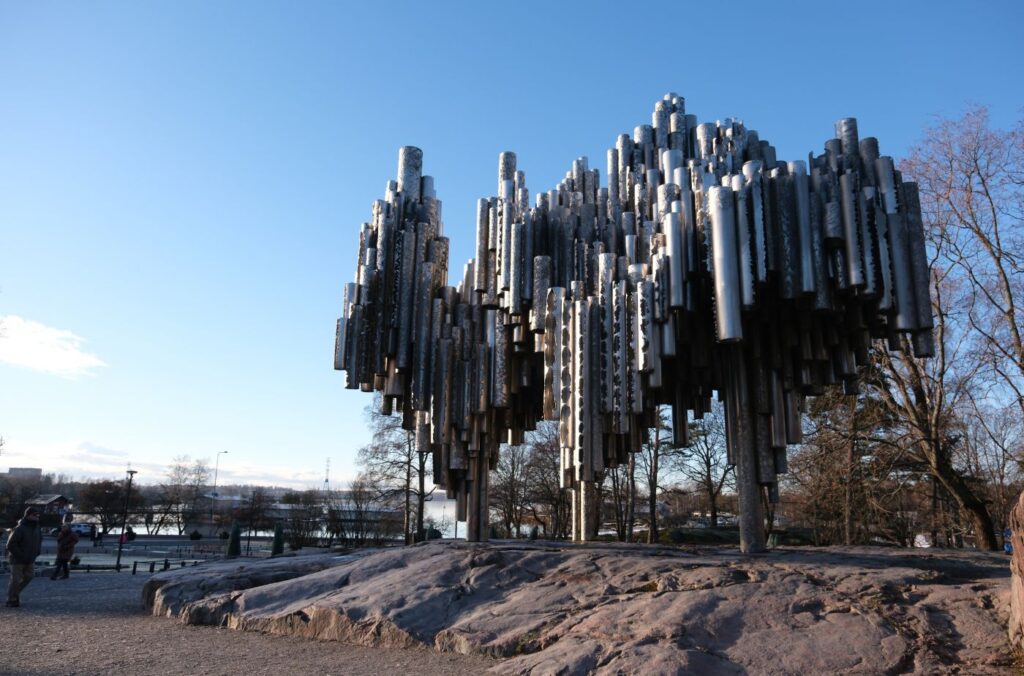
Shortly after Sibelius died, the Sibelius Society organised a public competition to design a memorial worthy of Finland’s national composer. The competition became one of the country’s most discussed cultural events of the 1960s. The winning design came from Finnish sculptor Eila Hiltunen, whose proposal was titled Passio Musicae. Rather than creating a traditional statue, Hiltunen designed an abstract sculpture made from more than 600 welded steel pipes arranged in a flowing wave-like formation.
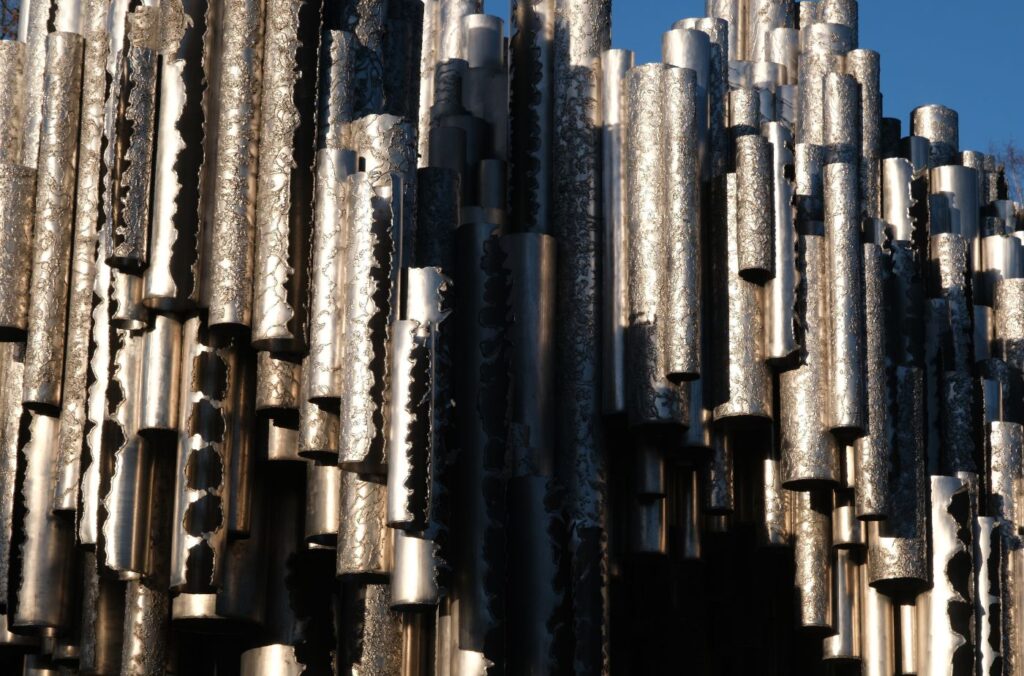
The monument was unveiled on the 7th of September 1967. It weighs approximately 24 tonnes, contains over 600 hollow tubes, is around 8.5 metres high, and is made from steel. The pipes are supposed to evoke musical rhythms, sound waves, organ pipes, and the forest, though some see the northern lights.
Visitors can walk around and partially beneath the sculpture. When the wind moves through the pipes, it sometimes creates soft echoes and resonant sounds.
Controversies Around the Monument
Today, the Sibelius Monument is one of Helsinki’s most beloved attractions. But when it was first unveiled, reactions were sharply divided. In the 1960s, abstract public art was still highly controversial in Finland. Many people expected a traditional heroic statue or a realistic portrait of Sibelius himself. Instead, they were presented with a modernist structure of welded steel pipes.
Critics argued:
- The monument did not clearly represent Sibelius
- It looked too abstract
- The pipe design resembled organ pipes, even though Sibelius composed very little organ music
- The sculpture felt too modern for a national memorial.
Supporters, however, believed the monument brilliantly captured the atmosphere and emotional power of Sibelius’ music rather than simply reproducing his face.
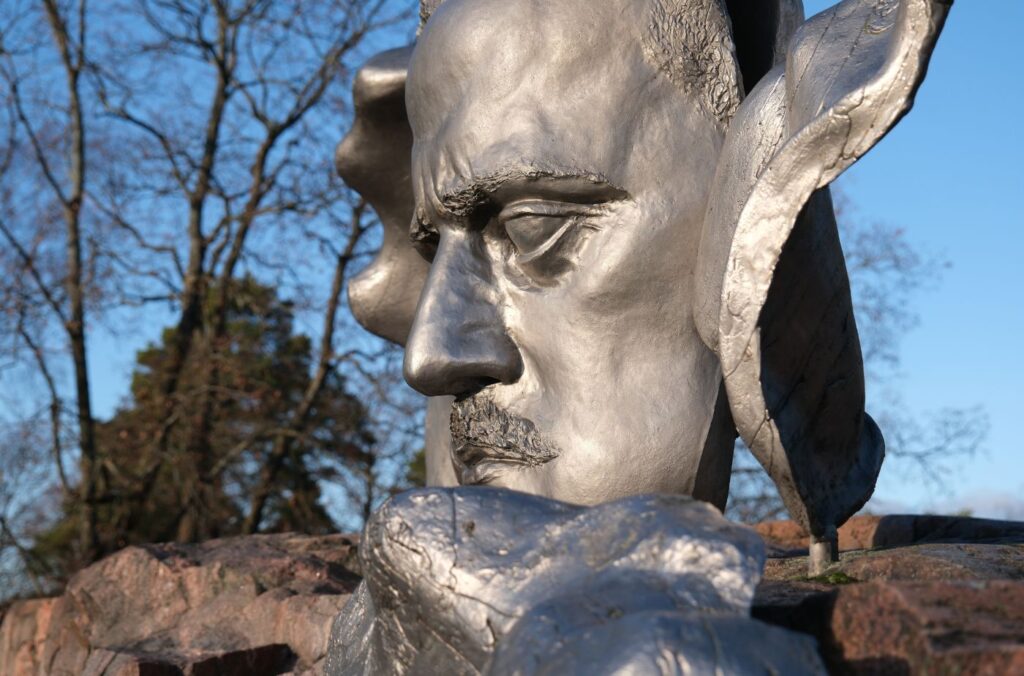
The debate became so intense that Hiltunen eventually added a separate sculpted bust of Sibelius beside the main structure to satisfy critics who wanted a more recognisable tribute.
Interestingly, that added bust is still somewhat controversial today. Many art historians feel it looks visually disconnected from the main sculpture, while others appreciate the compromise.
Over time, however, public opinion shifted dramatically.
The monument is now considered one of the defining examples of Finnish modern public art and one of Helsinki’s most iconic landmarks.
How to Get to the Sibelius Monument
The monument is located in Sibelius Park. The address for the park is:
Sibeliuksen puisto
00250 Helsinki
Finland
The monument is part of a park, so is open 24/7 and has no admission fee.
By Tram
The easiest way to reach the monument is by tram in Helsinki.
From central Helsinki:
- Take Tram 2 or Tram 4
- Exit near Töölö
- Walk around 5–10 minutes through the residential district
The tram ride from Helsinki Central Station takes roughly 15–20 minutes.
By Bus
Several local buses stop nearby, especially routes running along Mechelininkatu.
Public transport in Helsinki is reliable, clean, and easy for visitors to navigate using the HSL app.
By Foot
If the weather is good, walking from central Helsinki is an excellent option.
The walk takes about 35–45 minutes from the city centre and passes:
- The waterfront
- Töölö Bay
- Parks
- Cafés
- Residential Art Nouveau districts
Many travellers combine the monument with other nearby attractions.
Final Thoughts
The Sibelius Monument succeeds precisely because it does not behave like a traditional monument.
Rather than presenting Jean Sibelius as a distant heroic figure on a pedestal, it attempts to translate music itself into physical form — using steel, space, sound, and landscape.
The result remains one of Finland’s most distinctive public artworks.
Even visitors unfamiliar with Sibelius often leave impressed by the monument’s atmosphere and originality. It feels deeply connected to Helsinki and to the broader Finnish aesthetic: modern yet natural, minimal yet emotional, quiet yet powerful.
For travellers exploring Helsinki, the Sibelius Monument is well worth visiting — not just as a photo stop, but as a fascinating glimpse into Finland’s artistic and cultural identity.