Thorvaldsens Museum in Copenhagen: A Temple of Neoclassical Art
In all the years I’ve been going to Copenhagen, Thorvaldsen’s Museum was the one I would see and go to. “Wow, I should go there,” but I never actually went! The building from the outside is impressive; this cathedral-like structure right by Christiansborg Palace tells me that Bertel Thorvaldsen was important in Danish history. I have seen his famous depiction of Jesus Christ inside Copenhagen Cathedral several times, and knew I needed to see what other works he made. So, in August 2025, I took myself to Copenhagen for the day, got the Copenhagen Card, and tried to visit the museum.
Thorvaldsens Museum is a must-see in Copenhagen for travellers who love art, history and architecture. Opened in 1848 as Denmark’s first public museum building, it was purposely built as a ‘temple’ to house the works of renowned sculptor Bertel Thorvaldsen. Unlike larger institutions, this single-artist museum offers an intimate journey into the life and legacy of one of Europe’s great neoclassical artists.
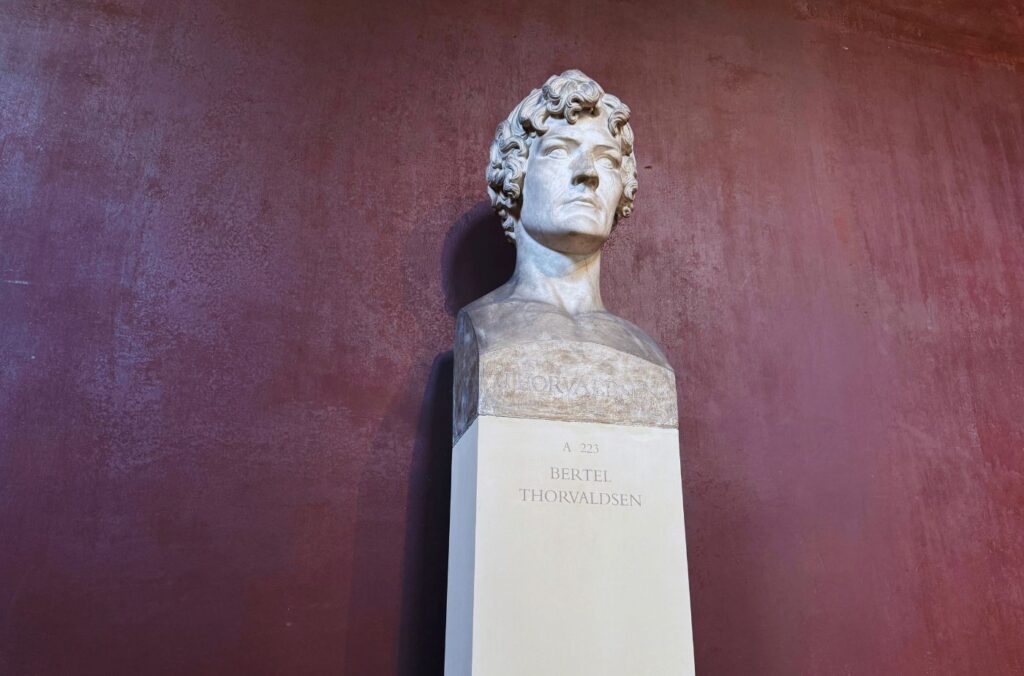
Bertel Thorvaldsen (1770-1844) was Denmark’s most famous 19th-century sculptor and the first Danish artist to win an international reputation. Born in Copenhagen, Thorvaldsen trained at the Royal Danish Academy of Fine Arts in his early teens and showed remarkable talent. In the late 1790s, he won a scholarship to study in Italy, so at 26, he set off for Rome. Rome was the capital of Neoclassical art, and Thorvaldsen made it his home for about 40 years.
He developed a grand, idealised style by immersing himself in classical sculpture. Thorvaldsen’s breakthrough came in 1803 with a plaster model of the Greek hero Jason, which impressed the great Italian sculptor Antonio Canova so much that it “launched one of the most successful careers of the 19th century”. He quickly attracted patrons from Europe, building a large workshop in Rome. Over the following decades, he carved countless marble statues and reliefs – mostly drawing on Greek and Roman mythos or Christian themes – all rendered with Neoclassicism’s calm balance and clarity.
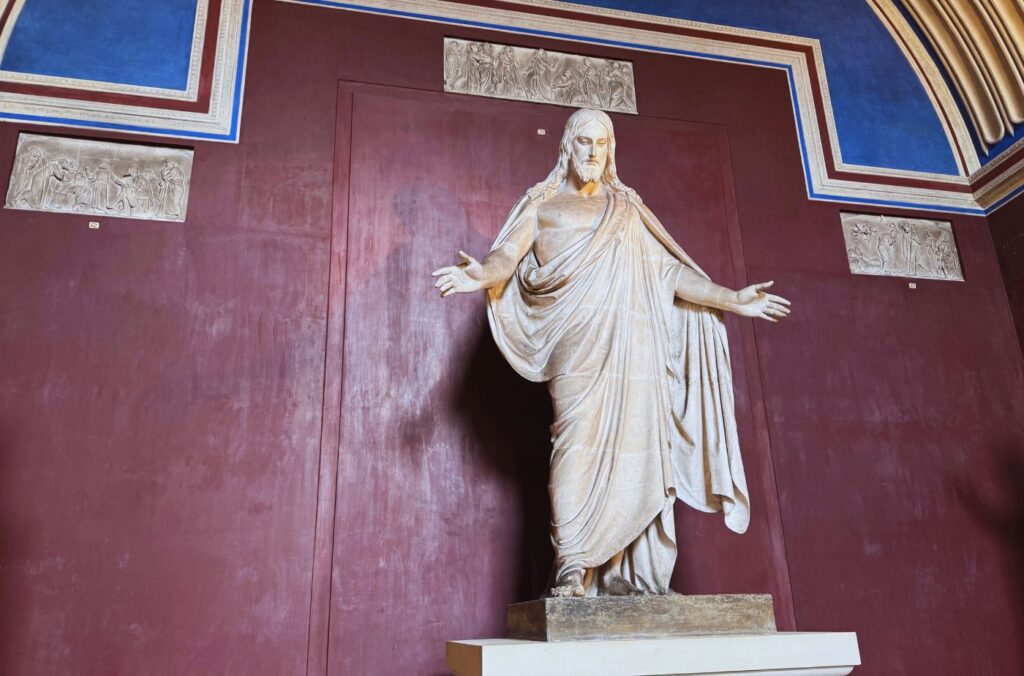
Arguably, his most famous work is the statue of Christ (1821), located in Copenhagen Cathedral. This depiction of Christ has been used worldwide, most famously by the Mormon church.
His polished skill and elegant style made Thorvaldsen highly sought after. Even kings and popes sought him out; by 1805, back in Copenhagen, he had already been named a professor at the Royal Academy of Art, and European royalty clamoured for his work. When he visited Copenhagen in 1819, his passage through the city was treated like a triumphal procession. When he returned permanently in 1838, he was greeted as a national hero – crowds lined the streets, and King Christian VIII ensured the sculptor received full honours.
The Museum
Founding of the Museum
Bertel Thorvaldsen donated his entire collection of artworks and antiquities to the Danish people, which inspired the creation of this museum to honour his life’s work. Public fundraising and support from the city and even the King made constructing a dedicated museum next to Christiansborg Palace possible. Thorvaldsen did not live to see the museum completed—he died in 1844, four years before the grand opening in 1848. The artist’s remains are interred in the museum’s courtyard, literally making Thorvaldsen Museum his final resting place.
Design
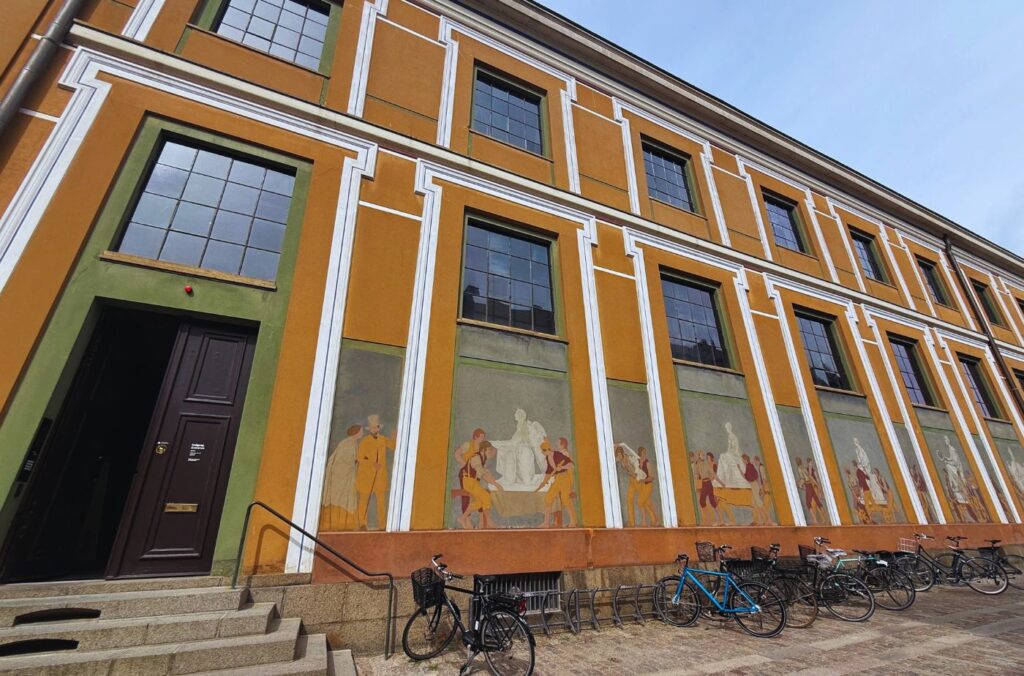
Thorvaldsens Museum’s architecture is as much an attraction as the art inside. Designed by Danish architect Michael Gottlieb Bindesbøll and built from 1839 to 1848, the building draws inspiration from classic Greek temples, with a touch of Egyptian and Pompeian influence in the details. Its bright polychrome façade immediately stands out: huge trapezoidal portals with “Egyptian” ears from its entrance, and a long wraparound frieze by Jørgen Sonne vividly depicts Thorvaldsen’s triumphant return to Copenhagen with his artworks in 1838. Atop the roof, you’ll spot a Victory goddess driving a four-horse chariot, a dramatic classical flourish crowning the building.
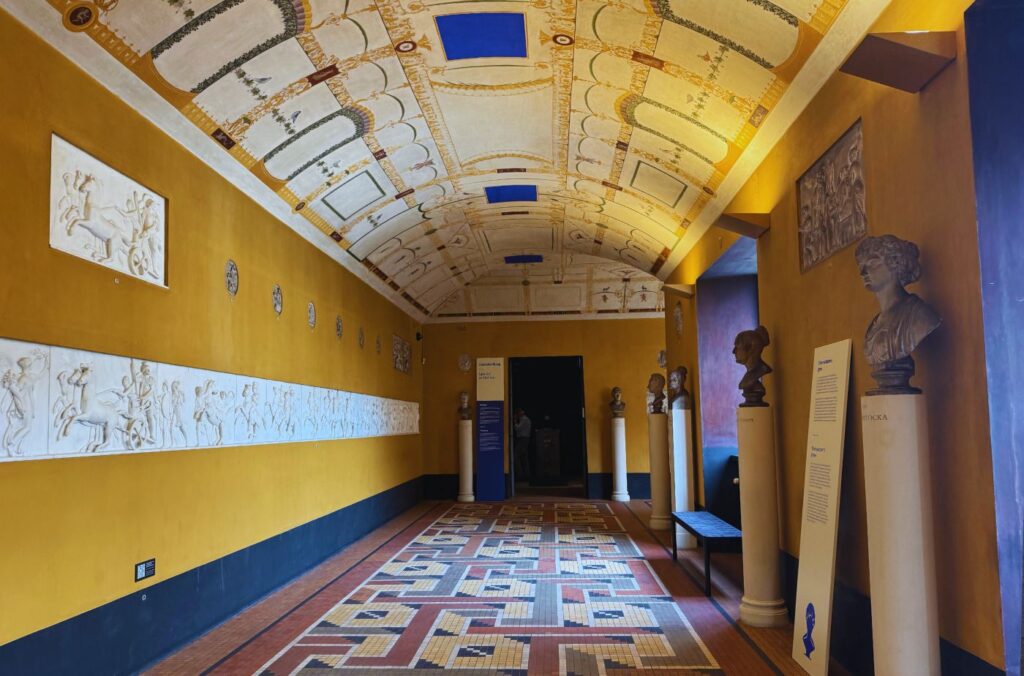
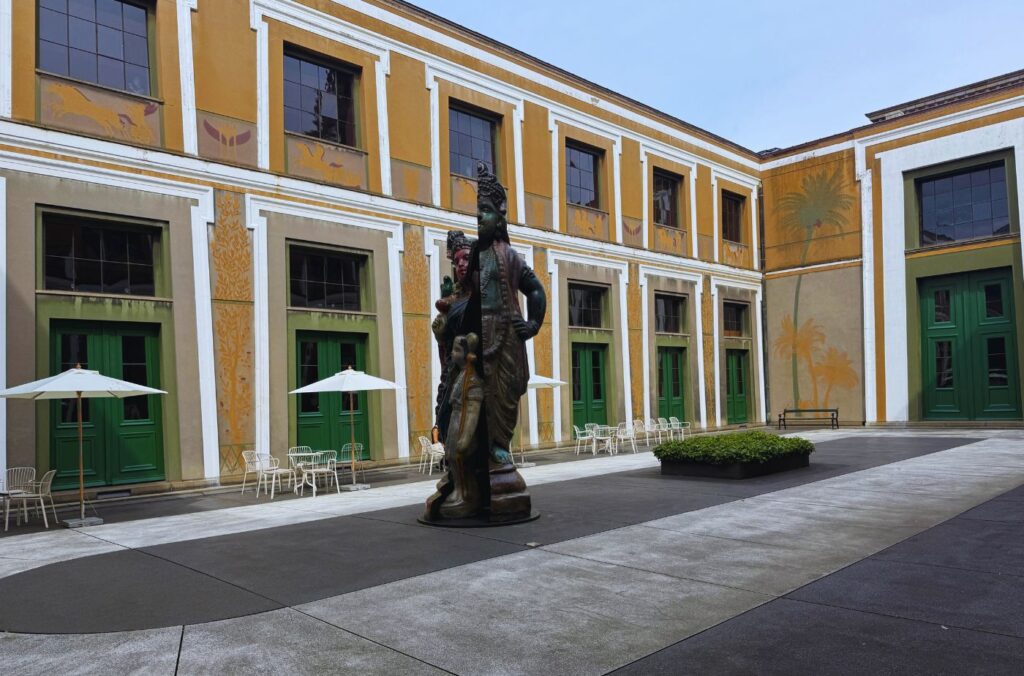
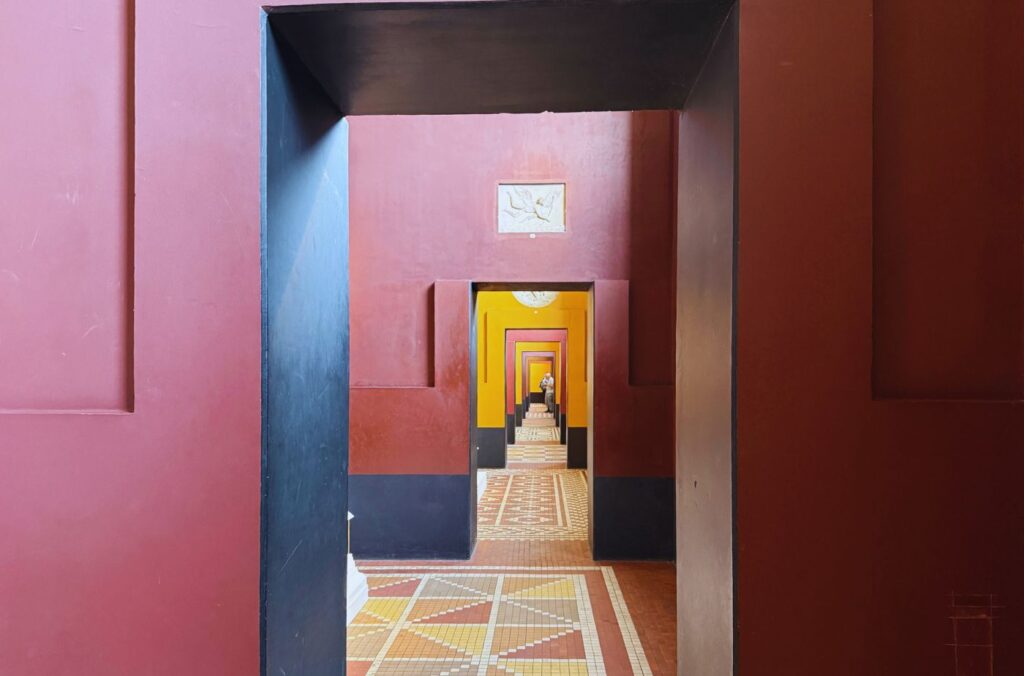
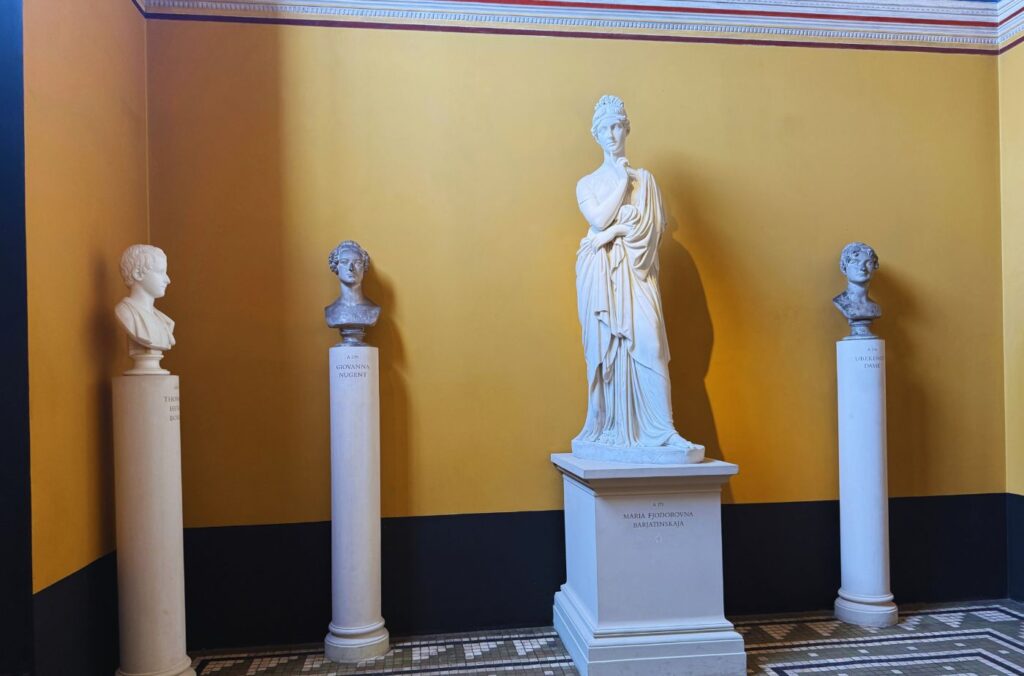
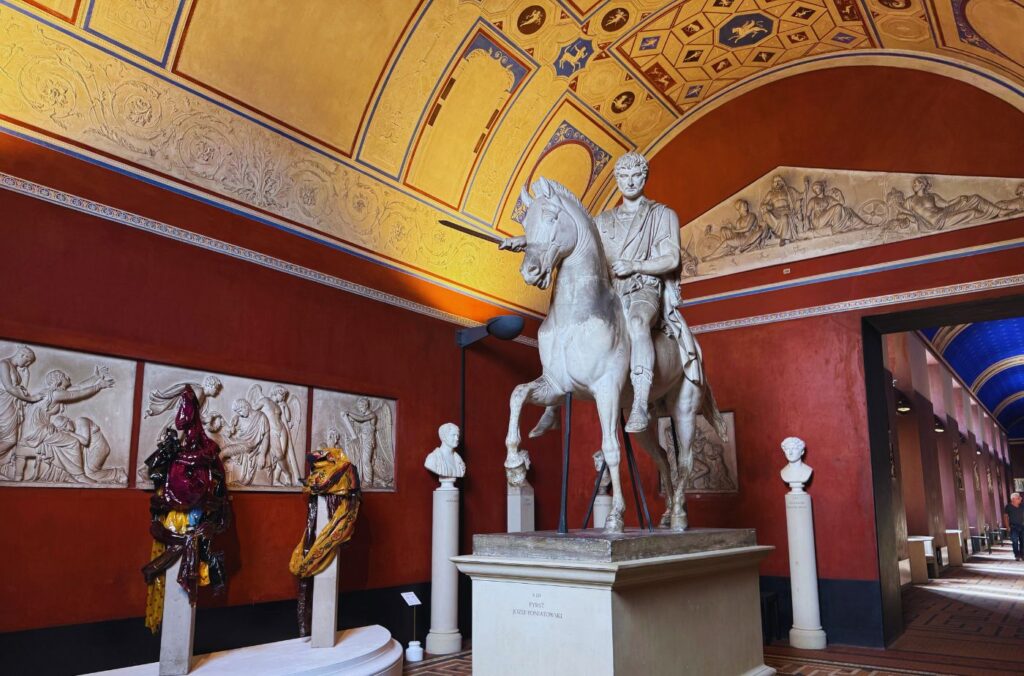
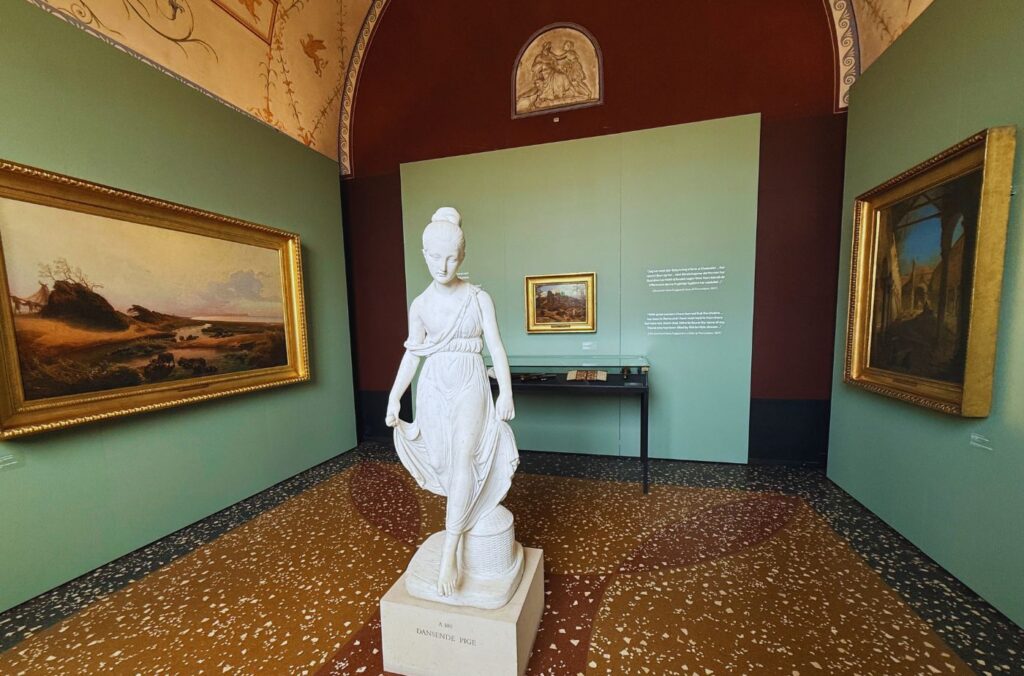
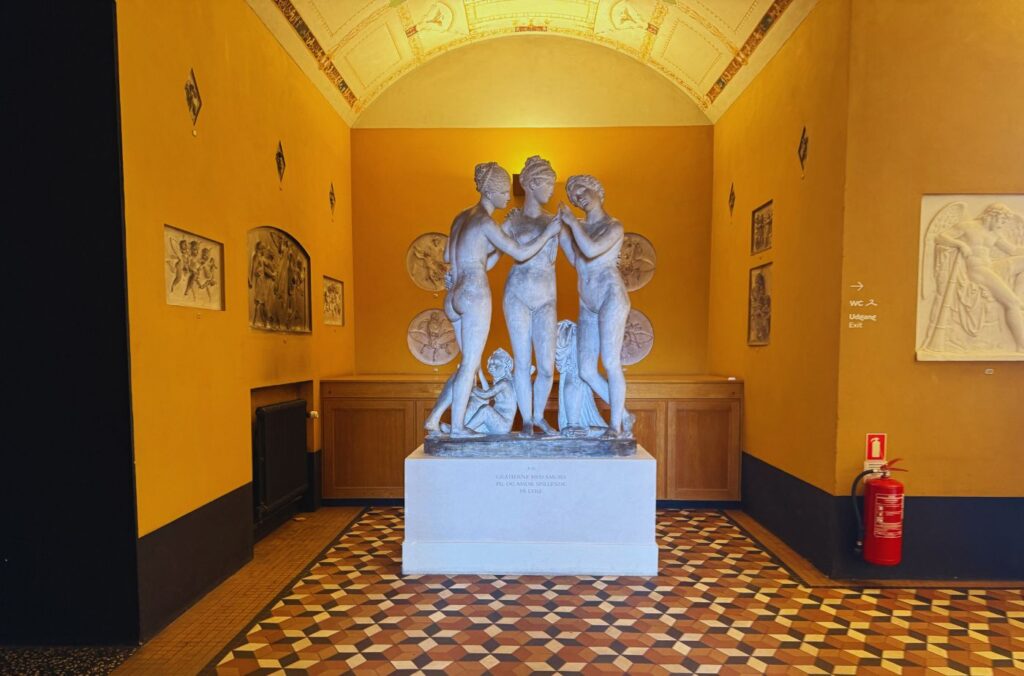
Inside, the museum is a feast for architecture lovers. The galleries encircle a tranquil inner courtyard (where Thorvaldsen is buried) and are richly decorated from floor to ceiling. Mosaic floors in each room display unique patterns—some simple, others wildly intricate—that feel like walking on art itself.
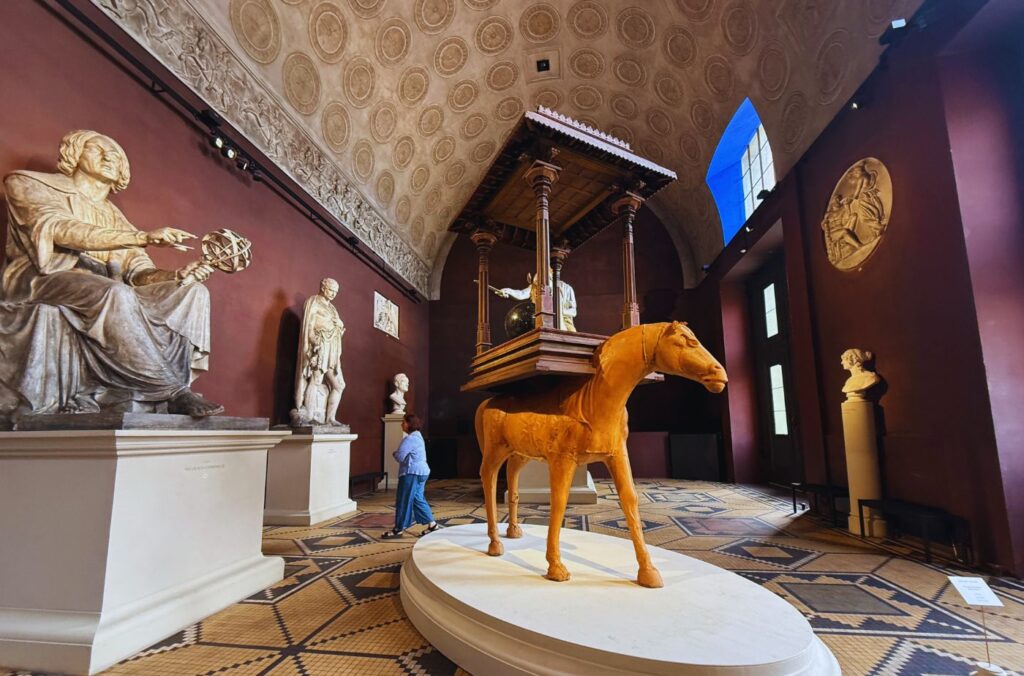
Above, every ceiling is painted in a different grotesque or Pompeian-style design, infusing the interior with vibrant colour and almost theatrical atmosphere. Natural light and shadow play across marble statues and burgundy walls, creating a practically reverent mood. The building’s distinctive style was unconventional in its day, marking a transition in Danish architecture towards historicism and bold use of colour. Even today, Thorvaldsens Museum feels unique – an exotic gem tucked in the heart of Copenhagen’s historic centre.
Highlights of the Collection
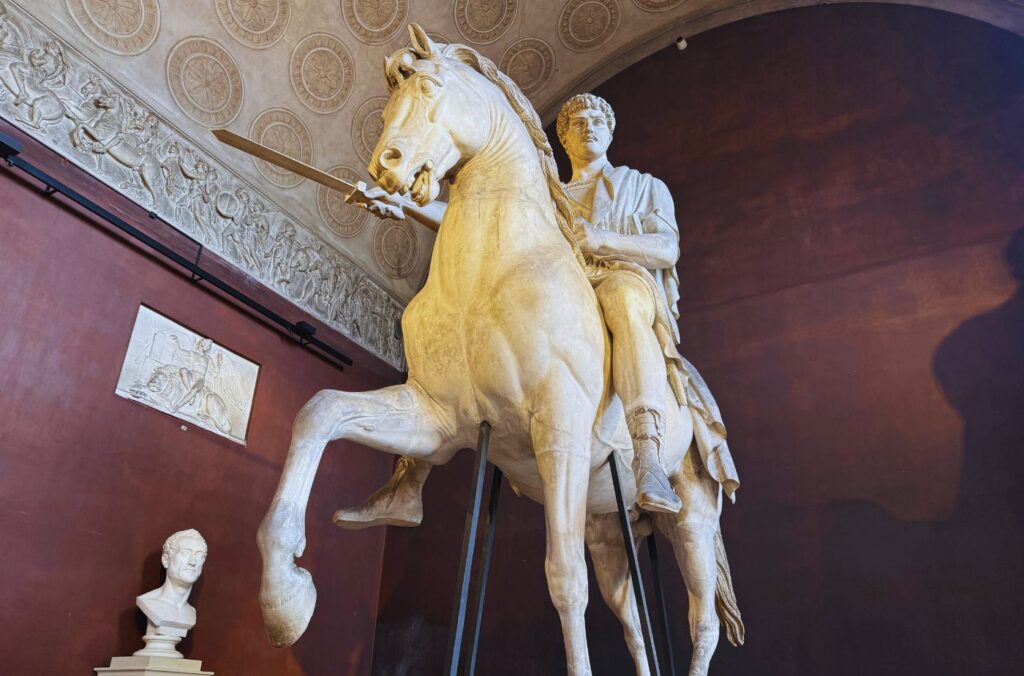
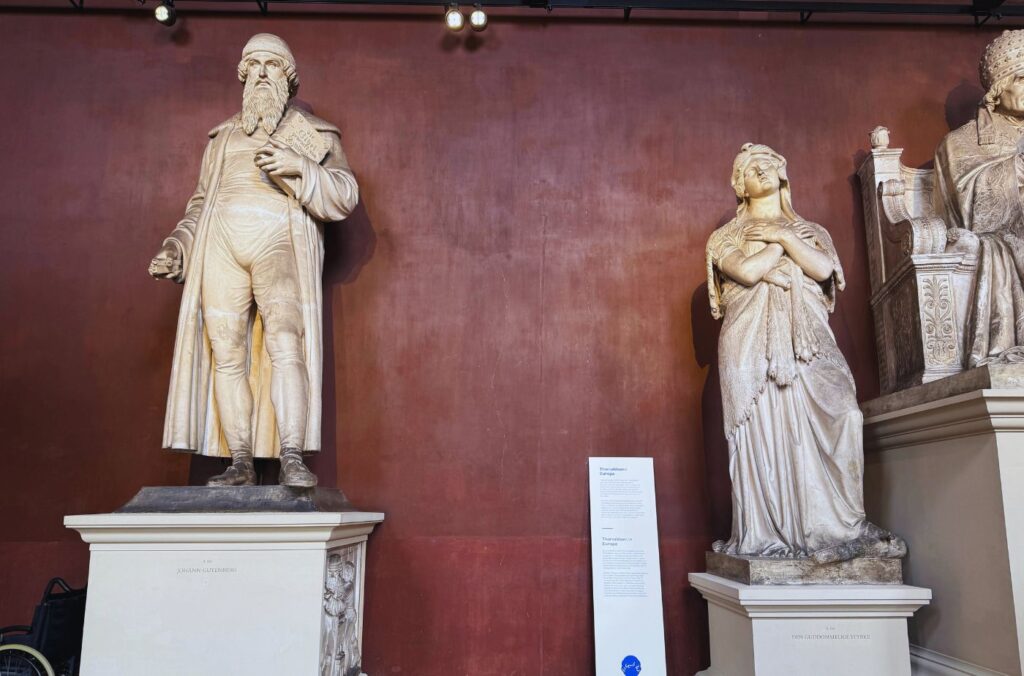
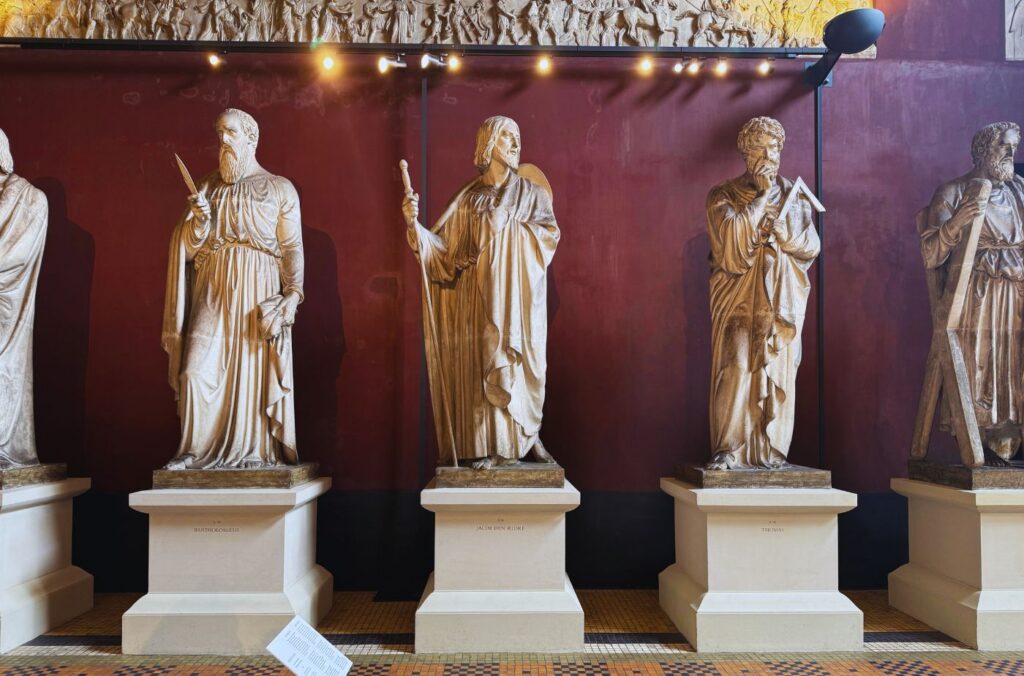
Despite its single-artist focus, the museum’s collections are impressively diverse. Of course, the centrepiece is Thorvaldsen’s oeuvre: you’ll encounter room after room for his sculptures, from monumental marble statues to the original plaster models and clay sketches that reveal his artistic process. Thorvaldsen’s style brings Greek and Roman mythology to life – look out for works like Jason with the Golden Fleece, serene goddesses and gods, heroic relief panels, and expressive portrait busts of 19th-century luminaries. Many of the white marble figures you’ll see are actually casts or replicas of pieces now found in churches and palaces worldwide, but here you can see the original plaster models used to create them. This offers a fascinating insight into how Neoclassical sculptures were made – an aspect often missed in typical art museums.
Beyond Thorvaldsen’s creations, the museum showcases his personal art collection and curiosities, reflecting the sculptor’s broad interests.
He amassed many paintings by other artists, including Danish Golden Age paintings and works by his contemporaries across Europe. These hang in several galleries alongside period furniture (imagine an elegant Biedermeier sofa set), giving a cosy salon feel.
Thorvaldsen was also an avid collector of antiquities – so you’ll find cases of ancient Greek, Roman, and Egyptian artefacts that he brought back from Italy. Coins, cameos, vases, and marble fragments from antiquity are displayed, offering context to the classical inspirations behind his art. In addition, the museum holds thousands of Thorvaldsen’s drawings, sketches, and letters, some of which are periodically on view or accessible via interactive screens, allowing visitors to delve deeper into his creative mind. The collection paints a comprehensive portrait of the artist, from majestic statues of gods to delicate paper sketches and even personal belongings (like his tools and plaster casts of his hands). It’s the kind of place where art and biography intertwine – you see beautiful works and understand the man and era behind them.
Temporary Exhibitions & Events
While the permanent collection is the star, Thorvaldsens Museum hosts rotating exhibitions and cultural events that enrich the visit. The curators often bring in contemporary artists or thematic exhibits to create a dialogue with Thorvaldsen’s classics. For example, in late 2025, the museum opened Bharti Kher – Mythologies, a special exhibition from 22 August 2025 to 8 March 226. Kher is a renowned contemporary sculptor, and her modern works – exploring body, identity, and myth – are displayed throughout the ground floor in conversation with Thorvaldsen’s Neoclassical sculptures and the museum’s unique architecture. This kind of contrast between old and new offers fresh perspectives and has proven to be thought-provoking for visitors. I’m going to be honest, I was not the biggest fan of this! I didn’t like that it was mixed with Thorvaldsen’s sculptures; it was a little confusing and distracting.
The museum also marks special occasions with events like talks, guided tours, and even musical performances in the atmospheric courtyard. Check the official program or ask at the front desk – you might time your visit with a free curator’s tour or a workshop. It’s worth noting that Thorvaldsens Museum has become part of Copenhagen’s Green Attraction initiative, meaning it actively works on sustainability and often highlights eco-friendly practices in its operations. While these details might not be immediately visible during a casual visit, they show the museum’s modern ethos. Overall, whether you catch a temporary exhibit or enjoy the permanent displays, you’ll find the museum a lively space connecting past and present.
Practical Information
Opening Hours
The museum is open Tuesday through Sunday from 10 am to 5 pm.
I spent about 40 minutes here and was satisfied, but visitors with a greater interest in art will spend considerably more time here. The museum isn’t large, but it’s densely packed with art.
Tickets
Please check the website for the current ticket price. Youths under 18 enter for free, making this a great value stop for young adults. If you’re 65+ or a pensioner, note that Tuesdays are free for seniors. Every Wednesday, the museum is free for all visitors.
Those with the Copenhagen Card get free admission.
Thorvaldsens Museum is located at Bertel Thorvaldsens Plads 2, next to Christiansborg Palace. It’s an easy walk from downtown sights like Strøget or Nyhavn. Public transport access is excellent; the Metro stop at Gammel Strand is just a few minutes’ walk away.
Accessibility
Due to the museum’s status as a protected historic building from the 1840s, accessibility can be challenging. There’s no elevator inside, and the exhibits span three levels. Wheelchair visitors can access the ground floor, but reaching the upper galleries requires climbing stairs.
Visually impaired visitors are allowed to touch certain marble sculptures wearing cotton gloves, a thoughtful gesture that enhances the tactile experience.
Cafe & Shop
There is a small museum shop at the entrance where you can pick up art prints, books, or even replicas of Thorvaldsen’s reliefs to take home. The shop doubles as a spot to grab a drink – you can enjoy a coffee or even a glass of wine in this area, which is a nice way to reflect on the visit. In the warmer months, the museum has a quaint courtyard café that serves coffee, cakes, cold drinks, and al fresco so that you can sit under an open sky surrounded by 19th-century sculptures.
Amenities
The museum has a complimentary cloakroom/locker service on the lower level. Large bags, backpacks, and umbrellas must be stowed away.
In summary, Thorvaldsens Museum offers a richly rewarding visit for adults who appreciate art and history, all wrapped in an architecturally stunning package. Its manageable size, central location, and cultural significance make it an ideal stop for the independent traveller in Copenhagen. Whether you’re marvelling at a marble Venus, admiring the vivid ceiling frescoes, or sipping a coffee in the sunlit courtyard, you’ll get a genuine sense of Denmark’s Golden Age of art. It’s a place where the past comes alive in beautiful ways –a Copenhagen gem that deserves a spot on your itinerary. Enjoy your visit (and don’t forget to look up at those ceilings)!