Located in the heart of Copenhagen, the museum was founded in 1897 by Carl Jacobsen, the son of the founder of the Carlsberg brewery. The museum is renowned for its marble sculptures and lush indoor winter garden. I’ll be honest – the first time I visited this museum (I believe more than 10 years ago!) I wasn’t that impressed. I don’t come to Denmark to see Egyptian sculptures! However, going back in August 2025 gave me a new appreciation. I still don’t think it should be at the top of the list when visiting Copenhagen, but there’s no denying that the architecture of the building and the vast collection of sculptures are impressive. So, here’s my overview of the Ny Carlsberg Glyptotek, including what you can see when visiting the museum.
The museum’s story begins with Carl Jacobsen (1842-1914), the beer magnate behind Carlsberg, Denmark’s most significant art patron. His passion for art – especially sculptures – drove him to amass a vast collection of works ranging from classical antiquities to contemporary pieces of his time. In 1888, he donated his collection to the public and funded the construction of a museum to house it. The name “Glyptotek” comes from the Greek words glyptos (sculpture) and theke (storage/display place), reflecting Jacobsen’s vision of a ‘sculpture gallery’ open for everyone. The name inspiration came from Ludwig I’s Glyptotek in Munich. The museum opened in 1897 just next to the Tivoli Gardens. Jacobsen envisioned that the Glyptotek wouldn’t be an “ordinary museum” but a cultural oasis where visitors could enjoy art in a relaxed, uplifting environment.
The Building
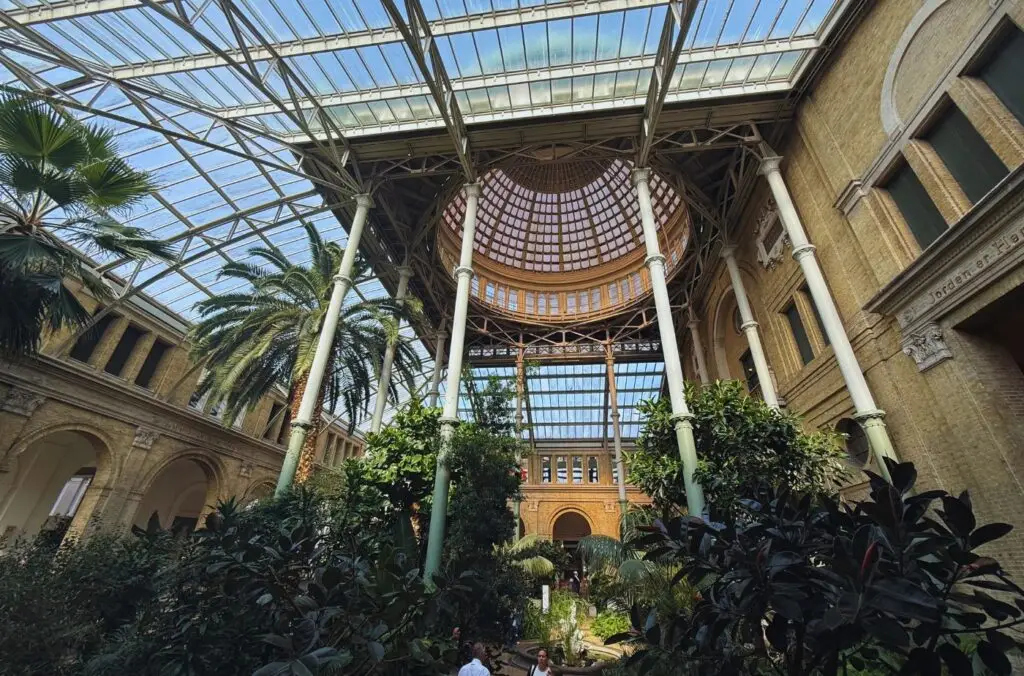
The original Dahlerup wing (designed by Vilhelm Dahlerup) presents an ornate historicist façade in red brick, with polished granite columns in a Venetian Renaissance style. The striking glass dome reflects Jacobsen’s idea of a ‘daylight museum’ designed to bathe the sculptures in natural light. Behind it, the Kampmann Wing (added by architect Hack Kampmann in 1906) offers a more understated neoclassical style, arranged around a central auditorium for lectures and small concerts. Bridging the two wings is the Winter Garden, a glass-domed conservatory with mosaic floors, towering palm trees, and a central fountain featuring the sculpture The Water Mother by Kai Nielsen.
The last addition was in 1996, when architect Henning Larsen extended the museum further. Built in the former courtyard, this wing houses the Glyptotek’s paintings and newer works. The architecture is minimalist and bright but echoes antiquity with smooth, gently sloping walls inspired by ancient Egyptian forms. Don’t miss stepping out onto the rooftop terrace atop this wing, which offers panoramic views over Copenhagen’s rooftops.
Collections
Antiquities
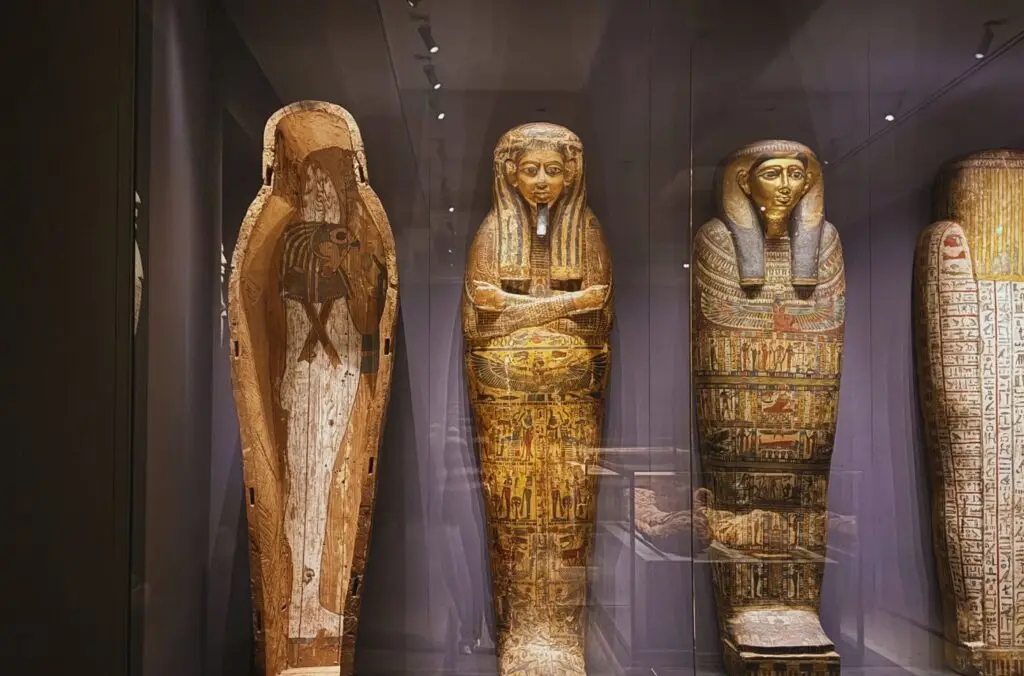
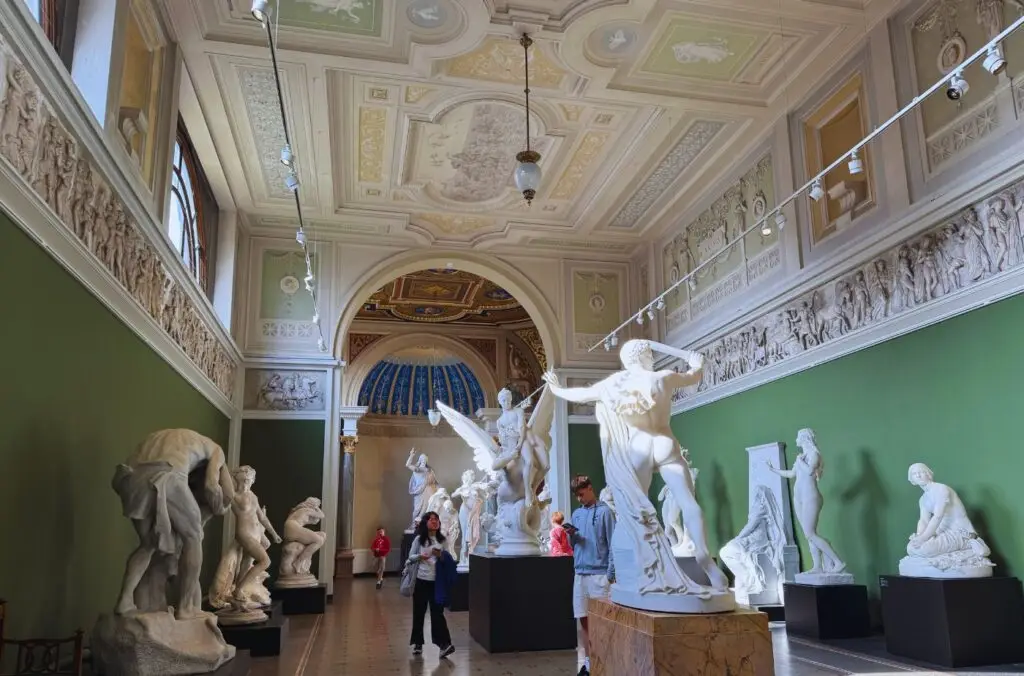
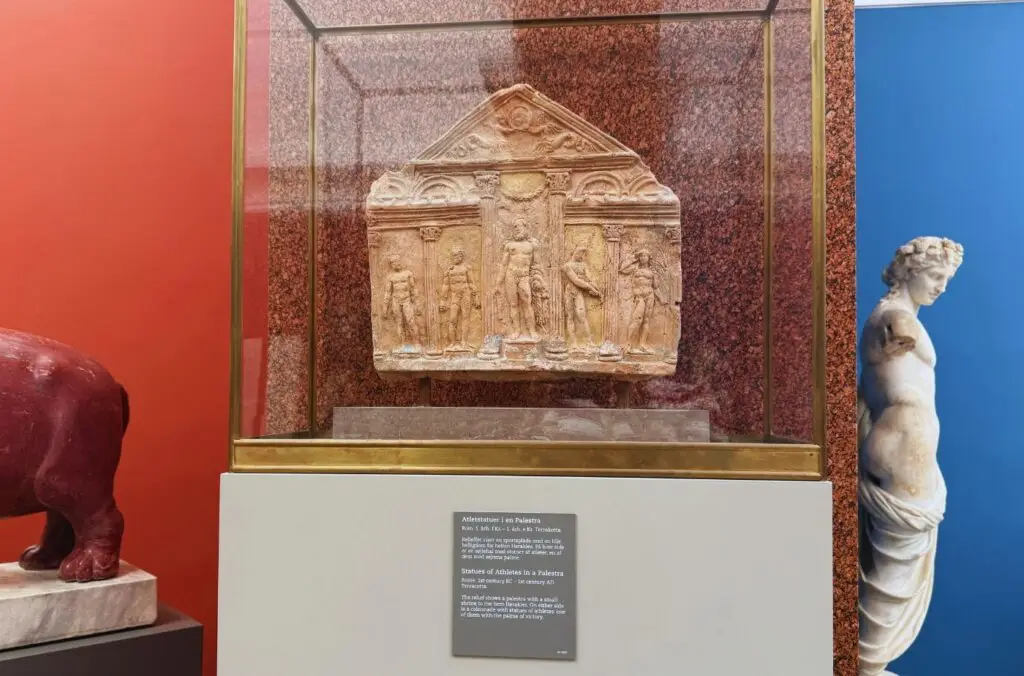
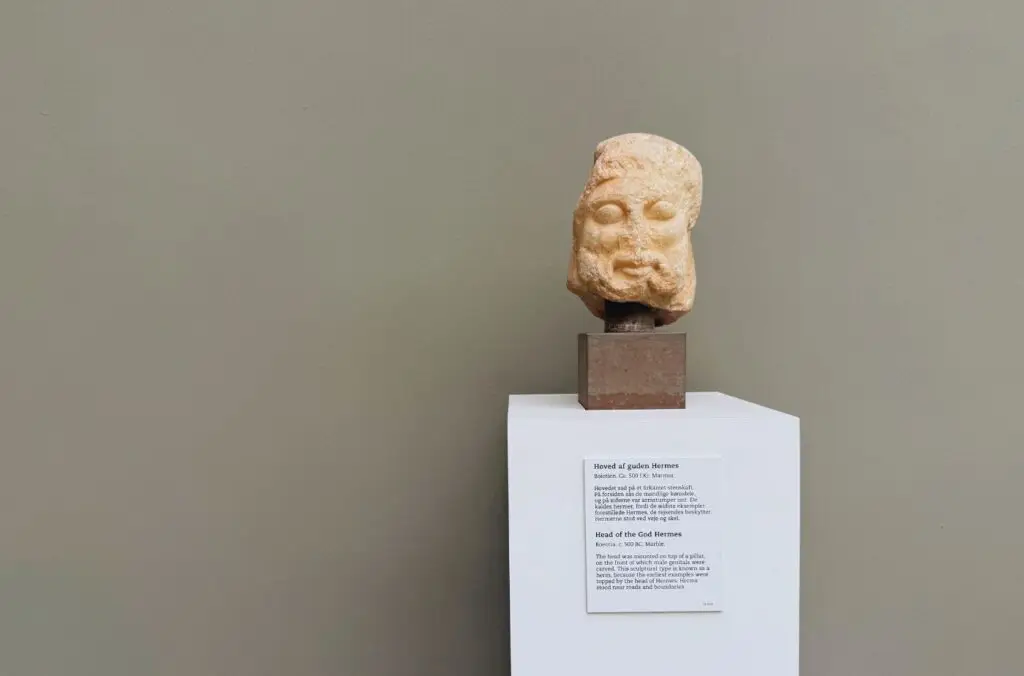
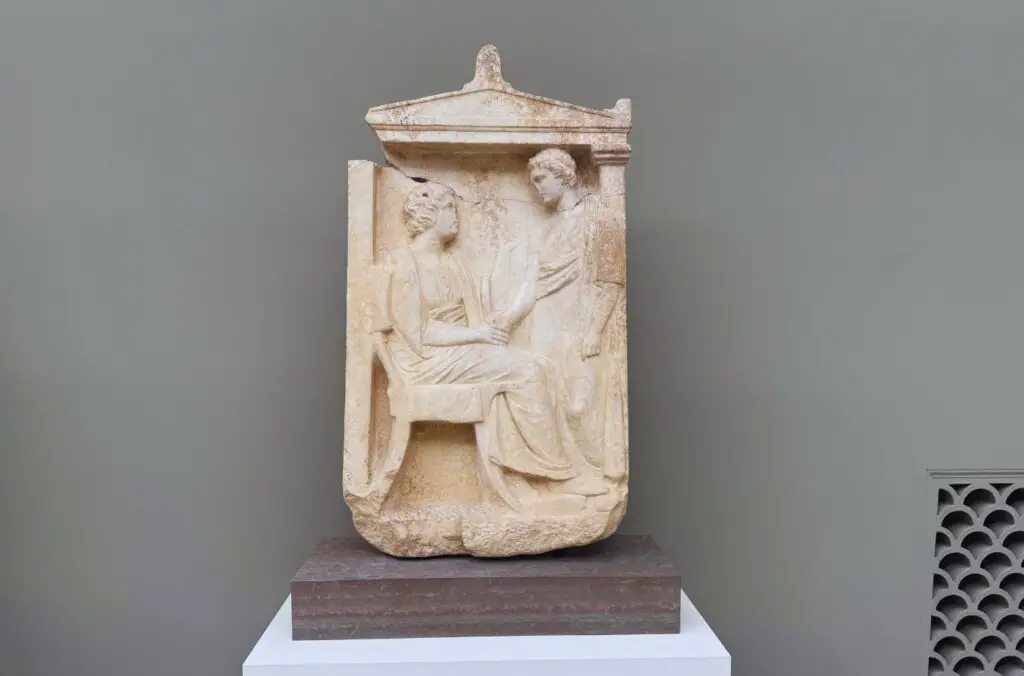
The museum today has over 10,000 works spanning antiquity to the 19th century. It is especially renowned for its antique sculpture galleries, which comprise one of Northern Europe’s most comprehensive assemblages of ancient Mediterranean art. In the Department of Antiquities, you’ll wander among Egyptian mummies, Greek marble gods, Etruscan urns, and Roman emperors, tracing a 3,500-year timeline of ancient history.
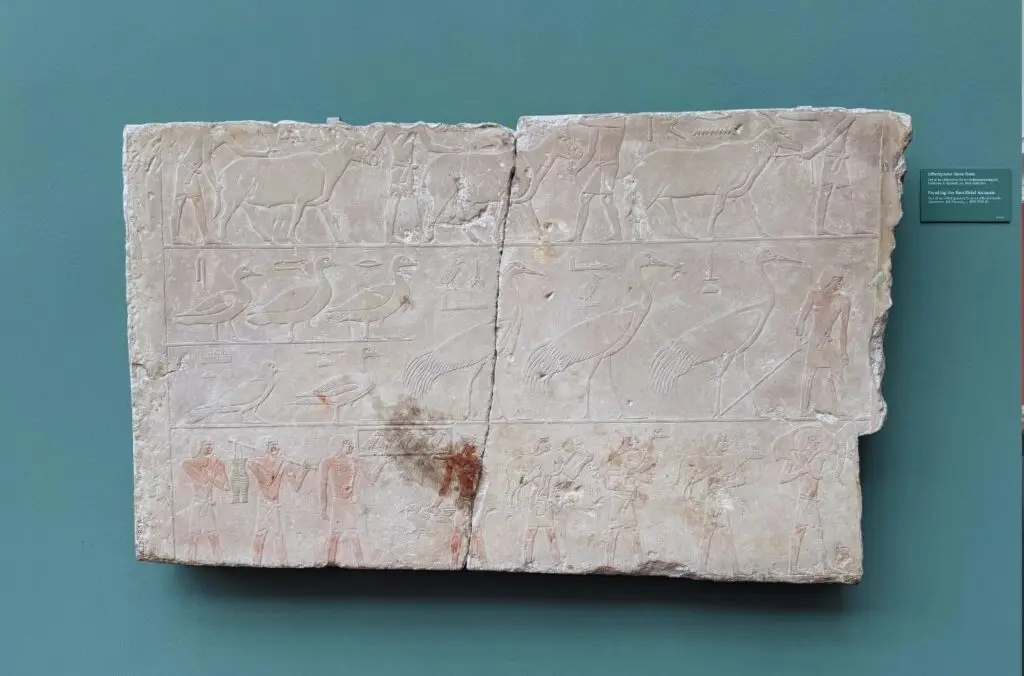
The Egyptian collection has more than 1,900 pieces, dating from 3000BC to 1AD. Carl Jacobsen got his first Egyptian piece, a sarcophagus, purchased from the Egyptian Museum in Cairo in 1882. Many items come from when the Ny Carlsberg Foundation sponsored excavations at the beginning of the 20th century, led by the English Egyptologist W.M.F. Petrie.
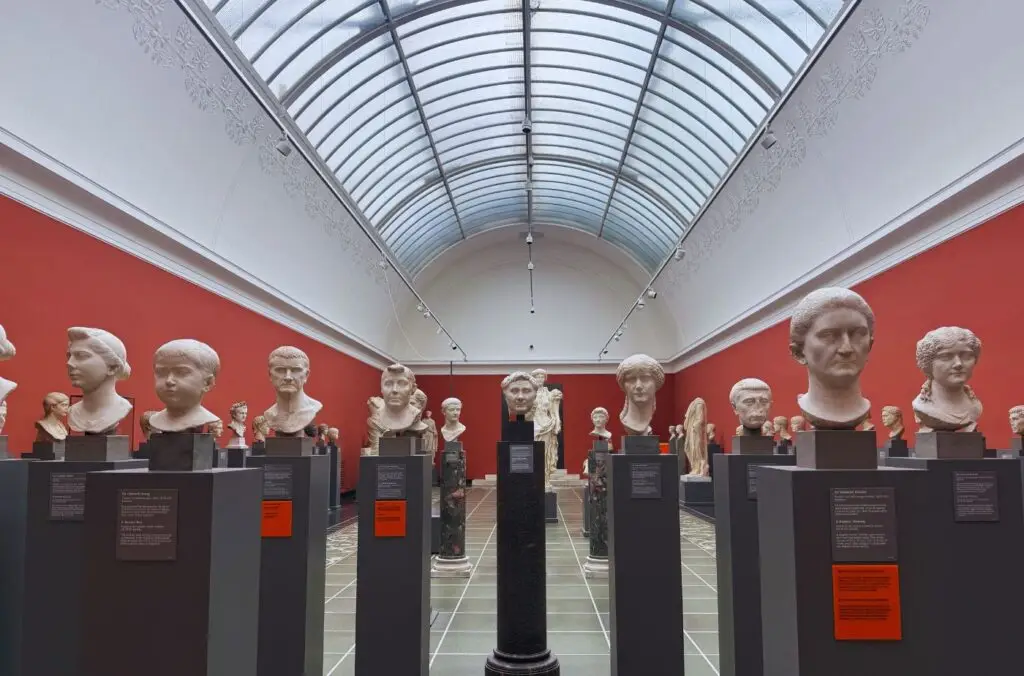
Highlights include exquisitely carved mummy portraits, a broad collection of Greek and Roman portrait heads, and rare treasures from the Near East.
French & Danish Art
Equally impressive is the museum’s collection of 19th-century art, especially from Denmark and France. The Glyptotek boasts one of Europe’s finest collections of French art from 1800 to 1930. Art enthusiasts can admire paintings from Denmark’s Golden Age alongside a stellar array of French and Post-Impressionist works. The galleries have masterpieces by Monet and Cezanne and their contemporaries, but the undisputed stars are Paul Gauguin, Edgar Degas, and August Rodin. In fact, the Glyptotek holds over 40 works by Gauguin, many inspired by his time in Tahiti. You can also find the complete set of Degas’ bronze sculptures (including his famous ballerinas and horses), which offer a deep dive into his obsession with movement. The collection of Rodin is one of the largest in the world and the most important outside of France. 35 Rodin sculptures, ranging from contemplative figures to dramatic mythological scenes, are scattered throughout the halls and garden courtyards. The most famous Rodin sculpture here is The Thinker.
The Danish Collection has an extensive collection of Danish Golden Age paintings by painters like Eckersberg, Købke and Lundbye. It contains the country’s most significant representation of Danish Golden Age sculpture.
Concerts
The Auditorium is mainly used for concerts, including the Helge Jacobsen concert series. It has good acoustics, and the early music vocal ensemble Musica Ficta commonly uses it as a rehearsal room.
Visiting the Museum
Opening Hours
Open Tuesday-Sunday, typically 10 am – 5 pm, with extended evening opening until 9 pm on Thursdays.
Try visiting on a weekday morning or later on Thursday evening. The museum’s late closing on Thursdays often means a quieter atmosphere.
Regardless of when you go, you need 2-3 hours to appreciate the collections fully.
Tickets
Please check their website for up-to-date ticket costs. If you plan to go, the last Wednesday of every month is free admission for all. Tickets can be bought at the museum or online—online purchases come with a 10% discount. The Copenhagen Card gives you free entrance.
The museum offers public guided tours. Most tours are in Danish, but they also have English-language tours. Private tours can be arranged. Learn more here.
Location
The museum is at Dantes Plads 7 in central Copenhagen, next to Tivoli Gardens. It’s only a 10-minute walk from Copenhagen Central Station and about five minutes from City Hall Square (Rådhuspladsen), making it easy on foot. Public transport is convenient; several bus lines stop nearby, and the nearest metro is Rådhuspladsen on the M3 line.
Accessibility
Being a 19th-century listed building, the Glyptotek does have some accessibility limitations. Many galleries are reachable by elevators or a small handicap lift, but a few areas have steps and narrow passageways. Please feel free to contact the museum beforehand to request specific assistance.
Cafe
Café Glyptotek, located in the Winter Garden, has light lunches, pastries and coffee. The café menu includes Danish smørrebrød and seasonal dishes.
Shop
The shop has many art books, design items, and tasteful souvenirs.
References
Besides the official Ny Carlsberg Glyptotek website and Wikipedia, these are the references I used when researching this article:
The Ny Carlsberg Glyptotek offers a rich, multidimensional experience for independent travellers interested in art, history, and architecture. It’s a space where colossal Egyptian statues share space with French Impressionist paintings, where a quiet garden under glass brings a dash of the tropics to Scandinavia, and where a 19th-century brewer’s passion continues to inspire the public.