Riding Into the Soviet Arctic: A Snowmobile Journey to Pyramiden
If you’re looking for an adventure while in Svalbard, I can’t recommend Pyramiden enough. This three-day winter snowmobile expedition had everything: glaciers, wildlife, surreal scenery, and a Soviet-era ghost town frozen in time. Pyramiden had been on my bucket list ever since I started visiting Svalbard, and when I travelled there in March 2026, I finally took the opportunity to make the journey.
I absolutely loved this trip, so in this article I want to show you what the experience was like, what you can expect along the route, and hopefully convince you to do the same.
In this article...
About Pyramiden
Pyramiden is not simply a ghost town. It feels more like a Soviet Arctic thought experiment preserved in permafrost.
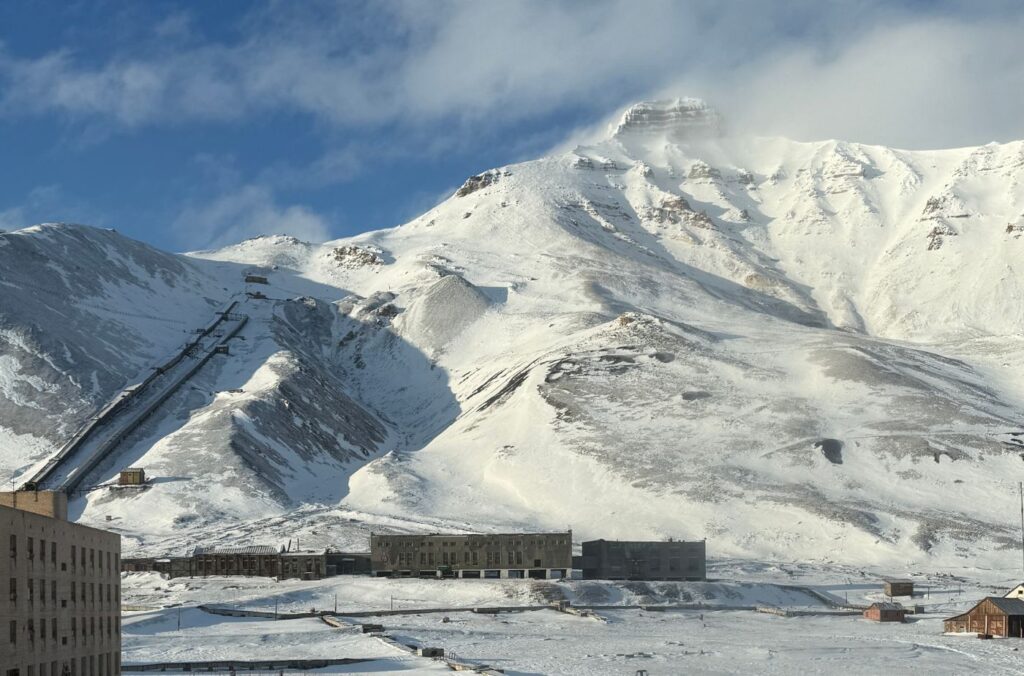
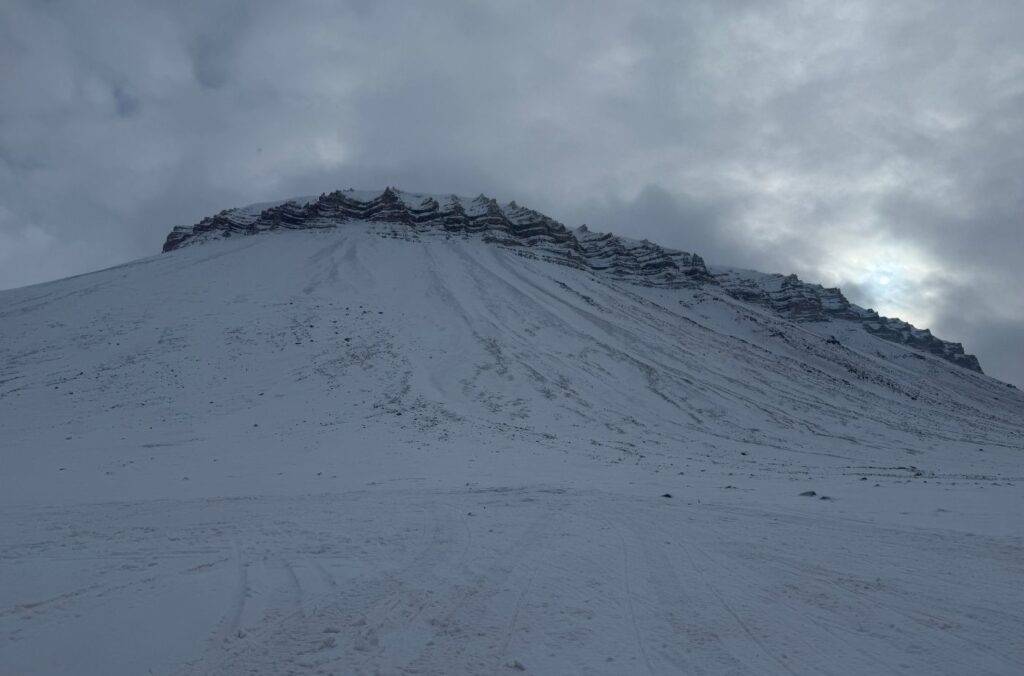
The settlement was founded by Sweden in 1910 after coal was discovered beneath the pyramid-shaped mountain towering behind the town. In 1926, the Soviet Union purchased the settlement and transformed it into a heavily subsidised mining community designed to showcase the best parts of Soviet society in the High Arctic.
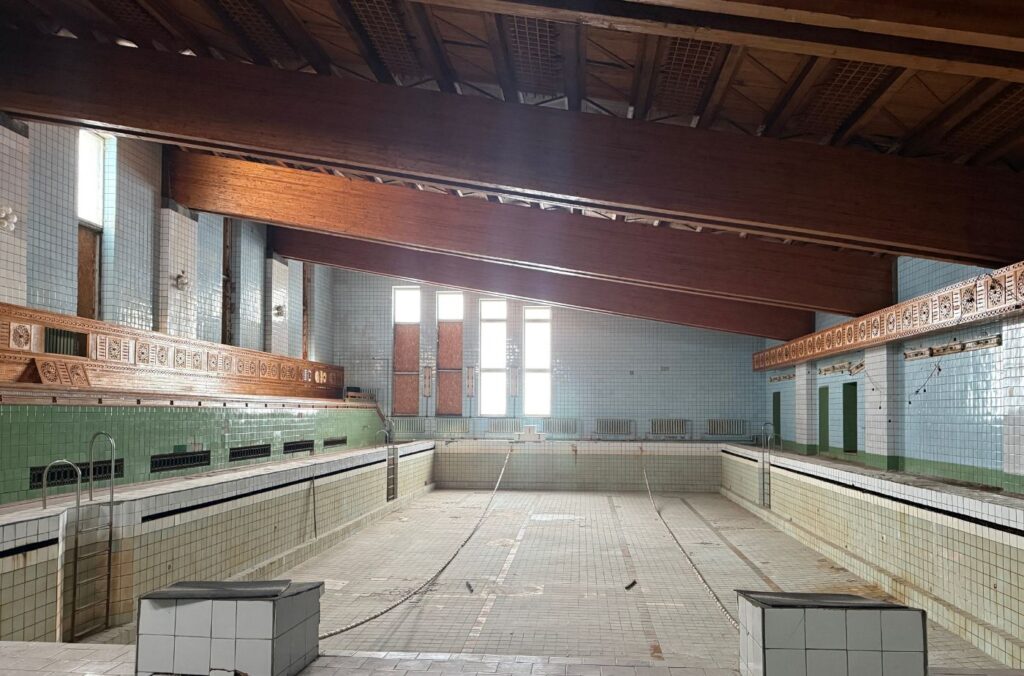
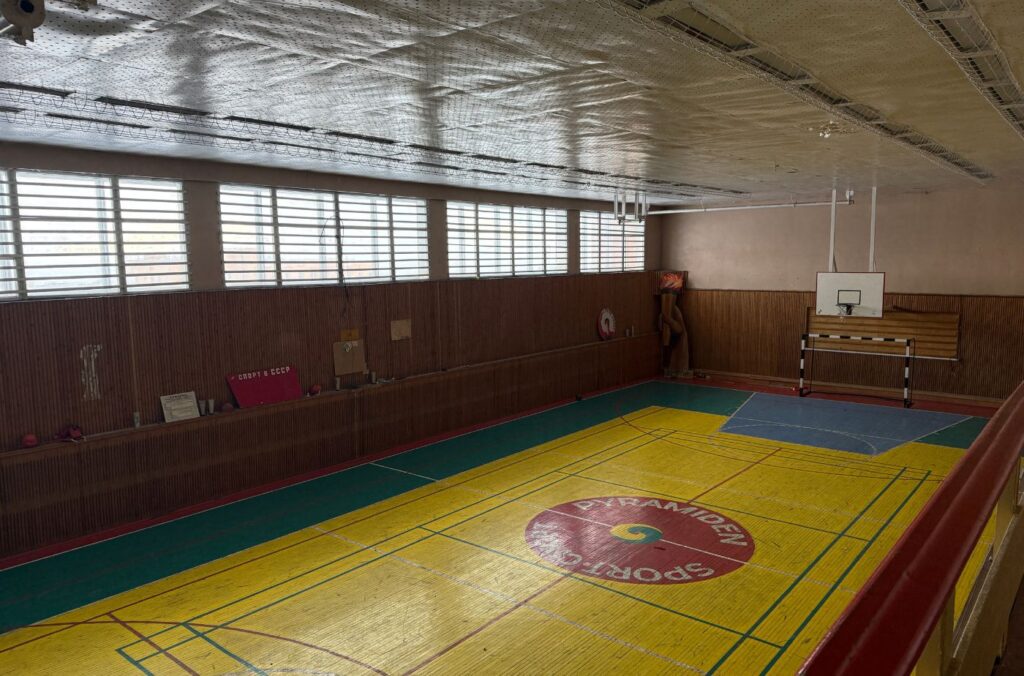
Unlike many mining settlements, Pyramiden was designed for families. Residents had access to free housing, a heated swimming pool, theatre, library, music hall, school, hospital, sports facilities, and cultural centre. Getting a placement here was considered prestigious; thousands applied every year, but only the best miners were selected. Workers earned higher wages than elsewhere in the Soviet Union and often arrived with their families for two-year rotations.
At its peak in the late 1980s, around 1,000 people lived in Pyramiden.
After the collapse of the Soviet Union, it became increasingly difficult to justify the enormous subsidies needed to keep the settlement running. Then, in 1996, tragedy struck when Vnukovo Airlines Flight 2801 crashed into Operafjellet mountain near Longyearbyen, killing all 141 people onboard — many of them connected to Pyramiden.
The town rapidly declined afterwards and was officially abandoned in 1998.
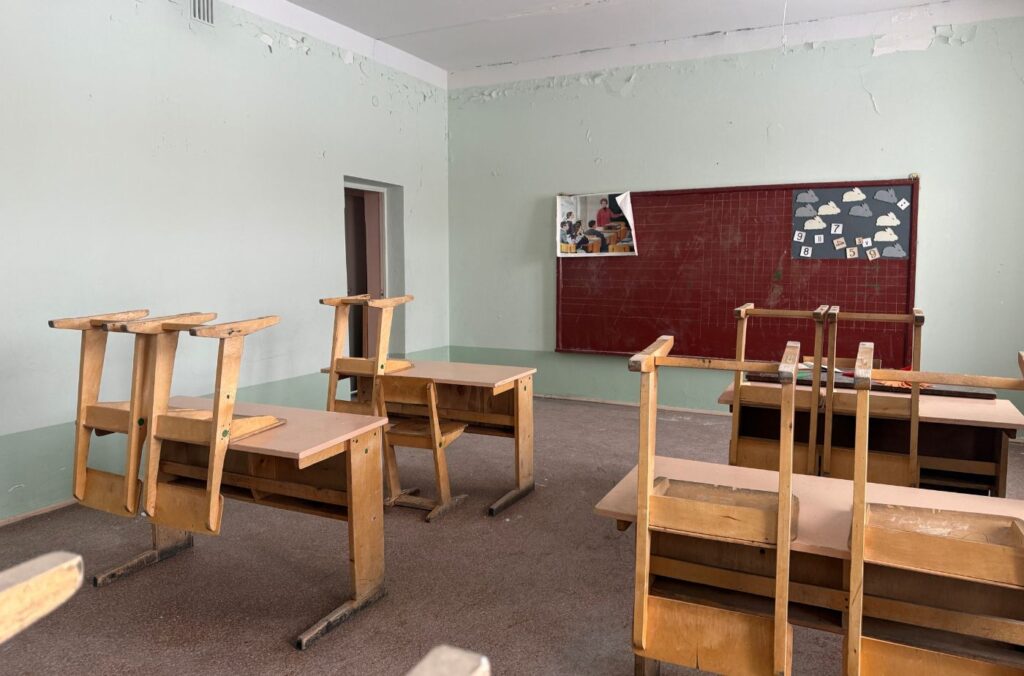
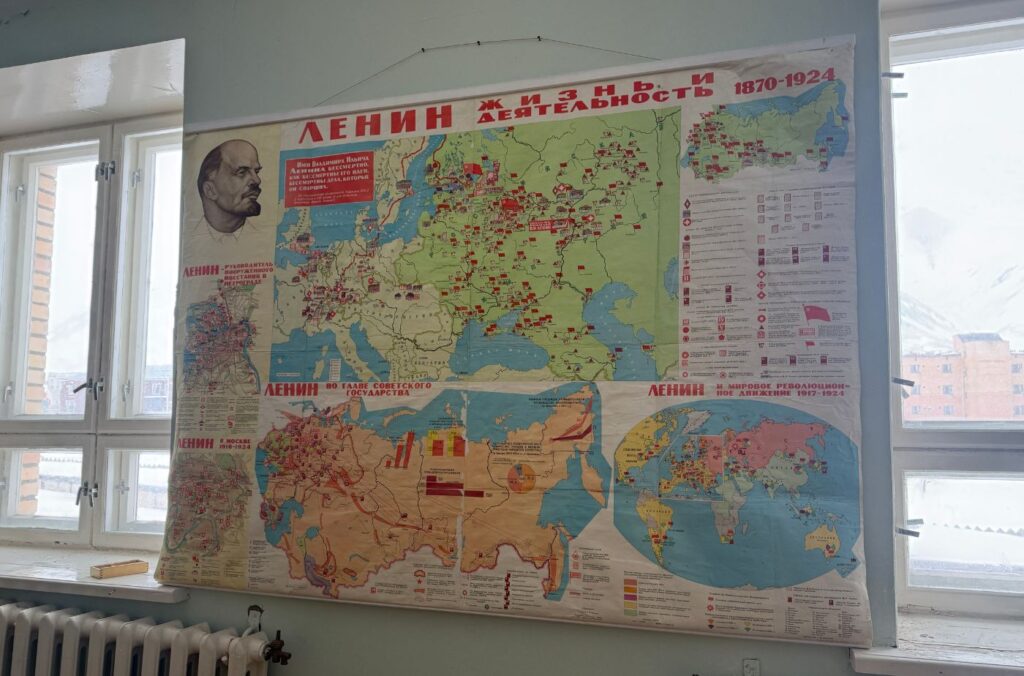
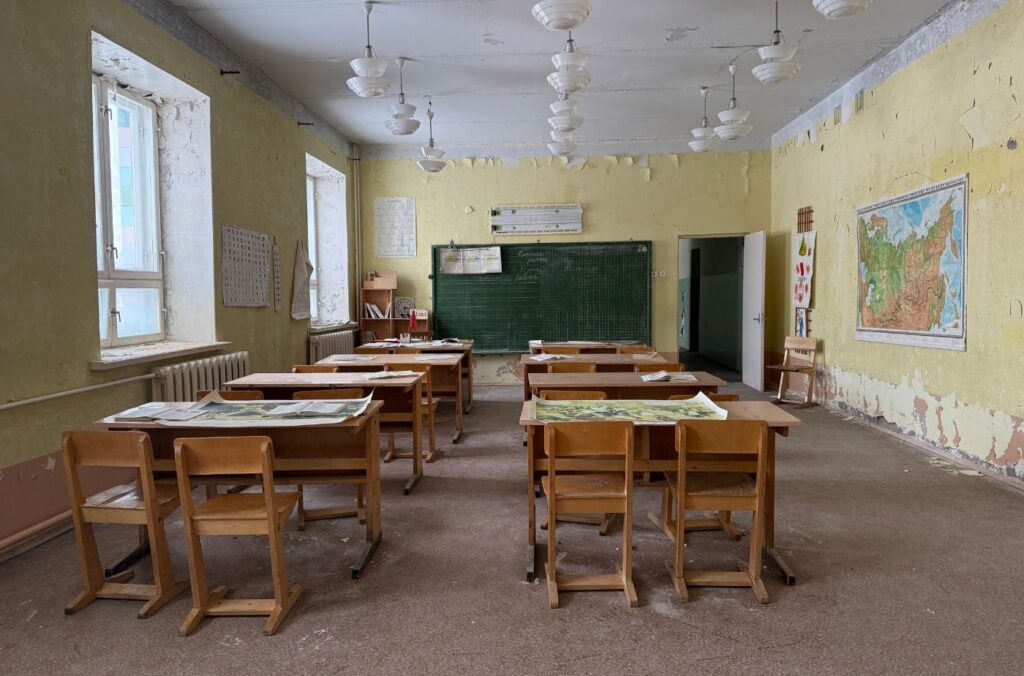
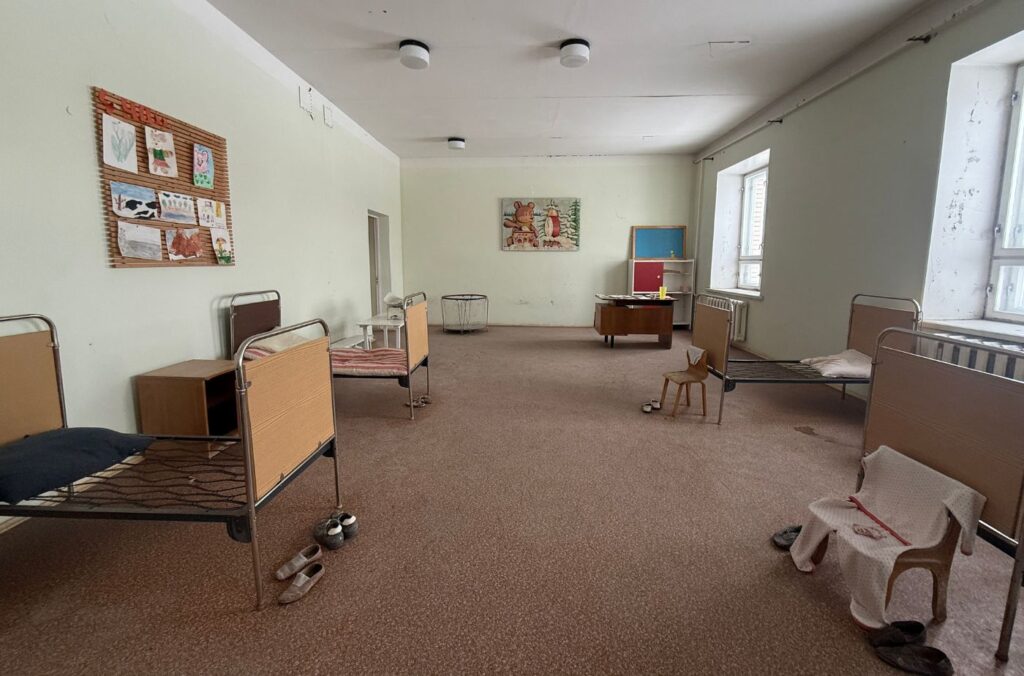
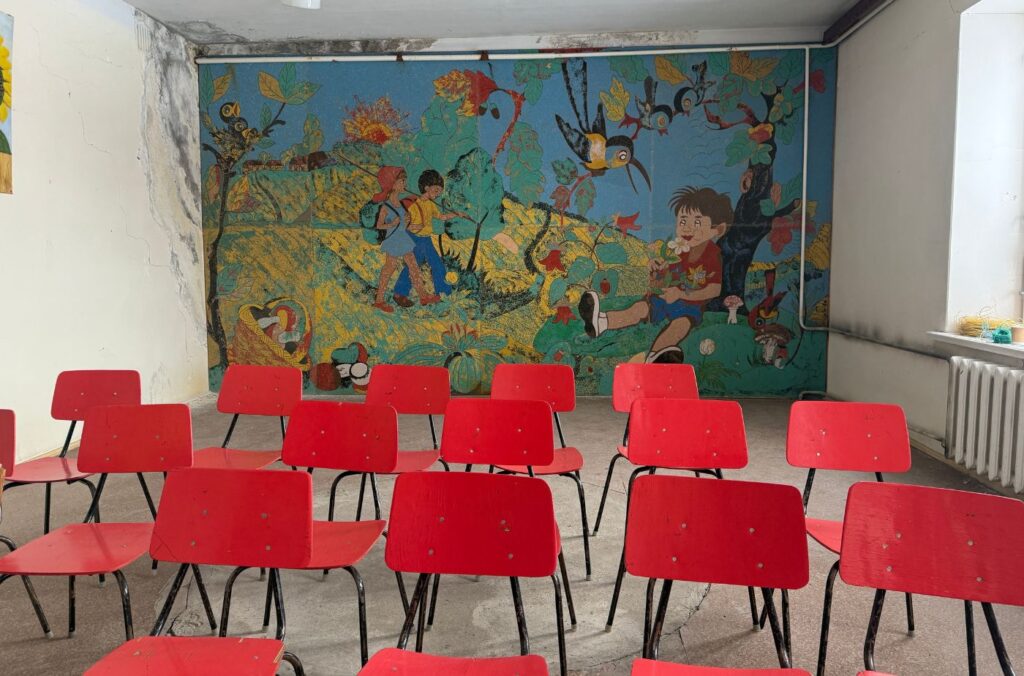
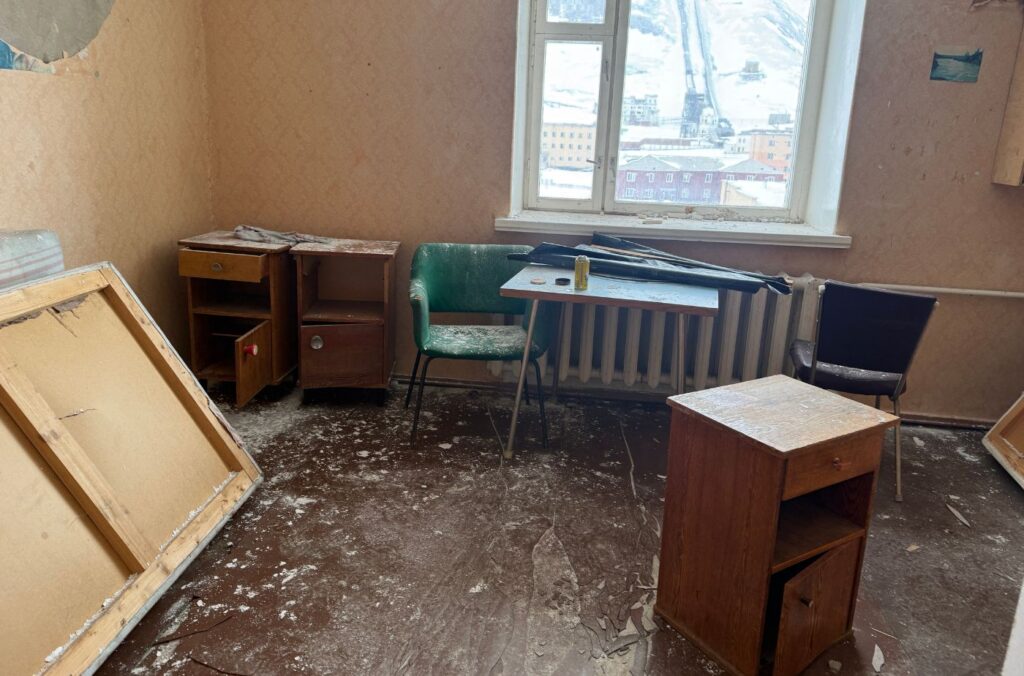
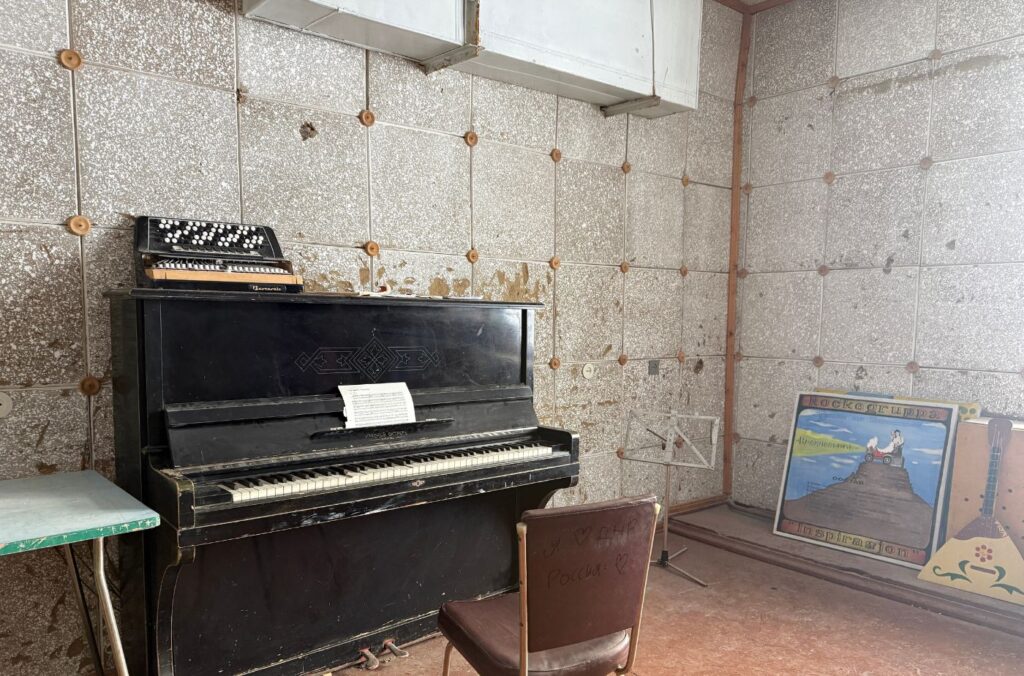
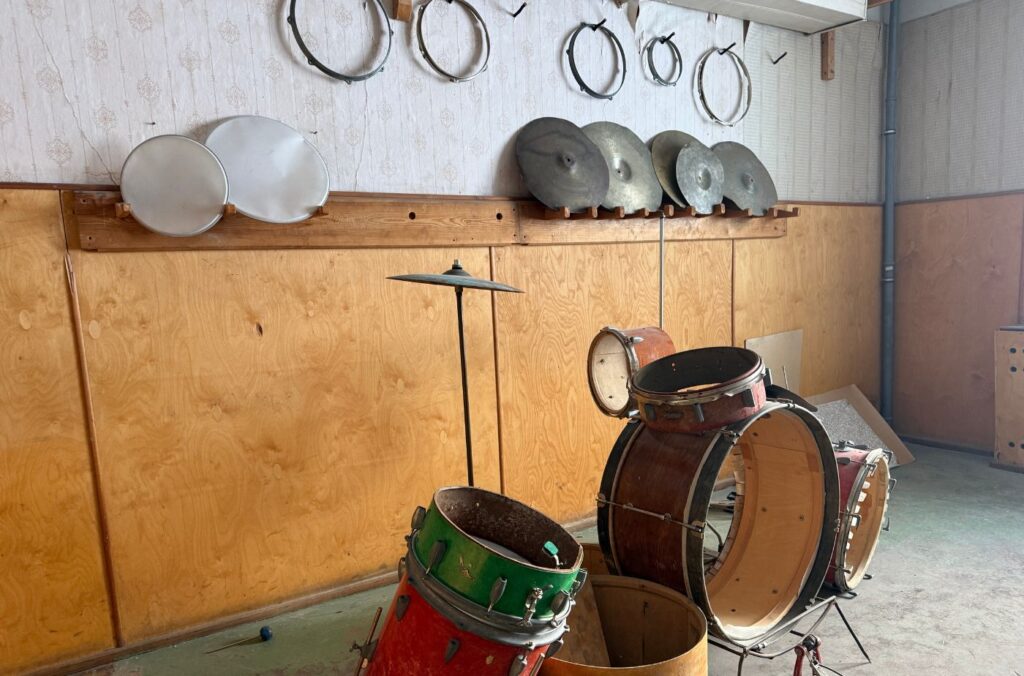
What makes Pyramiden so unique today is how well preserved everything remains. The Arctic cold and permafrost have dramatically slowed decay. Buildings, furniture, murals, classrooms, propaganda posters, and even everyday objects remain almost exactly as they were left.
Today, a very small team lives there year-round, maintaining the settlement and operating tourism activities during the season.
How Can Russia Be Here?
It’s important to note that Pyramiden is on Norwegian territory and is subject to Norwegian law. Svalbard is governed under Norwegian sovereignty, but the Svalbard Treaty grants nationals of signatory states broad rights of access and non-discriminatory economic activity, within the limits of Norwegian law. This legal context enables non-Norwegian mining communities to exist on the archipelago.
It may seem a bit confusing, but basically you are visiting a Russian-operated community under Norwegian jurisdiction, which is part of what makes the experience so unique and unusual.
Booking a Trip to Pyramiden
After Russia’s invasion of Ukraine, tourism involving Russian state-owned operators became more politically complicated in Svalbard. As a result, trips connected to Russian companies are no longer promoted through Visit Svalbard’s booking platform, meaning you usually need to book directly through operators.
I travelled with GoArctica, the only company still operating winter expeditions to Pyramiden.
Honestly, the extra effort almost adds to the experience. It makes the trip feel even more remote and unusual — like you’re actively seeking out somewhere hidden from mainstream tourism.
Winter vs. Summer
There are two main ways to visit Pyramiden.
In summer, boats run from Longyearbyen between roughly May and September. These day trips are easier and more comfortable, but you usually only get a couple of hours in the settlement.
Winter is much more demanding, but also far more immersive.
Our snowmobile expedition lasted three days, with two nights spent in Pyramiden itself. Waking up in an abandoned Soviet town surrounded by Arctic mountains is such a surreal experience that I honestly can’t imagine doing it any other way. And rather than seeing glaciers from a boat, you cross them on snowmobile. What an amazing experience.
That said, winter travel here is physically exhausting. Walking around Pyramiden can be extremely icy, visibility changes constantly, and for long periods the entire landscape feels monochrome — like living inside an old black-and-white photograph.
Still, that atmosphere is part of what makes the trip unforgettable.
Day 1: Snowmobiling Across Svalbard to Pyramiden
We were picked up early in the morning and driven to the operator’s administrative building to sign paperwork, collect gear, and prepare for departure.
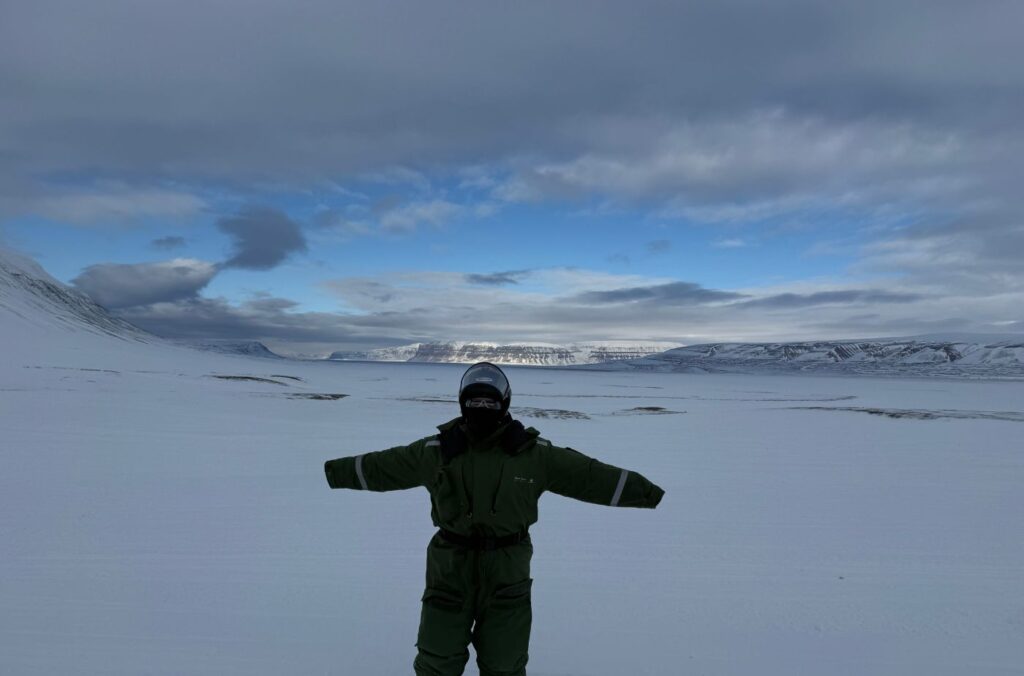
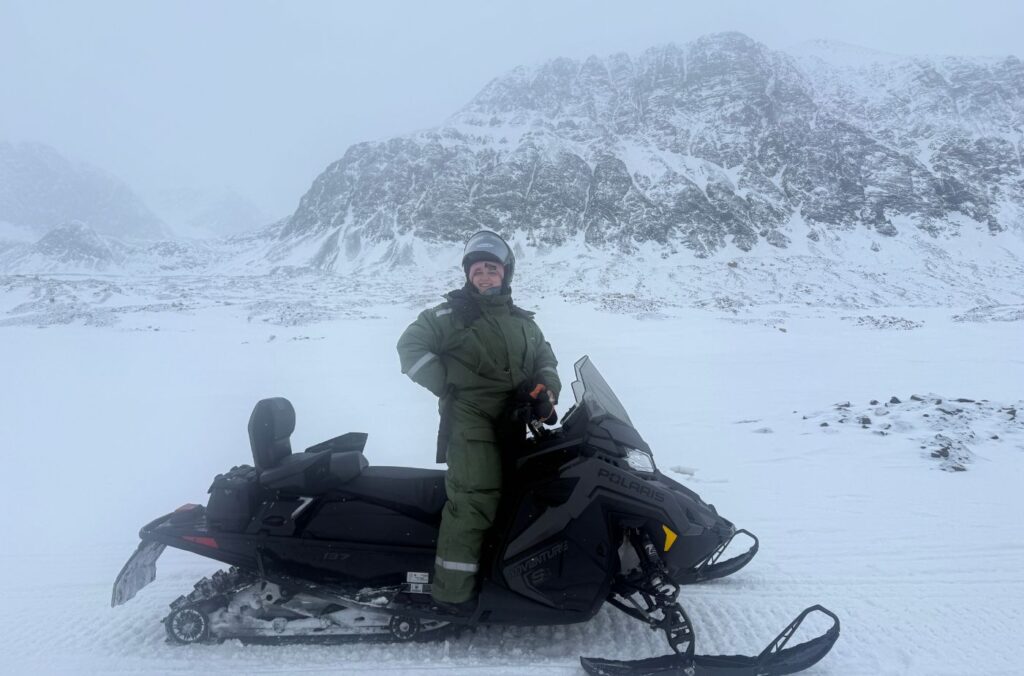
The provided snowmobile suits are incredibly warm. I wore thermals and a wool jumper under everything the entire trip. The boots, however, were definitely built for practicality rather than comfort.
You can only bring a backpack, so packing light is essential. Suitcases are stored back in Longyearbyen at GoArctica’s administrative building.
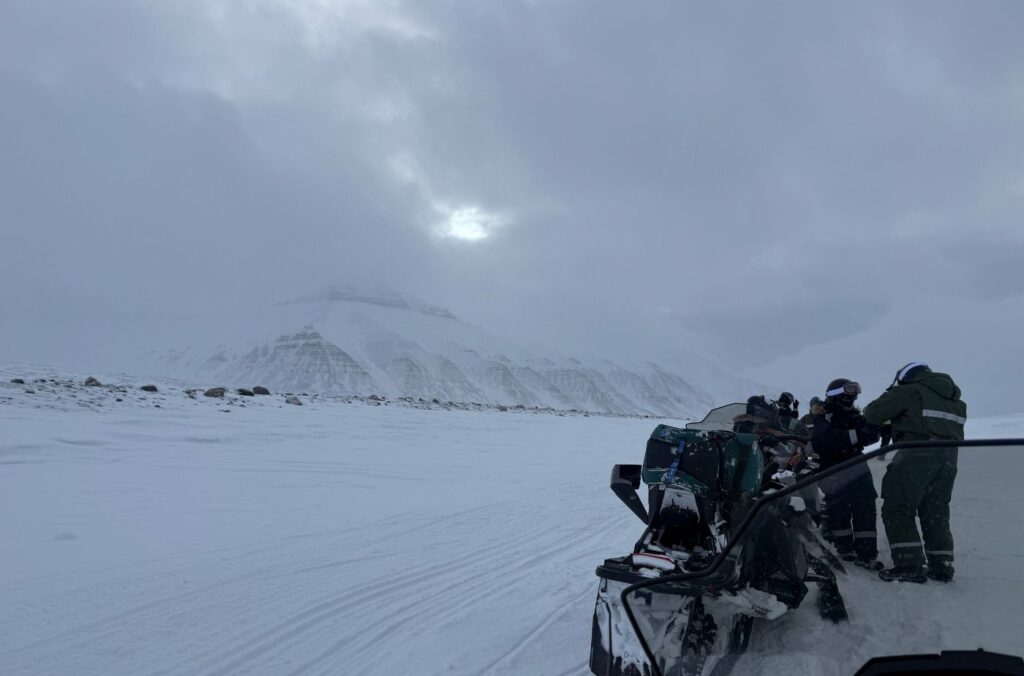
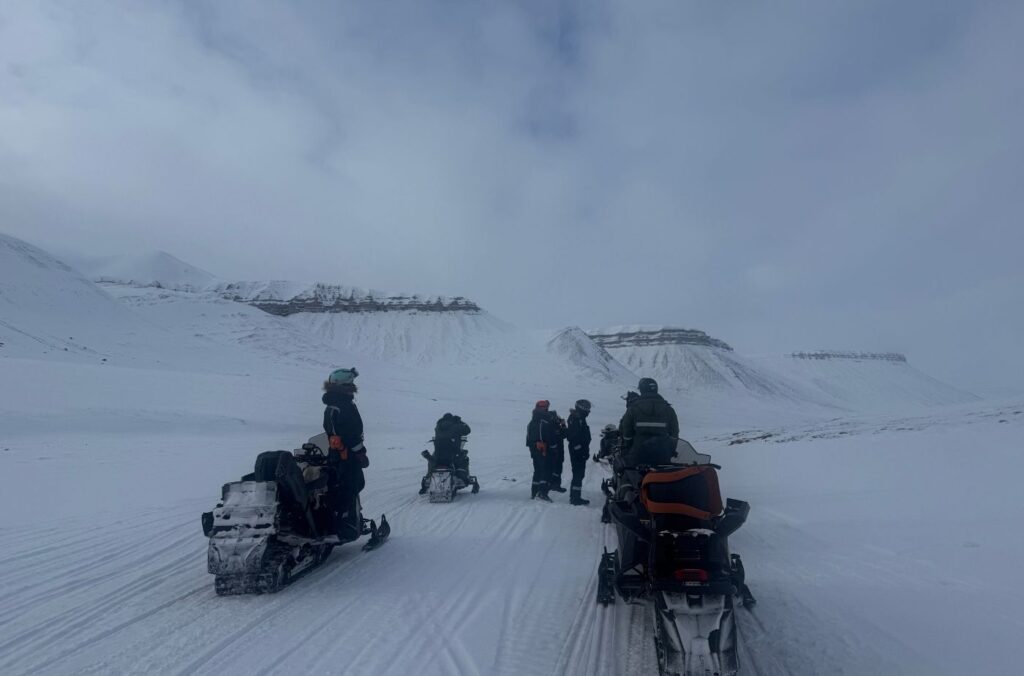
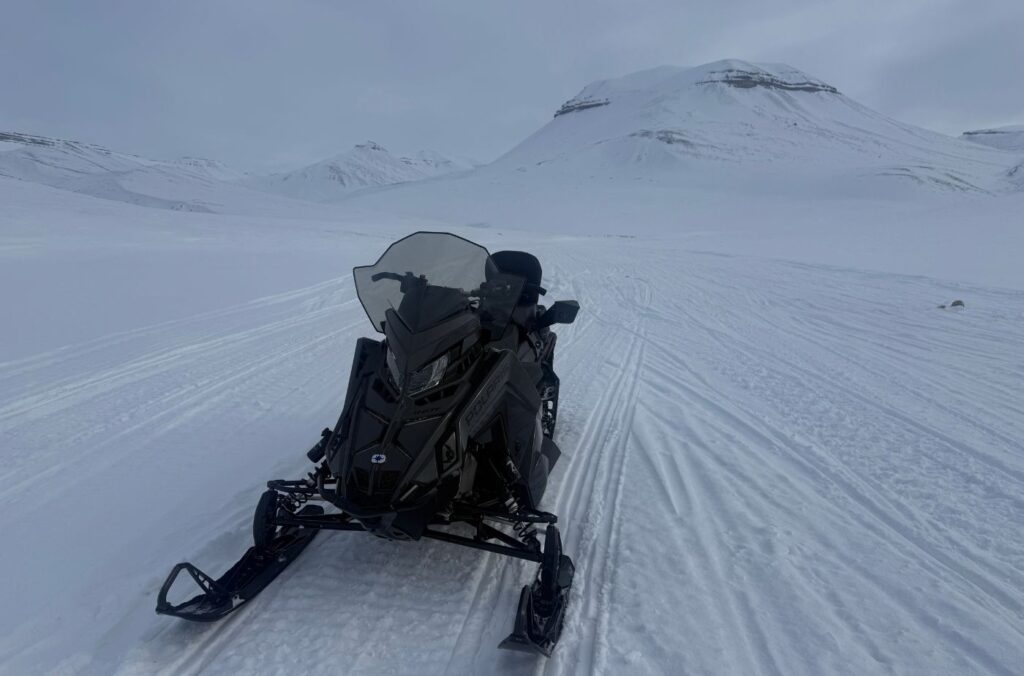
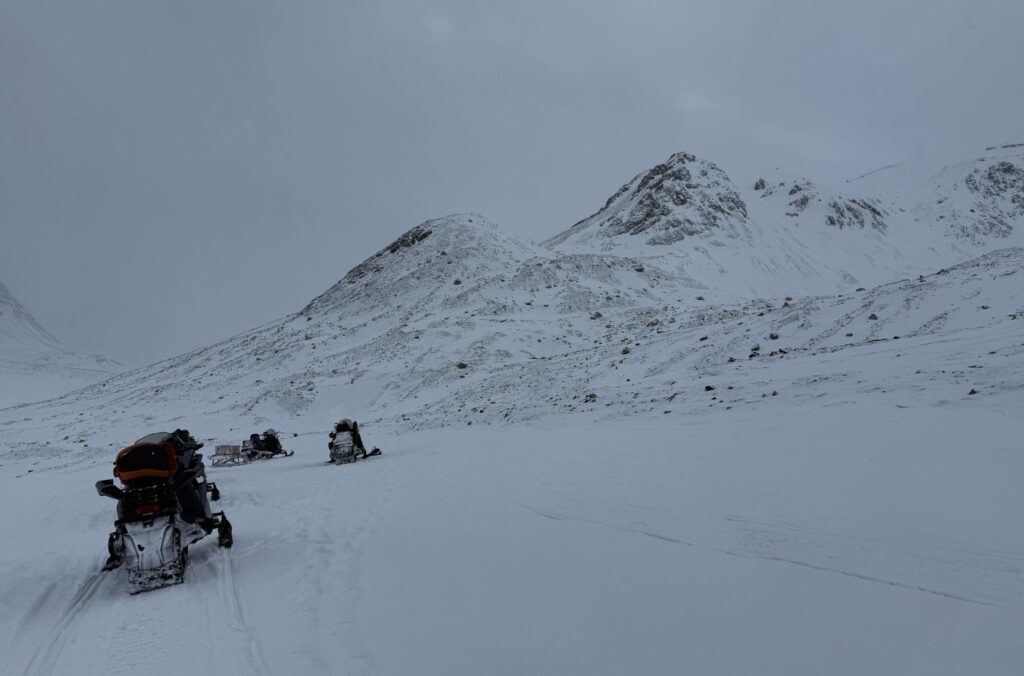
After a quick lesson on driving a snowmobile, we headed out into Adventdalen. The snowmobile lesson always makes it look very intimidating, but it’s actually very easy.
Adventdalen
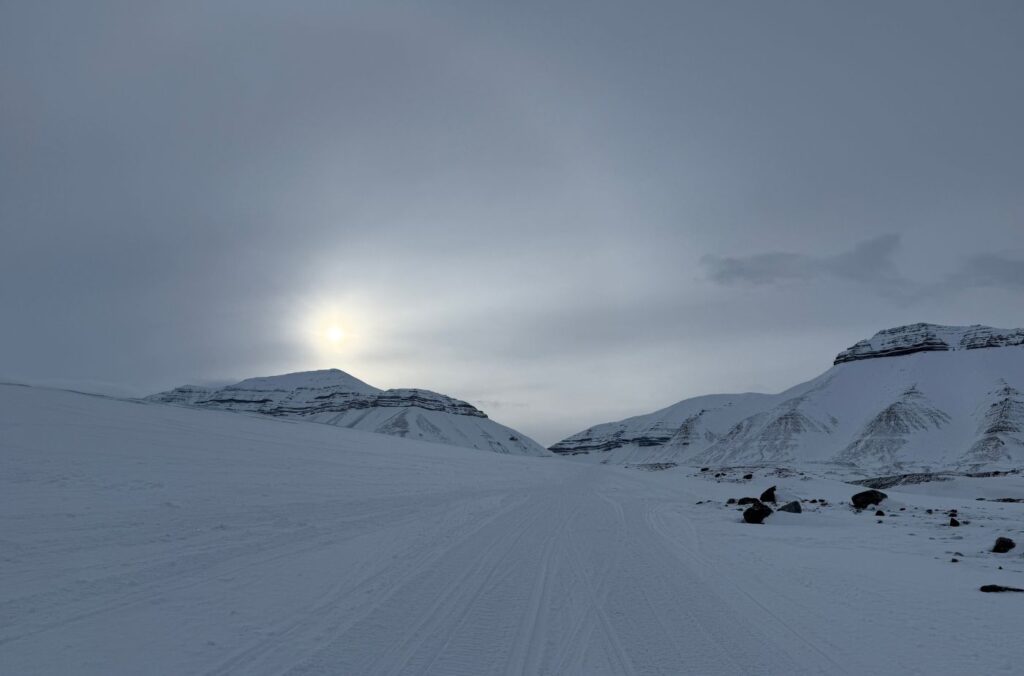
The first stretch through Adventdalen feels like the transition between civilisation and wilderness. Longyearbyen quickly disappears behind you, replaced by enormous snowy valleys and mountains stretching endlessly into the distance.
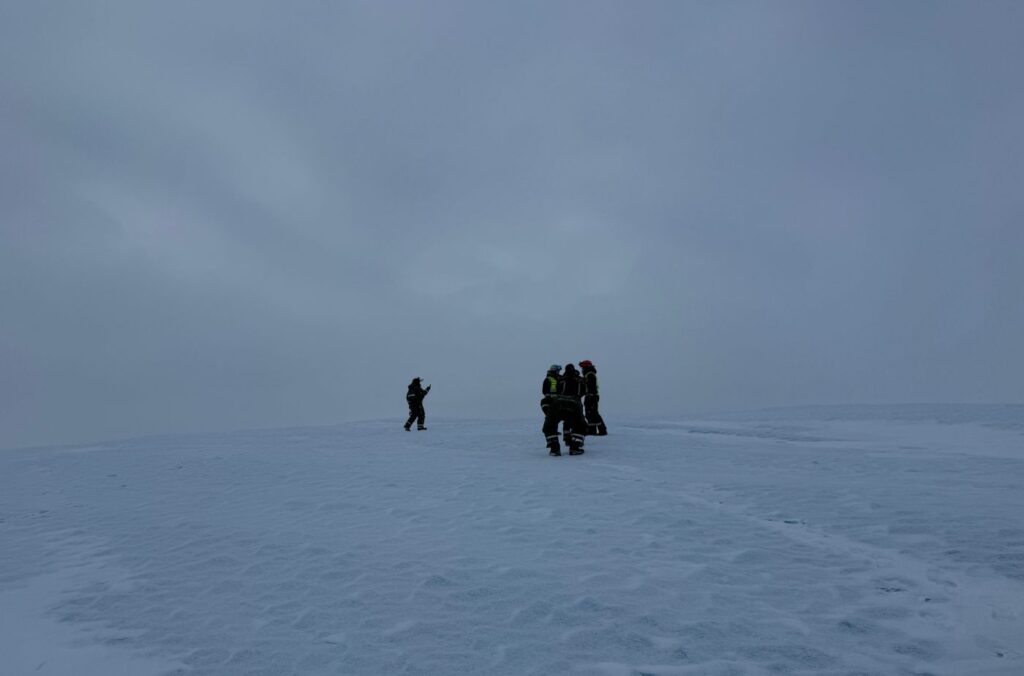
This section is relatively gentle and perfect for getting comfortable on the snowmobiles. We made one short stop so the guides could check everyone’s driving.
Sassendalen
From Adventdalen, we continued into Sassendalen, which was probably one of my favourite parts of the entire route.
The valley is vast, open, and unbelievably beautiful. The terrain here is smooth and easy to ride on, so we spent most of the time simply enjoying the scenery and building confidence on the snowmobiles.
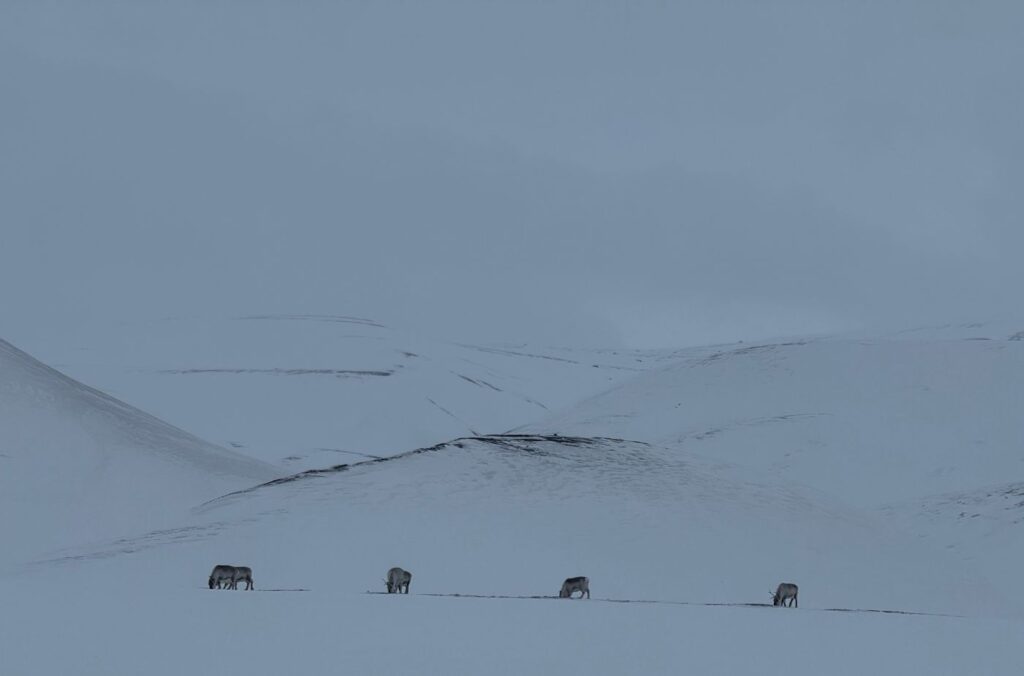
We saw reindeer throughout the journey, scattered across the snowy plains, looking completely unfazed by the passing convoy.
Lunch was served near the glacier, where the guides laid out bread, spreads, toppings, and hot drinks. It was surprisingly generous considering how remote we were.
Nordenskiöldbreen Glacier
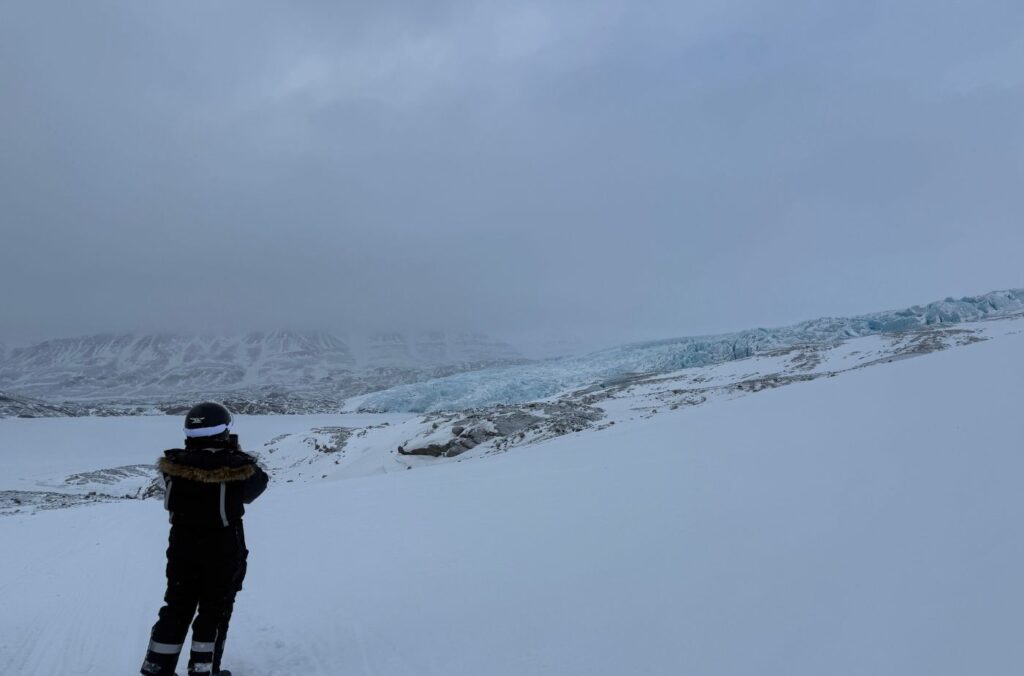
The next stage of the journey was crossing Nordenskiöldbreen Glacier.
This was also the most intense part of the day.
We climbed to more than 800 metres above sea level, crossing a huge frozen plateau where visibility can apparently change within minutes. On clear days you can supposedly see across enormous sections of Svalbard from the top.
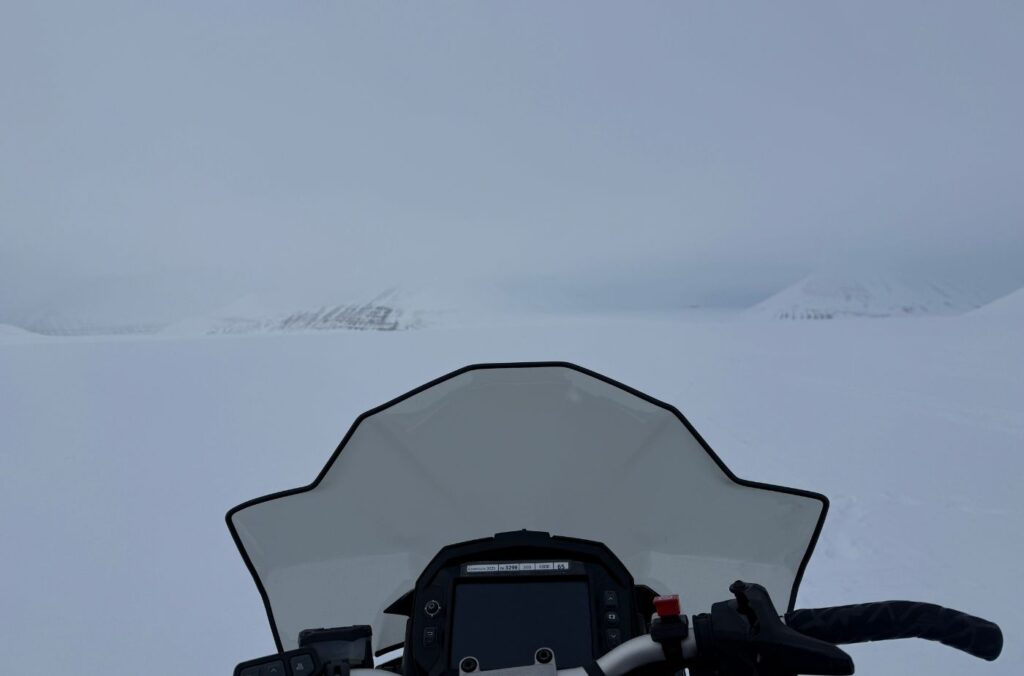
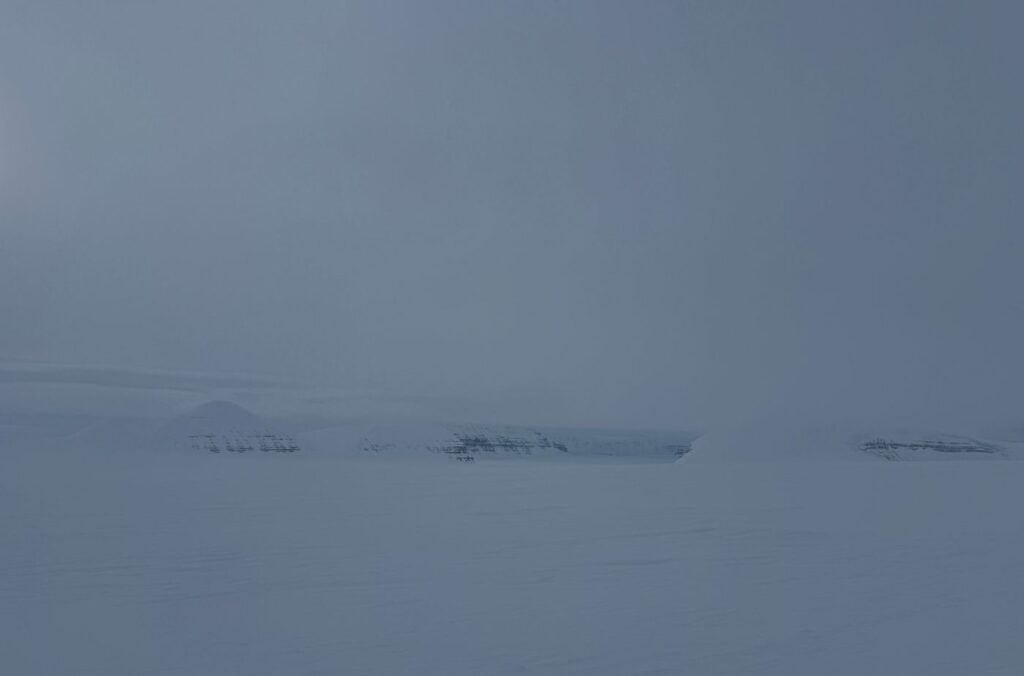
Naturally, we got a complete white-out.
Without the guides and GPS equipment, I genuinely think it would be easy to become completely disoriented up there. The landscape becomes nothing but endless white in every direction.
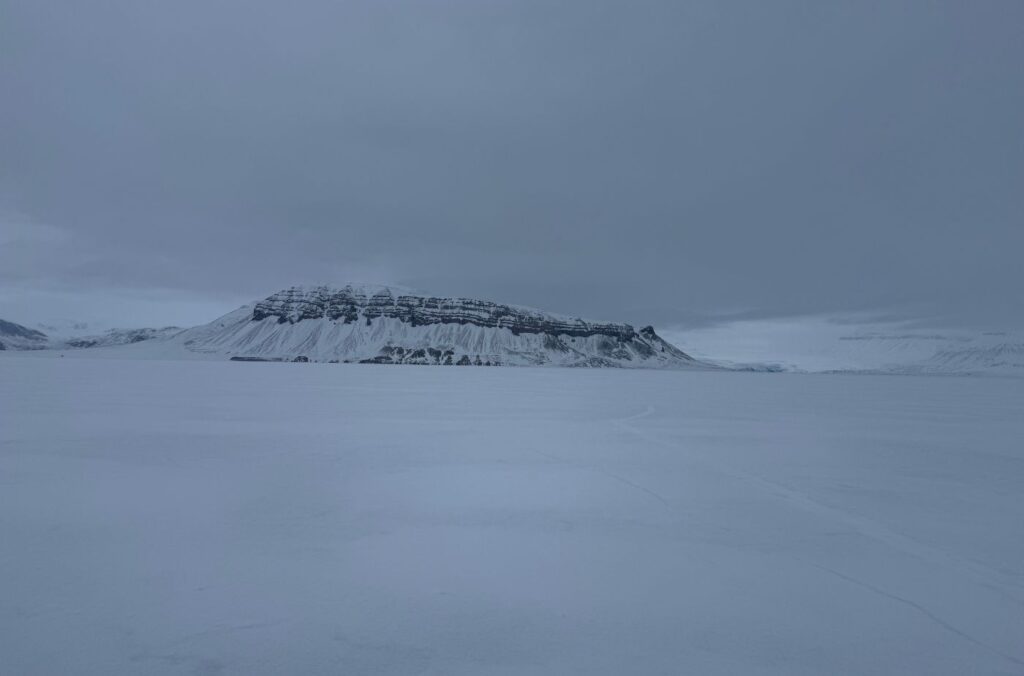
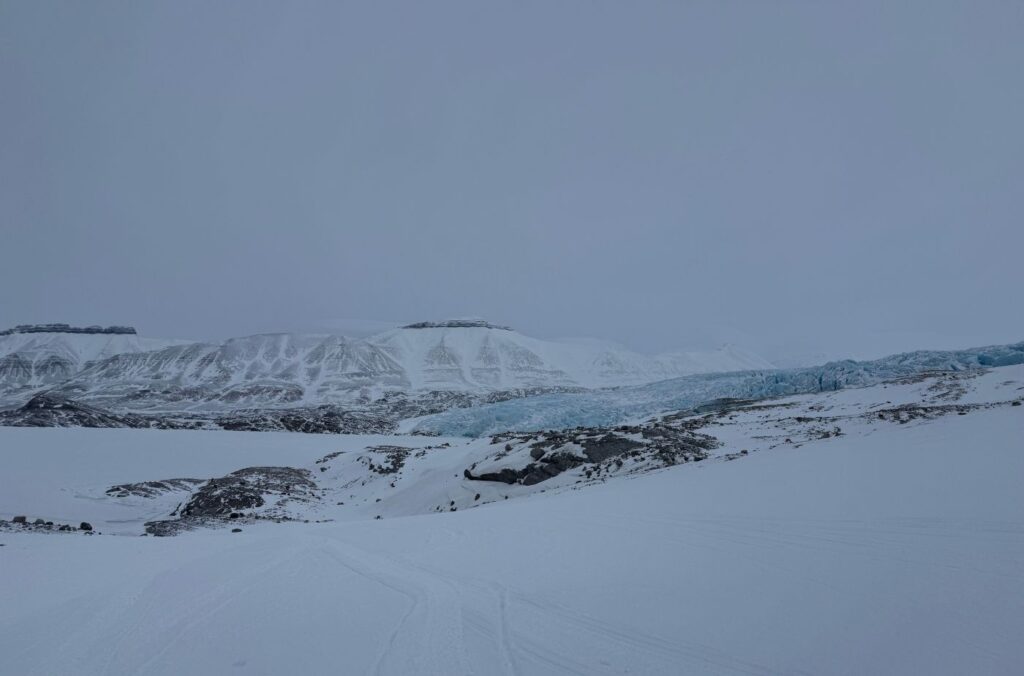
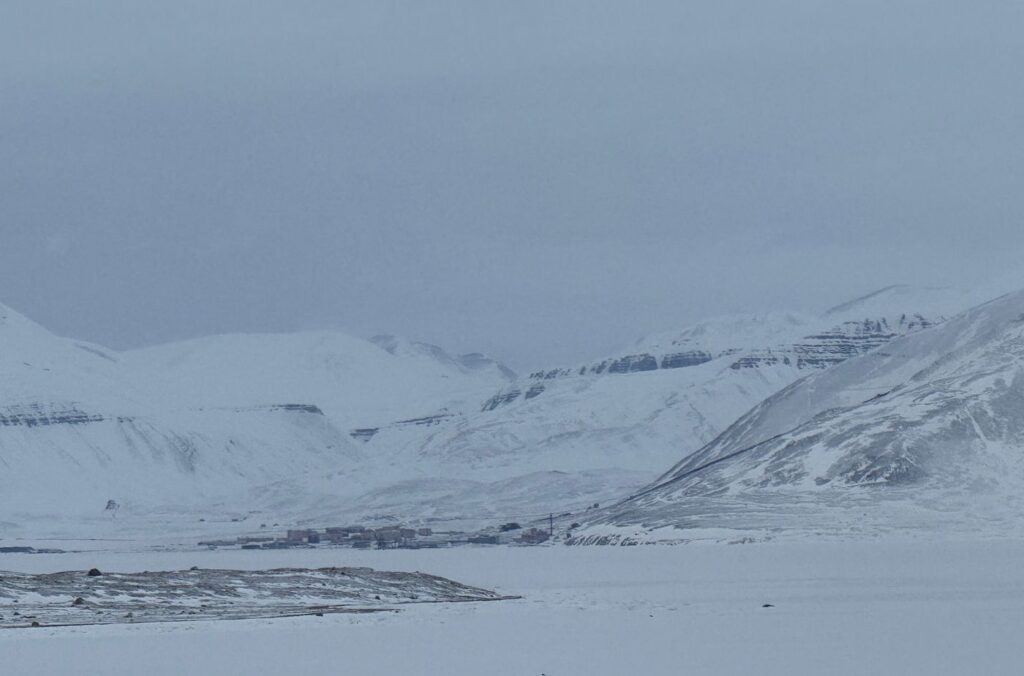
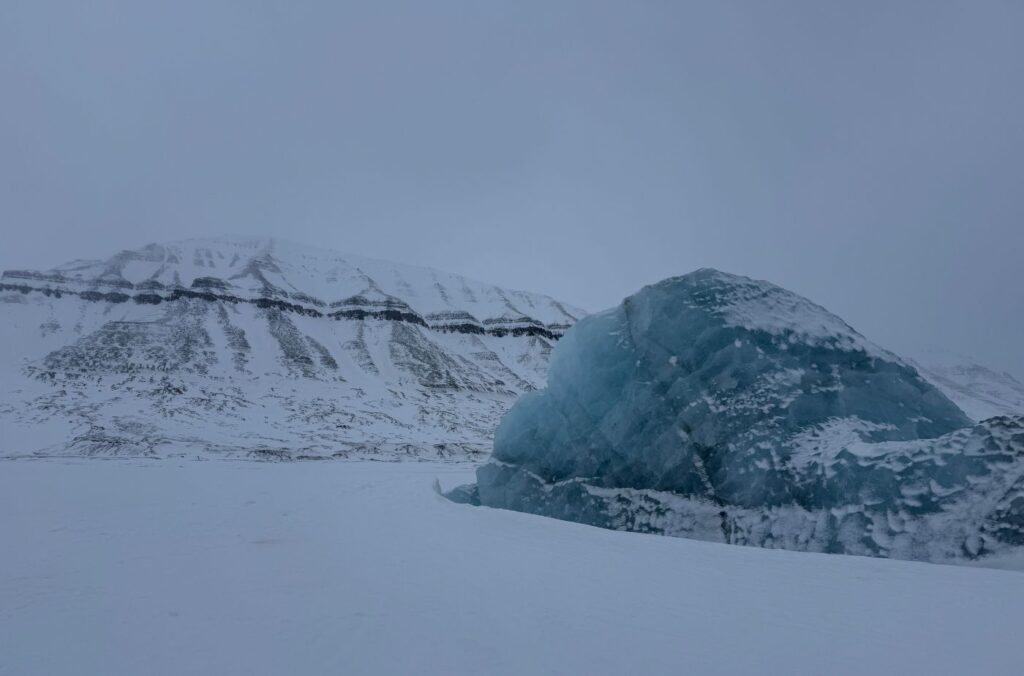
Eventually we descended from the glacier and reached one of its dramatic tongues near sea level. The views here were incredible, and for the first time we could see Pyramiden in the distance beneath the mountain.
Crossing the Frozen Fjord
The final stretch involved crossing the frozen fjord itself.
Because of changing ice conditions, we weren’t allowed to stop here, so we travelled slowly and steadily across the sea ice. Along the way we spotted seals resting on the frozen surface.
Then finally, after hours of snowmobiling through the wilderness, the settlement appeared.
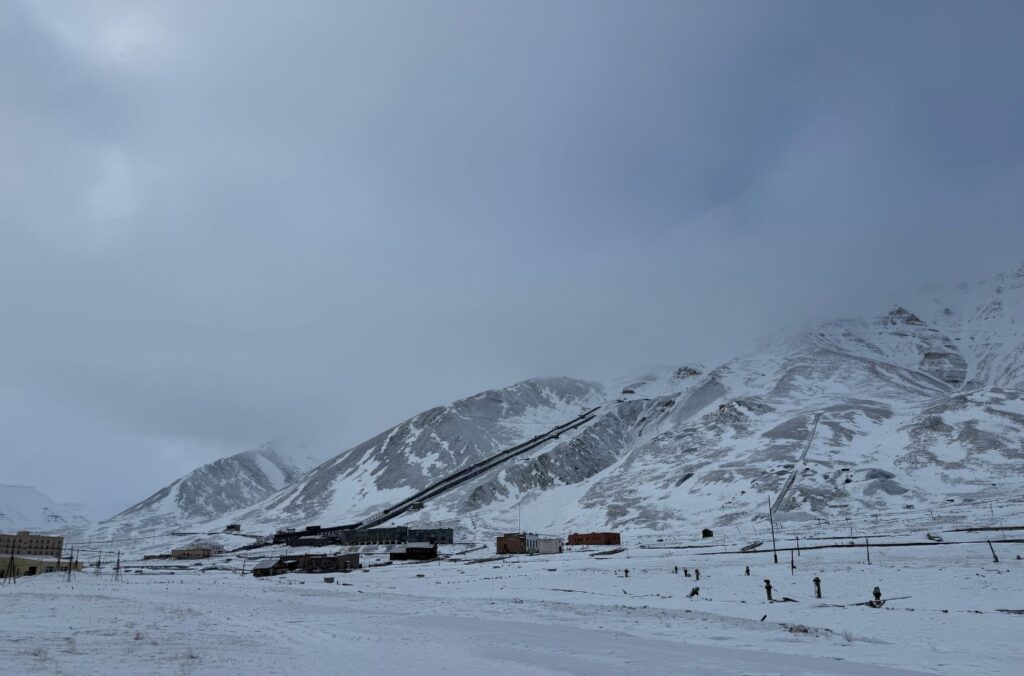
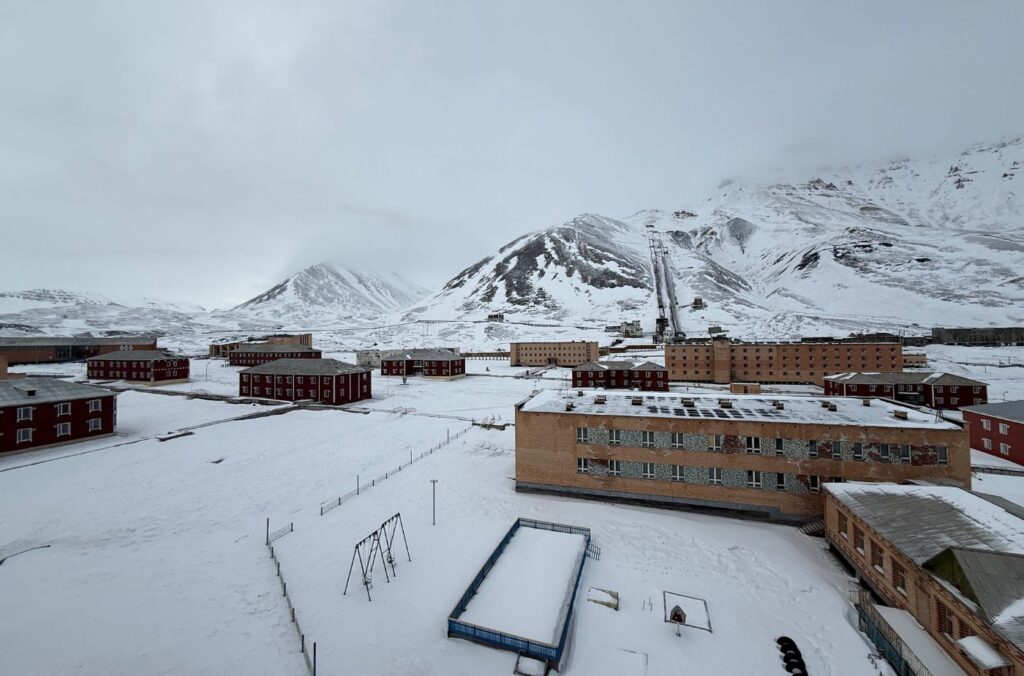
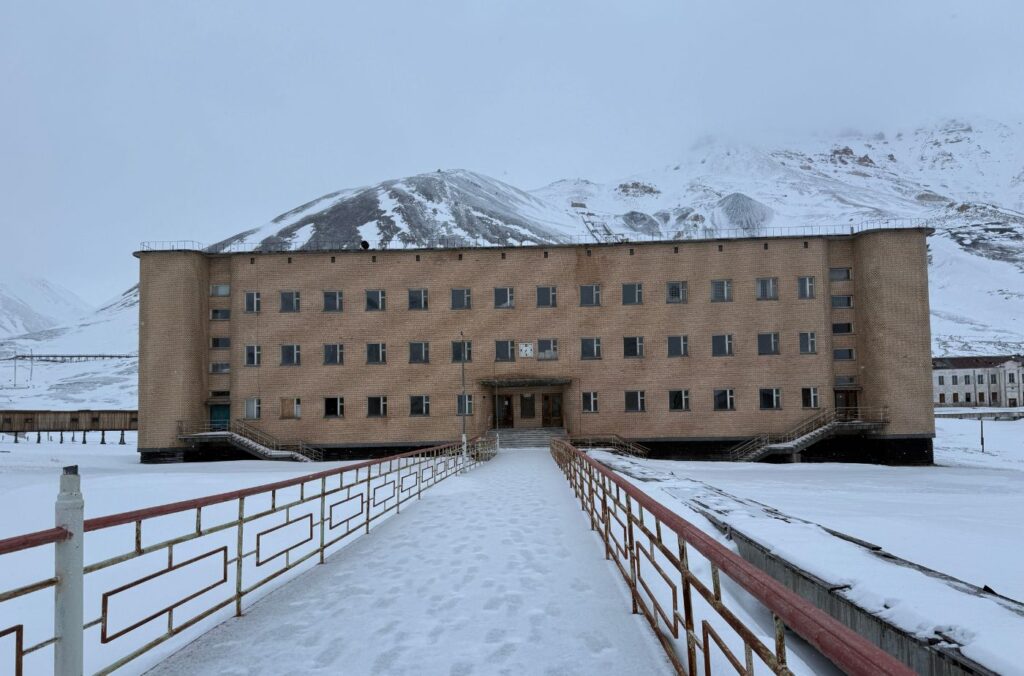
The arrival at Pyramiden is honestly surreal. Soviet apartment blocks, cranes, and industrial buildings rise out of the snow beneath the pyramid-shaped mountain looming overhead.
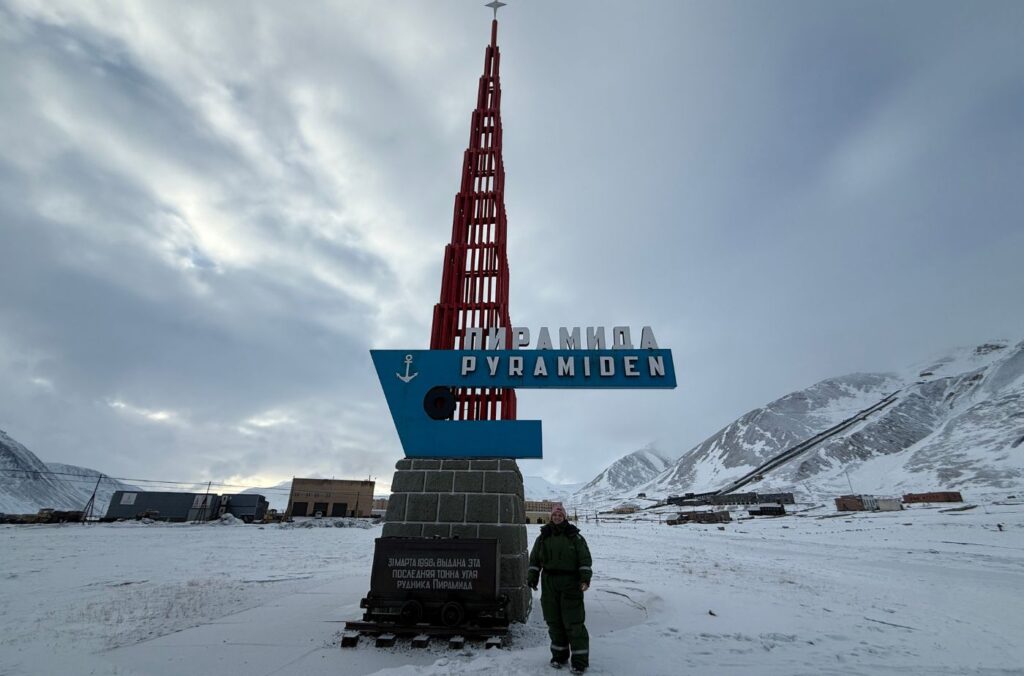
Our first stop was the famous Pyramiden sign, featuring both Cyrillic and Latin lettering. At its base sits a coal trolley carrying what is claimed to be the final load of coal extracted from the mine in March 1998.
Staying in Pyramiden
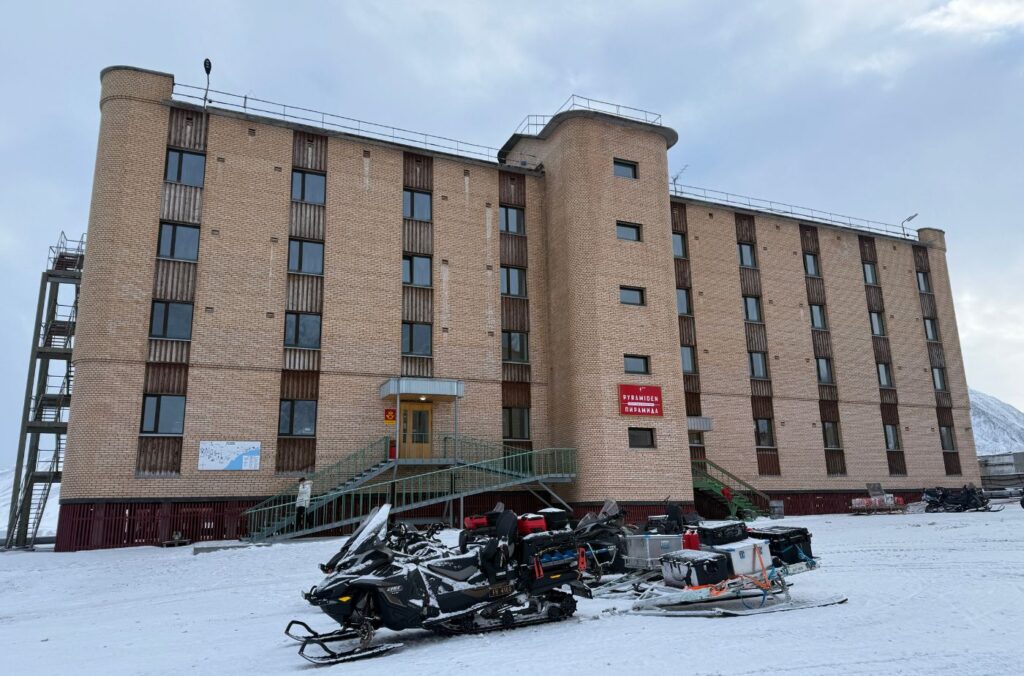
We stayed in Pyramiden Hotel — naturally the only hotel in town.
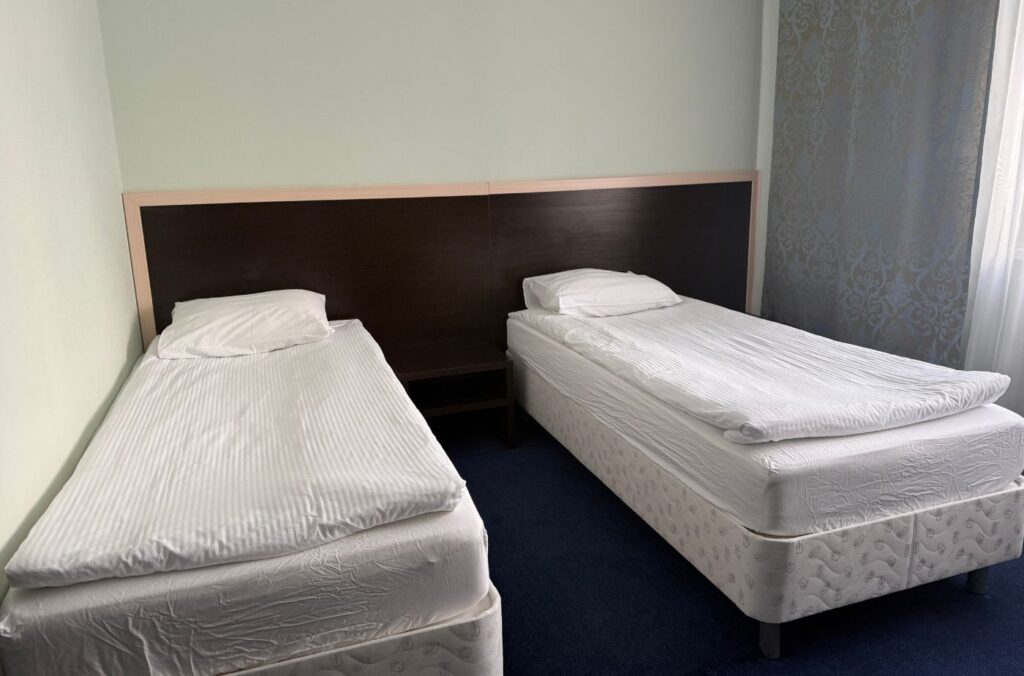
The building originally housed workers without families, but has now been renovated into surprisingly decent accommodation. The rooms felt like a standard budget hotel in Europe: basic but warm, clean, and comfortable enough after a long day riding snowmobiles.
There’s around 16 staff in Pyramiden during the tourist season, mostly from Russia, and they handle absolutely everything themselves. One German man has apparently been living there since the 1990s.
The mine dominates the mountainside above the town. Interestingly, miners travelled uphill into the mountain rather than descending underground.
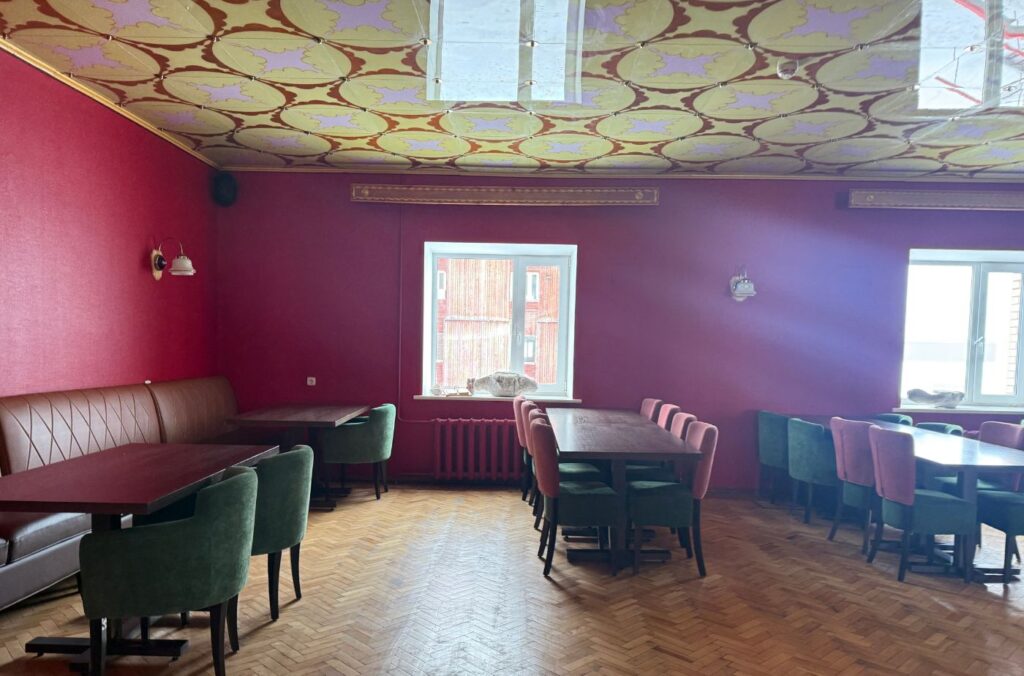
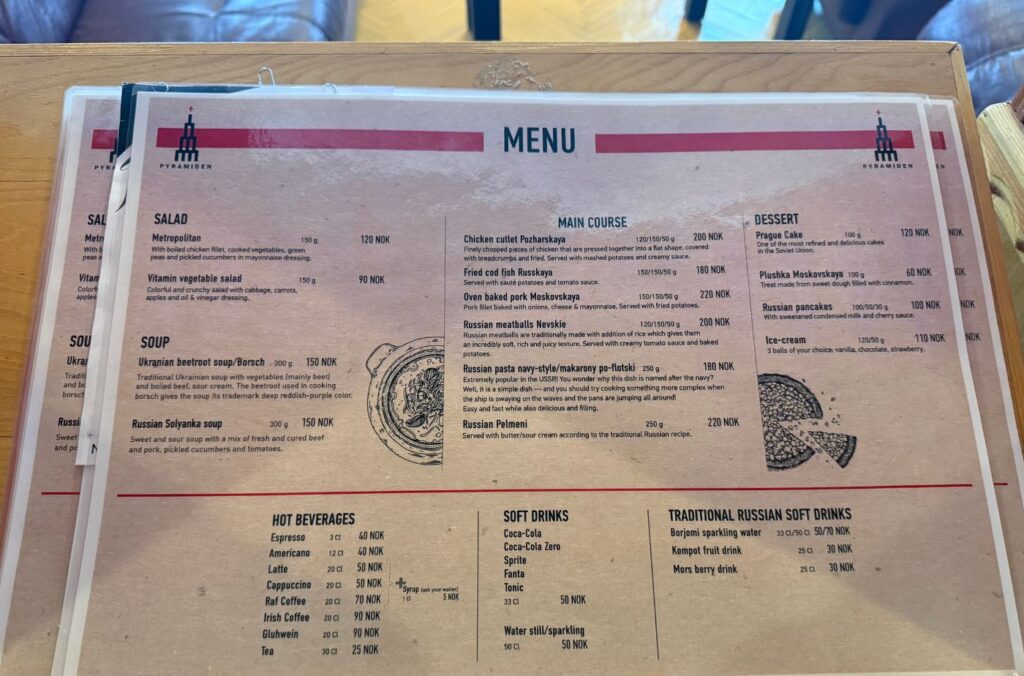
Dinner was served in the hotel restaurant. The food is heavily Soviet-inspired and definitely feels old-school, but considering how remote Pyramiden is, it was much better than I expected. Especially considering how frozen the food has probably been, and the journey it has taken to get here!
By the end of the day, we had spent around eight hours on snowmobiles. My entire body hurt, and I fell asleep almost instantly.
Day 2: Exploring Pyramiden
Snowmobile Tour
In the morning, we set off on a three-hour snowmobile tour to the neighbouring valley, in hopes of seeing polar bears. The weather was mixed, with nice, clear skies on the way to the valley, but heavy fog once we got to the valley. We saw fresh polar bear prints, so if it wasn’t so foggy, we probably would’ve seen polar bears in the distance, but that’s okay! I didn’t take the trip to see polar bears, and I was lucky to have seen them on Svalbard before.
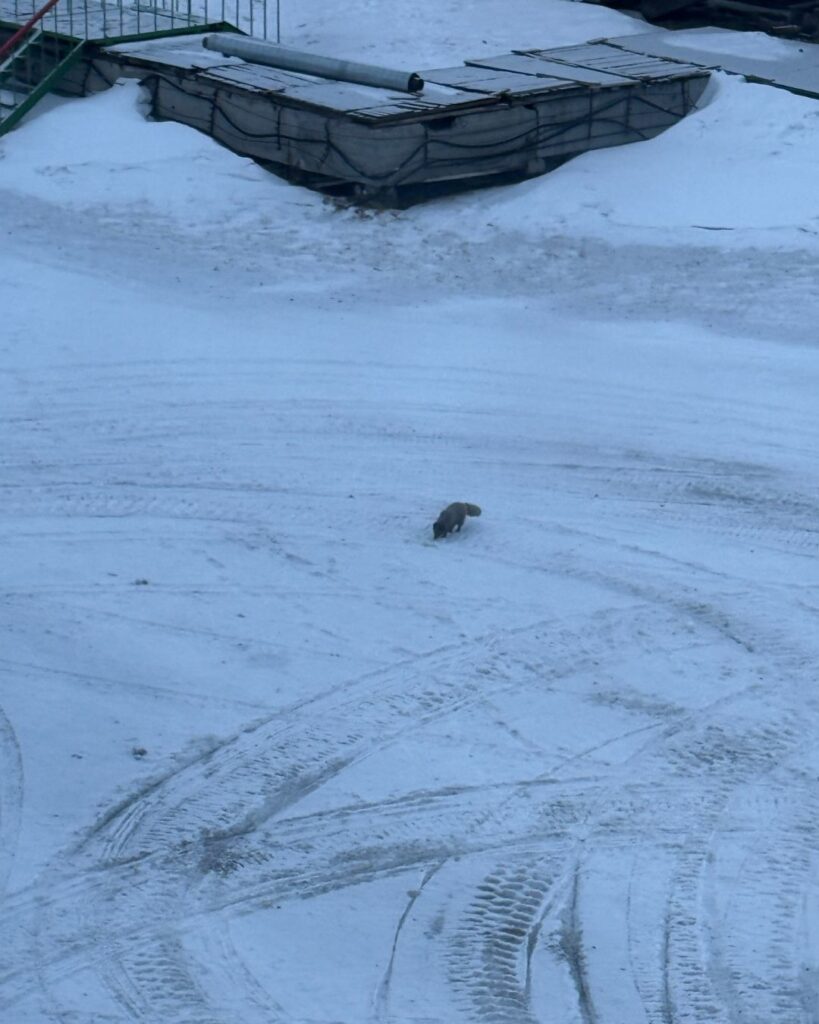
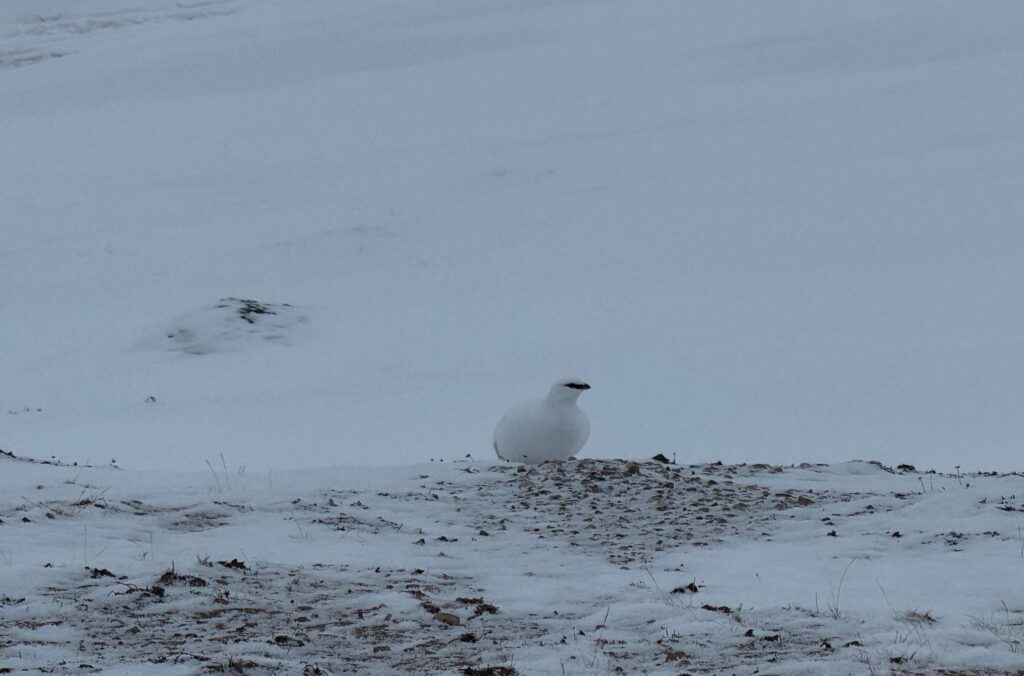
The morning trip was okay, but considering the weather and how exhausted we were from the day before, I would’ve personally preferred to skip it. The best part of the trip was a ptarmigan that followed us around at one of the stops.
After lunch, it was time to set out on a guided tour of the settlement. It is not possible to explore the settlement on your own, due to the high risk of polar bears. We met our guide in the hotel; she was carrying a rifle with her. Not all of the buildings are stable enough to enter, and all the buildings are padlocked, so you need the guide to unlock each building.
Guided Tour of Pyramiden
Walking through Pyramiden is fascinating because everything feels suspended in time.
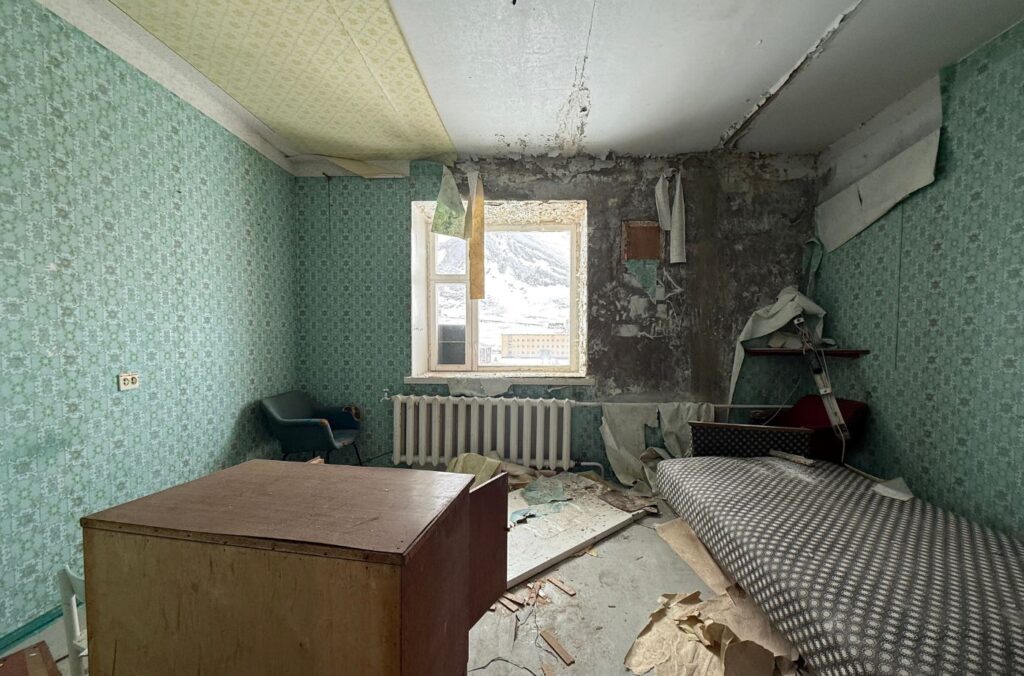
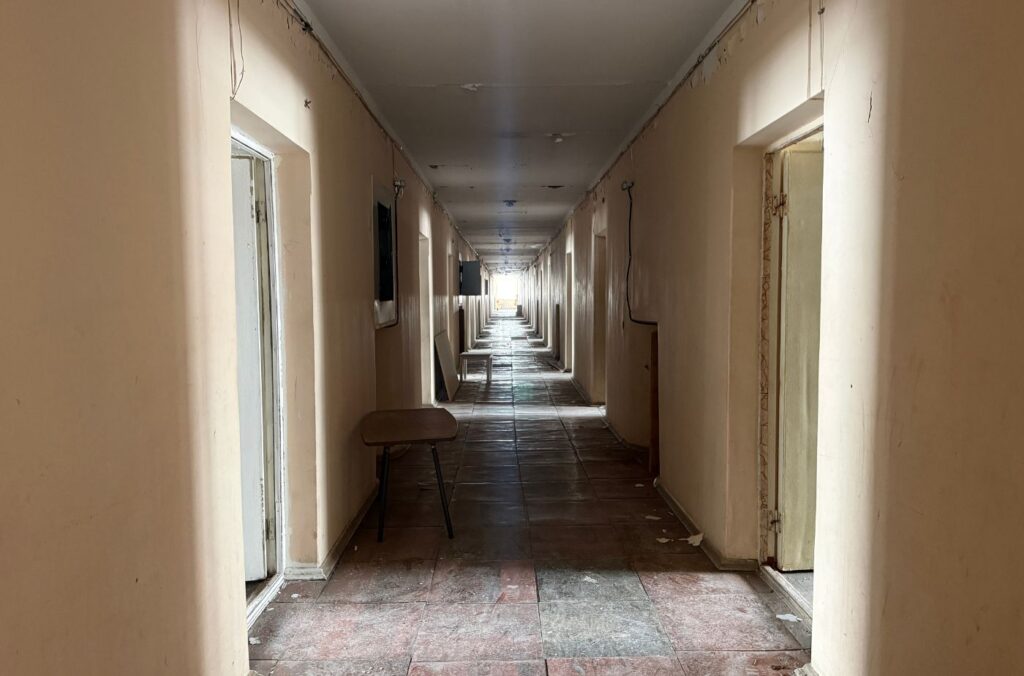
The apartment blocks still contain traces of everyday life. Some buildings housed single men (“London”), others single women (“Paris”), while family housing was jokingly referred to as “the Asylum”.
One detail I found especially interesting was the lack of refrigerators in apartments. Residents simply stored food outside in boxes attached to windows because the Arctic climate acted as natural refrigeration.
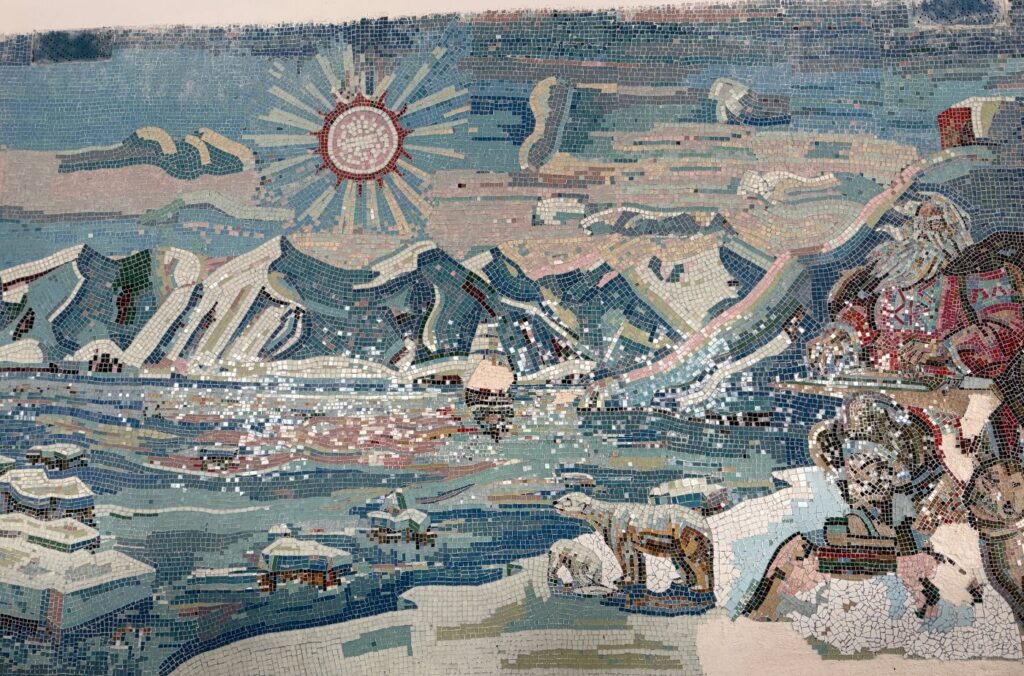
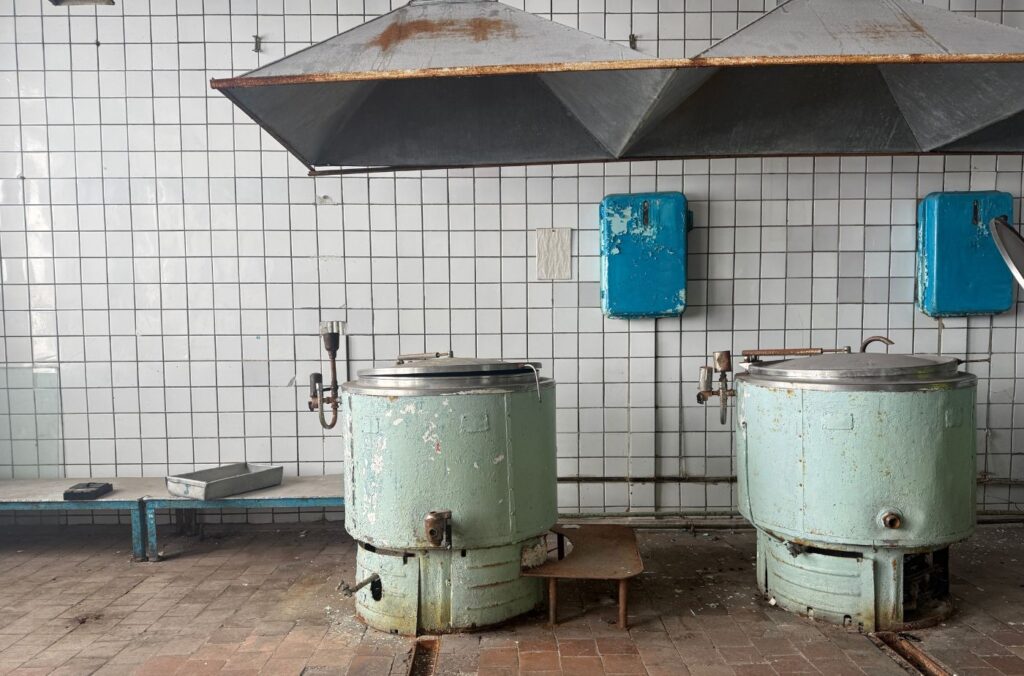
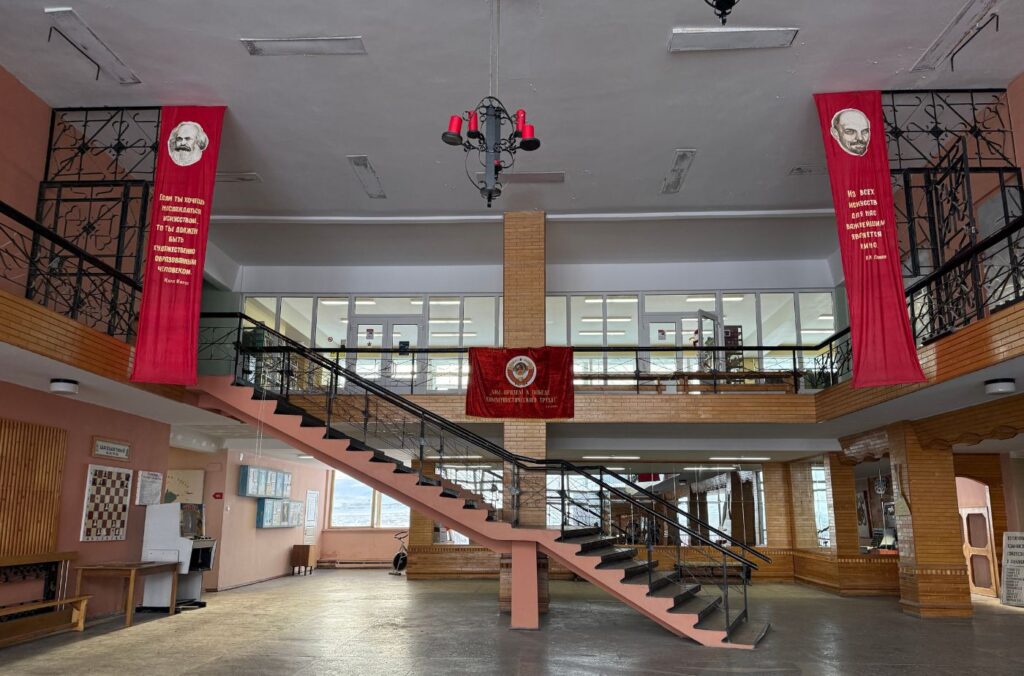
The old cafeteria building was one of the most impressive spaces in town, decorated with huge Soviet murals and propaganda artwork.
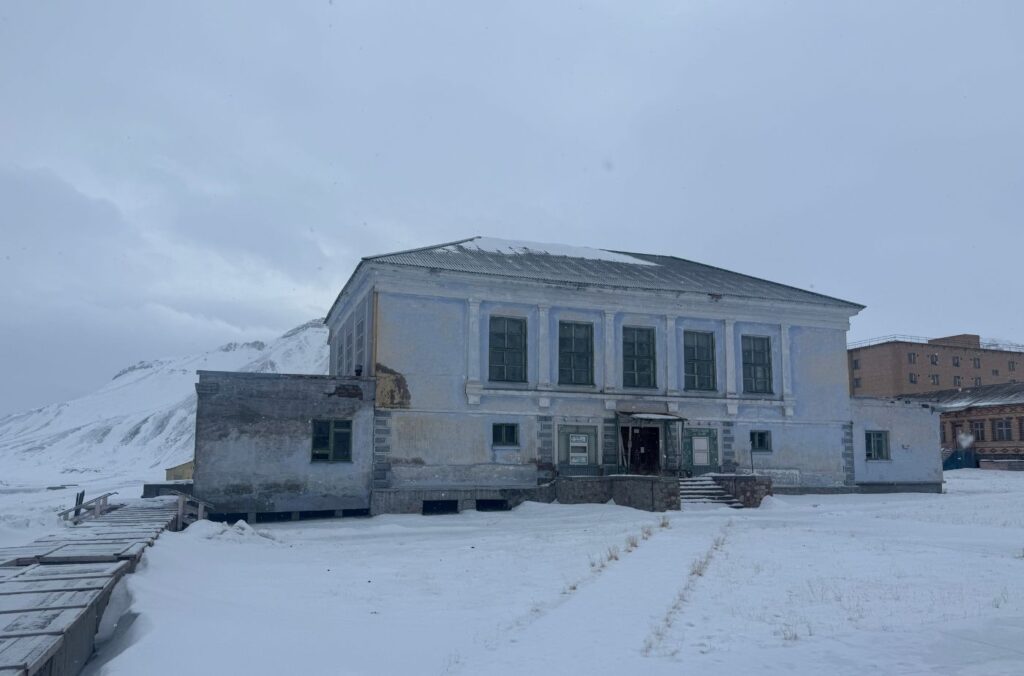
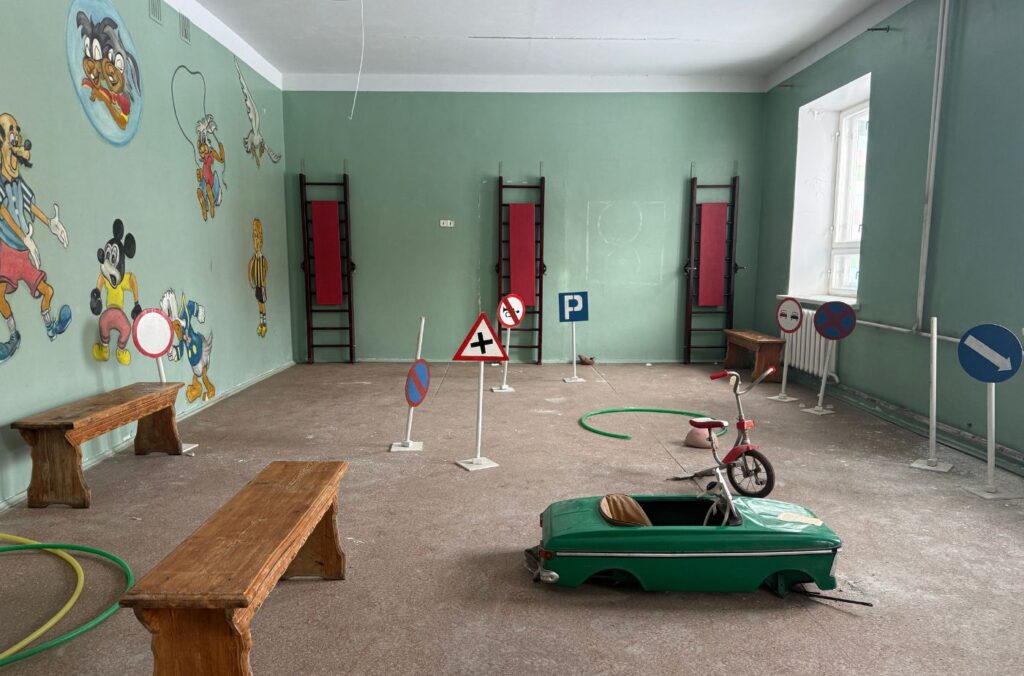
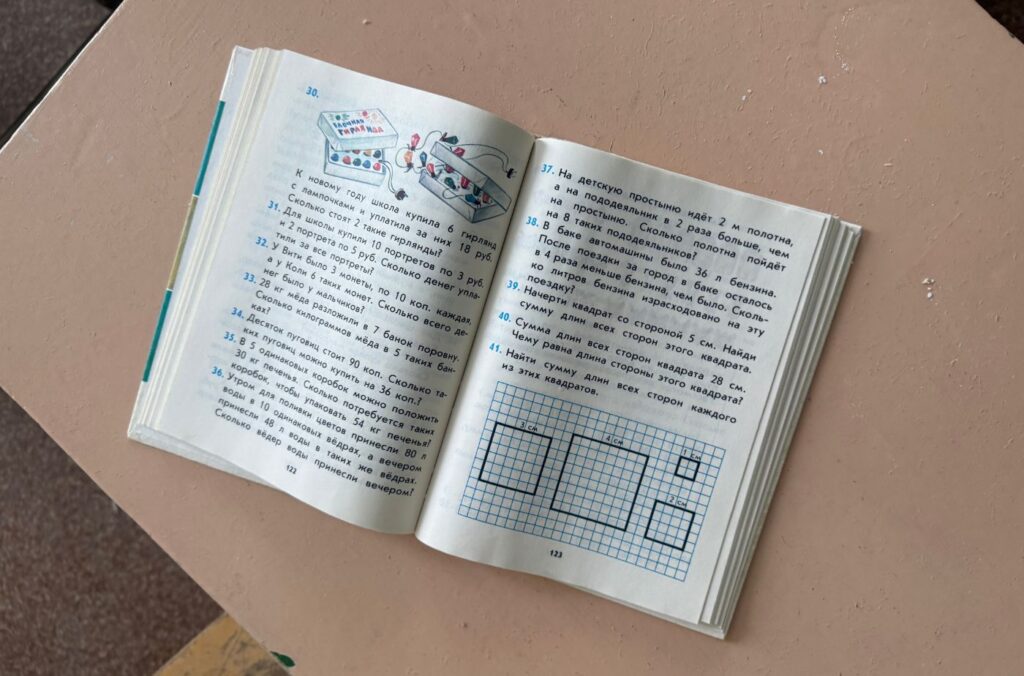
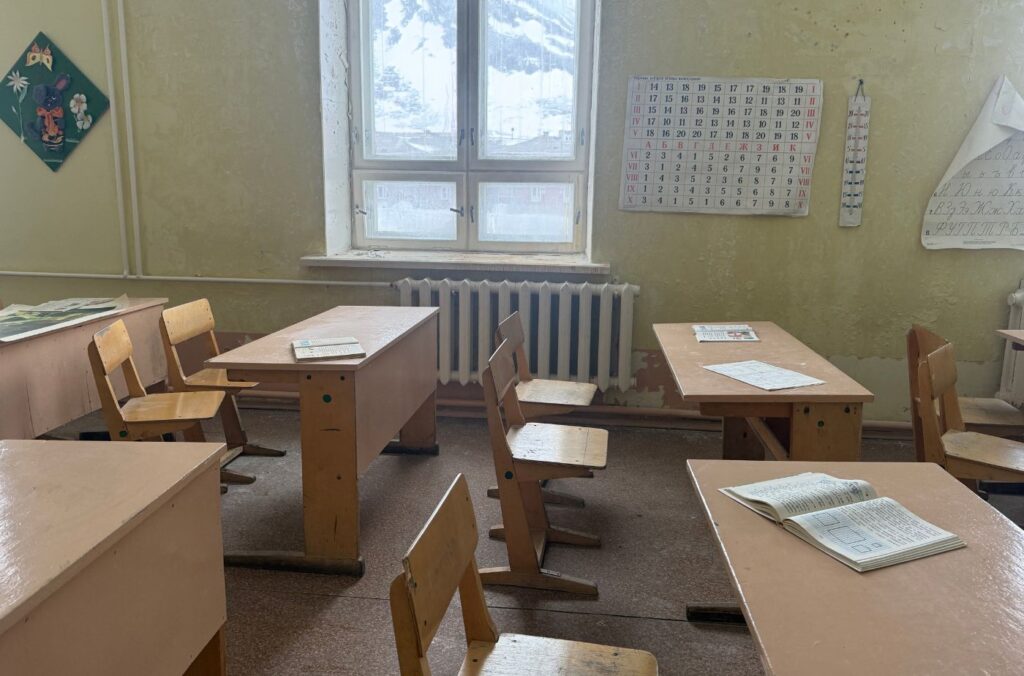
The school was equally surreal. Children’s clothes, books, and educational materials remain scattered throughout classrooms. One room dedicated entirely to teaching traffic rules felt particularly bizarre considering there are essentially no cars in Pyramiden.
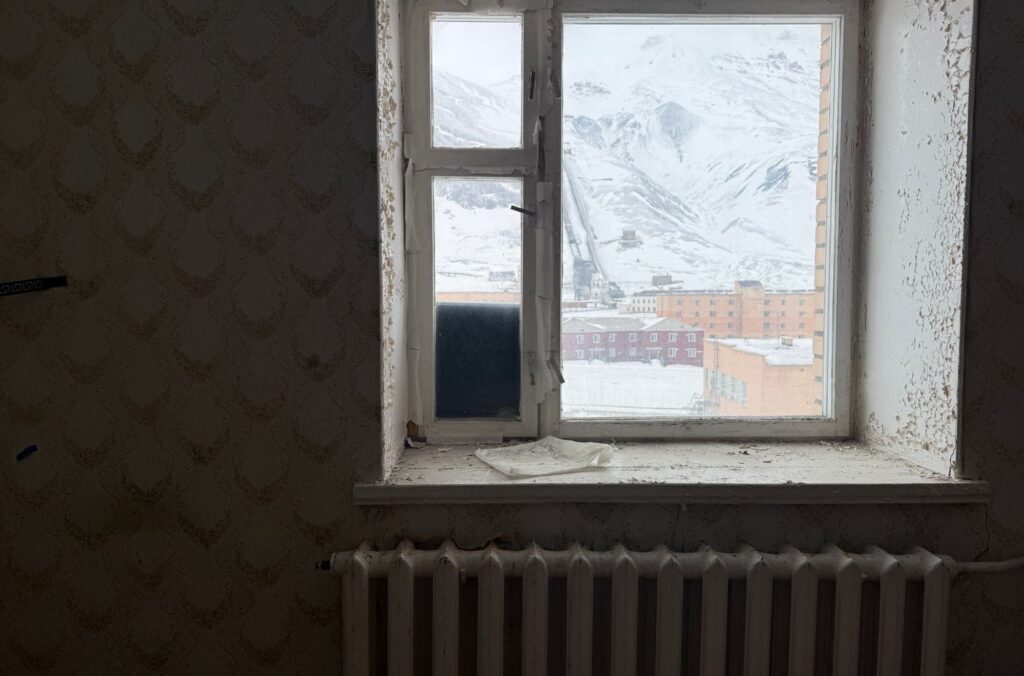
After visiting the school, we went to the rooftop of one of the apartment buildings, where we got excellent views over Pyramiden. On the way back down, we got to look inside several of the apartments. Everyone got the same apartment (of course), but it was fun seeing how they customised them with wallpaper and posters. The apartments were teeny tiny, but I guess you don’t need a lot of space with all the amenities around.
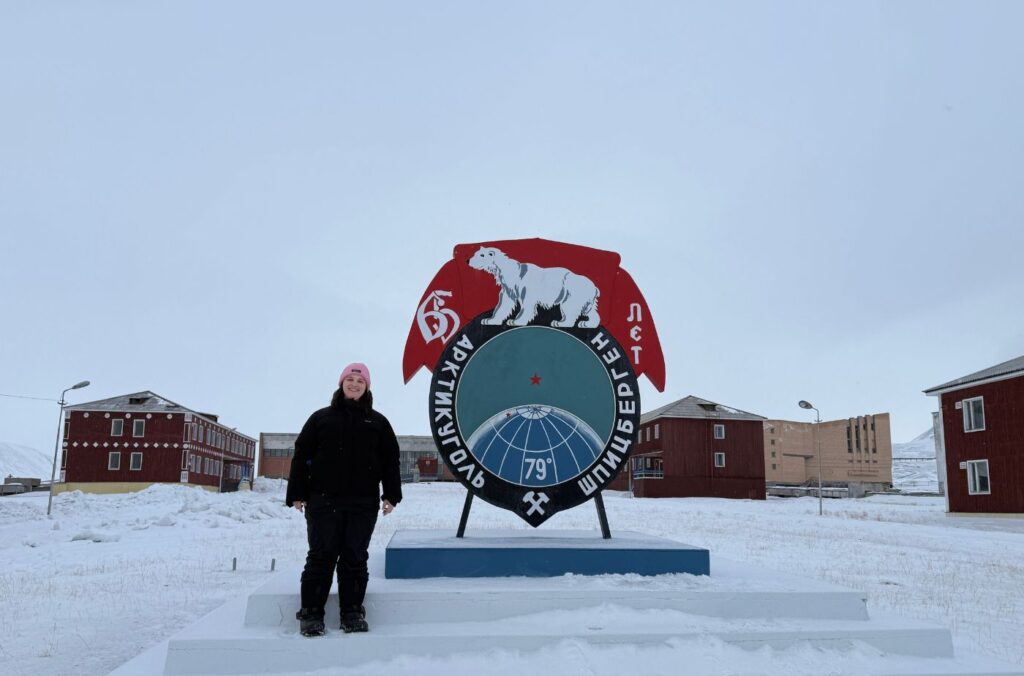
Next up was the Trust Arktikugol sign – the name of the Russian state-owned mining company that owns Barentsburg and Pyramiden. I love this sign; not just because it is so distinctive, but because there are some errors. First, the polar bear looks more like a dog. Second, Pyramiden is not at 79 degrees north – it is further south than that!
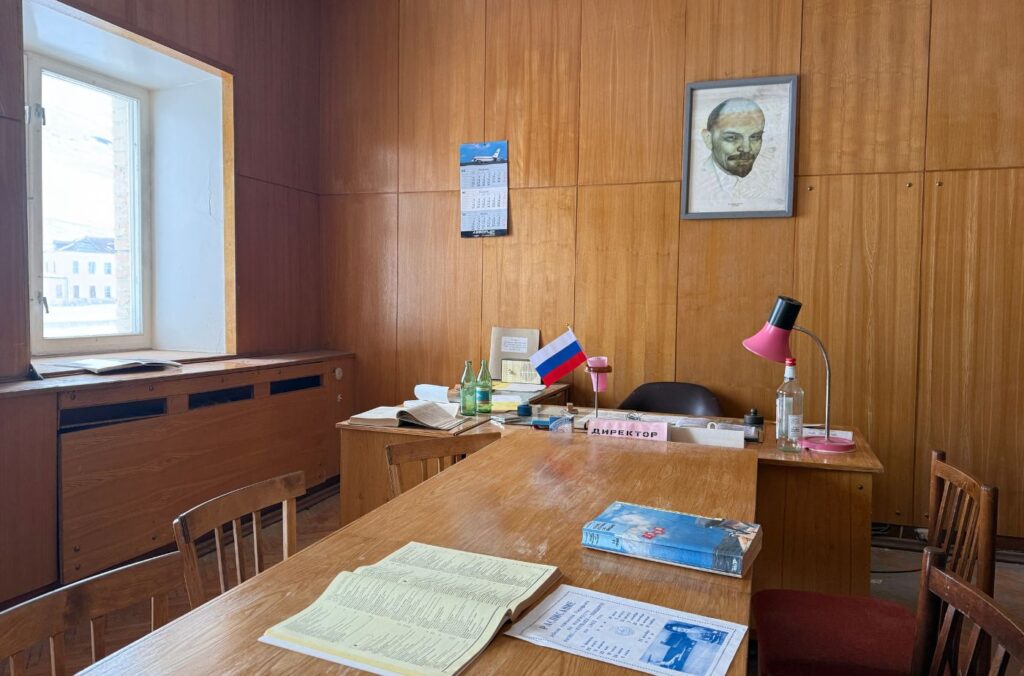
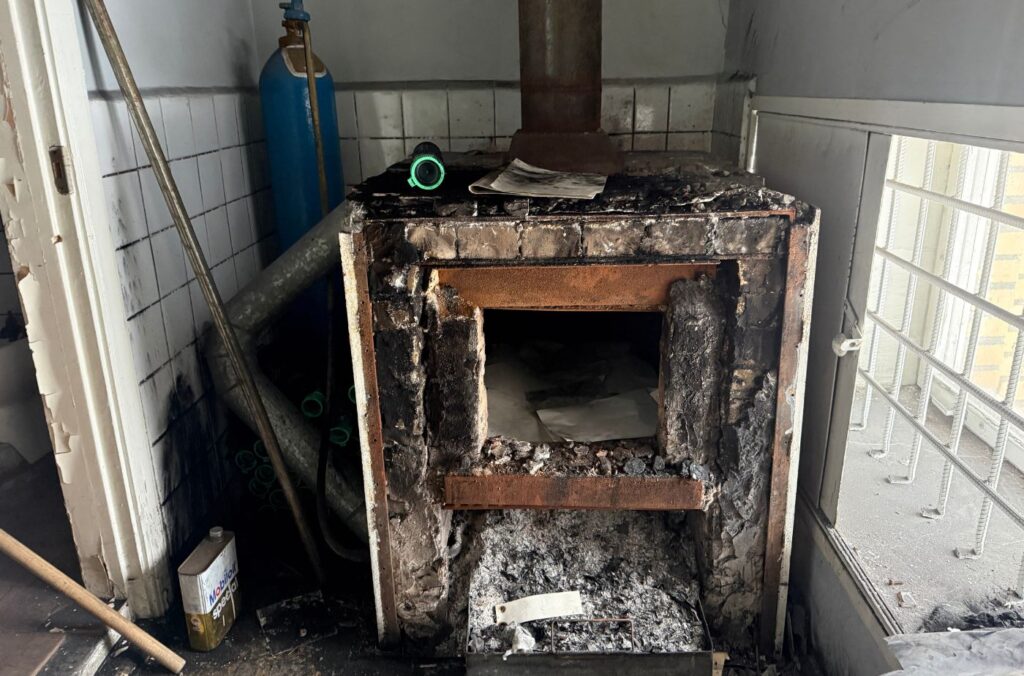
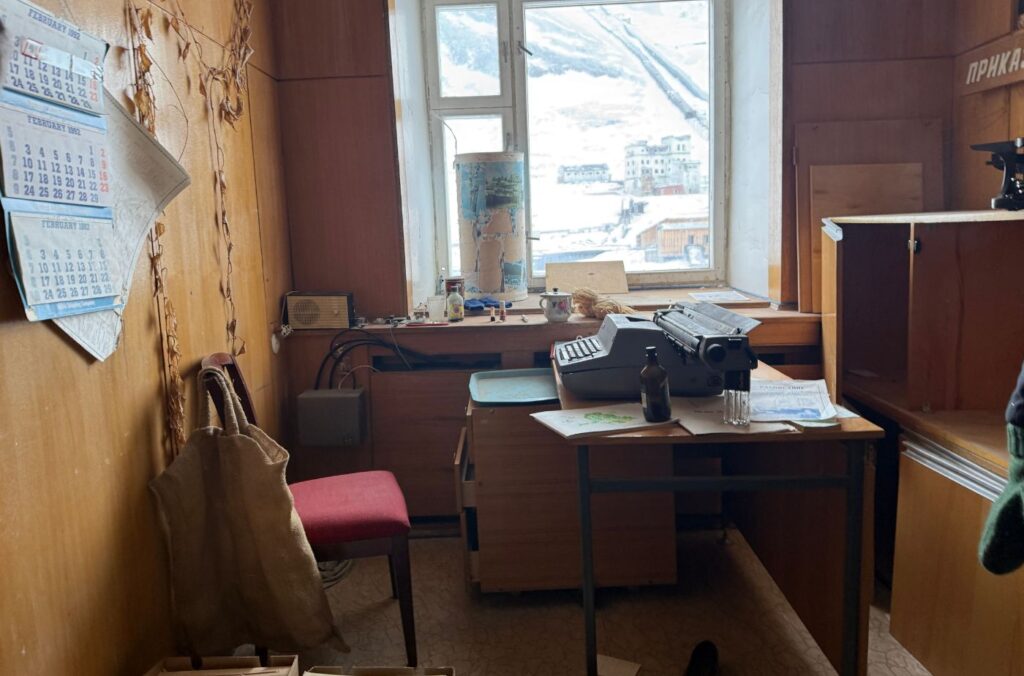
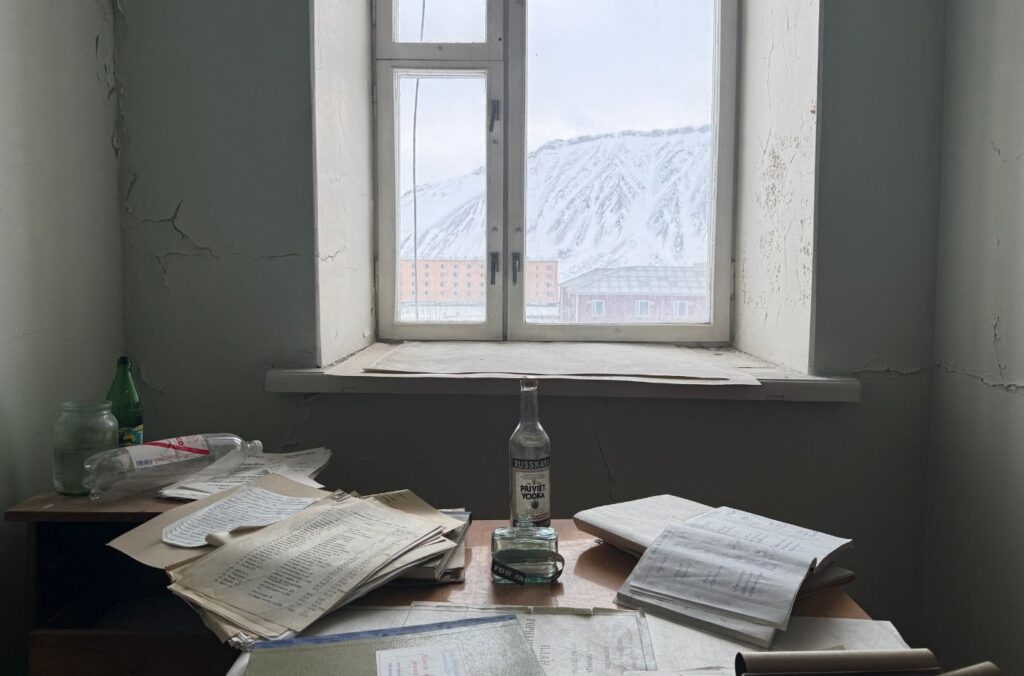
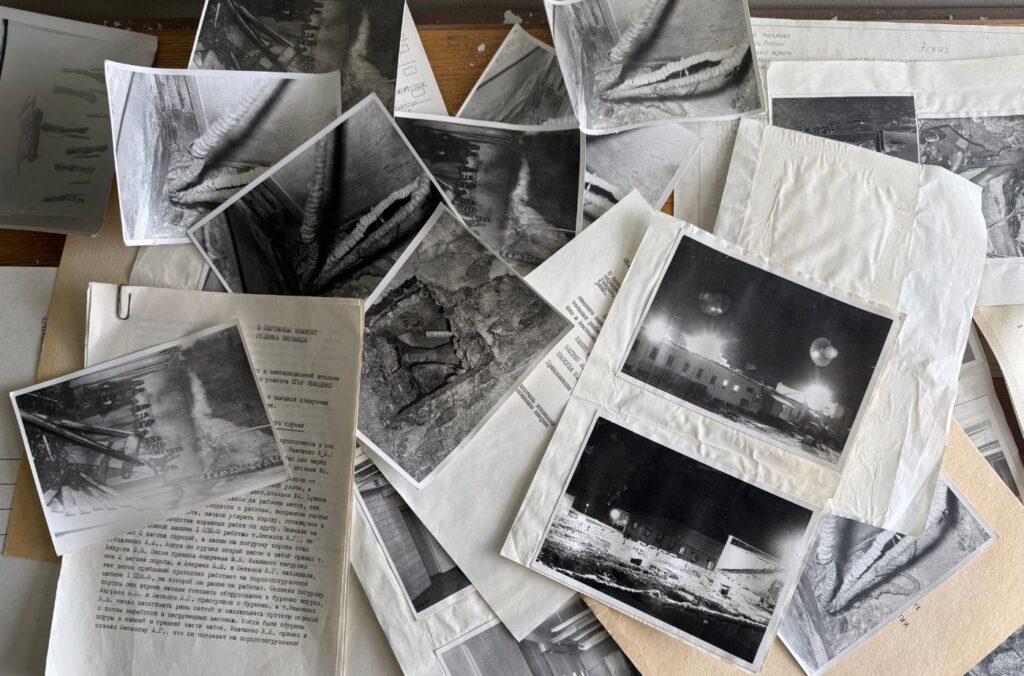
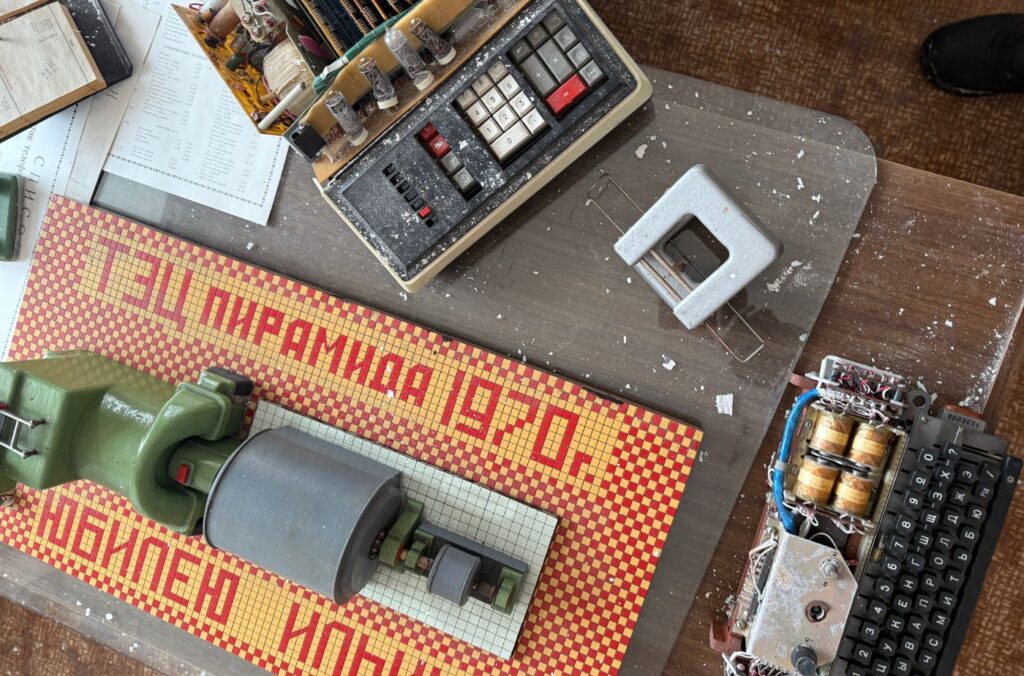
Our next stop was the mine headquarters. It was pretty cool seeing the old maps, computer systems, and documents related to mining activities. The highlight was the secret KGB room and the well-used furnace with documents in!
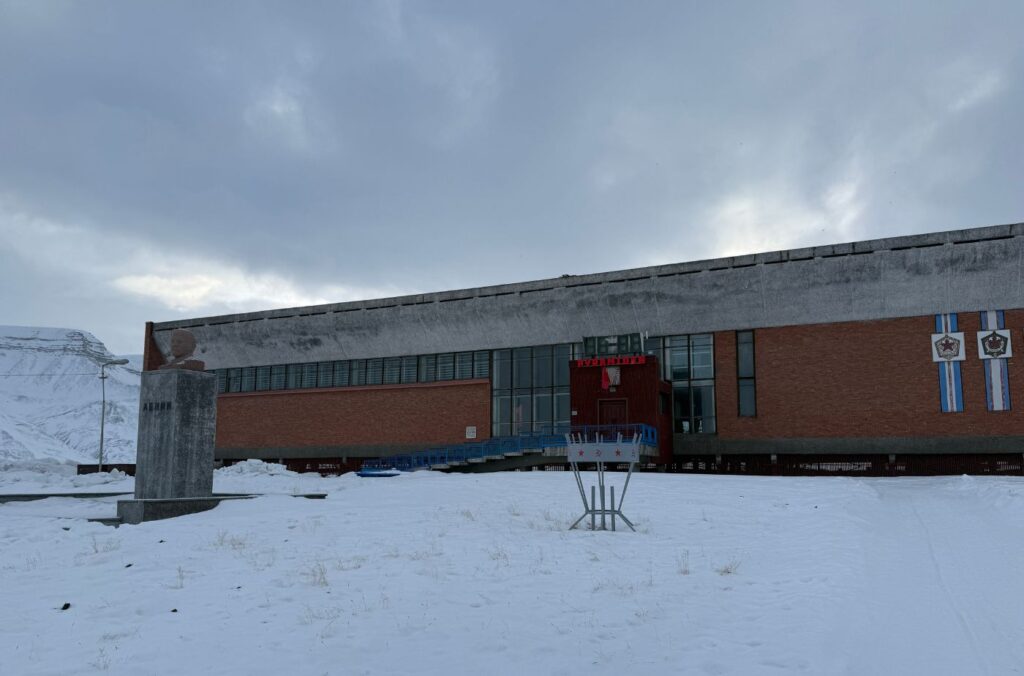
A highlight for many (you see this picture everywhere) is the famous Lenin bust in the square in front of the sports and cultural centre. This is no ordinary Lenin bust – it is the world’s northernmost and furthest outpost of Marxist-Leninist communism, at least symbolically speaking. In the vicinity of the statue are more examples of old-style Soviet symbolism, hammer and sickle and all. And
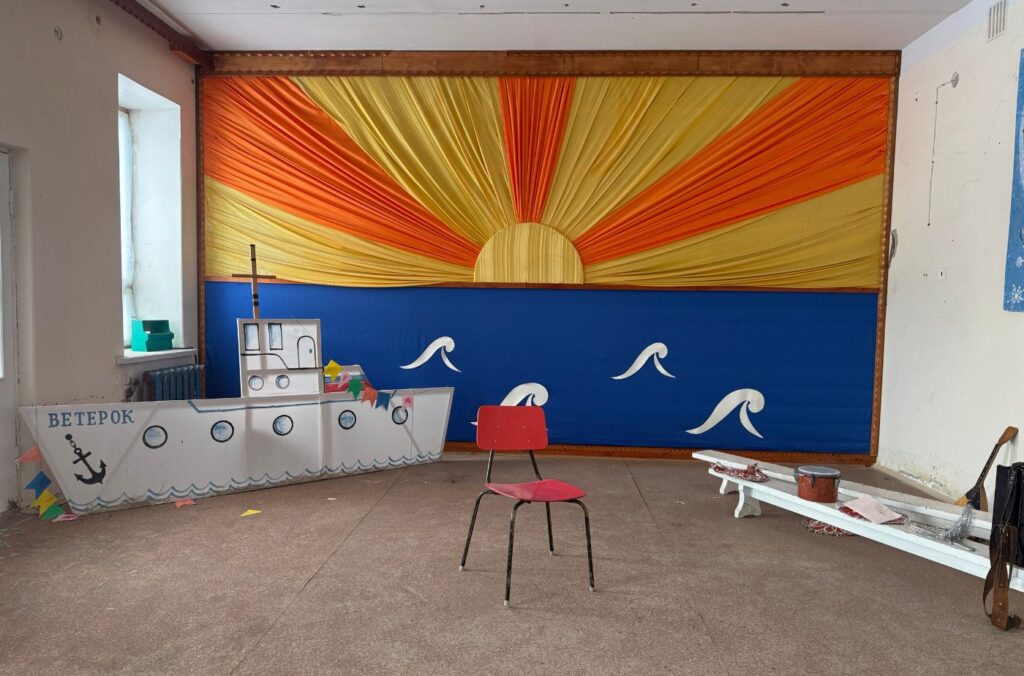
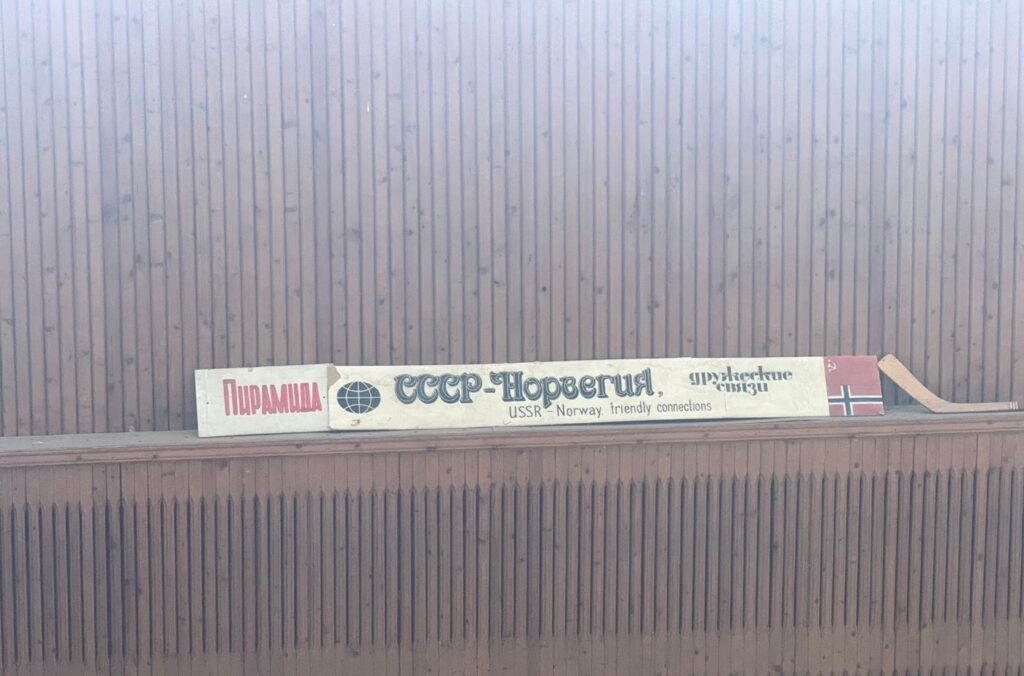
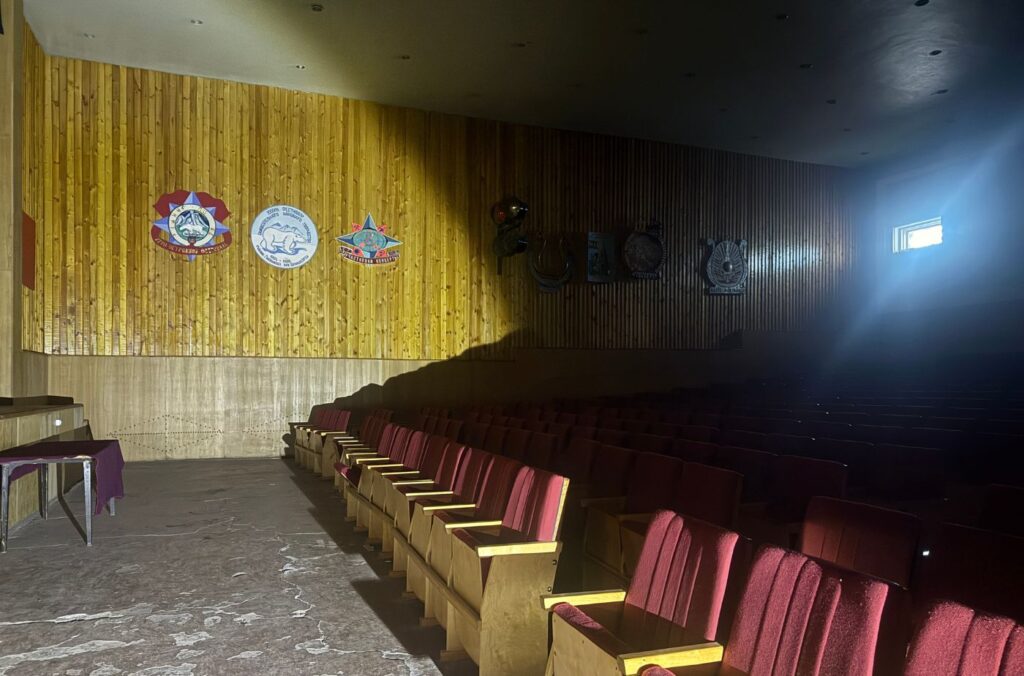
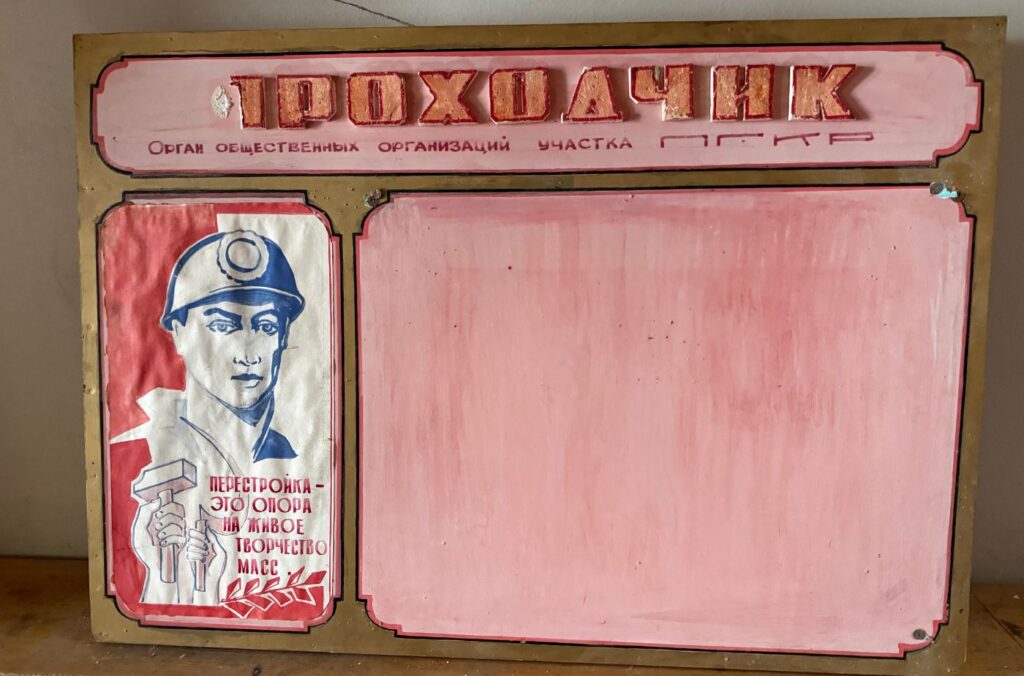
The cultural centre was one of my most favourite buildings. There were old socialist realist propaganda posters, garish but now crumpling 1970s style decorations, balalaikas on wood-pannelled walls, as well as photos from the glory days, when theatre and concert performances were regular for inhabitants. Our guide told us they still sometimes hold screenings here, and the theatre is managed by a cinema enthusiast living in Barentsburg.
This is where the gift shop is – mostly the same souvenirs you find in Barentsburg, but some cool stickers and postcards for Pyramiden. They accept card payments at the shop, and the currency is NOK.
Pyramiden was considered to be model Soviet housing at the time, and it was much nicer than what the miners could get in their home villages. The apartments didn’t have refrigerators, so people would hang things they needed refrigerated out on the window or put them in a windowbox. It is possible to see some of these windowboxes, which are now mostly nesting spots for seabirds.
The people of Pyramiden didn’t need to book their own food because the cafeteria served meals.
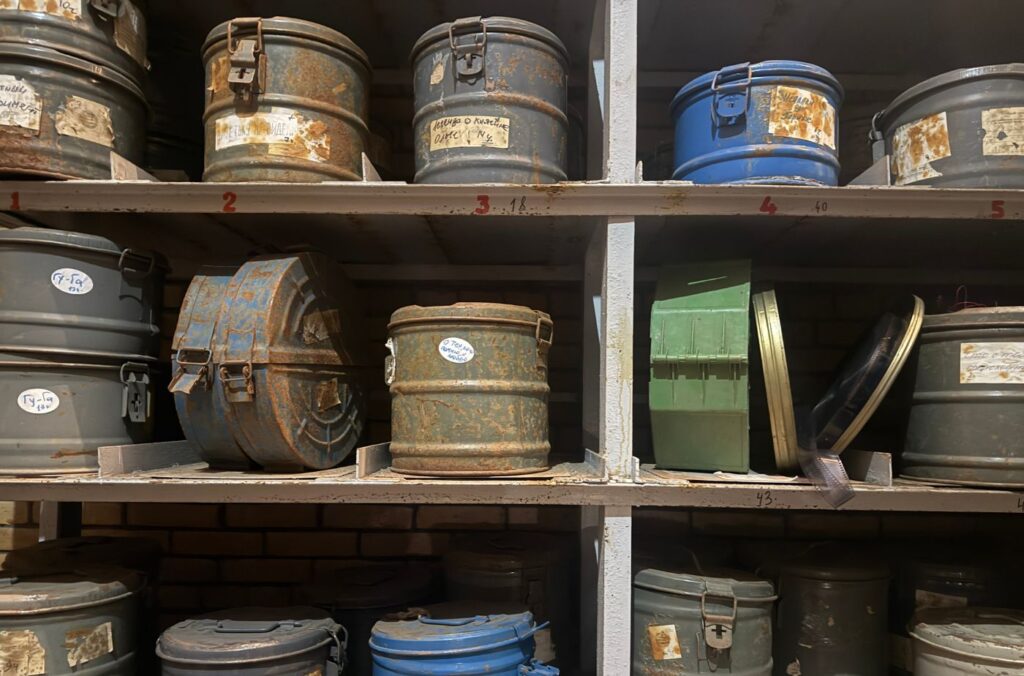
To combat seasonal depression, the Soviets built a modern recreation facility in Pyramiden, including an indoor heated swimming pool, a basketball court, and a full theatre. The theatre has one of the best preserved collections of Soviet-era films, which was so cool to see.
As we walk around, it’s fascinating to see how everything seems to have been left stuck in time. It looks as though everyone had to leave in a rush, given the way things have been left behind. We asked our guide, and the buildings have been ‘decorated’ to look as if people packed up and left quickly. Which makes much more sense!
We also asked our guide whether there were plans to restore the buildings, and she said no. There’s more money in tourism to ghost towns.
Day 3: Back to Longyearbyen
Sadly, the final morning meant heading back to Longyearbyen.
Our guides decided to leave early due to an approaching blizzard. The return journey follows exactly the same route because of snowmobile regulations and ice safety rules.
This time the weather on the glacier was much clearer, so we finally got the panoramic views we had missed on the way over. Unfortunately, descending the glacier involved another intense white-out, which was honestly pretty stressful.
After lunch at the same glacier stop, we continued through Sassendalen and Adventdalen, passing reindeer and stopping briefly at a frozen waterfall before finally arriving back in Longyearbyen.
Returning civilisation after several days in the Arctic wilderness felt strange.
The first thing we did? Burger and beer.
Practical Information
Difficulty
You definitely don’t need to be an expert snowmobiler. In fact, I found this easier than some shorter snowmobile tours I’ve done elsewhere on Svalbard.
However, it is physically demanding. Sitting on a snowmobile for eight-plus hours each day takes a toll on your back, wrists, and shoulders.
What to Pack
Because you can only bring a backpack, packing efficiently matters a lot.
I brought:
- One outdoor outfit
- One indoor outfit
- Pyjamas
- Toiletries
The operator can provide balaclavas, gloves, and socks if needed.
I’d also strongly recommend proper ski goggles. My sister brought them and had a much better experience than I did using sunglasses-style glacier goggles.
Staying at Pyramiden Hotel
The rooms are fine – much more modern and clean than I was expecting, given the circumstances. The beds (two single beds) are very firm, but the sheets are fresh. The bathroom has modern amenities, and the showers work pretty well and have hot water. It felt like staying in a budget hotel anywhere in Europe.
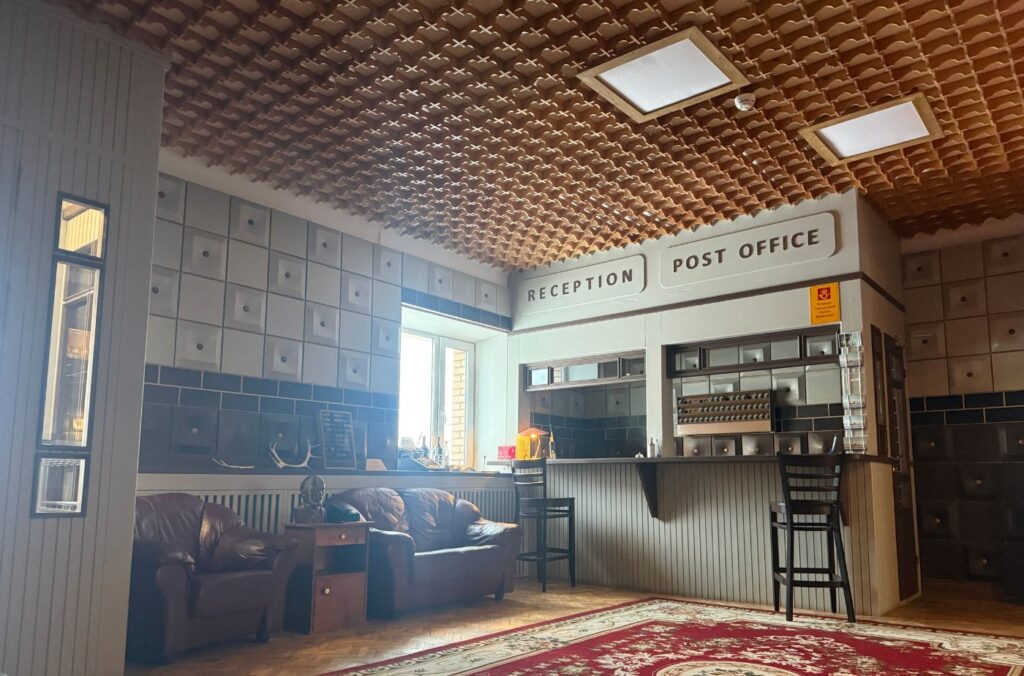
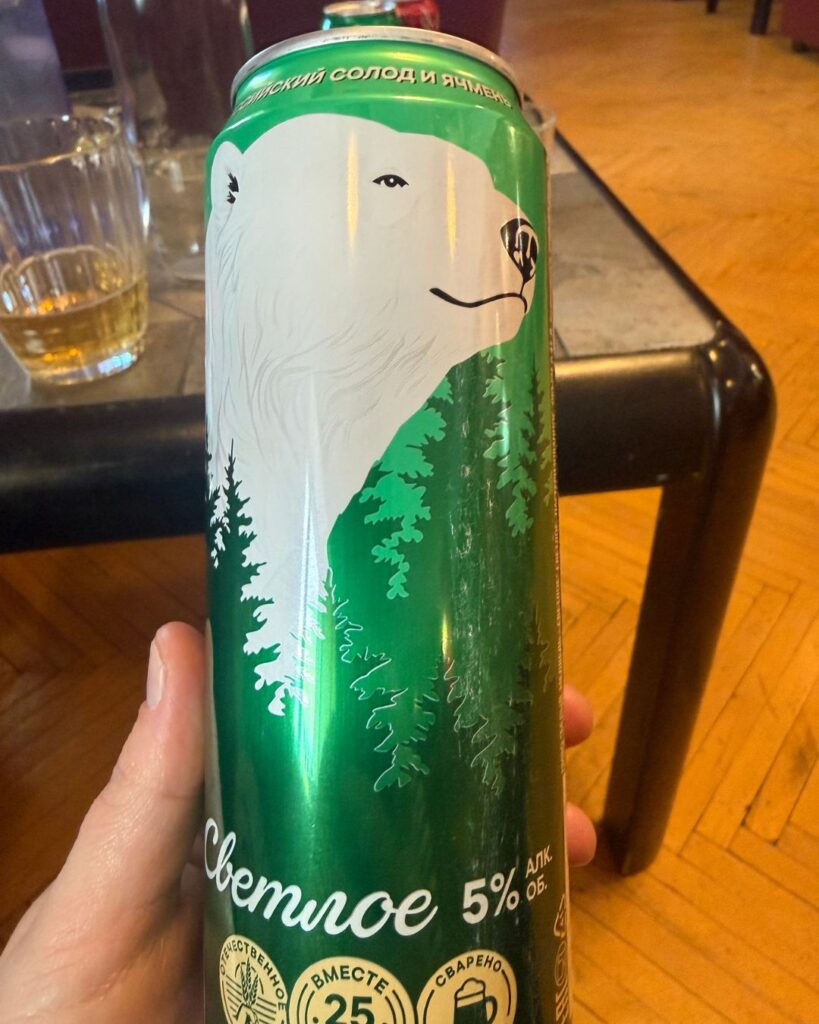
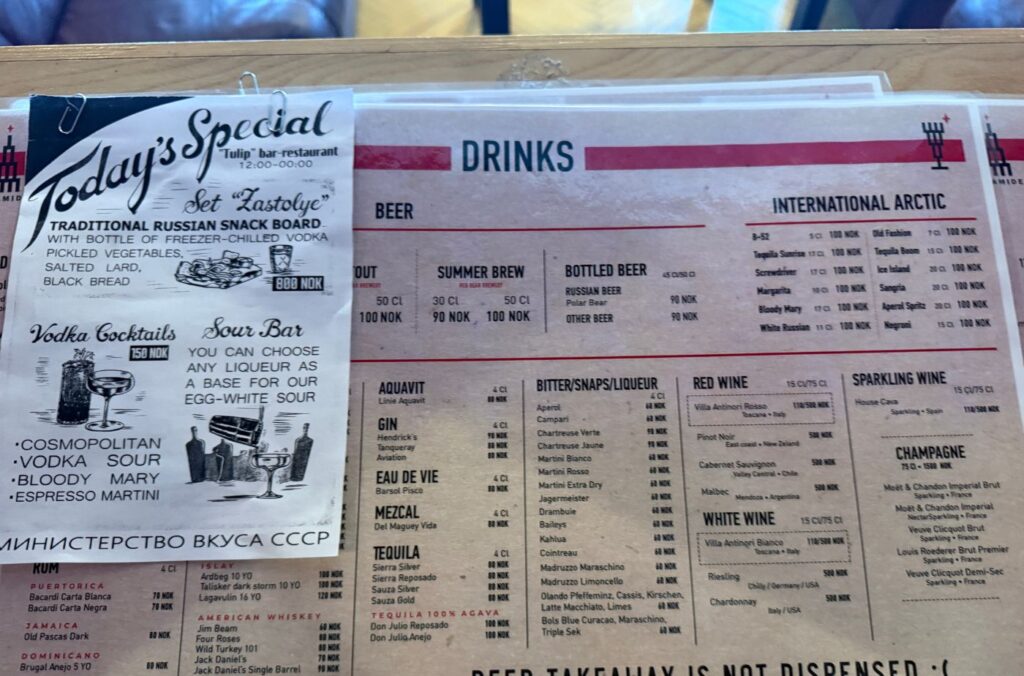
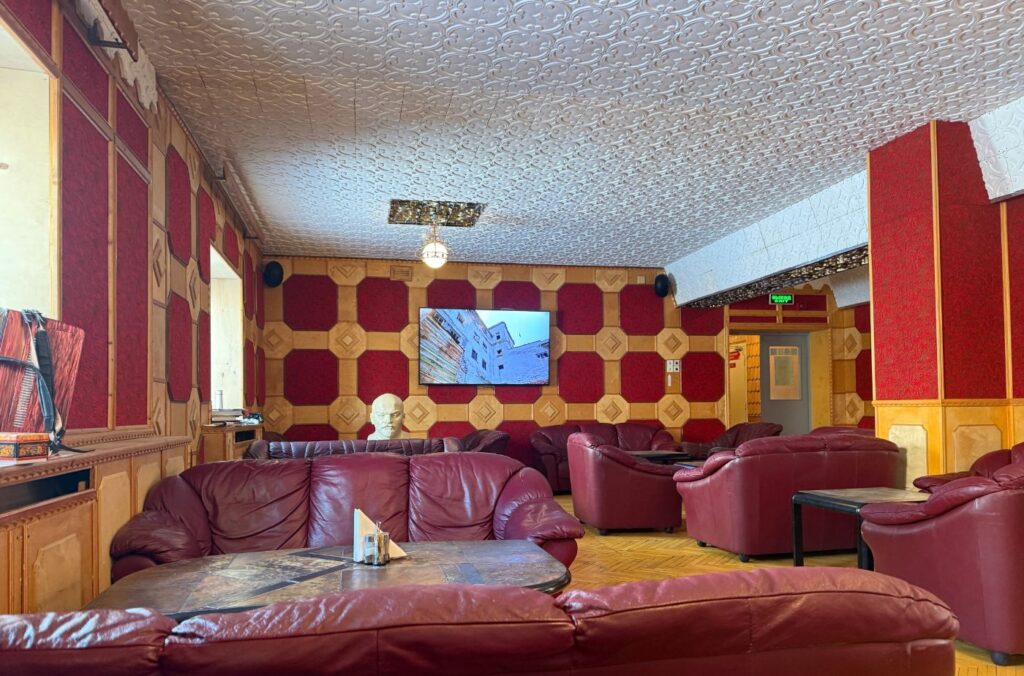
The bar has a generous selection of alcohol. We always went with some Russian beer, but wine and spirits were available. There was some Russian chocolate and snacks for sale as well. The bar is located in a large lounge area with television screens showing documentaries about Svalbard. The bust of Lenin staring at us all the time was a nice touch. In the evenings, our guides would hang out with us and even put on documentaries they helped make. The restaurant is in the same seating area, and does have an à la carte menu, though as part of our tour package, we got a set menu.
Final Thoughts
I had dreamed about visiting Pyramiden ever since first learning about Svalbard, so finally making the journey felt incredibly special.
The political realities surrounding Russian operations in Svalbard definitely add complexity to the experience, but at the same time, the people working there seemed genuinely passionate about preserving the settlement and sharing its history.
As for the trip itself — it completely lived up to expectations.
Pyramiden feels unlike anywhere else I’ve ever visited. It’s part Arctic expedition, part Soviet history lesson, and part frozen time capsule.
Very few places combine this level of wilderness, atmosphere, and historical surrealism so completely. One moment you’re crossing glaciers and frozen fjords; the next you’re standing inside an abandoned Soviet theatre beneath propaganda posters from another era.
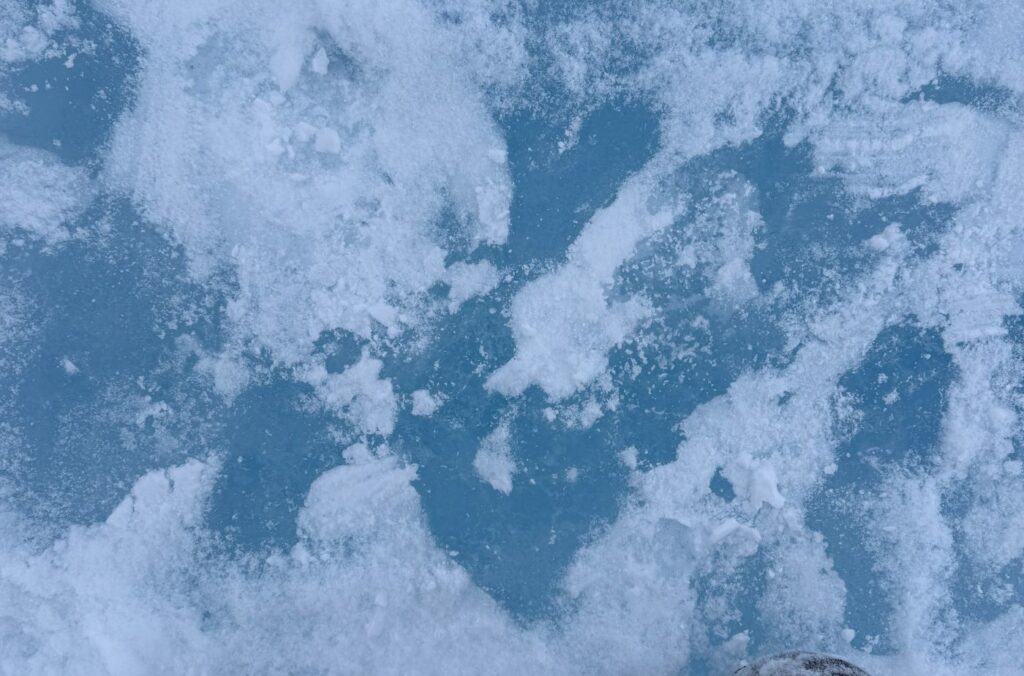
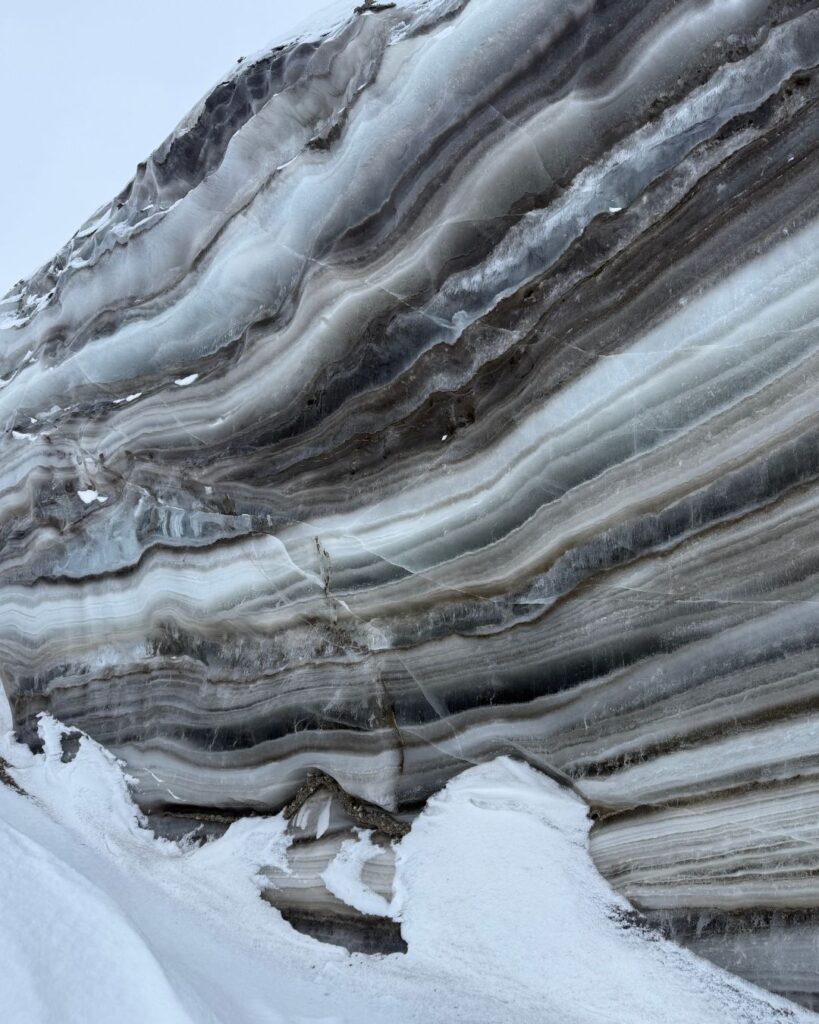
Even now, months later, I still think about the silence of the Arctic, the blue glacier ice, and the strange beauty of a town preserved by snow and time.