How to Get to North Cape: A Seasonal Guide
North Cape (Nordkapp) is one of Norway’s most popular places to visit. After all, it is the northernmost tip of Europe (sort of – there are points further north but aren’t easily accessible) perched above a 306-metre-high coastal cliff on Magerøya Island. From this plateau, only the Svalbard archipelago lies between you and the North Pole. Reached via the town of Honningsvåg, North Cape is a must-see no matter the season you visit, though some seasons are easier than others.
I have been to North Cape countless times, driving there myself and going with groups. I have also enjoyed experiencing all four seasons at the Cape, including those stormy and challenging winter months. For this guide, I wanted to provide some practical information on how to get there and what you can see and do there. I’ve divided it by season, as information varies a lot.
In this article...
Getting to North Cape
Driving Yourself
Driving to North Cape is easy; from Honningsvåg, follow signs to “Nordkapp” on the E69 highway. The drive takes 45-75 minutes, depending on conditions. The road itself is paved, modern, and easy to navigate. The drive is scenic – you’ll pass Skipsfjorden, wind over a mountain plateau, and descend near tiny fishing villages like Kamøyvær, Gjesvær, and Skarsvåg – all of which are worth the detour.
Remember that the ease of driving varies greatly depending on when you go. It’s common for the road to close at short notice in winter due to strong winds or blizzards, and you will be driving over snow throughout winter. Most of the time, a convoy vehicle guides vehicles to the Cape at select times throughout the day, often whenever the coastal ferry is in port. If you drive in winter, you must have proper winter tyres and be comfortable with snow driving.
The North Cape website has a great guide to driving in a convoy and the convoy schedule. Please read carefully before heading out: https://www.nordkapp.no/en/other/winter-expeditions
Please be careful driving; it’s common to have hikers or cyclists and reindeer along the side of the road in the summer months.
In clear summer conditions, the drive is straightforward, and the road is paved the whole way. There are a few pull-off viewpoints where you can stop for photos (for example, viewpoints overlooking Skarsvåg or a Sami craft tent in summer).
Due to the remote location, daily rental rates tend to be fairly high (expect 1,100 to 1,300 NOK per day), and fuel in Norway is expensive (around 20-23 NOK per litre), so budget accordingly for the trip. There are no road tolls, but North Cape’s entrance fee is charged per person in the vehicle.
Going by Bus & Guided Tour
The bus from Honningsvåg is a convenient and popular option, especially for those without a car or visiting in winter. The bus (Route 406, often branded as the North Cape Express) departs from Honningsvåg Tourist Information Centre. There are daily departures in summer, sometimes with multiple runs (including a midnight sun tour in peak season). In winter, the bus typically leaves about once daily at around 11:15 am to join the convoy to North Cape. The travel time is one hour and 15 minutes each way, including a stop at Skarsvåg to line up for the convoy in winter. In summer, the drive is faster.
Bus tickets can be booked in advance, and the price generally includes the North Cape entrance fee.
The bus is stress-free, and you don’t have to worry about driving on snowy or stormy roads. The drivers are experienced with local conditions. Along the way, some bus tours include commentary about the area’s history and even brief photo stops at scenic overlooks or the Sami camp. In winter, the bus handles all convoy arrangements and keeps you warm. However, remember that the bus is on a fixed schedule, and it’ll be difficult to do long hikes while at the plateau.
The North Cape website has the public tours listed clearly, and you can book online: https://www.booking.nordkapp.no/en/transport
You can also visit North Cape Tours, a company offering sightseeing tours, wildlife tours, and both summer and winter tours: https://northcapetours.com/en/tours
Summer (June-August) at North Cape
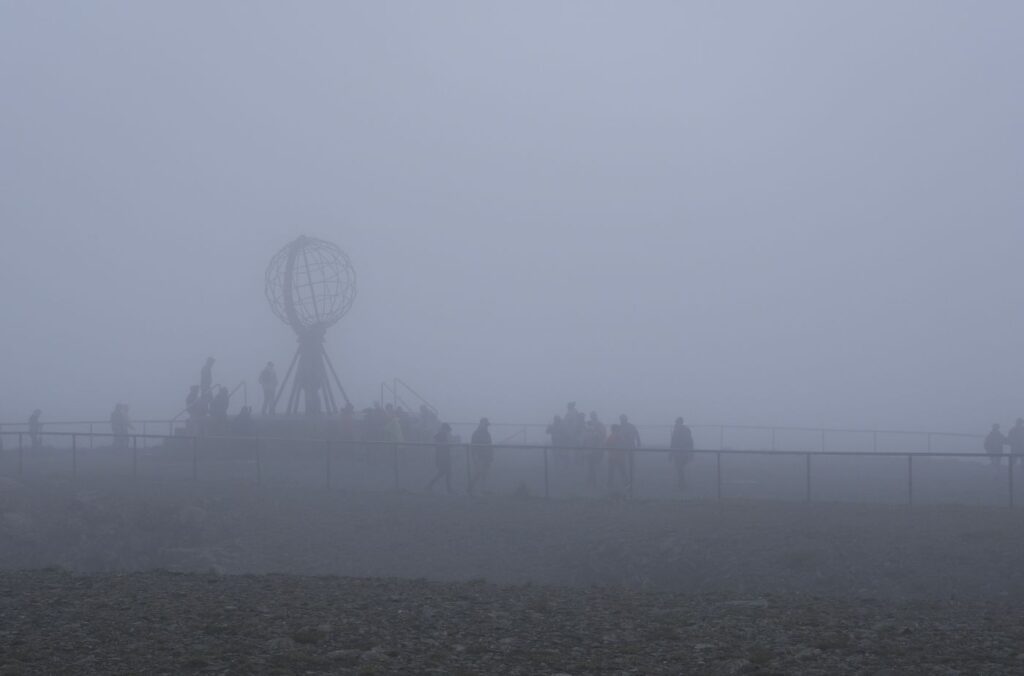
This is arguably the most beautiful time to visit the Cape, as you get the incredible midnight sun. Summer brings mild temperatures and endless daylight to North Cape, with average highs around 10C (50F), though sometimes you can be there when the temperatures go above 20C (68F). The midnight sun lasts from roughly the 14th of May until the 29th of July (it varies slightly yearly), but expect the plateau to be cool and often windy.
What to do at North Cape in Summer
Sightseeing at midnight is a must – join a late evening tour or drive yourself to witness the Midnight Sun at North Cape. Hiking is also very popular at this time of year, and there are several trails around the plateau. A popular hiking trail near Skarsvåg leads to the natural rock arch Kirkeporten, which frames a unique view of the North Cape Plateau. For avid hikers, a longer 9km (one way) trek takes you to Knivskjellodden, the true northernmost point, from which you can look back at North Cape’s cliffs.
If you want to see some wildlife, take a boat trip to the Gjesværstappan bird cliffs, where thousands of puffins, gannets, and cormorants nest in the summer. Fishing trips for the fames king crabs of the Barents Sea are offered. You will also commonly see reindeer on the side of the road.
Autumn (September-November) at North Cape
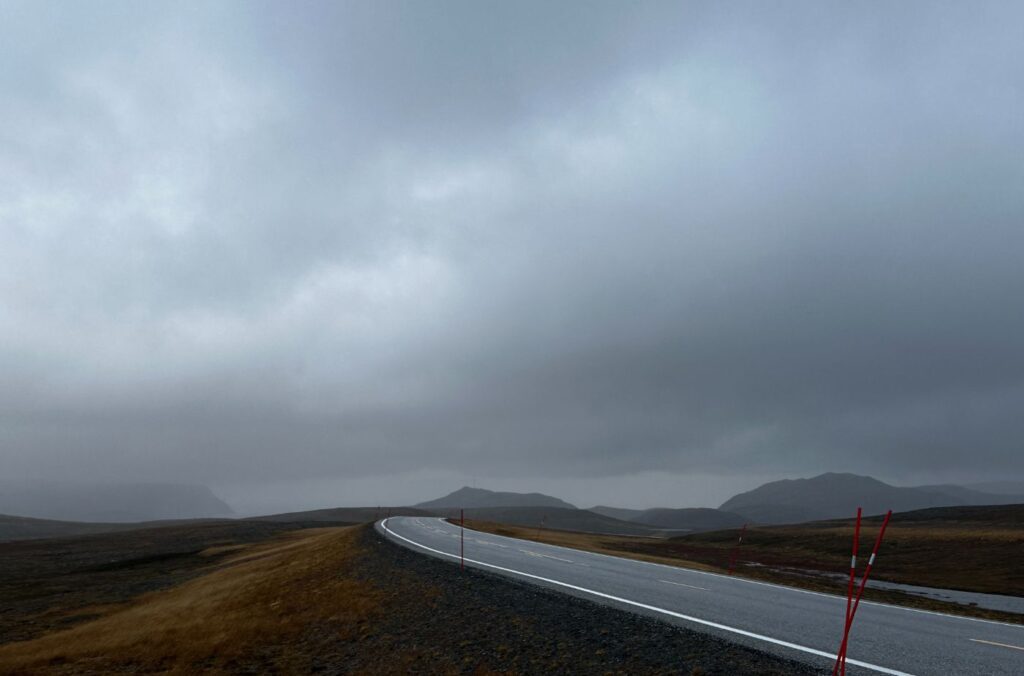
Autumn is a season of change. September can bring cool, crisp days, but by November, the temperatures approach freezing. The days shorten rapidly; from about 14 hours in early September down to mere twilights by late November, when the polar night begins. The Northern Lights are visible from September onwards, and any dark, clear night offers a chance to see the aurora. Early autumn is a great time to visit, as the tundra landscapes turn bright orange and red in their autumn colours. October and November are the wettest months of the year, and you can expect to get snow around this time. It will be very windy, but the Cape often stays open.
Below is my video from when I drove to North Cape in late October!
What to do at North Cape in Autumn
Crowds thin out and cruise ships stop calling here, so it’s much more peaceful. By late October, snow may dust the plateau. Most birds depart by mid-autumn, but you may spot some sea eagles or reindeer.
When visiting, be ready for rain; waterproof clothing is essential. You also need to start checking road conditions; ice can affect the E69 highway and cause closures in October and November. By November, winter tyres are needed.
For the Northern Lights, plan for dark, clear nights. In September and early October, there are a few hours of darkness and stable weather, but by November, the nights are long, and the weather is very unstable. If driving to the Cape at night, be ready to leave at a moment’s notice in case of surprise blizzards or strong winds.
Some tourist services reduce hours or close in the shoulder season. Call ahead for opening times.
Winter (December-February) at North Cape
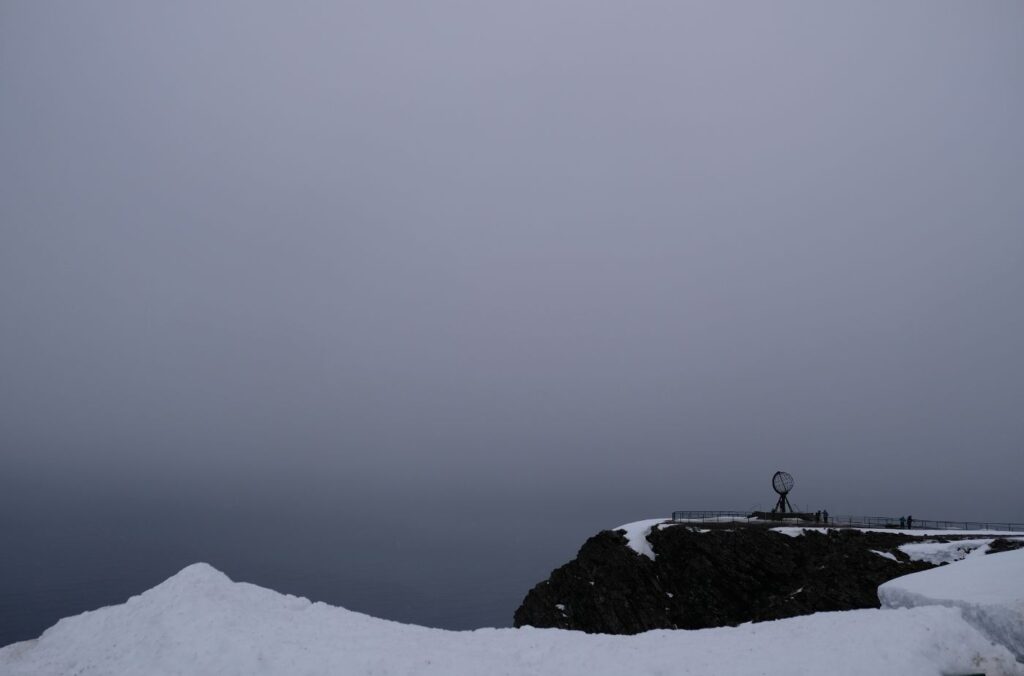
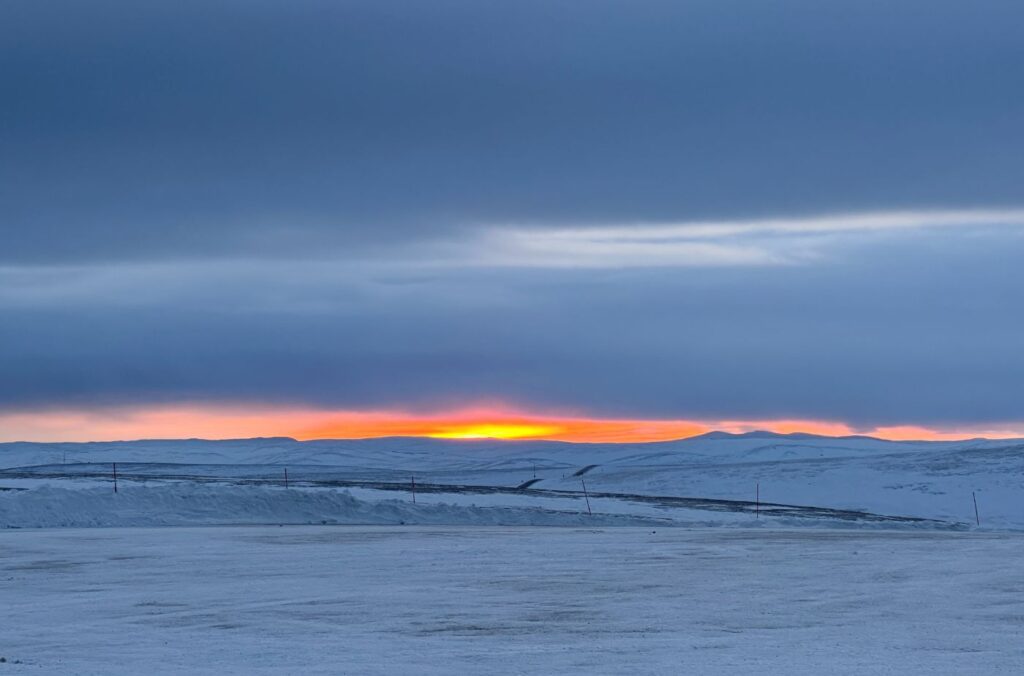
Winter is both a magical and a challenging time to visit the Cape. From the 21st of November until the 21st of January (give or take a few days each year), the sun never rises above the horizon – the polar night period is when you’ll experience a surreal bluish twilight at noon. December and January are dark and often very stormy; by February, the sun reappears, and daylight slowly increases (to 5-8 hours by late February). Temperatures average to around -3C but can drop to -15C or lower once the wind chill is factored in. Thanks to the Gulf Stream, North Cape’s coastal climate is milder than inland Arctic areas, but frequent gale winds, snowstorms, and icy conditions make it feel very cold.
What to do at North Cape in Winter
The best thing about visiting in winter is the northern lights, Arctic scenery, and the unique adventure of reaching North Cape under extreme conditions. The northern lights are visible on clear nights, and being at North Cape means no light pollution, but be prepared for the fact that clear nights are rare at North Cape. Organised northern lights tours take the evening convoy to North Cape to seek auroras; seriously consider a guided tour if you don’t have experience driving in winter conditions. Another highlight is simply experiencing the polar night sky – on cloudless days, you may see a faint glow at noon.
There are many snow activities around North Cape. You can join snowmobile safaris, dogsledding trips, snowshoe walks, or even ATV rides across the tundra. Some tours will take you to vantage points around the island for winter landscapes and cultural experiences.
Reaching North Cape in Winter
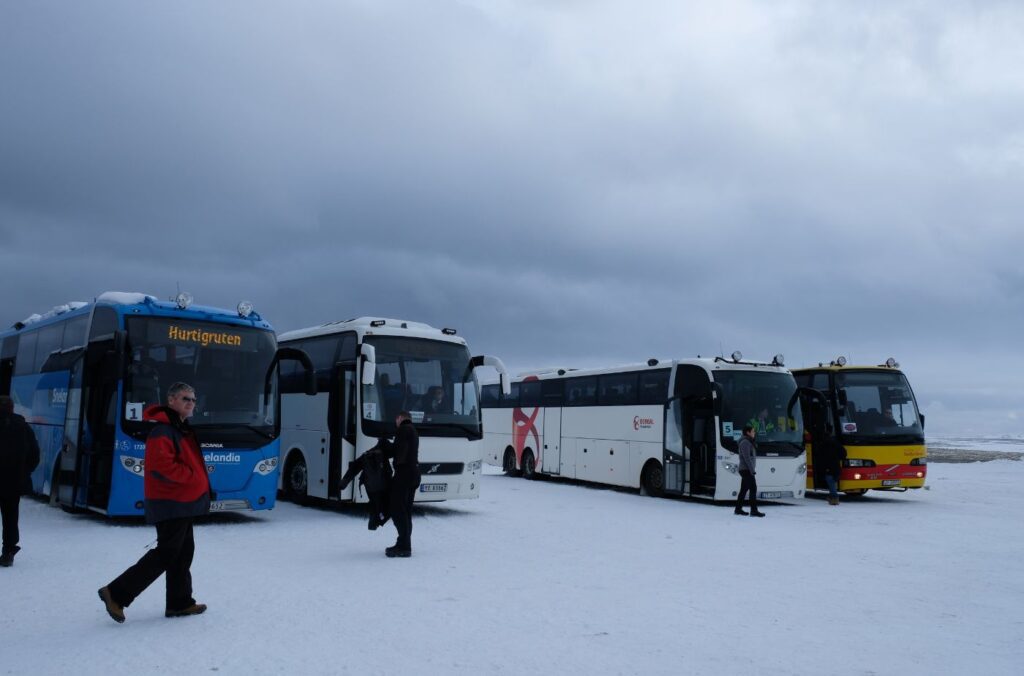
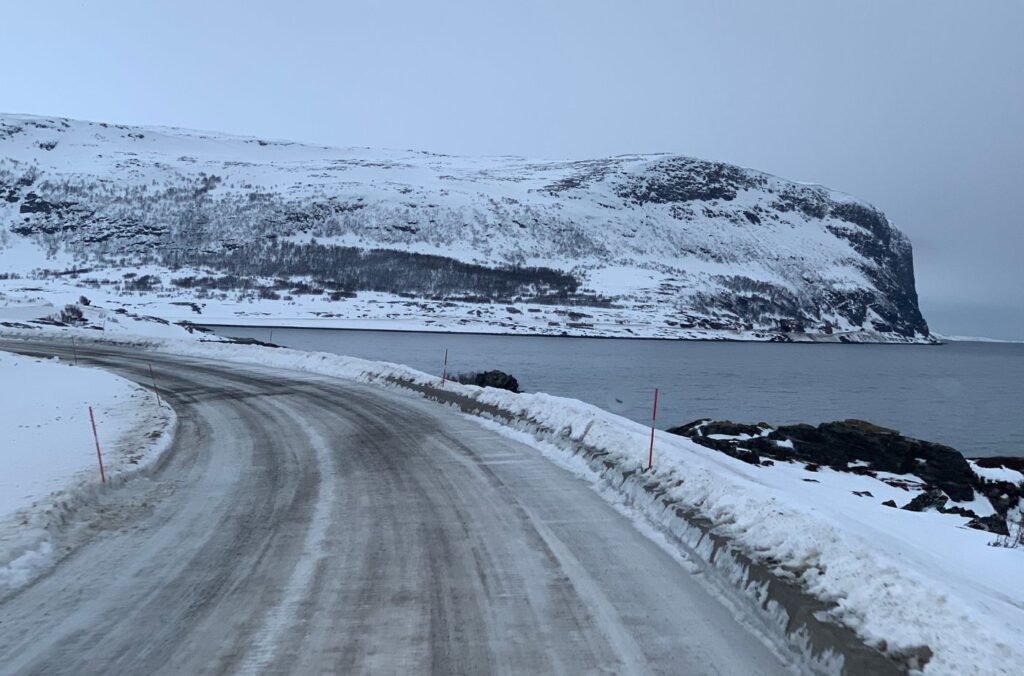
This is where the adventure truly lies. The last stretch of road (the E69 from about 13km before North Cape) is not freely open in winter – convoys control access. Depending on the weather, the road can close for hours or days at short notice. Convoys typically run daily in the winter season – one departs from the Skarsvåg junction around 11 am and returns at 1 pm. An evening aurora convoy may be around 7:30 pm, returning at 9:45 pm. All vehicles gather at the gate by Skarsvåg junction (15km from North Cape) to join the convoy. This ensures safety on the windy, snow-drifted plateau road. You follow a snowplough in a line, and no one can drive up outside these times.
Always check the convoy times and road status via Statens Vegvesen because if a blizzard hits, convoys can be cancelled at the last minute. Ensure your car is winterised—good, studded winter tyres are mandatory. Have a full tank of fuel before heading out and pack emergency items—food, water, flashlight, shovel, tow rope, and warm blankets—in case you get stuck. Follow all convoy rules: use headlights/hazards, keep close to the car ahead, and never stop or exit your car during the convoy.
If you are unsure about winter driving, take a bus or guided tour. The public North Cape bus from Honningsvåg departs around 11:15 a.m. on weekdays to join the convoy. Tour buses have experienced drivers who handle the logistics of the convoy, which can reduce stress and make things easier for you. The bus/tour ticket usually includes the Nordkapp visitor entry fee in winter.
In winter, flexibility is key. Add an extra day or two to your schedule in case a storm closes the road or your flights are delayed due to bad weather. Remember, winter weather can change quickly – follow local advice on whether an excursion is running.
Spring (March-May) at North Cape
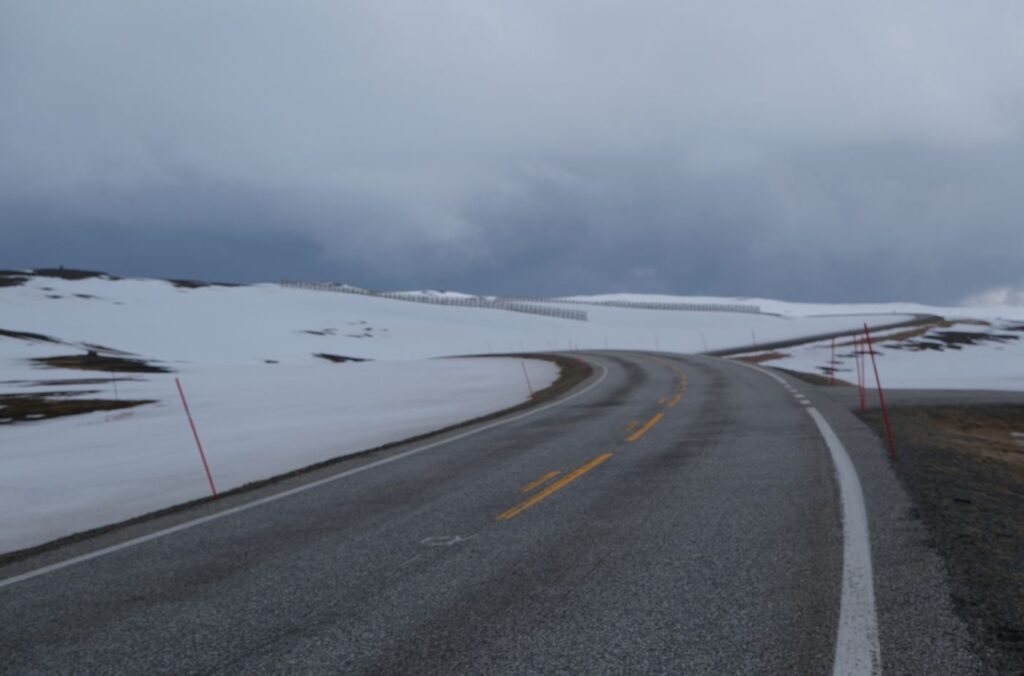
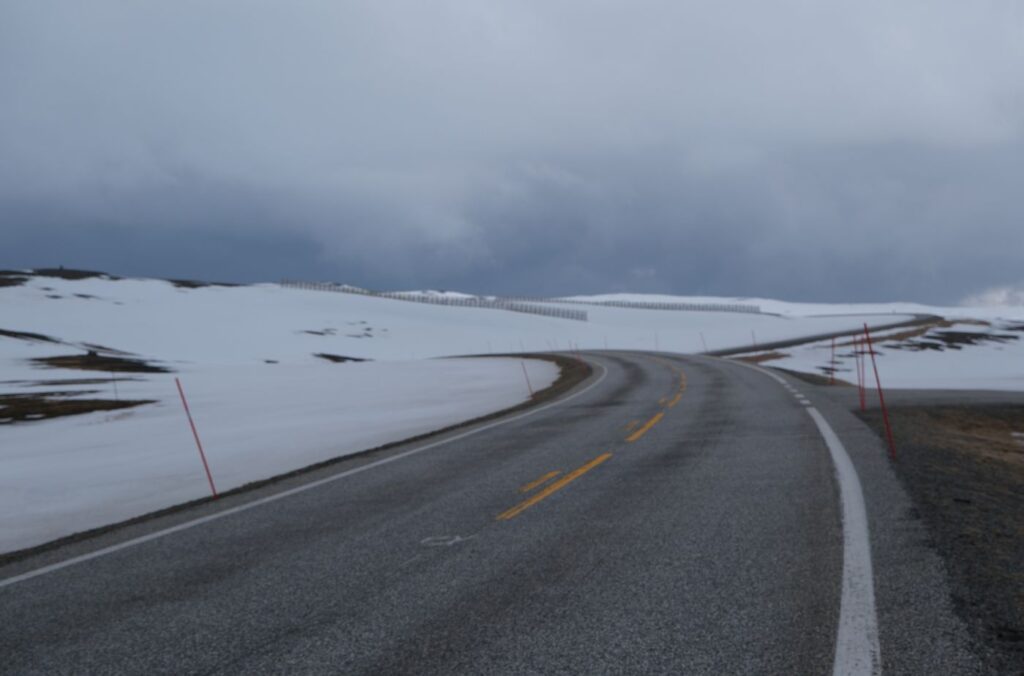
Spring is the season of transition of North Cape. March is still deep winter, with snow being thick and temperatures often below freezing. By May, the snow recedes and the midnight sun appears once again. In fact, the daylight increases dramatically from about 8-12 hours in March to nearly 24 hours by mid-May. Early spring (March) still requires convoy driving, but by late April/May, the road is typically open 24/7 again (weather permitting), and full summer operations resume around May.
Things to do in Spring
In March, you can experience the best of both winter and emerging light. It’s a great time for the northern lights, though they cannot be seen from April onwards. The contrast of the white snow under a strengthening sun is beautiful, and it’s an excellent month for photo taking.
April is a quieter period, so it’s a good month to visit. As the snow melts, wildflowers and green tundra begin to appear in late spring. Migratory birds (like puffins and other seabirds) return to Gjesværstappan in May, so bird-watching tours resume towards the end of spring. The North Cape Visitor Centre extends its opening hours as summer approaches, and seasonal businesses in Honningsvåg re-open for the influx of tourists. By late May, it is effectively summer and the midnight sun is in full swing with generally accessible roads.
If you are visiting in March or April, bring winter clothing. It can still be very cold, and you may also be dealing with convoy drives. In April, be ready for mud and melting snow, making trails slushy or muddy.
How to Get to North Cape: A Seasonal Guide
I hope this guide has provided some clarity on how exactly to get to North Cape throughout the year. In general, I recommend being ready for whatever challenge comes your way, and be sure to spend several days up there to really make the most of the changing conditions.