
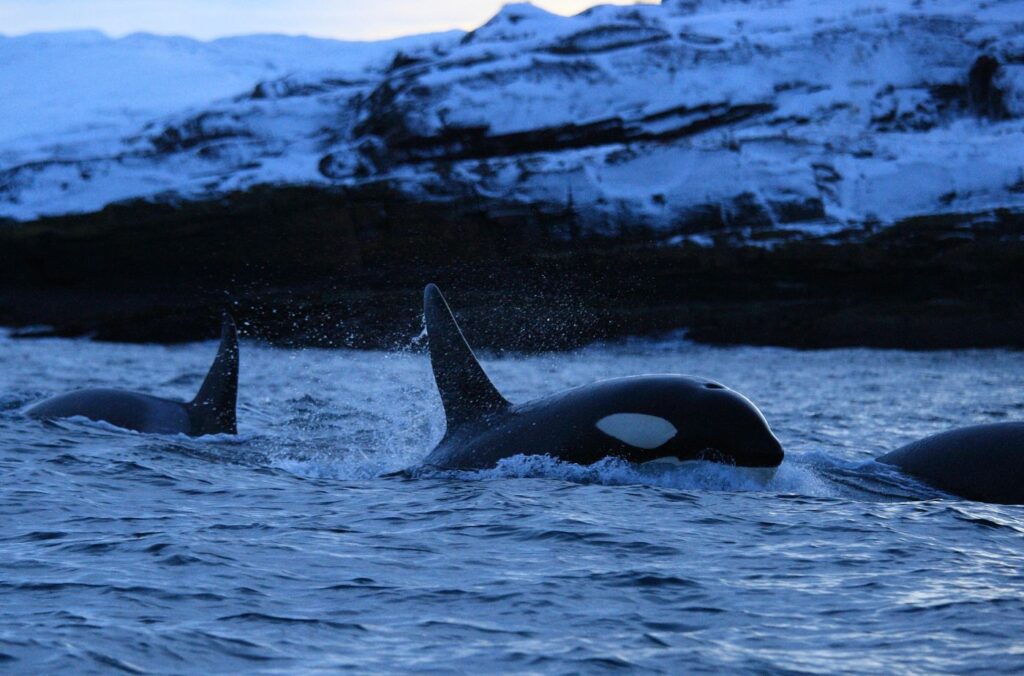
Located in the eastern part of Troms county, Skjervøy is a small town and island facing out towards the Arctic. The town is historic; people have lived there for hundreds of years thanks to the close proximity to the fishing grounds. One of the first churches built to convert the Sami to Christianity was built in Skjervøy as the island was also an important meeting place for local communities. Today Skjervøy is a port on the coastal ferry and renowned place for whale sightseeing tours.
Latitude: 70 degrees north
Population: 2,788
Sami name: Skiervvá
Hottest Month: July
Coldest Month: February
Wettest Month: October
Windiest Month: February
Skjervøy Municipality
Here are some things that you must do and try in Skjervøy
Here’s an overview of some of the best things to see and do in Skjervøy
Skjervøy Church is one of the oldest churches in Northern Norway and dates back to 1728. The distinctive white wooden church stands prominently above the harbour and has long served as a landmark for fishermen and travellers arriving by sea. Inside, visitors can admire historic furnishings and learn about the island’s maritime and religious heritage. The church remains an important symbol of Skjervøy’s history and community life.§1
Seppalatunet is a historic museum that tells the history of Skjervøy. It primarily tells the story of Leonhard Seppala (1877-1967), a man who grew up in Skjervøy and became known as the world’s best dog musher. He went to America and gained his fame in Alaska, even befriending Roald Amundson. The museum is also about Skjervøy’s role in Norwegian polar history.
Maursund Gård is a preserved working farm from the 17th century that has been converted into a museum.
Looking to go for a hike or take part in a unique experience? Here are our recommendations!
Please note – the links provided are affiliate links. We only recommend experiences that we have researched and/or tested and focus on providing unique, local things to do!
Skjervøy has become one of Norway’s premier whale-watching destinations. During winter, large numbers of humpback whales and orcas gather in the fjords to feed on herring, creating extraordinary wildlife encounters. Boat tours offer visitors opportunities to observe these magnificent animals in their natural environment. The combination of whales, snow-covered mountains and Arctic light makes this one of Northern Norway’s most memorable experiences.
Join some locals on a guided fishing trip.
We recommend the tour “Skjervøy: Guided Fishing Trip with Local Expert” on GetYourGuide.
Follow our road-trip guides for scenic trips around Skjervøy
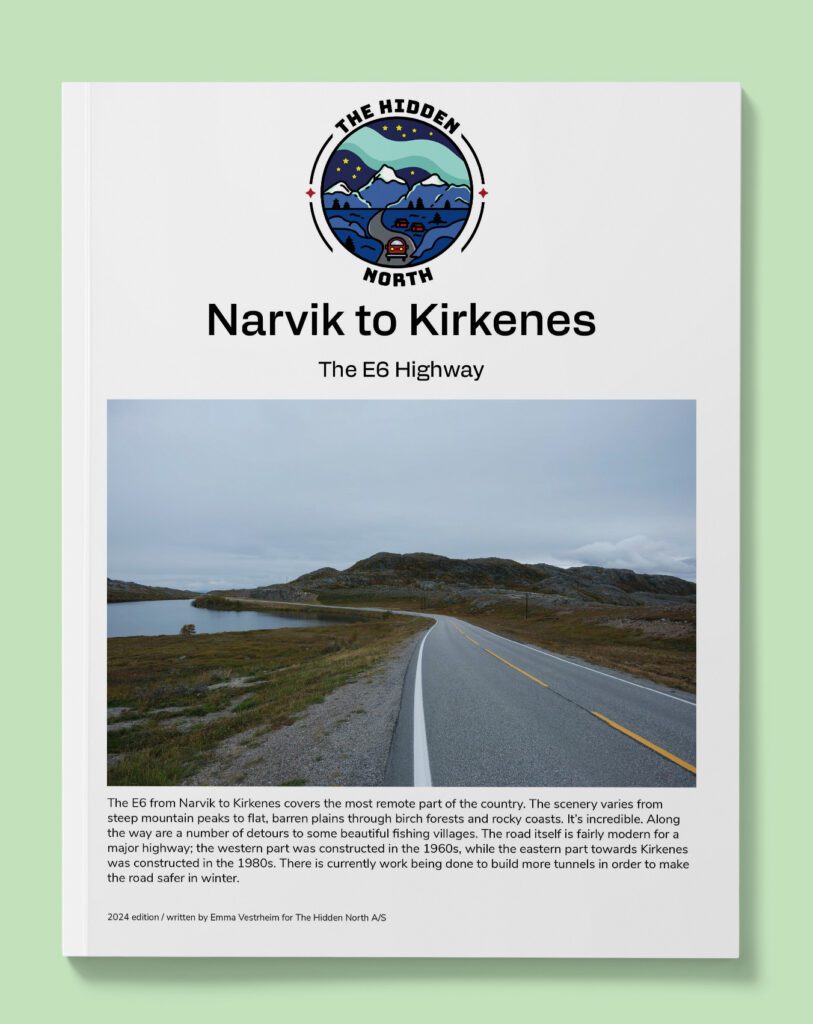
The E6 highway is the longest highway running through Norway, beginning south of Oslo and ending at Kirkenes. This stretch of the E6 covers the entire length of Arctic Norway, passing by and including some spectacular remote places.
Watch our YouTube videos featuring Skjervøy
Skjervøy is known was a good area for fishing and many people gathered here during the fishing seasons. Most of them were fishermen; however there were also merchants and other tradesmen. There was a barter trade, with fish exchanged for various goods. Travellers came from Sweden and Finland. Kvens also came to trade goods.
Authorities that were to provide for law and order also came to Skjervøy. Skjervøy had a district court in 1586. Persons who had committed crimes could be arrested and be sentenced; they could be fined or imprisoned. Taxes were collected, sometimes in the form of fish catches. Around this time, a regular market was held that attracted people from as far away as Sweden.
The market was large and laid settlement for the Kvens.
Skjervøy developed from a small shoreline hamlet into more of an idyllic town with a church. The shipping route known as the Hamburger Route, which was a large cargo vessel that sailed between Vadsø and Hamburg to bring fish to Germany, called at Skjervøy. From 1896 Hurtigruten began to dock here. The main telegraph line was extended in 1869 and in 1890 the line was extended to Skjervøy.
Skjervøy was the first port of call for the polar exploration vessel ‘Fram’ after the three year North Pole expedition carried out by Fridtjof Nansen. The expedition was the first Fram voyage, when the ship drifted with the ice over the Polar Sea. Nansen and one of his closest colleagues, Lieutenant Johansen, left Fram frozen in the ice in March 1895 and travleled north on skis with dog sledge. The captain of Fram, Otto Sverdrup, sailed the ship out of ice, southward and arrived at Skjervøy on 20 August 1896, eight days after Nansen and Johansen were brought to Tromsø.
Some parts of Skjervøy escaped the scorched earth policy that the Nazis enacted when they retreated in 1944.
Modern Skjervøy remains deeply connected to the sea. Fishing, seafood processing and aquaculture are among the most important industries, providing employment and helping sustain the local economy. The harbour remains a busy working waterfront where traditional livelihoods continue alongside modern marine industries.
Tourism has grown significantly in recent years, particularly due to the popularity of whale watching and northern lights experiences. Visitors arrive from around the world to experience Arctic wildlife and dramatic landscapes. Despite this growth, Skjervøy retains an authentic atmosphere as a working fishing community rather than a purpose-built tourist destination.
Life in Skjervøy is shaped by strong community ties and close connections to nature. Residents enjoy access to mountains, fjords, fishing grounds and outdoor recreation throughout the year. The combination of traditional coastal culture and spectacular Arctic scenery gives the island a distinctive character.
Fly: The closest airport is Sørkjosen Airport, which is approximately 45 minutes by car from Skjervøy. The airport has flights to Tromsø, Hammerfest and Kirkenes.
Drive: Skjervøy is a short drive off the E6 highway.
Train: No train access
Ferry: Skjervøy is a port of call on the coastal ferry. There are also express boats to Tromsø.
The town centre is compact and can be explored on foot. A car is recommended for reaching viewpoints, hiking trails and neighbouring islands such as Kågen. Local roads are generally quiet and offer excellent scenic driving opportunities. Guided tours are also available for whale watching, northern lights experiences and outdoor activities.
Cafes & Bakeries
Quick Bites
Reasonable Restaurants
High End & Unique Eats
At The Hidden North we believe in recommending quality & local places, so we only provide links to places we have researched and/or tested.
Camping
Skjervøy Lodge Fiskecamp
High End & Unique Properties
Midnight sun until 17 January
Average Temperature: -4C (25F)
Sunrise: 8:12am
Sunset: 3:29pm
Average Temperature: -4C (25F)
Sunrise: 5:56am
Sunset: 5:35pm
Average Temperature: -2C (28F)
Sunrise: 4:29am
Sunset: 8:45pm
Average Temperature: 1C (34F)
Midnight sun from 16 May
Average Temperature: 6C (43F)
Midnight sun
Average Temperature: 12C (54F)
Midnight sun until 28 July
Average Temperature: 12C (54F)
Sunrise: 3:34am
Sunset: 9:42pm
Average Temperature: 12C (54F)
Sunrise: 5:49am
Sunset: 7:10pm
Average Temperature: 8C (46F)
Sunrise: 7:50am
Sunset: 4:51pm
Average Temperature: 4C (39F)
Sunrise: 9:28am
Sunset: 1:11pm
Average Temperature: 0C (32)
Polar night
Average Temperature: -2C (28F)