
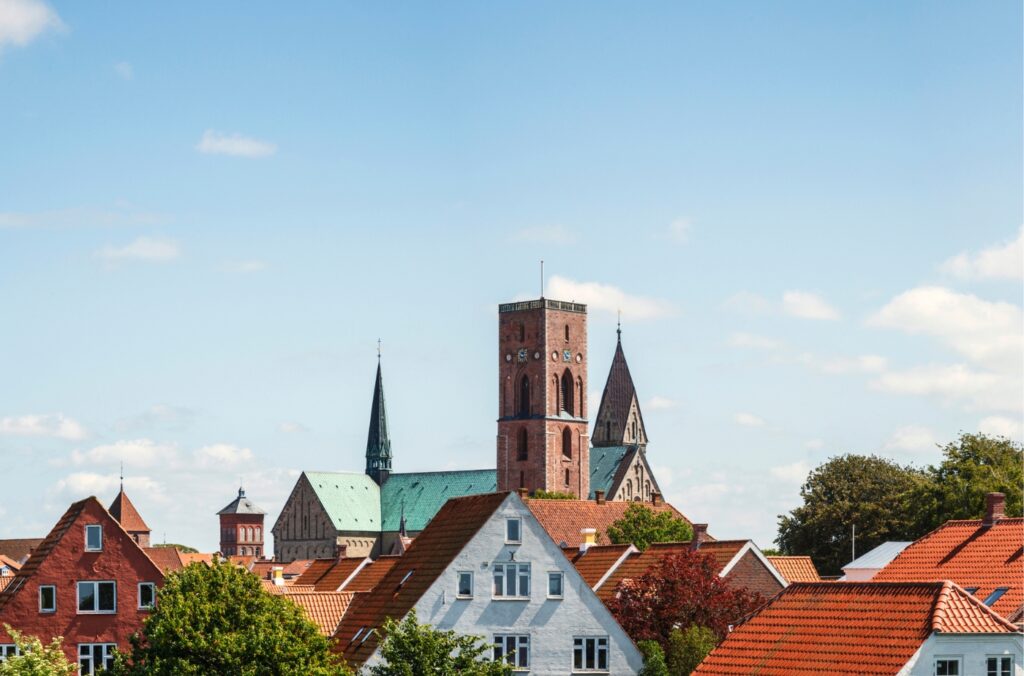
Ribe is Denmark’s oldest town and one of Scandinavia’s most atmospheric medieval destinations. With its cobbled streets, timber-framed houses and towering Ribe Cathedral, the city feels like a living piece of history set beside the marshlands of the North Sea coast. Visitors can explore Viking heritage, historic waterfronts and the unique landscapes of the nearby Wadden Sea National Park while enjoying a relaxed small-town atmosphere. Ribe combines centuries of history, Danish culture and coastal nature in a way few places in Scandinavia can match.
Latitude: 55.1 degrees north
Population: 8,300
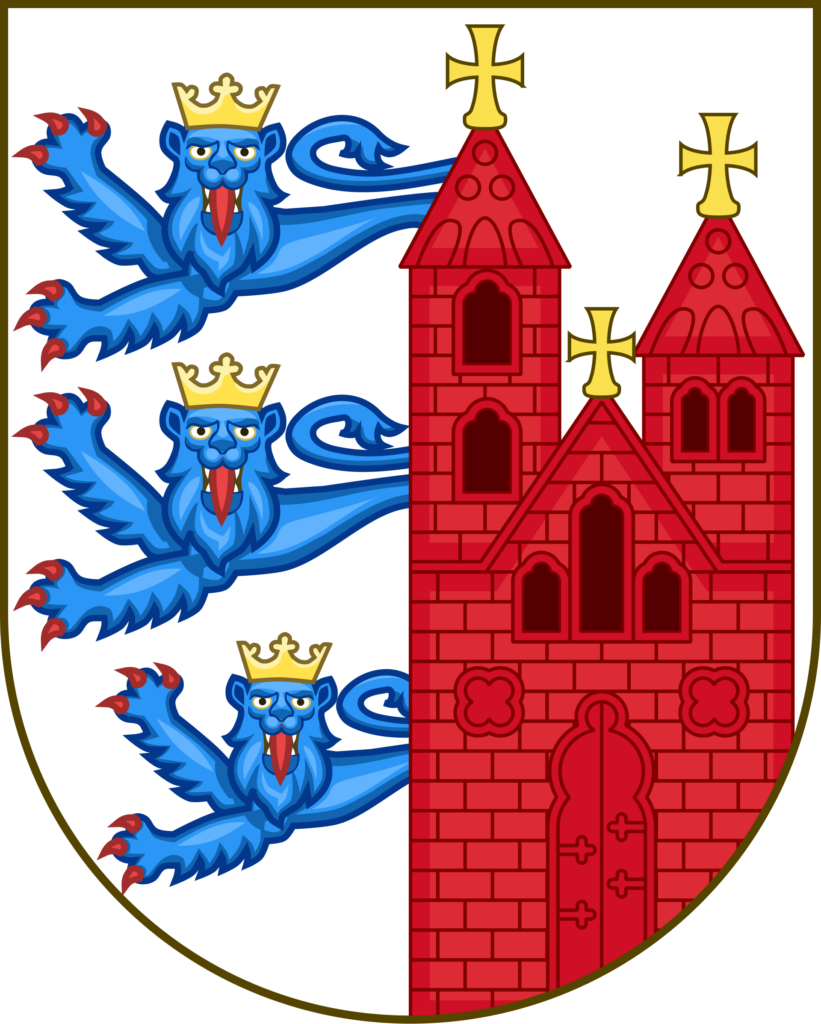
Ribe coat-of-arms
Here’s an overview of some of the best things to see and do in Ribe
Ribe Cathedral is Denmark’s oldest cathedral and the city’s most iconic landmark. Originally founded in the 12th century, the cathedral combines Romanesque and Gothic architectural styles shaped over centuries of rebuilding and expansion. Visitors can climb the tower for panoramic views across Ribe’s red rooftops, marshlands and surrounding countryside. The cathedral remains central to the city’s historical and cultural identity.
Ribe Old Town is one of Scandinavia’s best-preserved medieval town centres, filled with cobbled streets, timber-framed houses and centuries-old buildings. Walking through the historic centre feels like stepping back in time, with charming squares, cafés and artisan shops throughout the district. The town’s peaceful atmosphere and beautifully preserved architecture make it one of Denmark’s most atmospheric destinations. Evening walks through the lantern-lit streets are especially memorable.
The Ribe VikingeCenter is an immersive open-air museum recreating Viking Age life near Denmark’s oldest town. Visitors can explore reconstructed longhouses, markets and workshops while interacting with guides dressed in historical clothing. Demonstrations of blacksmithing, archery and Viking crafts help bring the period to life. The centre is especially popular with families and history enthusiasts.
This museum explores Ribe’s origins as Scandinavia’s oldest town and one of the region’s earliest Viking trading centres. Archaeological discoveries, artefacts and interactive exhibitions reveal how Ribe developed through trade, craftsmanship and maritime connections. Visitors can learn about Viking society, religion and daily life while exploring some of Denmark’s most important historical findings. The museum offers excellent context before exploring the town itself.
Looking to go for a hike or take part in a unique experience? Here are our recommendations!
The Wadden Sea National Park is a UNESCO World Heritage Site and one of Europe’s most unique coastal ecosystems. Visitors can explore tidal flats, marshlands and bird-rich wetlands through guided walks and nature tours. The area is especially famous for the “Black Sun” phenomenon, when huge flocks of starlings create dramatic patterns across the sky at sunset. Wildlife enthusiasts and photographers are particularly drawn to the region during migration seasons.
Mandø is a small tidal island accessible via a causeway that disappears beneath the sea during high tide. Visitors can experience remote coastal landscapes, birdlife and traditional island culture while exploring the quiet roads and marshlands. Guided tractor bus tours across the tidal flats are among the island’s most unusual experiences. The isolation and changing tides create a distinctive atmosphere unlike anywhere else in Denmark.
Rømø is known for its enormous sandy beaches, dune landscapes and relaxed North Sea atmosphere. The island is popular for cycling, kite activities, beach driving and coastal walks throughout the year. Visitors can also explore traditional villages, seafood restaurants and scenic nature reserves. Its wide beaches are among the largest in northern Europe.
Watch our YouTube videos featuring Ribe
Ribe is Denmark’s oldest town and one of Scandinavia’s earliest urban settlements, with origins dating back to the early 8th century. Its location along the North Sea coast helped establish the town as a major Viking trading centre connecting Scandinavia with continental Europe. Merchants, craftsmen and seafarers gathered in Ribe to trade goods such as amber, furs and metalwork, contributing to the town’s rapid growth and prosperity.
During the Middle Ages, Ribe became an important religious and political centre, strengthened by the construction of Ribe Cathedral. Pilgrims, bishops and merchants helped shape the city’s influence throughout medieval Denmark. Despite fires, floods and changing trade routes over the centuries, much of the historic town survived remarkably intact.
In modern times, Ribe gradually transformed from a commercial centre into one of Denmark’s most treasured heritage destinations. Preservation efforts helped maintain the medieval streets, historic buildings and unique atmosphere that continue to define the city today.
Modern Ribe balances tourism, local traditions and relaxed small-town living. While visitors arrive year-round to experience Viking history and medieval architecture, the city remains a functioning local community with schools, shops and cultural institutions. Residents enjoy a slower pace of life shaped by the surrounding marshlands and coastal landscapes.
Tourism plays a major role in the economy, particularly during summer when the old town, museums and Wadden Sea experiences attract travellers from around the world. Local businesses focus heavily on heritage, craftsmanship and Danish hospitality, contributing to the city’s welcoming atmosphere. Seasonal festivals and historical events remain important parts of community life.
Nature and sustainability are also deeply connected to life in Ribe due to the nearby Wadden Sea ecosystem. Bird conservation, coastal management and environmental tourism continue to influence the region’s identity and development.
Fly: The nearest major airports are Billund Airport and Hamburg Airport in Germany. From there, travellers can continue to Ribe by train or car.
Drive: Ribe is easily accessible by road from southern Denmark and northern Germany. Scenic coastal drives through Jutland pass marshlands, farmland and North Sea landscapes.
Train: Regional trains connect Ribe with Esbjerg and the wider Danish rail network, including connections to Copenhagen and Aarhus.
Ribe is compact and highly walkable, particularly within the medieval town centre. Cycling is also popular thanks to the flat terrain and scenic countryside surrounding the city. Rental cars are useful for exploring the Wadden Sea coast, islands and nearby nature reserves. Guided tours provide easy access to tidal flats and birdwatching areas.
Cafes & Bakeries
Quedens Gaard Café – Historic café serving Danish cakes, coffee and light meals in a beautifully preserved old townhouse.
Café Kammerslusen – Relaxed café near the Wadden Sea known for marshland views and traditional Danish dishes
Restaurants
Restaurant Backhaus – Well-regarded restaurant offering modern Nordic cuisine inspired by local ingredients and seasonal produce.
High End & Unique Eats
Hostels & Camping
Danhostel Ribe – Accommodation popular with cyclists, backpackers and travellers exploring the Wadden Sea region
B&Bs & Guesthouses
Den Gamle Arrest – Unique guesthouse located inside a former historic prison building in the centre of Ribe.
Chains & Mid-Range
Hotel Dagmar – Historic hotel beside Ribe Cathedral offering classic Danish charm and medieval surroundings.
High End & Unique Properties
Ribe Byferie Resort – Comfortable resort-style accommodation located close to the old town and surrounding nature areas.