
Latitude: 55.2 degrees north
Population: 185,480
Odense Municipality
Here’s an overview of some of the best things to see and do in Odense
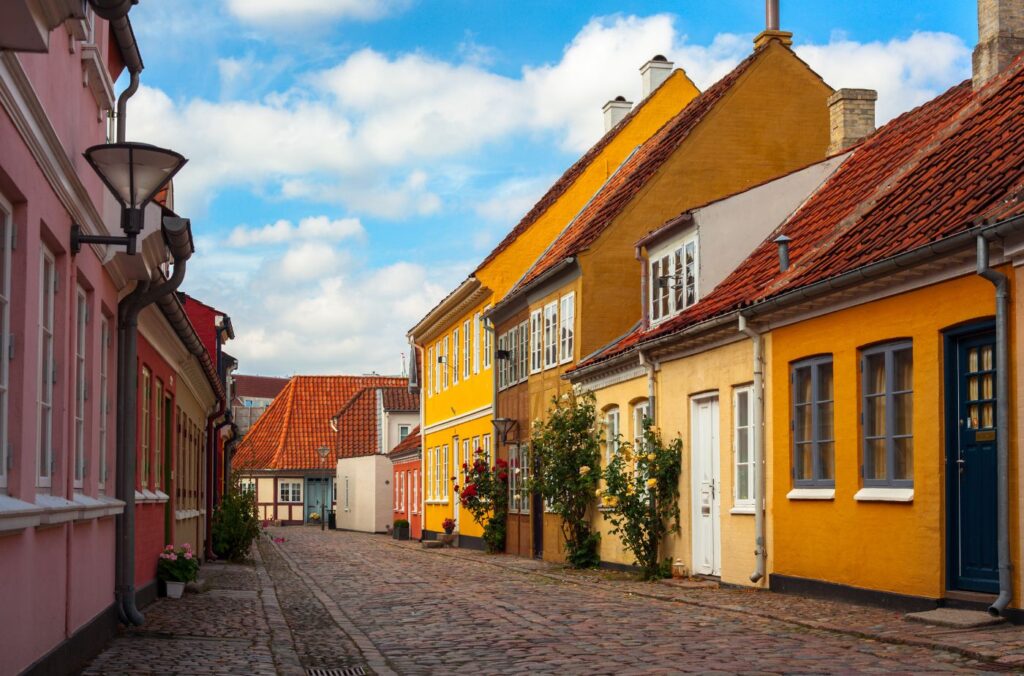
The Hans Christian Andersen House is one of Odense’s most famous attractions and celebrates the life and imagination of Denmark’s beloved fairytale author. The modern museum combines immersive exhibitions, sound, art and architecture to bring Andersen’s stories to life in creative ways. Visitors can explore interactive installations inspired by tales such as The Little Mermaid and The Ugly Duckling. The surrounding old town streets also preserve the atmosphere of the city where Andersen was born.
Also known as Saint Canute’s Cathedral, Odense Cathedral is one of Denmark’s most important Gothic churches. The cathedral dates back to the 13th century and contains the remains of King Canute IV, Denmark’s patron saint. Visitors can admire the impressive red-brick architecture, peaceful interior and centuries of Danish religious history. The church remains a central landmark within the historic city centre.
Den Fynske Landsby, or The Funen Village, is an open-air museum recreating rural Danish life from the 18th and 19th centuries. Historic farmhouses, gardens and workshops are spread throughout the village, with staff often dressed in traditional clothing. Visitors can learn about farming, crafts and daily life on the island of Funen before industrialisation. Seasonal events and traditional food experiences make the museum especially engaging for families.
Brandts is Odense’s creative cultural quarter, filled with galleries, cafés, design shops and museums. The area combines historic industrial buildings with modern Danish art, photography and contemporary culture. Visitors can explore exhibitions, independent boutiques and lively public spaces throughout the district. The neighbourhood becomes especially vibrant during evenings and cultural festivals.
Looking to go for a hike or take part in a unique experience? Here are my recommendations!
Please note – the links provided are affiliate links. I only recommend experiences that I have researched and/or tested and focus on providing unique, local things to do!
Egeskov Castle is one of Europe’s best-preserved Renaissance water castles and makes an excellent day trip from Odense. Surrounded by lakes, gardens and forested parkland, the castle combines history with interactive museums and outdoor experiences. Visitors can explore antique car collections, treetop walks and beautifully decorated historic rooms. The grounds are especially colourful during spring and sum
The Funen Archipelago offers peaceful islands, coastal villages and scenic cycling routes easily accessible from Odense. Visitors can enjoy island-hopping by ferry, kayaking, hiking and quiet beaches throughout the region. The landscapes are gentler than much of Norway or Sweden, with rolling farmland and charming seaside communities. Summer is ideal for slow travel and outdoor exploration across the islands.
Kerteminde is a picturesque coastal town known for colourful houses, seafood restaurants and relaxed maritime atmosphere. Visitors can stroll along the harbour, visit beaches and explore museums focused on local seafaring history. The town is also home to the Fjord & Bælt marine research centre featuring harbour porpoises and marine life exhibitions. Its peaceful seaside setting makes it a popular excursion from Odense.
Odense is one of Denmark’s oldest cities and has origins dating back more than a thousand years. During the Viking Age, the city became an important religious and trading centre due to its location on the island of Funen. The construction of Odense Cathedral helped establish the city as a major ecclesiastical centre during the Middle Ages. Markets, monasteries and royal connections contributed to Odense’s growth and influence throughout Danish history.
The city became internationally famous as the birthplace of Hans Christian Andersen, whose fairytales shaped children’s literature around the world. Andersen’s childhood experiences in Odense strongly influenced many of his stories and literary imagination. Today, his legacy remains central to the city’s identity and tourism.
In the 19th and 20th centuries, Odense developed into an important industrial and commercial city while preserving much of its historic character. Modern redevelopment has transformed former industrial districts into cultural and creative neighbourhoods while maintaining strong ties to Danish heritage and traditions.
Modern Odense combines historic charm with innovation, education and creative culture. The city has a youthful atmosphere supported by universities, research institutions and a growing technology sector focused particularly on robotics and engineering. At the same time, cobbled streets, parks and bicycle lanes help maintain the relaxed pace typical of Danish urban life.
Cycling plays a major role in everyday life, and much of the city is designed around pedestrian-friendly streets and green public spaces. Cafés, bakeries and cultural venues fill the city centre, especially around Brandts and the old town. Festivals, concerts and outdoor events create a lively cultural atmosphere throughout the year.
Odense is also increasingly recognised for sustainability and modern urban design. Redeveloped waterfronts, public transport improvements and creative industries continue to shape the city’s future while preserving its strong historical identity. The balance between fairytale history and modern Scandinavian living gives Odense a unique personality within Denmark.
Fly: The nearest major international airport is Copenhagen Airport, connected to Odense by direct train in around 1.5 hours. Billund Airport is another convenient option for international travellers.
Drive: Odense is located centrally on Funen and connected by motorway to Copenhagen and Jutland via Denmark’s major bridge systems. Driving through Denmark is straightforward and scenic, particularly along coastal routes.
Train: Odense is one of Denmark’s main railway hubs with frequent direct trains connecting Copenhagen, Aarhus and other Danish cities. Rail travel is fast, efficient and one of the easiest ways to reach the city.
Ferry: Although Odense itself is inland, ferries throughout the Funen Archipelago connect nearby islands and coastal towns. Ferry travel is especially popular for cycling and island-hopping trips.
Odense is compact, highly walkable and exceptionally bicycle-friendly. Public buses connect neighbourhoods and nearby towns throughout Funen. Rental bicycles are widely available and remain one of the best ways to experience the city and surrounding countryside. The city centre is designed to prioritise pedestrians and cyclists over cars.
Cafes & Bakeries
Nelle’s Coffee & Wine – A cosy and stylish café known for specialty coffee, brunch and relaxed Scandinavian atmosphere in the heart of Odense.
Velodrom Kaffebar – Popular local coffee bar combining minimalist Danish interiors with high-quality coffee and homemade pastries.
Restaurants
Restaurant Under Lindetræet – Historic restaurant serving classic Danish cuisine in charming traditional surroundings near the old town.
Sortebro Kro – Restaurant located beside The Funen Village, specialising in refined Danish food using seasonal ingredients.
High End & Unique Eats
Aro – Modern fine dining restaurant offering creative Nordic tasting menus and one of Odense’s most acclaimed culinary experiences.
All my hotel recommendations are based on research and experience. I don’t recommend somewhere unless I think it is wonderful! The Hidden North focuses on accommodation that provides good quality for price or offer local or unique experiences.
Camping & Hostels
Danhostel Odense City – affordable and centrally located accommodation ideal for backpackers, cyclists and budget-conscious travellers.
Cabins & B&Bs
Amalie Bed and Breakfast – cosy interiors and personal atmosphere located close to the historic centre.
Chains & Mid-Range
First Hotel Grand – Historic hotel combining elegant architecture, modern comfort and a central location near major attractions.
High End & Unique Properties
Hotel Odeon – Stylish modern hotel inspired by Scandinavian design, located close to the Hans Christian Andersen district.