
Located in southern Sweden just across the Øresund Bridge from Copenhagen, Malmö is a vibrant coastal city known for its modern architecture, multicultural atmosphere and relaxed Scandinavian lifestyle. Once an industrial port city, Malmö has transformed into one of the Nordic region’s most creative and sustainable urban destinations. Visitors can explore historic squares, waterfront promenades, sandy beaches and a thriving food scene shaped by influences from around the world. With its mix of innovation, history and easy access to both Sweden and Denmark, Malmö offers a dynamic but approachable city experience.
Latitude: 55.3 degrees north
Population: 368,000
Malmö Municipality
Here’s an overview of some of the best things to see and do in Malmö
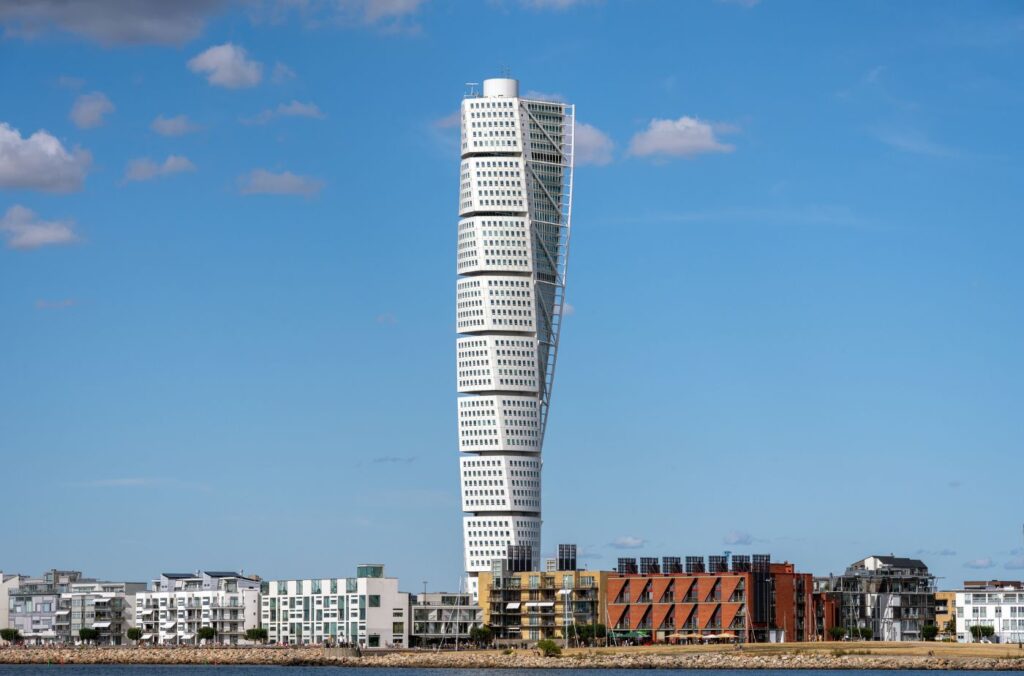
Turning Torso is Malmö’s most recognisable landmark and the tallest building in Scandinavia. Designed by architect Santiago Calatrava, the twisting skyscraper has become a symbol of Malmö’s transformation into a modern and internationally connected city. The surrounding Western Harbour district showcases innovative Scandinavian architecture, waterfront promenades and sustainable urban design. The area is especially popular for evening walks and sunset views across the Øresund Strait.
Malmö’s old town, with cobbled streets and three historic market squares. Here you’ll find many charming half-timbered houses with references back to medieval times. The oldest half-timbered house is Thottska Huset, dating back to 1558.
Malmö Castle is one of Scandinavia’s oldest surviving Renaissance fortresses and offers insight into the city’s Danish and Swedish history. Visitors can explore museums covering natural history, art and regional culture within the historic complex. The castle grounds include gardens, canals and walking paths close to the city centre. Its combination of history and peaceful surroundings makes it one of Malmö’s most popular attractions.
Lilla Torg is Malmö’s most atmospheric square, lined with colourful half-timbered buildings, outdoor restaurants and lively cafés. The square dates back to the 16th century and remains a social gathering point throughout the year. During summer, terraces fill with locals enjoying long evenings outdoors, while winter brings cosy lights and festive markets. The surrounding streets are ideal for shopping, dining and exploring Malmö’s historic centre.
Known locally as “Ribban”, Ribersborg Beach stretches along Malmö’s western coastline and is popular year-round. The long sandy beach and waterfront paths attract swimmers, cyclists and walkers during warmer months. Visitors can also experience the historic open-air bathhouse offering traditional Swedish sauna culture with sea views. The beach provides excellent views towards Copenhagen and the Øresund Bridge.
Looking to go for a hike or take part in a unique experience? Here are my recommendations!
Thanks to the Øresund Bridge, Copenhagen is only around 40 minutes away from Malmö by train. Visitors can easily combine both cities during the same trip, experiencing Danish and Swedish culture side by side. Attractions include Nyhavn, Tivoli Gardens, museums and world-class restaurants. The connection between the two cities creates one of Scandinavia’s most dynamic cross-border regions.
The coastal villages of Skanör and Falsterbo offer beautiful beaches, colourful beach huts and relaxed seaside atmosphere just south of Malmö. The area is popular for cycling, birdwatching and summer swimming. Traditional fishing village architecture and fresh seafood restaurants add to the charm. During autumn, the region becomes one of northern Europe’s best locations for bird migration viewing.
Kungsparken and nearby Slottsparken provide green escapes in the heart of Malmö. Visitors can stroll through landscaped gardens, canals and shaded pathways while enjoying views of Malmö Castle. The parks are ideal for picnics, cycling and relaxing during warmer months. Seasonal flowers and outdoor cafés create a lively atmosphere throughout spring and summer.
Malmö was founded during the 13th century when the region of Skåne belonged to Denmark. Its strategic location along important trade routes helped the city develop into one of the most significant commercial centres in the Baltic region. Fishing, shipbuilding and trade drove early prosperity, while medieval churches and market squares reflected the city’s growing importance. Malmö remained under Danish rule until 1658, when Skåne became part of Sweden following the Treaty of Roskilde.
During the Industrial Revolution, Malmö expanded rapidly through manufacturing, shipbuilding and port activity. Large industries transformed the city into an economic powerhouse of southern Sweden during the late 19th and 20th centuries. However, the decline of heavy industry in the late 20th century forced Malmö to reinvent itself economically and socially.
In recent decades, Malmö has undergone major urban renewal and become known for sustainability, innovation and multiculturalism. Projects such as the Øresund Bridge and the development of Western Harbour helped reconnect Malmö internationally and reshape the city into a modern Scandinavian hub.
Modern Malmö is known for its youthful energy, cultural diversity and progressive urban design. The city has one of the youngest populations in Sweden, supported by universities, creative industries and strong links to nearby Copenhagen. Residents enjoy a relaxed lifestyle centred around cycling, waterfront living and public green spaces. The city’s multicultural identity is reflected in its neighbourhoods, food scene and festivals.
Sustainability plays a major role in Malmö’s development, particularly in districts such as Western Harbour where environmentally friendly housing and renewable energy solutions have become central features. Technology, education and creative industries continue to grow alongside traditional business sectors. The city’s excellent public transport and international connections make it especially attractive for students, entrepreneurs and professionals.
Despite being Sweden’s third-largest city, Malmö maintains a compact and approachable atmosphere. Locals spend summers swimming at city beaches, dining outdoors and enjoying parks and cultural events. The combination of modern Scandinavian design, history and international influences gives Malmö a distinctive personality within the Nordic region.
Fly: The closest major airport is Copenhagen Airport in Denmark, connected directly to Malmö by train via the Øresund Bridge in around 25–35 minutes. Malmö Airport also offers regional and international flights.
Drive: Malmö is easily reached by road from across Sweden and Denmark. The Øresund Bridge connects the city directly with Copenhagen and mainland Europe. Driving from Gothenburg takes approximately 3 hours, while Stockholm is around 6 hours away.
Train: Malmö Central Station is one of Scandinavia’s major railway hubs with frequent connections to Stockholm, Gothenburg, Copenhagen and other European destinations. Direct trains from Copenhagen Airport make international arrivals particularly convenient.
Ferry: Nearby ferry routes connect southern Sweden with Germany and Denmark, particularly via Trelleborg and Helsingborg. These routes are commonly used for road trips throughout Scandinavia and northern Europe.
Malmö is highly walkable and bicycle-friendly, with extensive cycling infrastructure throughout the city. Public buses efficiently connect neighbourhoods, beaches and surrounding suburbs. Regional trains provide quick access to Copenhagen, Lund and other parts of Skåne. Electric scooters, bike rentals and waterfront walking paths make exploring the city easy and enjoyable.
Here’s a nice guide on how to get around: https://www.routesnorth.com/destinations/malmo/getting-around-malmo/
There’s a nice guide for shopping in Malmö: https://www.farandclose.com/posts/malmo-city-guidehttps://visitlund.se/en/to-do-in-lund/shopping
Cafes & Bakeries
Solde Kaffebar – One of Malmö’s most respected specialty coffee cafés, known for expertly brewed coffee and minimalist Scandinavian atmosphere.
Lilla Kafferosteriet – A cosy café and roastery set inside a charming courtyard, serving homemade cakes, artisan coffee and a relaxed local atmosphere.
Restaurants
Malmö Saluhall – Malmö Saluhall is a modern food hall showcasing the city’s diverse culinary culture. Housed inside a converted industrial warehouse, the hall contains artisan bakeries, Nordic cuisine, international street food and specialty coffee shops. Visitors can sample local produce alongside flavours influenced by Malmö’s multicultural population. It is one of the city’s best places to experience contemporary Malmö food culture.
Saltimporten Canteen – A minimalist waterfront restaurant known for simple but high-quality lunches prepared using fresh seasonal produce.
Kollektivkroden – communal restaurant owned by 50 locals, with each one working two shifts a month.
High End & Unique Eats
Vollmers – One of Sweden’s most acclaimed fine dining restaurants, offering sophisticated tasting menus inspired by Skåne ingredients and Nordic culinary traditions.
Camping & Hostels
Moment Hotels – A modern budget-friendly hotel near Malmö Central Station offering compact rooms and convenient city access.
Cabins & B&Bs
The More Hotel Mazetti – Stylish apartment-style accommodation located inside a converted chocolate factory, combining historic charm with modern comfort.
Chains & Mid-Range
Clarion Hotel Malmö Live – Waterfront Hotel featuring modern Scandinavian interiors, rooftop views, and direct access to Malmö’s cultural district.
High End & Unique Properties
MJ’s – hotel known for bold interiors, lively social spaces and upscale dining in the centre of Malmö.
Story Hotel Studio Malmö – Modern design hotel located in Western Harbour with panoramic sea views, contemporary Scandinavian design and rooftop dining.