Longyearbyen Town Centre – Self-Guided Walking Tour
Explore Longyearbyen, the northernmost town in the world and historic mining settlement.
Welcome to Longyearbyen – the northernmost settlement in the world. This Arctic centre is a vibrant hub of cool cafes, shops, incredible excursions, research institutions – all nestled amongst the most stunning scenery. However, life in Longyearbyen hasn’t always been this cozy – for decades it was a harsh, isolated mining town. If travelling to Svalbard, you will be staying in Longyearbyen – so here’s a detailed guide to the settlement.
Latitude: 78.1 degrees north
Population: 2,500
Hottest month: July
Coldest month: March
Wettest month: December
Windiest month: December
Annual precipitation: 448mm
Longyearbyen coat-of-arms
Here are some things that you must do and try in Longyearbyen
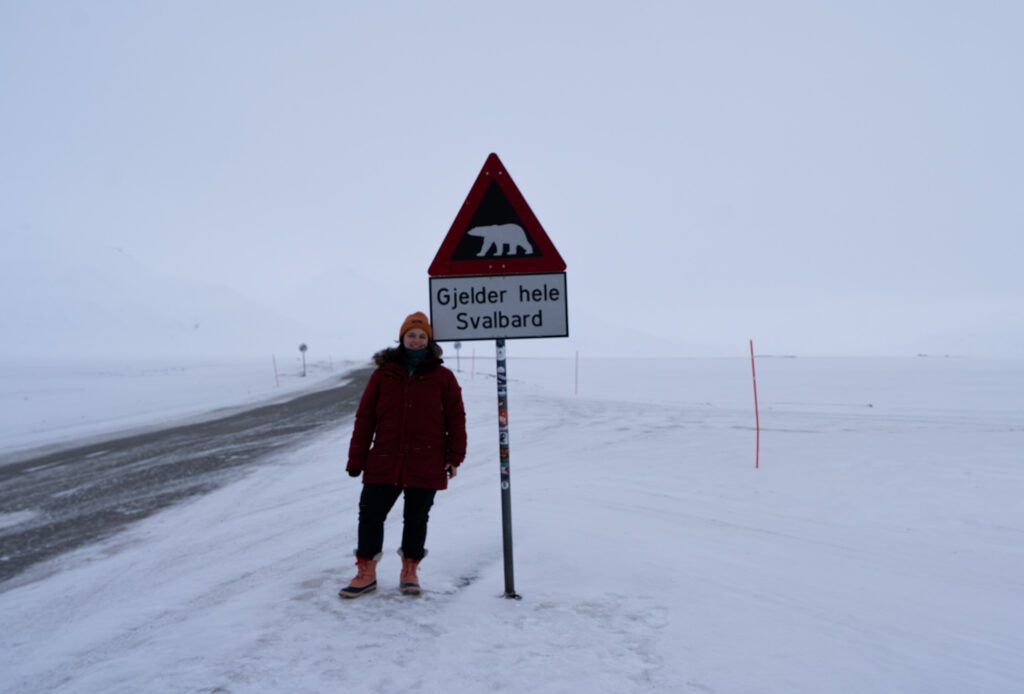
No visit to Longyearbyen is complete without a visit to the polar bear sign! To get here, you can walk – though I’d recommend booking a tour out to the sign (and other places, of course) instead.
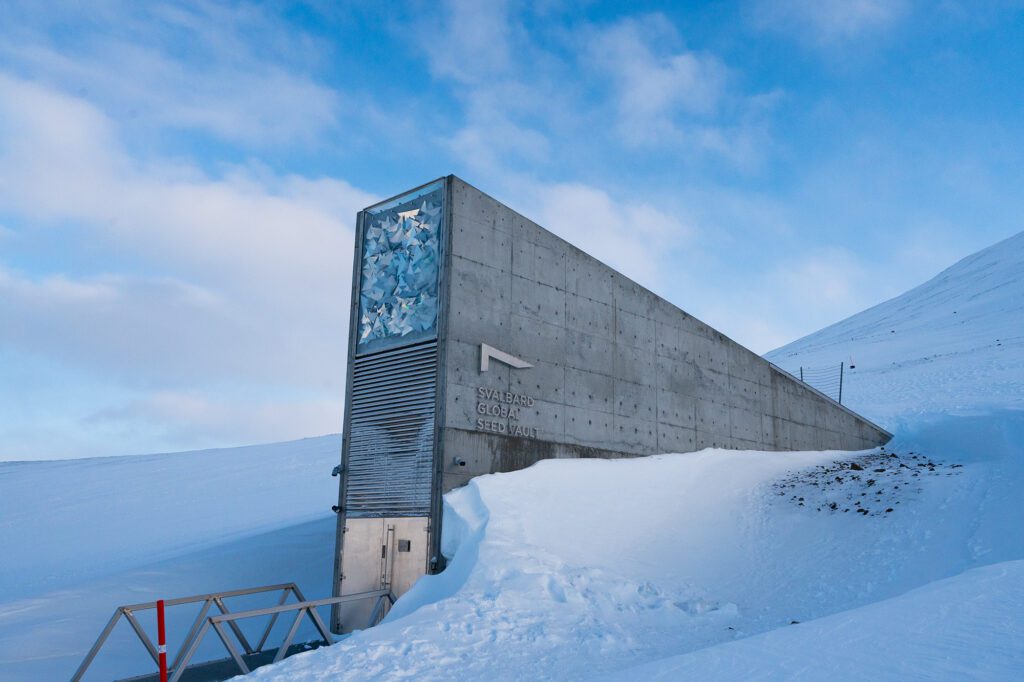
The Svalbard Global Seed Vault has become an icon around the world. To get here, you need to book a guided tour of Longyearbyen (it’s beyond the safe-zone limits of the town).
Here’s an overview of some of the best things to see and do in Longyearbyen
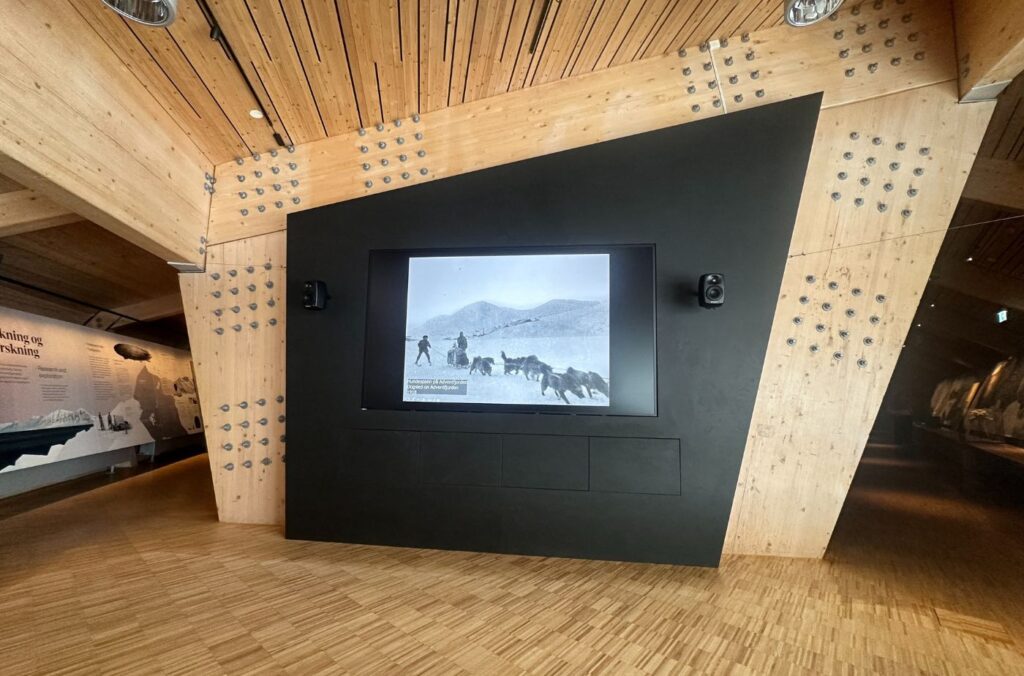
The Svalbard Museum offers an excellent introduction to the history, wildlife and polar exploration of the Arctic archipelago. Exhibitions cover everything from whaling and trapping to coal mining and climate research. Visitors can learn about polar bears, glaciers and the unique ecosystem that defines life this far north. The museum is compact but highly regarded for its engaging storytelling and well-curated displays.
This small but fascinating museum focuses on Arctic exploration and historic expeditions to the North Pole. Original photographs, diaries and artefacts tell the stories of explorers who passed through Svalbard during the golden age of polar discovery. The exhibits provide insight into the dangers and ambitions of early Arctic expeditions. It is particularly interesting for visitors interested in aviation, exploration and survival history.torytelling and well-curated displays.
Longyearbyen Church is the world’s northernmost church and serves as an important community gathering place in the Arctic town. The warm wooden interior contrasts beautifully with the stark polar environment outside. Visitors are welcome to attend concerts, community events and seasonal celebrations held throughout the year. The church also provides insight into the social life of Longyearbyen’s international population.
Because Svalbard is so unique and excursions are mandatory for exploring it, I’ve made overviews of what to do by season. You can find those guides on the main Svalbard travel guide page (click the link below).
I also recommend visiting the excellent VisitSvalbard website, which is my go-to when organising excursions.
Follow this self-guided walk around Longyearbyen, covering both the modern centre and historic mining settlement.
Watch my YouTube videos featuring Longyearbyen
Join me on a walking tour around Longyearbyen during a beautiful sunny March day.
Join me on a walking tour around Longyearbyen during the night in March.
Follow me as I walk from the Longyearbyen cruise port into the city centre.
Longyearbyen was founded in 1906 by American businessman John Munro Longyear, who established coal mining operations in the area. The settlement quickly developed into one of the Arctic’s most important mining communities, attracting workers from Norway, Russia and beyond. Harsh weather conditions, isolation and long polar winters shaped daily life in the town for decades. Coal mining remained the dominant industry throughout much of the 20th century and played a major role in establishing Norway’s long-term presence in Svalbard.
Svalbard itself is governed under the 1920 Svalbard Treaty, which granted Norway sovereignty while allowing citizens of other signatory countries to live and work there. This created a unique international community unlike anywhere else in Norway. During the Cold War, Soviet settlements such as Pyramiden existed alongside Norwegian mining towns, giving the archipelago unusual geopolitical significance.
In recent decades, Longyearbyen has gradually shifted away from coal mining towards tourism, science and Arctic research. Institutions studying climate change, glaciers and polar ecosystems now play a major role in the town’s identity. Although mining heritage remains highly visible, Longyearbyen today is better known as a centre for polar tourism and scientific collaboration.
I have a special section dedicated to the history of Longyearbyen. You can find it below.
Longyearbyen is located in the Longyear Valley, which is just off the Adventdalen valley. The Adventfjorden runs along the southern shore of the valley. The population of Longyearbyen is around 2,500, with the largest group of Norwegians coming from Northern Norway (they make up 40% of the population). Roughly 300 people are non-Norwegians, with the largest nationalities being from Thailand, Sweden, Russia and Ukraine. Because of the mining industry, around 60% of the population are male. The average age of the population is between 25 and 44 years old, and there are nearly no residents over the age of 66.
Longyearbyen experiences a high turnover, with the average person living there for 6.3 years (6.6 for Norwegian and 4.3 for foreigners). The longest-residing people in the town tend to work in mining, followed by government employees. The shortest tenures are students and employees in higher education, tourism and the state.
70% of households consist of a single person, compared to 41% on the mainland. This is because many people work on Svalbard while their family remains on the mainland.
Coal production peaked in 2007, but today there is only one mine operating. Fishing is a growing economy as fish flee the warmer waters of the south in Norway (thanks to climate change) and head north to Svalbard. The University Centre of Svalbard has 350 students and 40 professors. Tourism is also very important.
There are two ways to get to Longyearbyen: by plane or by boat. Read my guide below.
Longyearbyen itself is small and walkable, with most shops, hotels and attractions located close together. Taxis and organised tours are commonly used for destinations outside the town centre. Snowmobiles are a major mode of transport during winter, while boats are widely used in summer for fjord excursions. Due to polar bear risks, visitors are generally advised not to leave settlement areas without a guide or proper safety equipment.
Longyearbyen is an excellent place to go shopping – so much so that I’ve written a separate article all about it! Read about shopping in Longyearbyen below.
There are so many wonderful places to eat at around Longyearbyen, so read my dedicated guide below.
We have a special section for where to stay in Longyearbyen, which you can find below.
Polar night
Average Temperature: -8C (18F)
Polar night until 16 February
Average Temperature: -9C (17F)
Sunrise: 6:27am
Sunset: 5:48pm
Average Temperature: -11C (13F)
Sunrise: 2:37am
Sunset: 11:33pm
Midnight sun form 19 April
Average Temperature: -8C (18F)
Midnight sun
Average Temperature: -1C (30F)
Midnight sun
Average Temperature: 4C (40F)
Midnight sun
Average Temperature: 8C (46F)
Midnight sun until 25 August
Average Temperature: 7C (44F)
Sunrise: 5:40am
Sunset: 8pm
Average Temperature: 3C (38F)
Sunrise: 9:29am
Sunset: 3:53pm
Average Temperature: -2C (28F)
Polar night
Average Temperature: -5C (22F)
Polar night
Average Temperature: -7C (19F)

Explore Longyearbyen, the northernmost town in the world and historic mining settlement.
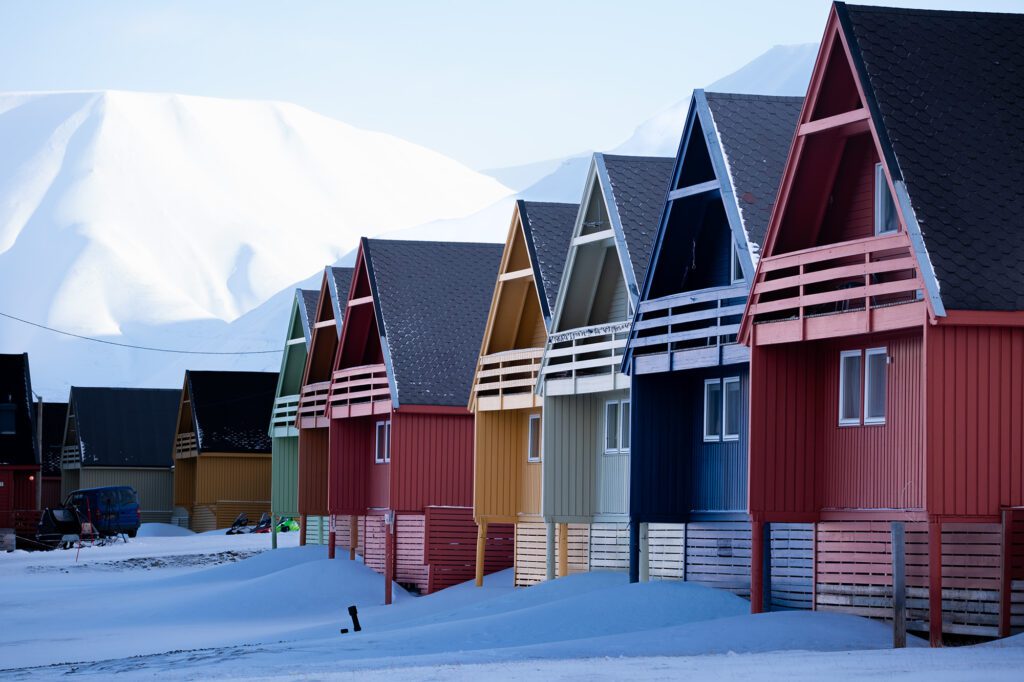
Learn about the fascinating history of Longyearbyen, the northernmost settlement in the world.