
Aarhus is Denmark’s second-largest city, and is known for its old town and cultural scene. Dating back to the 8th century, Aarhus was founded as a harbour town. Aarhus Cathedral is Denmark’s longest cathedral, and Vor Frue Kirke, dating from 1060, is the oldest stone church in Scandinavia.

Aarhus Coat-of-arms
Here’s an overview of some of the best things to see and do in Aarhus
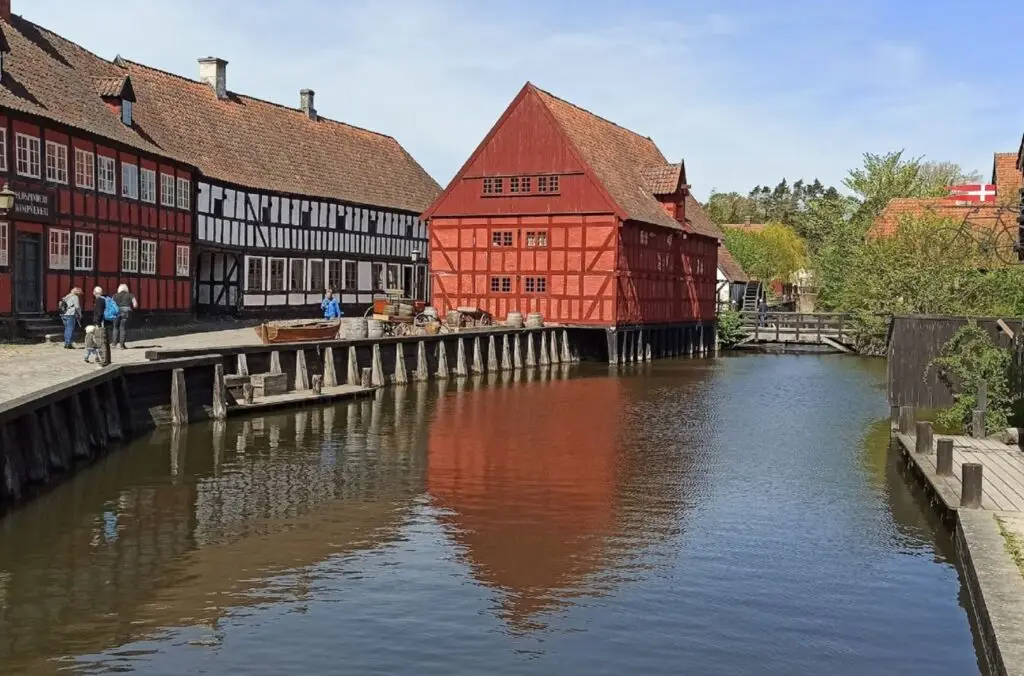
An open-air living history museum where you can wander through recreated Danish market towns from 19th and 20th centuries. Visitors “take a journey through time” with streets and buildings representing eras like 1864, 1927, 1974, and even 2014. It’s interactive and family-friendly, with shops, workshops and costumed staff bringing history to life.
A world-class modern art museum famed for its Your Rainbow Panorama, a circular skywalk above the roof. This colourful glass installation offers a 360° view of the city through rainbow-tinted. Inside, ARoS houses contemporary art galleries and installations, making it a must-see for culture lovers.
A strikingly designed museum showcasing archaeology and anthropology. Set in a “breathtaking architectural” hillside building, it uses cutting-edge exhibits to present prehistoric finds, including the Grauballe Man bog body, in an engaging way. Moesgaard has won awards and was even named Denmark’s Best Attraction in 2024, reflecting its innovative approach.
Aarhus Cathedral (St. Clemens) is Denmark’s longest church (93 m long) and dates back to the 12th century. It towers over the cobbled streets of the Latin Quarter – a charming neighbourhood of cafés, boutiques and half-timbered houses. On a sunny day, the narrow lanes (like Møllestien) feel “almost like being in Paris” with their cosy outdoor tables and vibrant street life. It’s an atmospheric area to explore the city’s heritage and enjoy Danish hygge.
Looking to go for a hike or take part in a unique experience? Here are our recommendations!
Please note – the links provided are affiliate links. I only recommend experiences that I have researched and/or tested and focus on providing unique, local things to do!
An amusement park nestled in the green Marselisborg woods just south of the city. Tivoli Friheden offers classic fun (roller coasters, Ferris wheel, games) in a scenic forest setting. It’s a hit with families. The surrounding Marselisborg Forest has walking paths and a deer park, so you can combine thrills with a peaceful nature stroll in one outing.
Aarhus offers gentle walks suitable for most fitness levels, even in cooler seasons. Riis Skov, a forest park north of the centre, is open 24/7 year-round and has a network of paths through “varied vegetation”. It also grants lovely views over Aarhus Bay from its western side. Likewise, the Brabrandstien trail follows the lakes and streams of Brabrand Lake, providing a flat 9 km (one way) path ideal for walking or cycling while spotting birds and enjoying wetlands scenery.
South of the city, explore the Moesgaard Strand Trail, an ~8 km circular route starting at Moesgaard Beach. The trail leads through lovely seaside forests overlooking the sea. The terrain is relatively flat and easy, making it perfect for families or casual hikers. In about 2 hours you’ll experience sandy shores, beech woods and ocean vistas. This hike is enjoyable in any season – expect refreshing sea breezes (bring a windproof jacket).
Mols Bjerge National Park (Challenging) – For avid hikers, a short trip out of town to Mols Bjerge is worth it. The Mols Bjerge Trail is a certified long-distance route spanning ~80 km through hilly heathlands and coast. It can be broken into four ~20 km stages, or you can just tackle a day-hike portion. Highlights include climbs to viewpoints like Trehøje, three hilltops rising 127 m above the sea – from which you’ll get panoramic views of unspoiled Danish nature.
An easy, scenic hike with a dash of history. About 20 km northeast of Aarhus lies the Kalø Slotsruin, a 700-year-old castle ruin perched on a peninsula. A medieval cobblestone causeway leads 1.5 km across coastal meadows to the ruin. It’s like walking back in time. The path is flat and suitable for all ages.
Aarhus is a gastronomic hotspot, and a guided Food Walk lets you literally taste the city. These tours typically take you to multiple eateries – from market halls to cafes – to sample local specialties. Knowledgeable guides share stories about Aarhus’s food culture while you meet passionate chefs or shop owners. Expect to try everything from smørrebrød (Danish open sandwiches) to new Nordic cuisine bites. It’s an excellent way to combine sightseeing with a progressive meal, and vegetarian-friendly options are usually available if you ask.
Denmark has a vibrant craft beer scene, and in Aarhus, you can join a fun BeerWalk that mixes city sights with local brews. On a 2½-hour guided stroll, you’ll stop at pubs and microbreweries to sample about six Danish craft beers (totalling around 2–3 pints). Local guides share entertaining stories of Aarhus – no canned script – as you sip beers from renowned brewers like Mikkeller and ÅBEN. It’s described as a “cozy and unforgettable” way to discover why Aarhus is called the “City of Smiles” (perhaps the beer helps!). This tour runs year-round in all weather, so dress accordingly; the pubs along the way will keep you warm.
Discover the history of Aarhus on a walking tour. From a small Viking village to a metropolis, learn how the city has developed over the years.
Follow our road-trip guides for scenic trips around Aarhus
We currently do not have any self-guided walks available in Aarhus
Watch our YouTube videos featuring Aarhus
Aarhus began as a Viking-age harbour settlement called Aros in the 8th century, strategically located at the mouth of a river. By around 900 AD, the first Christian church was built here, indicating how important Aarhus was as a town. In the late Viking Age, the settlement was fortified with ramparts.
During the Middle Ages, Aarhus became an important ecclesiastical centre. A bishopric was established, and religious institutions were built as the town grew. The city was granted market town privileges in 1441.
Aarhus truly began to expand in the 1800s. Prosperity picked up during the late 18th century with increased trade, but it was the Industrial Revolution and improved infrastructure that sparked real growth. In 1862, the first railway line opened in Aarhus, linking the city to the rest of Denmark and Germany. Industrialisation brought factories, a busy port, and population boom – transforming Aarhus from a provincial town to a commercial powerhouse by the end of the 19th century.
The 20th century cemented Aarhus’s status as Jutland’s capital. The founding of Aarhus University set the city on the course of becoming a centre of education and research. Post WWII, Aarhus continued to grow in population and area, absorbing suburbs and modernising quickly.
Known as “Smilets By” (the City of Smiles), Aarhus today has a special place in Denmark’s identity. It’s celebrated for its young population – in fact, it has the youngest demographics of any Danish city, thanks in part to the university having 37,000 students.
In recent years, Aarhus has been undergoing rapid development. The skyline has sprouted modern architecture like the urban development around the harbour.
Fly: Aarhus Airport in Tirstrup is the local airport about 35–40 minutes’ drive northeast of the city, with daily flights to Copenhagen and some direct flights from other European cities. The larger Billund Airport (BLL), about 1 hour’s drive to the southwest, offers a wider range of international flights (55+ direct routes) and is a common choice for visitors to Aarhus
Drive: Aarhus is located just off the E45 motorway, which runs north-south through Jutland, connecting Denmark to Germany.
Train:Direct trains run multiple times an hour from Copenhagen to Aarhus (the journey is ~3 hours by intercity train).
Ferry:Many visitors arrive brakeless on the Norway in a Nutshell itinerary: train to Flåm, then ferry to Gudvangen. One-way or return options available.
: Aarhus may be Denmark’s second city, but it’s compact and easy to navigate. The city’s public transport system consists of buses and the Letbanen light rail. Yellow city buses criss-cross Aarhus with frequent stops (you’re rarely more than a few minutes’ walk from a stop). They cover the downtown and neighbourhoods, while blue regional buses connect suburbs and nearby towns. The Aarhus Letbane (light rail) has two lines: L1 runs from the central station through the city and all the way northeast to Grenaa, and L2 runs south to Odder and north to university/hospital areas.
Walking is one of the best ways to enjoy Aarhus. The downtown is pedestrian-friendly, with key areas like Strøget (main shopping street) and the Latin Quarter best explored on foot. You can stroll from ARoS art museum to the Old Town to the harbour bath in minutes, soaking in the street life. Even in winter, as long as you have a warm coat, walking is pleasant – the city is beautifully decorated during Christmas, for example, encouraging wanders. For faster jaunts, do as the locals do and hop on a bicycle. Aarhus has short distances and plenty of bike lanes, which makes it “incredibly easy to get around … by bike”.
Cafes & Bakeries
The café scene in Aarhus is thriving and oh-so-cosy. You’ll find atmospheric coffee bars on every corner, whether in the historic Latin Quarter or the trendy Vestergade area. Danes love their coffee, and Aarhus boasts award-winning baristas and micro-roasteries.Stop by local favourites like La Cabra or Stillers Coffee for a perfectly brewed pour-over and a slice of cake. Cafés here often double as brunch spots and evening wine bars, so you can linger any time of day.
Casual Eateries
The city is famed for its street food markets. At Aarhus Street Food, a permanent market hall, you can choose from more than 30 stalls cooking up everything from Vietnamese banh mi and Mexican tacos to Danish meatballs. It’s a buzzing spot to grab a quick lunch or have a relaxed dinner with friends at communal tables (plus it’s indoors – great for rainy days). Another new addition is the Nicolinehus Market Hall at Aarhus Ø, where you can enjoy world foods like dumplings, falafel, sushi and more under one roof.
High End & Unique Eats
Foodies will delight in Aarhus’s gourmet credentials. The city holds four Michelin-starred restaurants – one with two stars and three with one star – putting Aarhus in elite culinary company. Top of the list is Restaurant Frederikshøj (2 Michelin stars), known for chef Wassim Hallal’s inventive cuisine that blends New Nordic with French techniques. Other Michelin venues like Gastromé, Domestic, and Substans each offer a unique dining experience, from farm-to-table innovation to urban chic dining, all showcasing local ingredients. Even beyond the stars, Aarhus’s gastronomic standards are high and local chefs “never compromise on quality”. You can expect menus that highlight freshly caught fish from Aarhus Bay, seasonal vegetables from nearby Samsø island, and organic produce from Jutland’s farms
All my hotel recommendations are based on research and experience. I don’t recommend somewhere unless I think it is wonderful! The Hidden North focuses on accommodation that provides good quality for price or offer local or unique experiences.
Camping
Nature-loving travellers or those on a road trip can take advantage of the excellent camping options around Aarhus. There are campgrounds by the sea, in the forest, and near the city – so you can stay close to nature while still being within easy reach of urban sights. For example, DCU-Camping Blommehaven is in the Marselisborg Forest right on the beach, and Aarhus Camping in Lisbjerg offers cabins and tent sites just 15 minutes from downtown.
Lodges & B&Bs
In the city centre, options like Badstuegade B&B in the Latin Quarter let you “live like a local” in a historic apartment with its own kitchen and patio.
Chains & Mid-Range
Aarhus has many chain and mid-range hotels in the city centre. For example, Scandic Aarhus City (click here to view rates & book) and Milling Hotel Ritz (click here to view rates & book) put you steps from the pedestrian shopping street, while Hotel Oasia (a boutique 3-star) sits on a quiet street near the train station. These hotels typically offer modern rooms with Scandinavian design flair, buffet breakfasts (expect a hearty Danish spread of breads, cheese, eggs and herring), and amenities like free Wi-Fi.
Also notable: Cabinn Aarhus offers budget-friendly compact rooms right by the canal – good value for a central crash pad. Most mid-range hotels in Aarhus strive for a “hyggelig” atmosphere and great service, and many have something special – be it sustainable initiatives, stylish Danish furniture, or a bit of local history in their walls.
High End & Unique Properties
If you’re looking to indulge, Aarhus’s top hotels deliver luxury with personality. Hotel Royal is the grand dame – a historic 19th-century hotel near the Cathedral, known for its elegant rooms (think chandeliers and antique art) and a pedigree of hosting royals and celebrities over the years. It’s like stepping into a bygone era of luxury, yet updated with modern facilities (there’s even a casino on-site).
Click here to view rates & book
For a more contemporary luxury, Comwell Aarhus (by Dolce/Wyndham) is a sleek 4-star high-rise with designer interiors by Hay and panoramic views of the city, harbour, and bay from many rooms.
Click here to view rates & book
Villa Provence is another gem – a boutique hotel that brings a bit of French Riviera flair to Aarhus, featuring individually decorated Provencal-style rooms around a courtyard fountain.