Climbing Through Time: A Visitor’s Guide to Copenhagen’s Round Tower
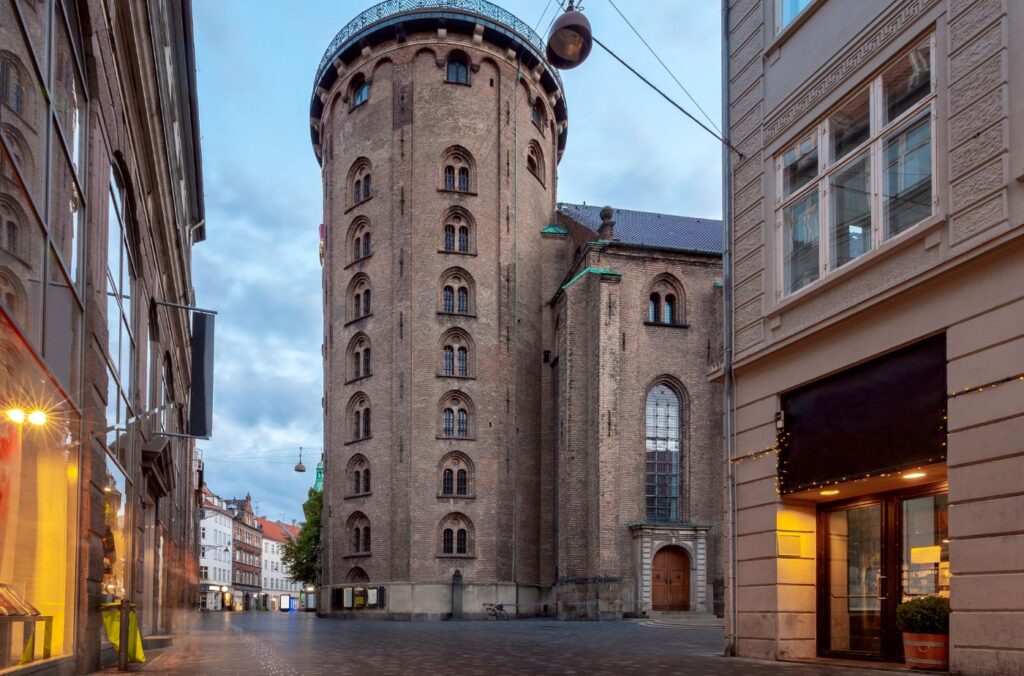
Rising above the cobbled heart of Copenhagen, the Round Tower (Rundetaarn) is one of the city’s most recognisable landmarks. Known for its graceful spiral ramp and sweeping skyline views, it’s a gentle introduction to Denmark’s royal history, scientific curiosity, and architectural charm. Whether you’re wandering the Latin Quarter or exploring Rosenborg Castle nearby, the tower makes for an easy and rewarding stop. Honestly, it’s also a good work-out! Here’s my guide for the Round Tower.
Commissioned by King Christian IV and completed in 1642, the Round Tower is Europe’s oldest functioning observatory. It formed part of the Trinitatis Complex, a combined church, library, and astronomical tower designed to advance scholarly work at a time when Denmark was deeply invested in scientific discovery. There aren’t many churches around the world whose tower doubles as an astronomical tower!
At the time in Europe, there was a race to understand the sky better, as this meant you could better navigate the seas for trade. Many countries were also establishing colonies in overseas territories, so the need for accurate navigation across the oceans was great. Many national observatories were therefore established, the first in 1632 in Leiden in the Dutch Republic. The Round Tower in Copenhagen followed five years later.
The famous Danish astronomer Tycho Brahe fell out of favour and left Denmark, so Christian Longomontanus became Christian IV’s new astronomer. He first proposed building it out of town on the hill Valby Bakke, but there were already plans to build a new student’s church and library for the university, so it was decided to merge the three buildings into one. The tower’s colours were initially yellow and red, reflecting the royal colours of the House of Oldenburg. The first stones came from the city’s fortifications, and later some came from Roskilde. Many of the stones were ordered from the Netherlands. Steenwickel – an architect synonymous with Dutch architecture in Denmark – has left his signature style on this building. The complex has a restrained, focused design. The style is now known as Dutch Baroque. Once it was completed, Christian Longomontanus became the observatory’s first director.
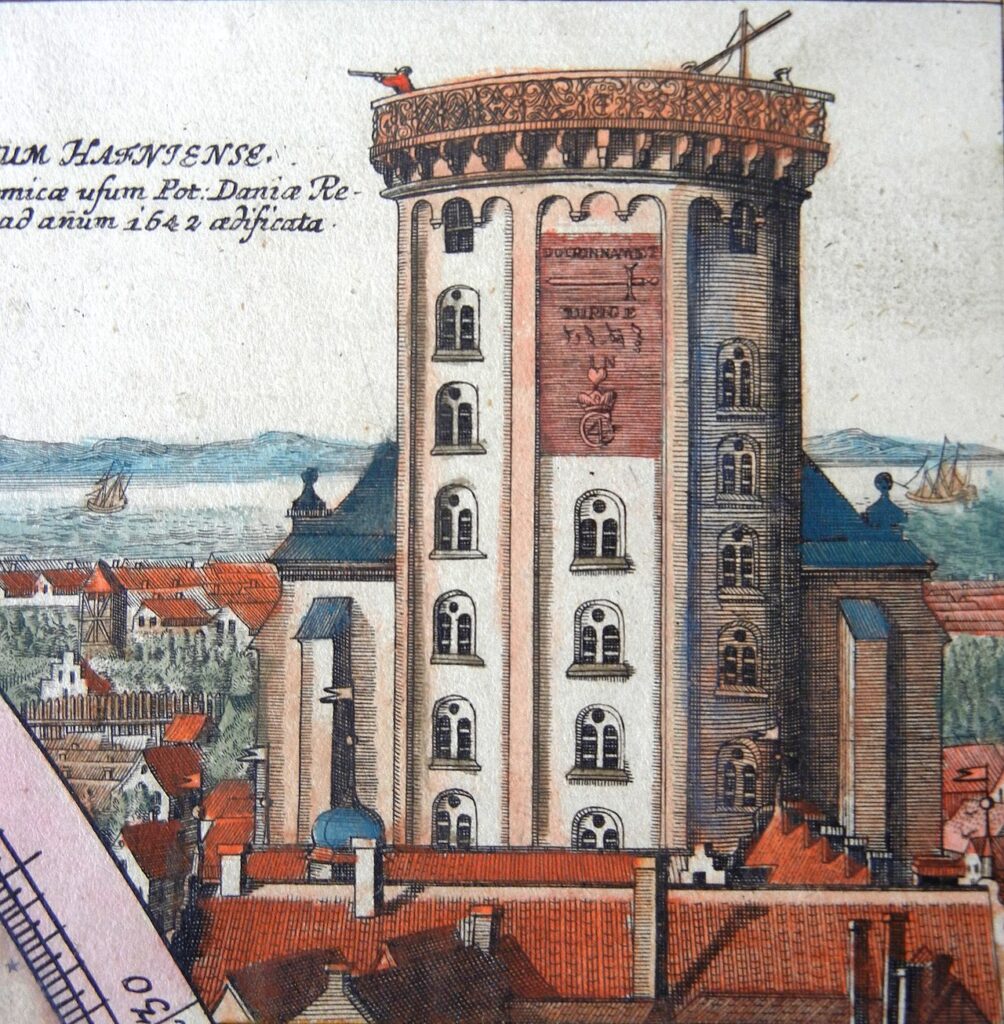
Round Tower, as depicted Johann Doppelmayr's map of the southern celestial hemisphere, ca. 1742.
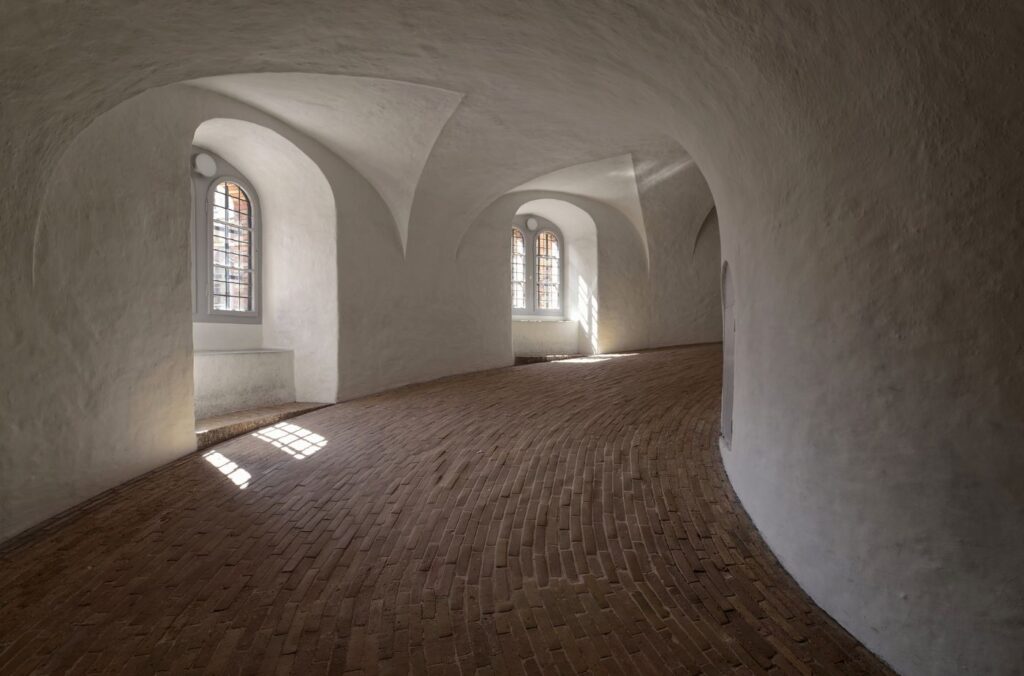
Its famous helical ramp was engineered to allow scholars — and even horse-drawn carts — to carry heavy instruments up to the observatory without stairs. In 1716, Tsar Peter the Great ascended the staircase on horseback, and in 1902, a Beaufort car was the first motorised vehicle to climb the tower. During the 19th century, the Round Tower became outdated as an astronomical observatory. Instruments were still growing larger, while the tower could not be expanded, and at the same time, light pollution from the surrounding city and traffic vibrations made observations inaccurate.
Modern Use
Today, the Round Tower still serves as an observatory, offering stargazing sessions during the cooler months. The former university library hall now functions as a contemporary exhibition space, hosting art shows, cultural events, and craft displays throughout the year. Its blend of historic architecture and modern creative energy makes it a favourite among locals and visitors alike.
What You Can See & Do
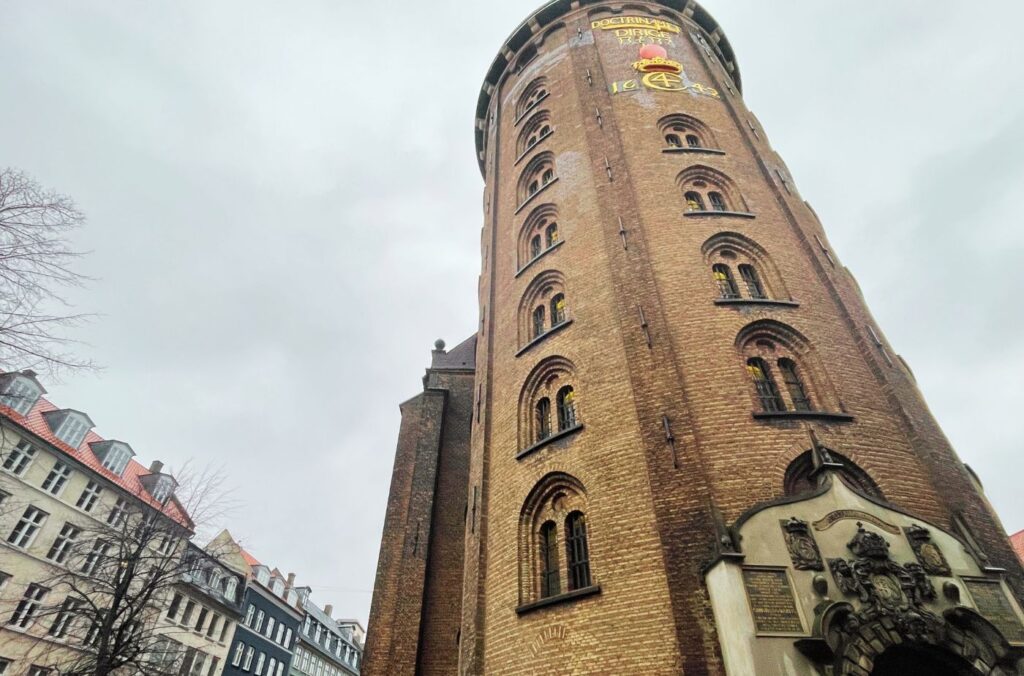
Upon arrival, most people often wonder about the gold lettering on the exterior of the Round Tower. It has actually been debated what the test says, as the first few elements combine words in Latin and Hebrew and contain a picture of a sword and a red heart. There is broad agreement that the text reads, ”Doctrinam et justitiam dirige, Jehova, in Corde coronati regis Christiani Quarti”, which has been translated into, “Lead, God, learning and justice into the heart of the crowned King Christian IV”. (source)
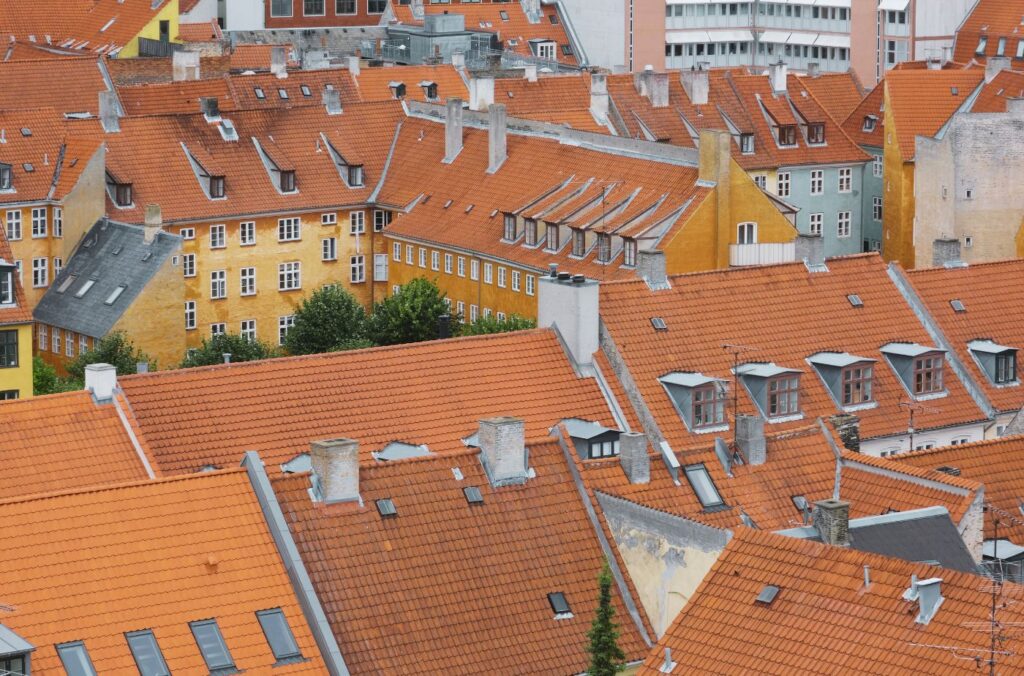
Climbing the spiral ramp is an experience in itself — a slow, circling ascent where light filters through tall arched windows, revealing glimpses of the surrounding rooftops. The spiral ramp is 210 metres in total, and each turn you climb just under four metres. There are places to stop along the way if you need to take a break, but it’s not as difficult as it may look! If you walk on the outer wall, the gradient is only 10%, whereas if you walk close to the inner wall, the gradient is 33%! So choose your path wisely. There are clear signs saying that the outer wall is for climbing up and the inner core is for walking down; that’s why you feel that walking up takes longer than walking down.
Halfway up the tower, you’ll find the library, once holding the entire University book collection. Today, the library is used as a gallery, concert venue, and exhibition space. Historically, over 10,000 volumes were held here, and a prerequisite to visiting was to avoid arguing or vomiting.
About two-thirds of the way up, you’ll find the glass-bottomed viewing platform suspended above the hollow core of the tower, a popular (and slightly nerve-racking) photo stop. You also pass one of the original toilets that the astronomers must’ve used!
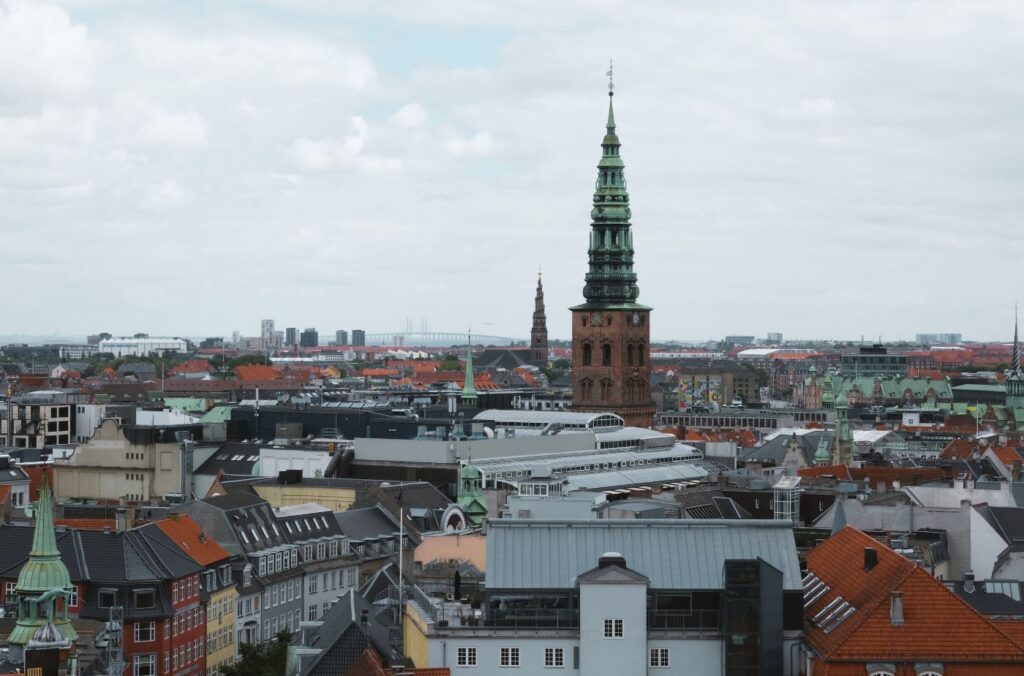
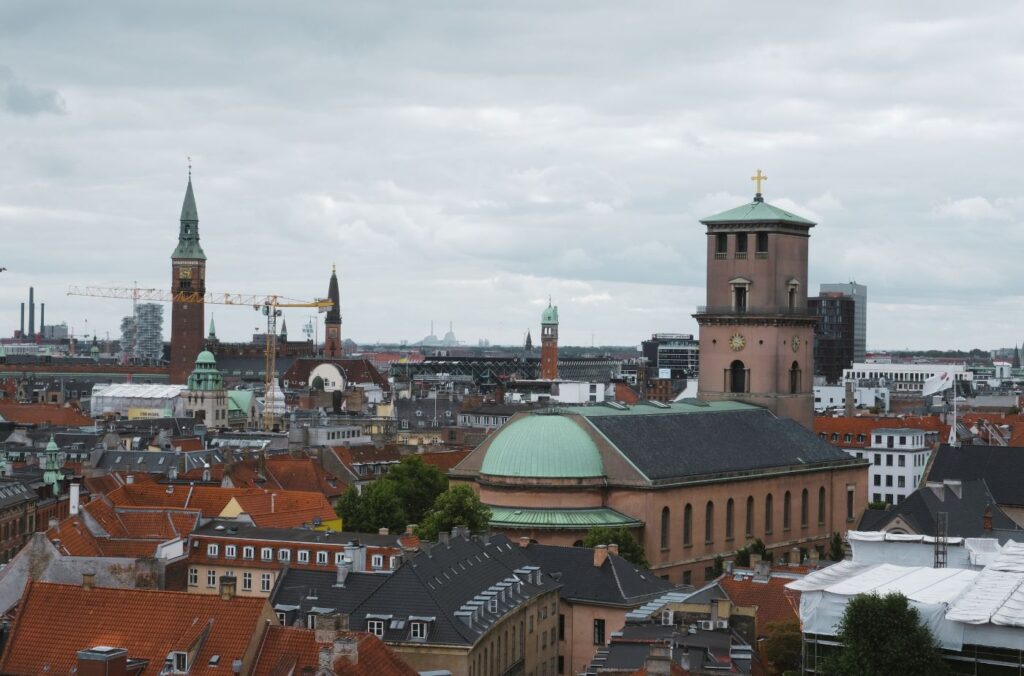
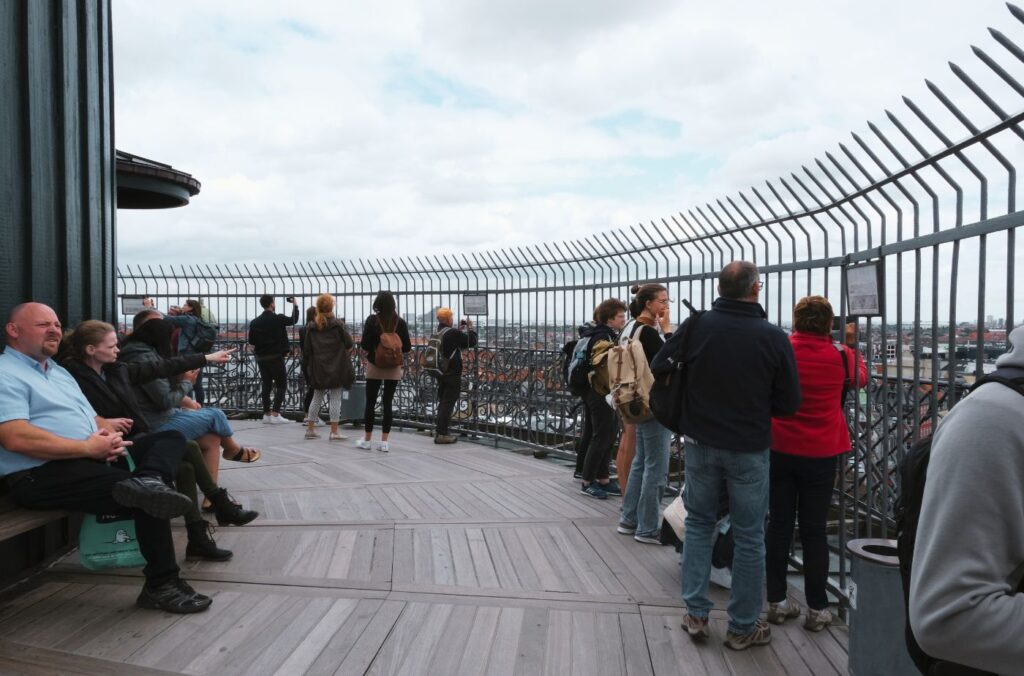
At the summit, the open-air deck provides one of the best panoramic views in Copenhagen, stretching from the old town spires to the Øresund coast. From here, you can see the towers of Copenhagen Cathedral, St. Nicolas Church, Rosenborg Palace, and the Marble Church, and, on clear days, Sweden.
You can also enter the observatory once you reach the top. Although the idea was to place the observatory far from the city centre, King Christian IV insisted on having it close to the university so students could easily reach it. To get to the observatory, the staircase is extremely narrow and has approximately 25 steps. Because of this, there is a traffic light system for traffic going up and down the stairs.
Once back down on street level, it’s worth looking inside the Trinitatis Church.
Practical Information
Location
Købmagergade, central Copenhagen, just a short walk from Nørreport Station. The street is a very popular shopping street, so it’s well worth hanging around the area.
Opening Hours
In the low season (November-March), the tower is open from 10am – 6pm. In the high season, the tower is open from 10am – 8pm.
In 2026, the copper dome of the Round Tower will be replaced. This restoration project means the tower will be closed for periods next year. You can read about the restoration project here: https://www.rundetaarn.dk/en/intro/restoration/
Admission
The Round Tower is not included with the Copenhagen Card, and you can only purchase tickets upon arrival.
The Round Tower blends centuries of scholarship, inventive design, and lively cultural activity into one compact landmark. Its gentle climb, striking views, and changing exhibitions make it suitable for history lovers, casual wanderers, and families alike. Whether you’re exploring Copenhagen for the first time or returning to old favourites, this tower offers a rewarding look at the city’s past and present in one memorable visit.