Akerselva River: Oslo’s Industrial Heritage & Urban Oasis
The Akerselva River is my favourite place in Oslo. Every time I go, I have to include a walk down the river. This is where Oslo’s modern history began and where Oslo developed itself into a hip, cultural city. By walking down this river, you get an insight into the development and revitalisation of a city.
Here’s my guide to what you can see and do along the river, and why you should visit! Once you’ve decided to visit the river, I recommend checking out my self-guided walk for the river.
In this article...
Akerselva Self-Guided Walk
I have made a dedicated self-guided walk for Akerselva, with a detailed historic overview and what you can see and do.
River Map
Here is a map of every location mentioned in this article, to help understand where everything is in context of the river.
Location of the River
The Akerselva River begins at Maridalsvannet north of Oslo and flows roughly 9.8km to the Oslofjord at Bjørvika, close to where the Opera House is today. As it goes down towards the city, the river passes through the popular neighbourhoods Nydalen, Sagene, Grünerløkka and Grønland.
The first element of the name, Aker, refers to the old farm and churchside that has named several places in Oslo, such as Akershus fortress and Aker Brygge wharf.
The river is considered the border between Oslo’s eastern and western parts.
History of the Akerselva River
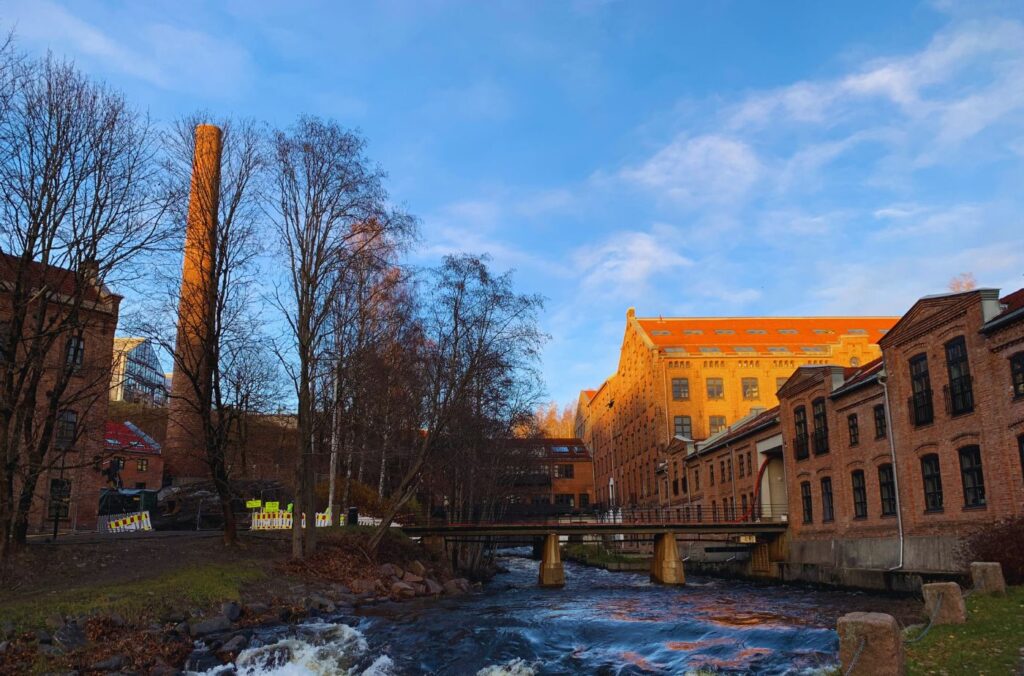
The Akerselva River has been used for centuries to power sawmills and factories. The oldest factories date back to the 16th century, though there is evidence of river use dating back to medieval times. The Old Norse name for the river was Frysja (“the frothing one”), which refers to its many waterfalls.
In the 19th century, the river was where Oslo became a centre for early industrialisation. In fact, the Akerselva River is “the only industrial river in Europe that runs through a capital with both its start and finish within the city limits”. As industrialisation grew in Oslo, mills, textile works and metal plants were built alongside the river.
Many factories continued to operate until the 1970s, with the area being heavily polluted.
In 1964, engineers built a 500 metre tunnel to carry the river under Oslo’s Central Station tracks, so that it could flow out to the harbour near the opera house. After decades of ‘clean-up’ initiatives starting in the 1980s, the river was dramatically rehabilitated. By the 2010s, it had “blossomed with footpaths, swimming areas, and new mixed-use development”. Salmon had even returned to the upper reaches of the river. Today, Akerselva is seen as a scenic and historic landmark, long regarded as a traditional dividing line between Oslo’s east and west sides, and is often called “Oslo’s green lung”.
Modern Akerselva: Regeneration & Recreation
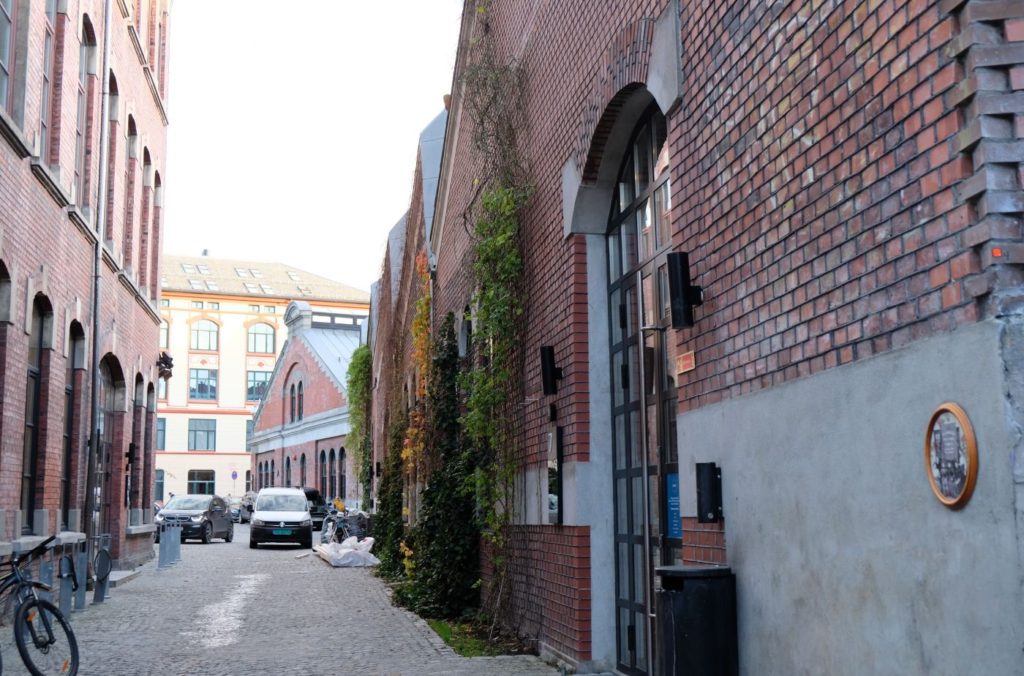
In recent decades, the Akerselva corridor has been extensively redeveloped and embraced by culture and nature. New neighbourhoods and venues have sprung up on former industrial sites. For example, Vulkan is a modern eco-friendly precinct built around an old factory by the river. It now hosts the popular Mathallen Food Hall and cultural venues. Further north, the Nydalen area has seen new offices, shops, and a public “river bath” – a stepped water playground with wading pools – taking advantage of the now clean water.
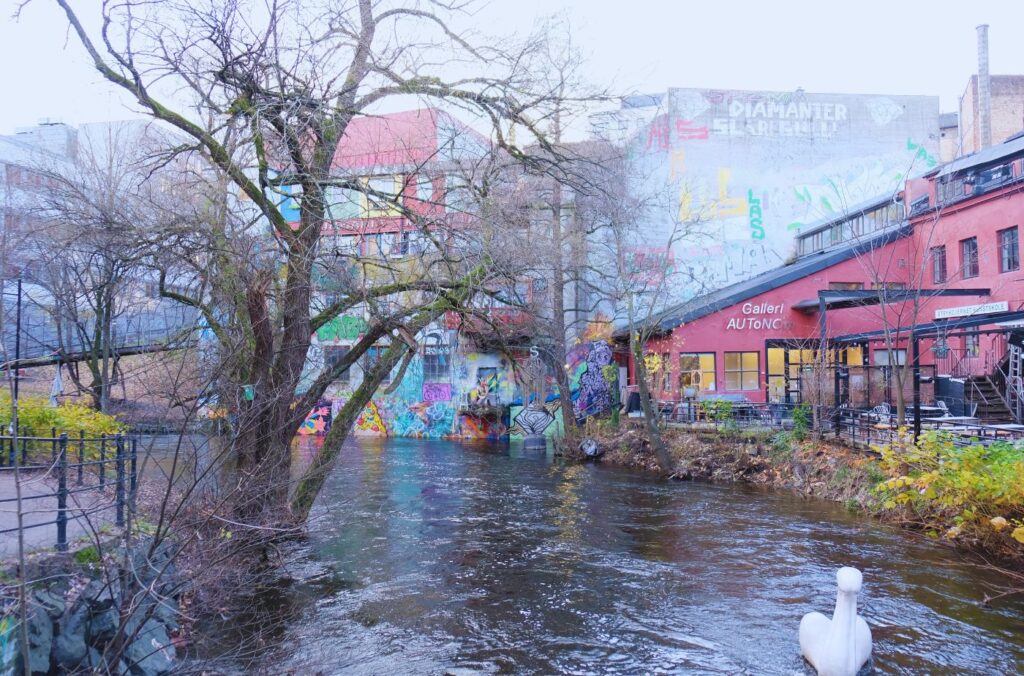
Culturally, Akerselva ties together many of Oslo’s creative hotspots. You’ll find Dansens Hus (the Norwegian Dance Theatre) along the river with a riverside cafe, and Det Andre Teatret – a small improv theatre with an outdoor summer bar. The Blå nightclub on Brenneriveien is a live-music venue famous for jazz, hip-hop and DJs; in summer, its riverside terrace and bar fill up with crowds under the floor lights. Each September, Oslo stages Elvelangs, a torch-lit art-and-music festival along the river, with around 4,000 torches lining the banks and bridges.
Environmentally, community groups help keep the river clean. Volunteers from organisations like Fjord CleanUp and Rusken Oslo regularly remove rubbish from the river and its shoreline. Today’s water is surprisingly clean – locals swim or paddle kayaks, and salmon and trout are routinely seen in the upper stretch.
Key Sights Along the River
Mathallen Food Hall
A renovated brick factory by the river, now an indoor market of over 30 specialty shops and eateries. It’s a foodie paradise: sample Norwegian delicacies (like reindeer or elk at Helt Vilt) or international street food, then grab a picnic bench by the water.
Blå
A riverside music club in an old mill, hosting jazz, hip-hop and DJ nights. In summer, it operates as an outdoor café with a terrace on the riverbank. (Legendary in Oslo’s nightlife scene.) Many street art and sculptures are around here, making it an interesting place to visit!
Dansens Hus
Norway’s national stage for contemporary dance. Visit the stylish foyer café overlooking the Akerselva, or check for dance performances.
Det Andre Teatret
An improvised comedy theatre in a red-brick building off the river, with an intimate summer outdoor bar.
Vøyenfallene & Hønse-Lovisa’s House
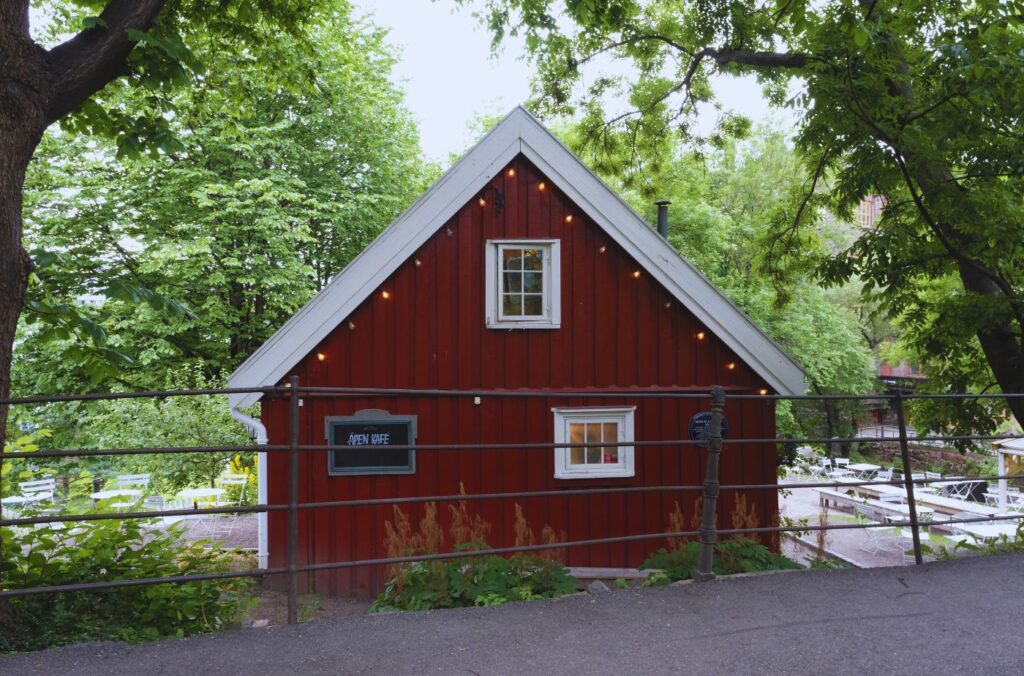
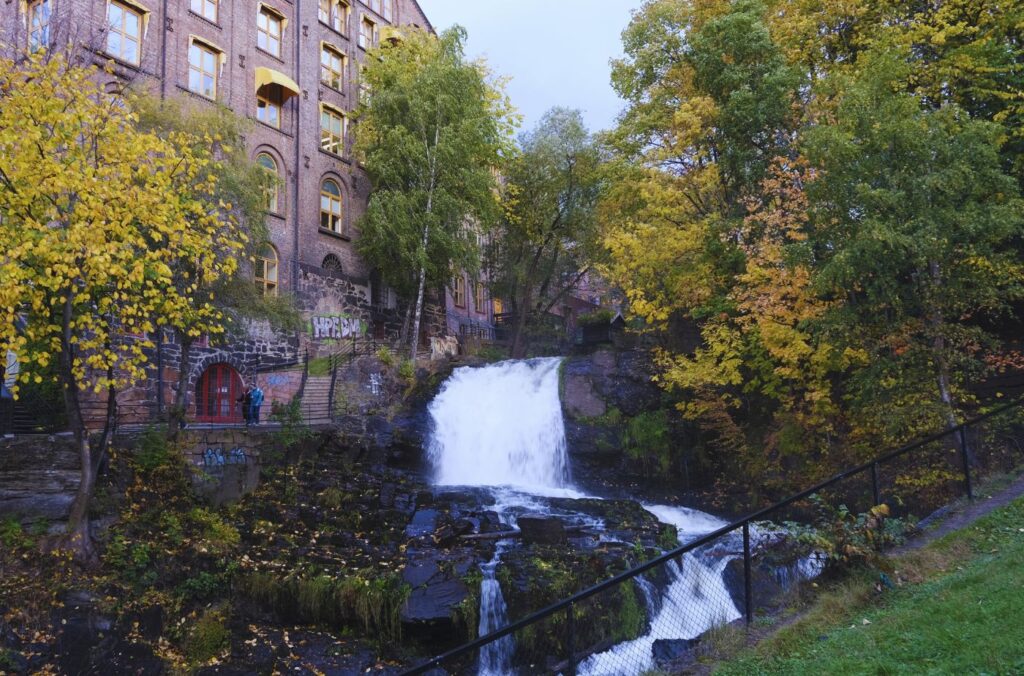
Among the prettiest spots on Akerselva. The cascade at Vøyenfallene is framed by forest, and atop the adjacent hill stands a tiny red cottage museum called Hønse-Lovisa’s House. This former caretaker’s cabin exhibits local crafts and “serves Oslo’s best waffles in an idyllic garden with a great river view.”
Aamot Bridge
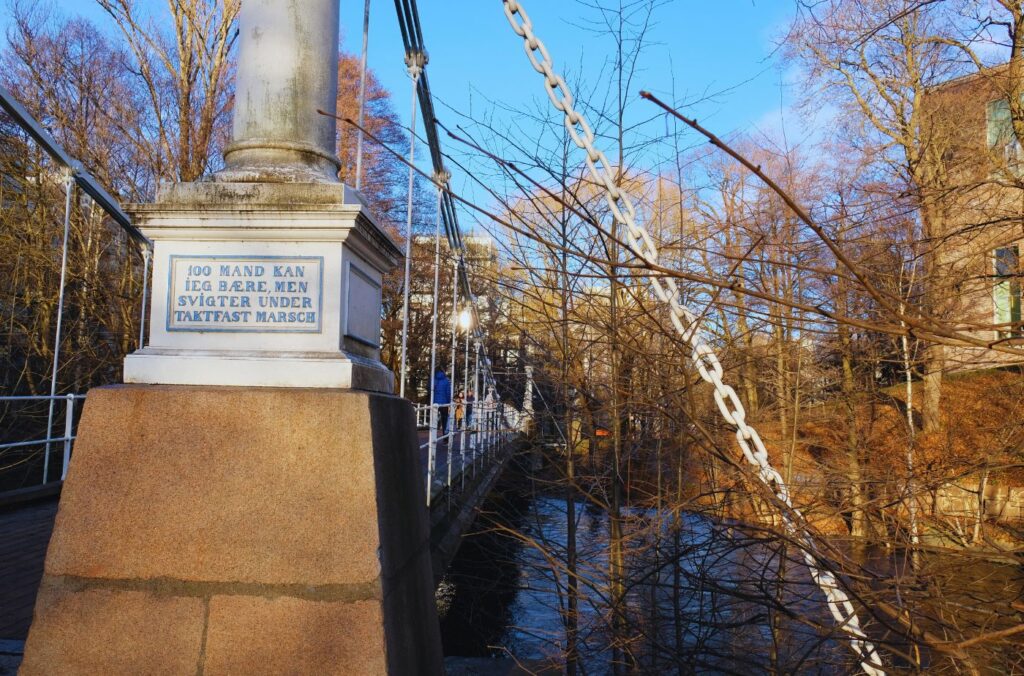
A historic 19th-century chain suspension bridge that gently sways underfoot. This photogenic iron bridge (moved here in the 1950s) is famed for inscriptions on its pillars and love-locks attached by visitors.
Labour Museum
A museum of Oslo’s working-class and industrial history, set in former 19th-century mills by the river. It has interactive exhibits on factory life and a café courtyard.
Damstredet
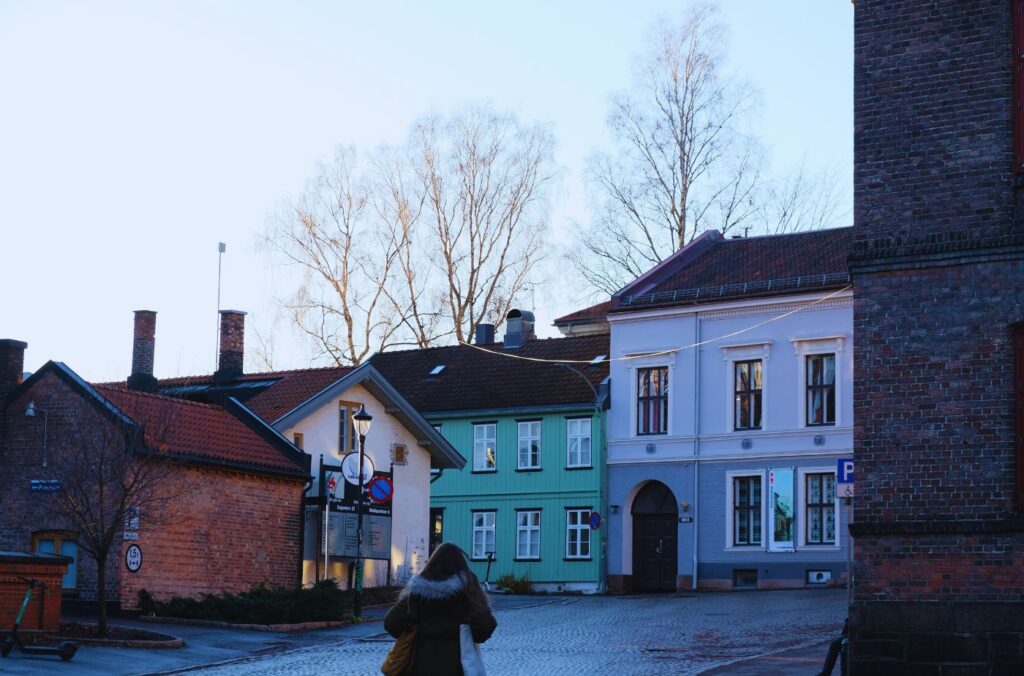
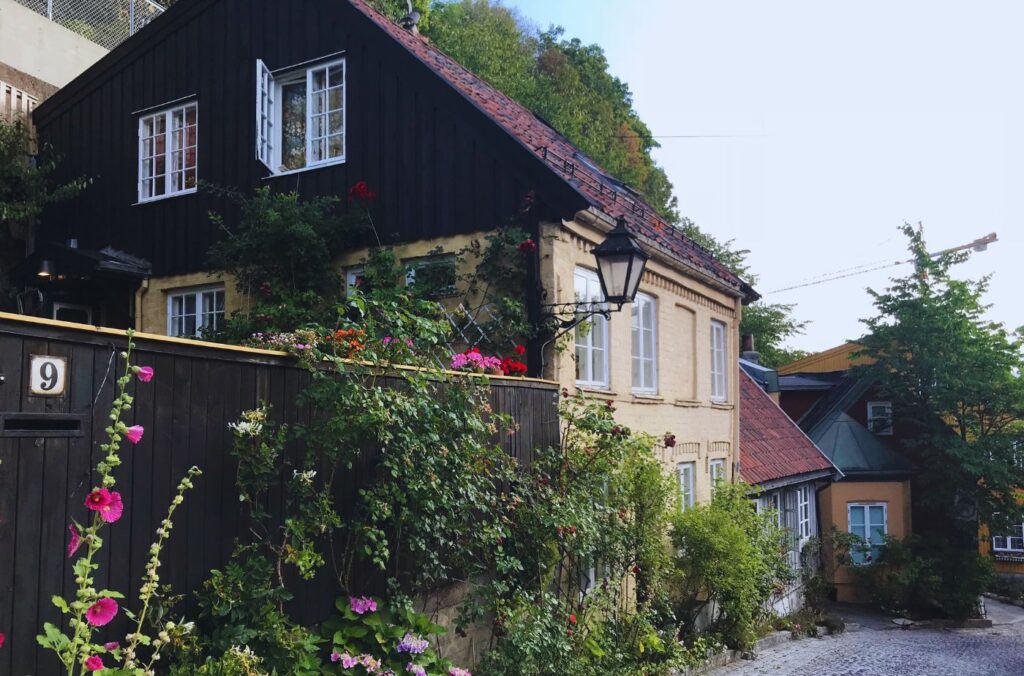
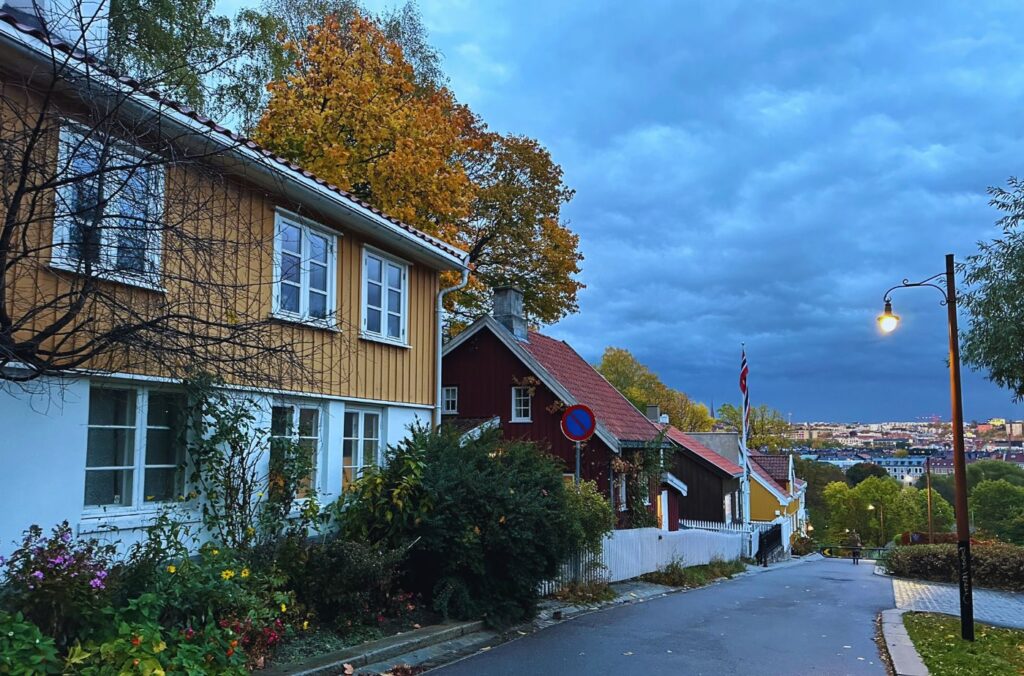
Damstredet is a tiny cobbled lane close to the Akerselva River. The street is famed for its 19th-century wooden houses, and the whole streetscape is a protected heritage area. At the top of Damstredet stands the 1830s house of poet Henrik Wergeland, and nearby is a 19th-century “asylum” (or orphanage) for poor children.
Telthusbakken
Telthusbakken is a steep, narrow, cobbled street running up the hill beside Gamle Aker Church. It is known for its 18th—and 19th-century wooden homes. Historically, this was one of Oslo’s poorer quarters, and 19th-century residents used water from the river. Today, the street is prized for its beautiful homes and allotment gardens, the oldest in the city.
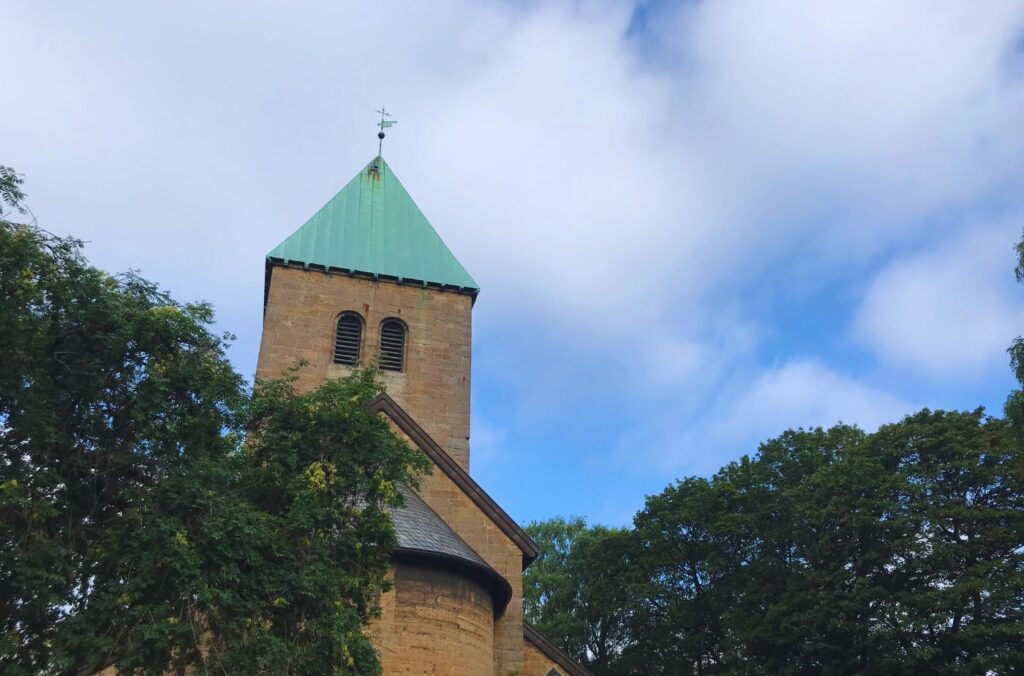
Gamle Aker Church
The Gamle Aker Church sits atop a hill overlooking Damstredet and Telthusbakken. It is Oslo’s oldest surviving building, built around 1100 in a three-aisled Romanesque style. However, it has been rebuilt over the centuries.
Eateries & Bars
The Akerselva corridor is now a popular dining district. At Mathallen Food Hall, you’ll find everything from tapas to craft beer. Here are some well-known eateries and bars along the river.
Hønse-Lovisa’s House (Sagene) – Across from the Labour Museum, this historic red cottage is now a café. It’s beloved for homemade waffles and coffee on a terrace overlooking the falls.
Sagene Lunch Bar (Sagene) – A classic neighbourhood eatery dating to 1855. It’s renowned for hearty Norwegian comfort food – try the famous “cab driver’s breakfast” (eggs, bacon, etc.) served for over 160 years.
Tim Wendelboe (Grünerløkka)—Tim Wendelboe is a barista from Oslo who has won the award of being the “Best Barista in the World.” His café is located close to the river in Grünerløkkan b, and here, you can sample his different coffees.
Café Månefisken (Sagene) – A trendy cafe and bistro housed in a distinctive red-brick building by Beierbrua. Once the army’s laundry plant (and, legend has it, a 1920s speakeasy), today it’s a symbol of Oslo’s industrial heritage. It overlooks the river and is popular for fika or dinner.
Ingensteds (Grünerløkka) – A cultural bar & cafe in a former textile factory. It hosts concerts and literary events, with a leafy outdoor area beside the river—a good spot for craft beers or wine.
Dansens Hus Café & Bar (Vulkan) – The dance theatre’s café offers coffee, light meals, and river views, making it a calm place for a mid-day break.
Det Andre Teatret Bar (Torshov) – A tiny lobby bar attached to the comedy theatre, perfect for evening drinks.
Practical Information
Getting There
Oslo’s public transport is fully integrated under one ticket called Ruter. A single Ruter ticket covers trams, buses and the metro in Zone 1. You can take the T-bane (metro) from Oslo S or Nationaltheatret to the stop Nydalen (which I recommend) to see more of the river. If you want to stay closer to the city, take Tram 11, 12, or 18 to Biermanns gate, close to the Labour Museum and waterfall.
Walking Down the River
From Nydalen, it is 6km back to the city centre, making for a nice and easy walk. The trail is well-signed and has information signs along the way.
Best Time to Visit
Late spring through early autumn is ideal – the weather is mild and daylight lasts until late. Summer evenings are enjoyable along the river, with open-air cafes and festivals. In winter, Akerselva’s parks are snowy and quiet; if you don’t mind the cold (down to –5 °C in daytime), the fall colours or snow can be beautiful, but daylight is short. If possible, time your visit for Elvelangs (around 20–30 September) to see the torch-lit riverwalk.
Akerselva River
In summary, the Akerselva River is the place to go if you want to experience the ‘real’ Oslo, in my opinion. It’s rich in history, a hub for outdoor life, and is an excellent example of how Oslo is revitalising an old industrial site into a clean, modern and people-friendly destination.