Visiting the Nordiska Museet in Stockholm: A Complete Guide
The Nordiska Museet (Nordic Museum) is one of Stockholm’s most distinctive museums, dedicated to everyday life and cultural change across the Nordic region from the 16th century to the present day.
I visited in March 2026 while in Stockholm. I had a vague memory of coming here back in 2013 as a tourist. Still, after spending over a decade in the Nordic region, I was curious to revisit it with a deeper understanding of the culture.
While I found the museum engaging and thoughtfully curated, I did feel it leaned heavily towards Sweden rather than presenting a balanced Nordic perspective. That said, for most visitors—especially those interested in Swedish culture—this likely won’t be a drawback.
Here’s a complete guide to what you can expect, including highlights and practical tips.
The Nordiska Museet is considered to be Sweden’s largest museum of cultural history, with over 1.5 million objects. The museum frames itself as having collections focusing on everyday life, which is a nice change from the majority of museums that focus on the royals, the wars, and the peasants. It’s nice seeing how the regular person lived.
The museum’s origin story is unusually visitor-relevant because it explains the institution’s long-term interest in everyday life rather than royal or military history. The museum’s history begins with the opening of the Scandinavian Ethnographic Collection on the 24th of October 1873, designed to preserve disappearing folk life, clothing, customs, and traditions amid rapid modernisation.
Building Design
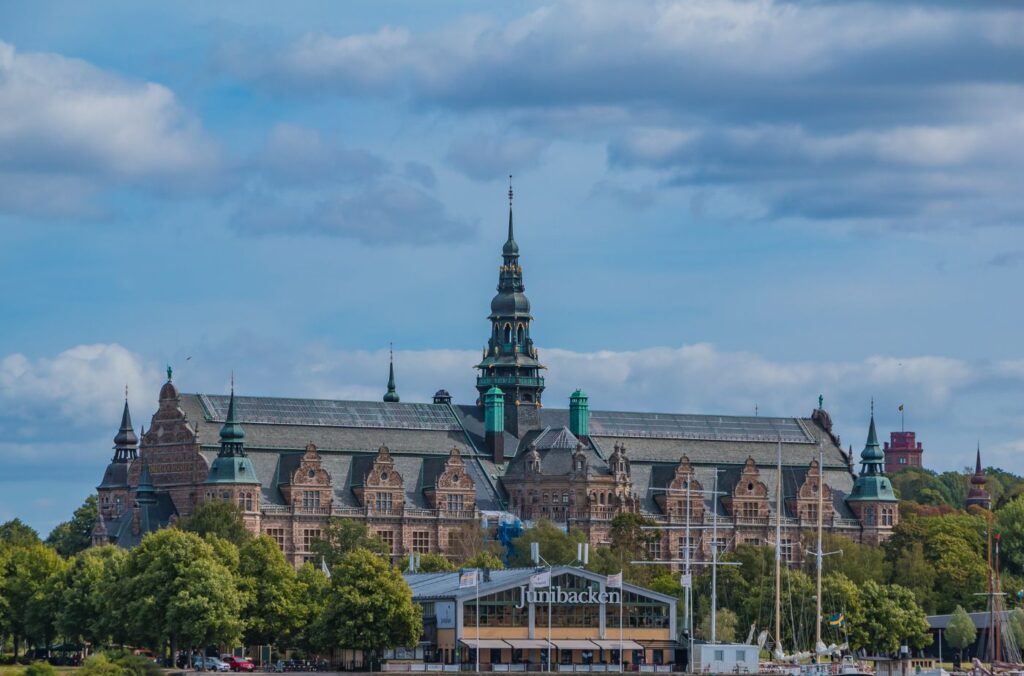
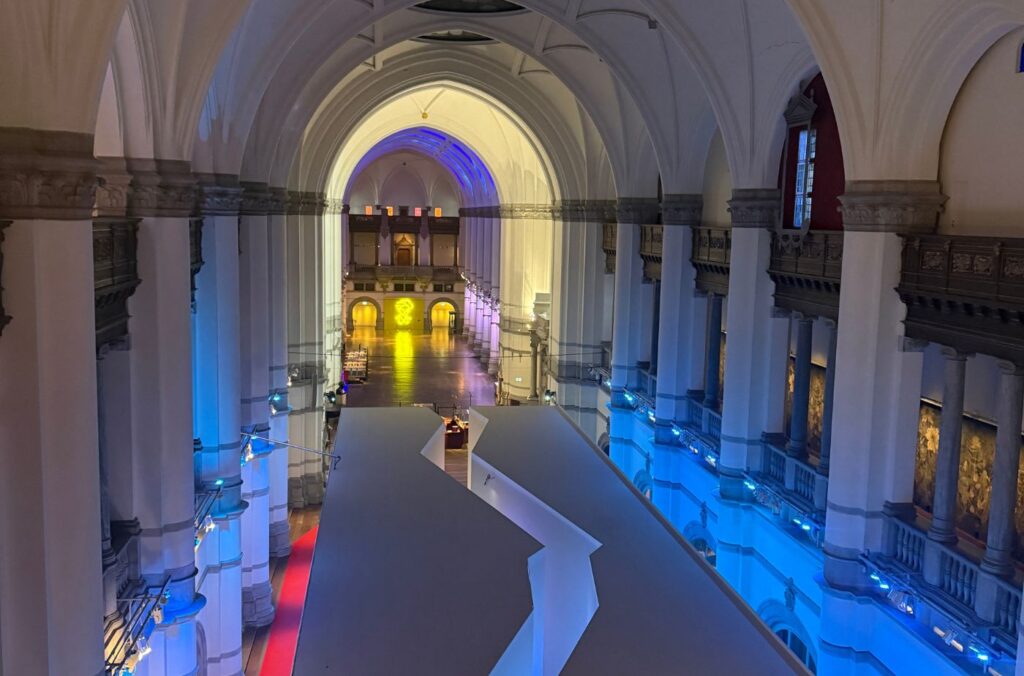
Architecturally, the building is very interesting. A lot of people don’t realise what it is when they first see it, as it resembles a historic palace. It was intended to be a ‘palace for the people’ and was originally supposed to be much larger, but financial constraints meant it couldn’t be too much bigger. It is based on Danish Renaissance castles (including Kronborg and Fredriksborg), and the Great Hall is 126 metres long and 24 metres high, making it one of the largest non-religious rooms in Sweden. The building opened in June 1907.
Exhibition & Highlights
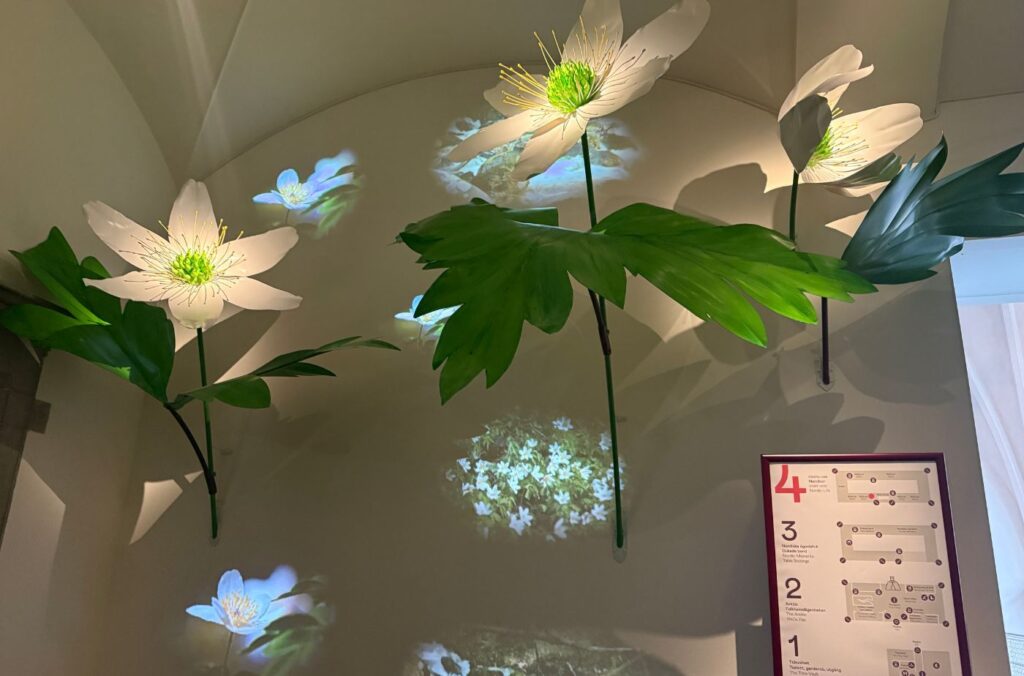
The permanent main exhibition, Nordic Life, spans 500 years of Nordic history. The main exhibition also follows the seasons, and ‘transition’ rooms are beautifully decorated to show the changing seasons. Each room is designed around real objects and documented life stories from the museum’s collections, and it positions environment, nature, and climate as structuring forces in Nordic life.
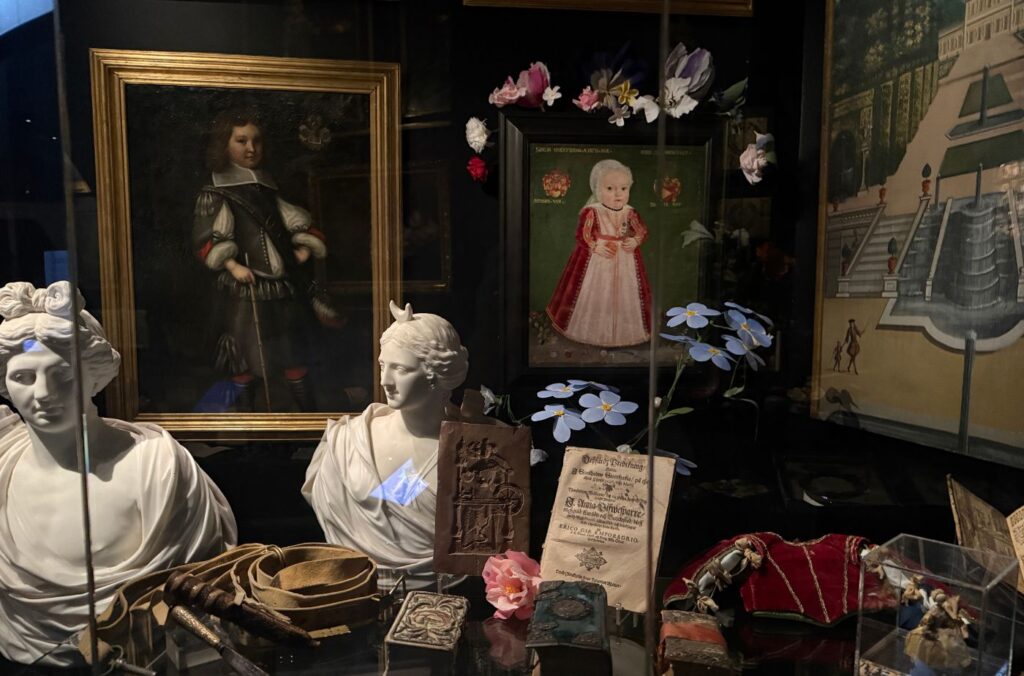
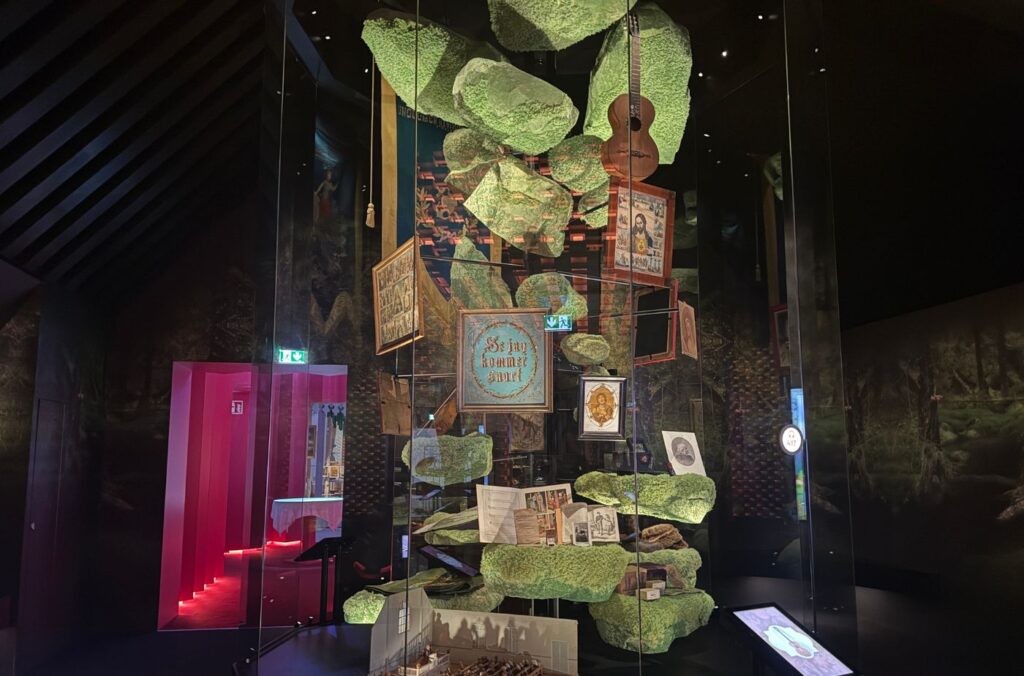
I did find many of the rooms had an overwhelming amount of stuff – like walking into a hoarder’s apartment – and it was hard to focus on certain objects. You have to spend a long time in each room if you want to soak in each exhibit. Only 4,000 of the museum’s 1.5 million objects are on display, which is so hard to comprehend!
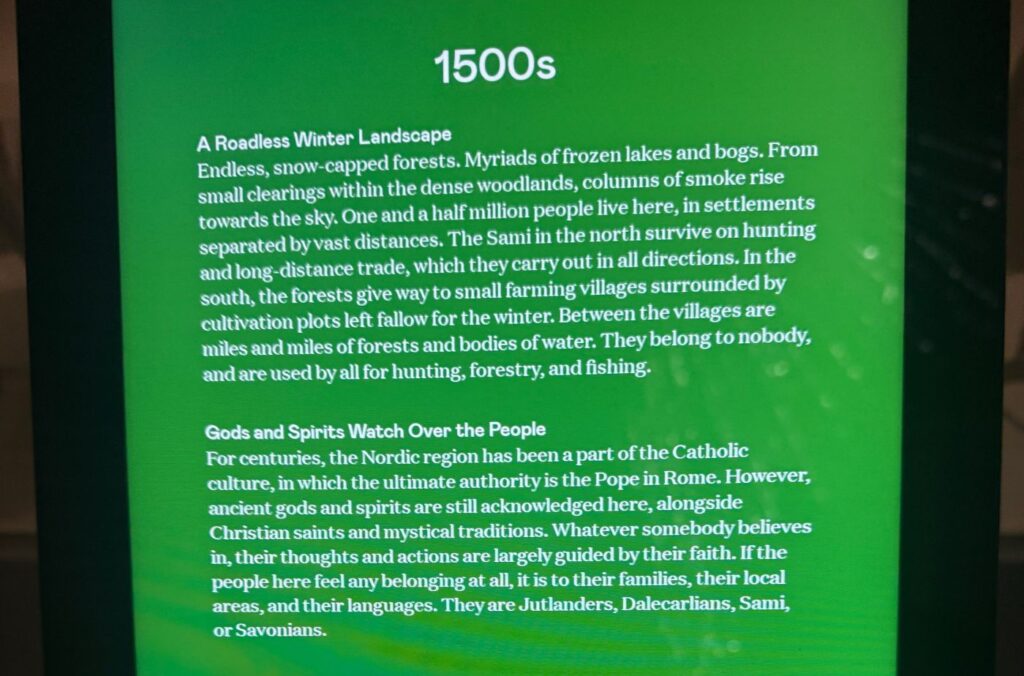
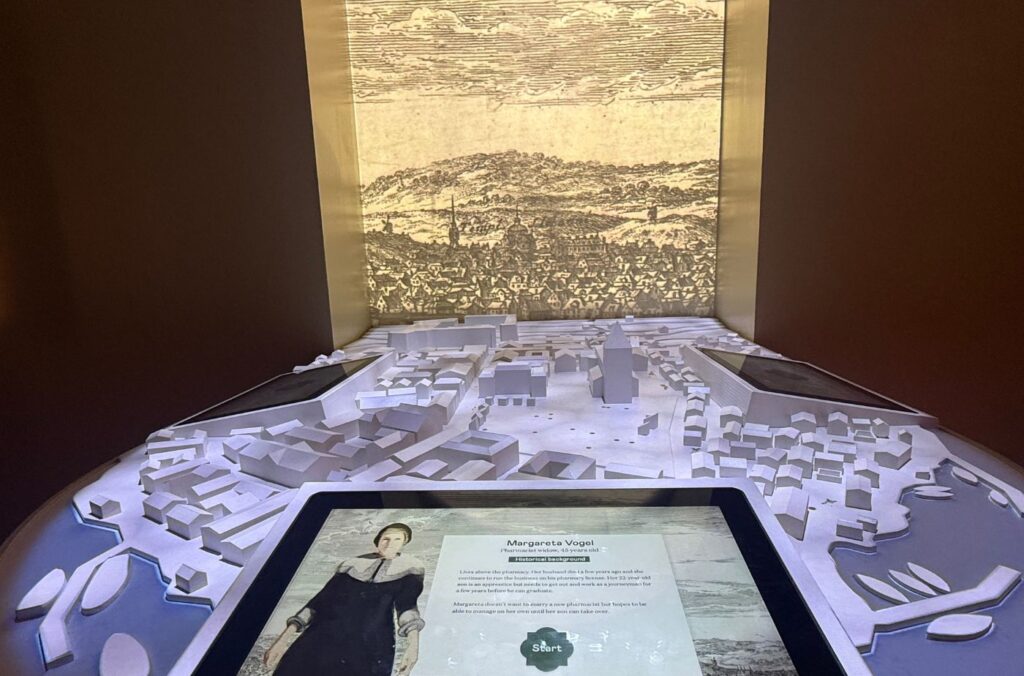
I found the information screens to be excellent and easy to read. In each room is a tablet with images of all the items on display. If you click on an item, it shows some text about it. This is great, but again, you’ll be here all day if you want to read about everything. There were some excellent visual displays; my favourite was a village set-up, and you could pick a particular person to follow around. That said, there is a lot to read! Each screen had multiple tabs, and each page was a couple of paragraphs long. If you want to read everything, prepare to spend a few hours here. I gave up and just took pictures of the text to read later.
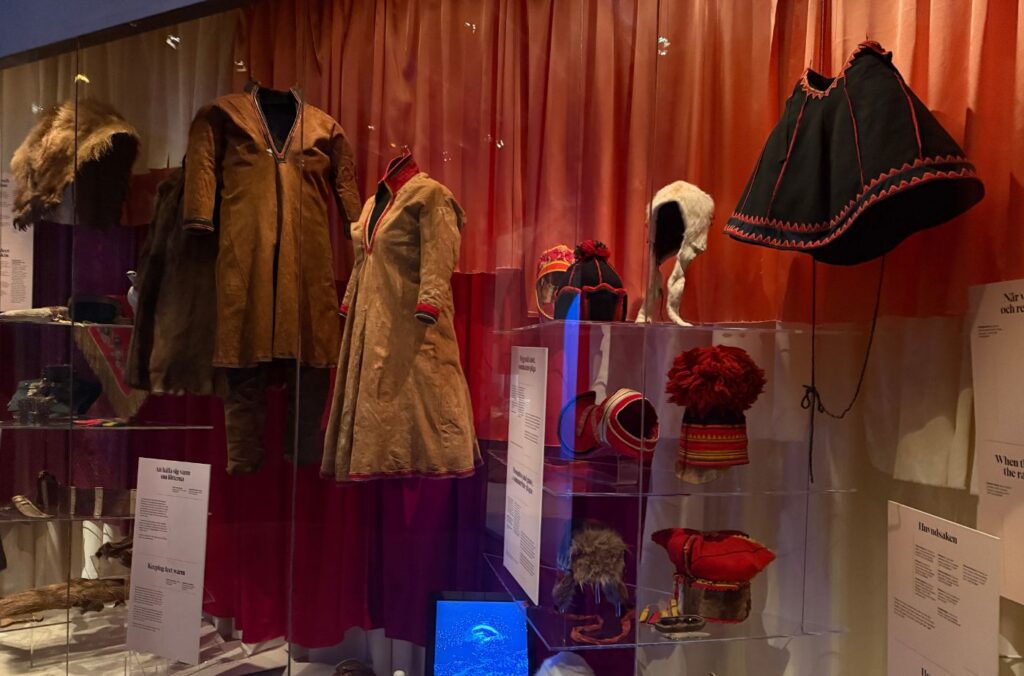
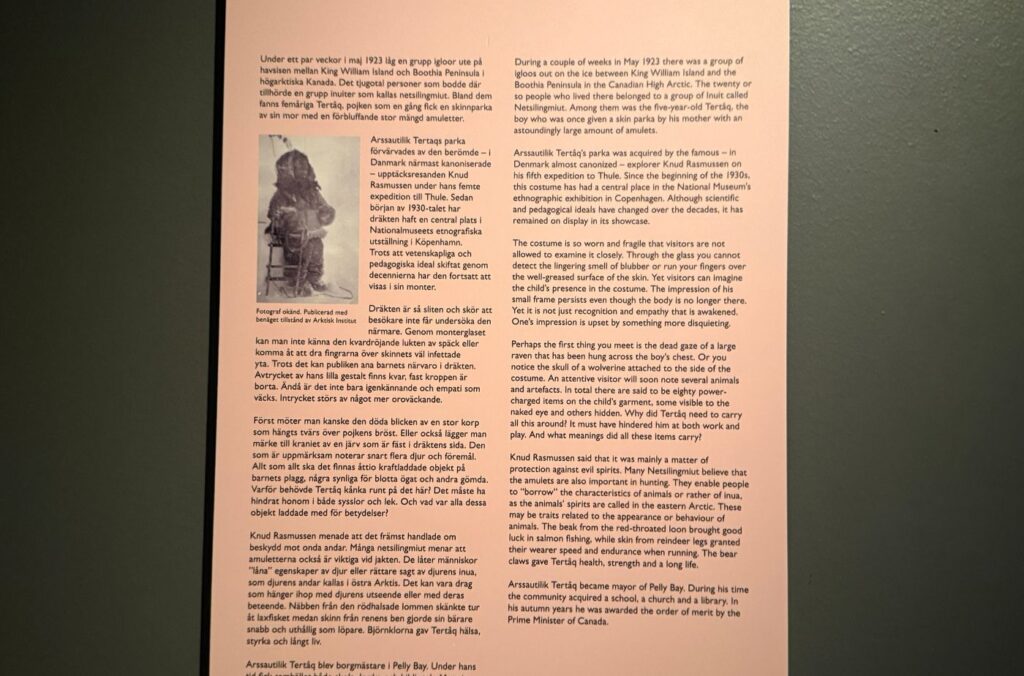
My one criticism, again, is that it focuses too heavily on Sweden. I get that I’m in Sweden, but the name of the museum is “Nordic Museum”, so I was expecting a more balanced presentation of everyday life across the Nordic countries. In the Nordics, we often joke that Sweden thinks it is the centre of the universe, but this museum really leans into that stereotype. Everyday life was very different in Norway and Finland, so I wish there was more focus on it. The Sami people are also mentioned in passing, though the storage of Sami objects is a little controversial. I wrote about that in the next section. Also, another example: World War II is almost glossed over; Sweden was neutral, so I understand, but Norway, Denmark, and Finland saw occupation and heavy fighting during the war. It’s a shame the museum didn’t include much on that.
However, if you are interested in everyday life in Sweden, the museum is excellent. It’s refreshing to see a museum focused on everyday people, and I love seeing how they lived in the past.
Another exhibition is called “The Arctic – While the Ice is Melting”, and this is located in the Great Hall. The exhibit focuses on the history and future of ice and the people who live in the Arctic, using objects, photos, designs, films, and projections, including Sami objects presented in an Arctic and Nordic context. I loved this exhibition; it’s well-presented, has great information screens, and doesn’t have an overwhelming number of objects.
There are also several compact exhibitions, including:
A 1940s apartment, showing the Swedish “People’s Home” (Folkhemmet) – a welfare-era housing narrative.
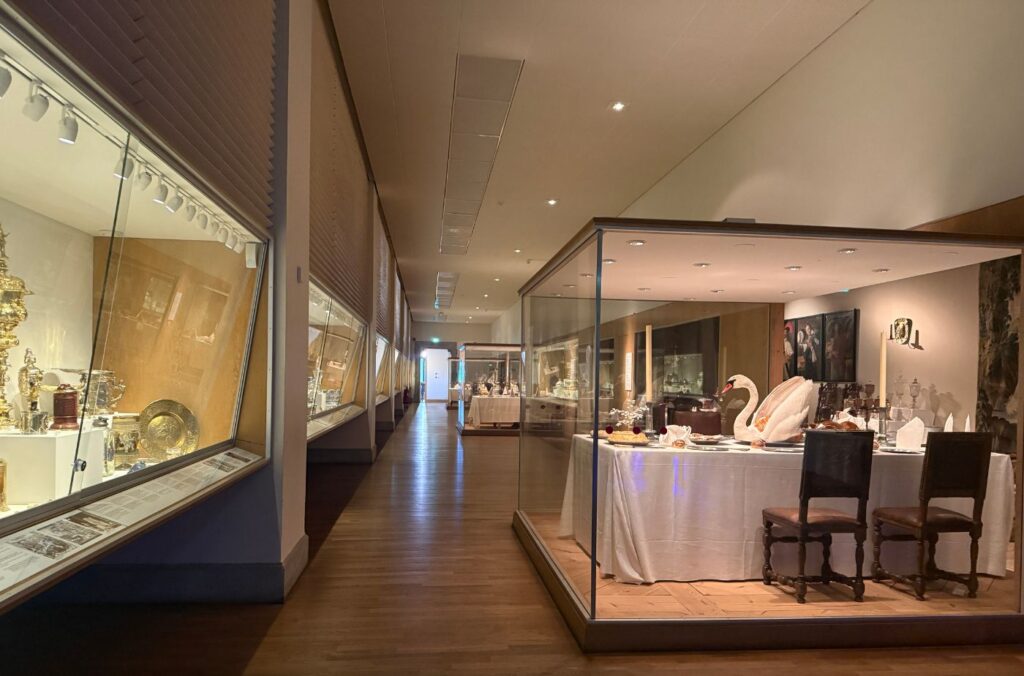
There’s also Table Settings, which is the one I checked out – it’s a long table with dining layouts from the 16th century until around 1950. The exhibit is used to discuss food, drink, and social customs.
Sami Collections
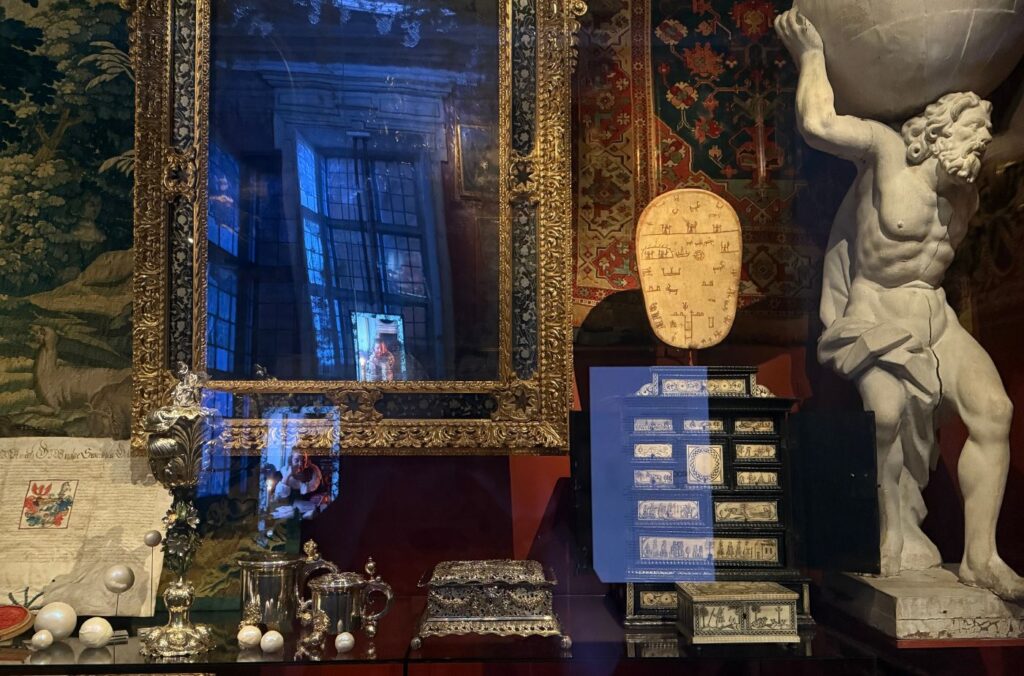
The Nordiska Museet’s Sami collections are an ongoing public topic. The museum has more than 8,000 objects that it obtained from the Sami people, collected during a time when the Sami were not respected in Sweden. It has been agreed that many of the items should be returned to the Sami region “Sapmi”. In 2025, the museum returned two “seitar” to Talma at the community’s request, and apologised for obtaining them in an unethical manner. The museum also has the largest collection of preserved Sami drums, which were confiscated from the Sami in earlier times to stop them from practising their shamanic religion. There are very few of these drums remaining in the world, so there has been a push to give them back to the Sami people.
In the picture above, you can see one of these sacred drums surrounded by irrelevant items.
Practical Information
Opening Hours
Nordiska Museet is open year-round, though its opening hours vary by season. Generally, the museum is open from 10 am to 5 pm. The museum is one of the few in Stockholm that opens on Mondays, so if your visit falls on a Monday, prioritise it! Click here to view their website.
Tickets
Check the website for the most up-to-date ticket information, but generally (at least as of April 2026), adults are 170 SEK. There are discounts for seniors, students, and children. The Stockholm Card (Go City) has free admission.
You can view ticket prices and book in advance by clicking here.
Guided Tours
If you want a tour, private tours are available for a high fee, starting at 4,000 NOK. The museum is primarily designed for self-guided visiting, with audio guides and phone-based texts.
Getting Here
It’s pretty easy to get to the museum, as it’s on Djurgården. You can take Bus 69 and 76 to “Djurgårdsbron,” and from there it’s a 10-minute walk to the museum, or you can then jump on Tram 7 for one stop to “Nordiska Museet/Vasamuseet”. Tram 7 is the only tram in Stockholm, starting near Central Station and heading through the city before ending on Djurgården.
For those staying on Södermalm or Gamla Stan, you can take the Djurgården ferry to “Allmänna Gränd”.
It took me about 40 minutes to walk from Gamla Stan to the museum, and it’s a nice and easy walk!
Accessibility
The museum has a clear set of accessibility disclosures. There are lifts to the exhibitions, ramps for some areas, and an accessible entrance to the right of the main entrance, plus another in the courtyard.
Lockers
There are lockers in the basement designed to store a coat plus a backpack. They are free to use and easy to set up. Backpacks may not be taken into exhibitions.
Cafe & Shop
There is a café on-site offering light meals, coffee, and pastries—ideal for a break, especially given how long you can spend here.
The museum shop is well-stocked with books, Nordic design items, and souvenirs.
Nordiska Museet Stockholm
The Nordic Museum is a beautiful, thoughtfully curated space that offers a deep dive into everyday life in Sweden across centuries. While its Nordic scope could be broader, it remains a worthwhile and enriching visit—especially for those interested in culture, history, and how ordinary people lived.
If you’re in Stockholm—particularly on a Monday—it’s well worth adding to your itinerary.