
The Fram Museum – Ultimate Visitor Guide for Travellers
Planning a trip to Oslo and keen to explore Norway’s epic polar history? The Fram Museum on Bygdøy is one of the city’s unmissable cultural highlights. After all, it has been Number 1 on TripAdvisor’s list of attractions for Oslo for several years. Home to the world’s strongest wooden ship and an award-winning immersive exhibition, the museum brings Arctic and Antarctic exploration to life in a fantastic way. I absolutely love this museum and always encourage visitors to check it out.
Here is my guide to the Fram Museum, including everything you need to know when visiting and some practical information.
In this article...
History of the Fram Museum
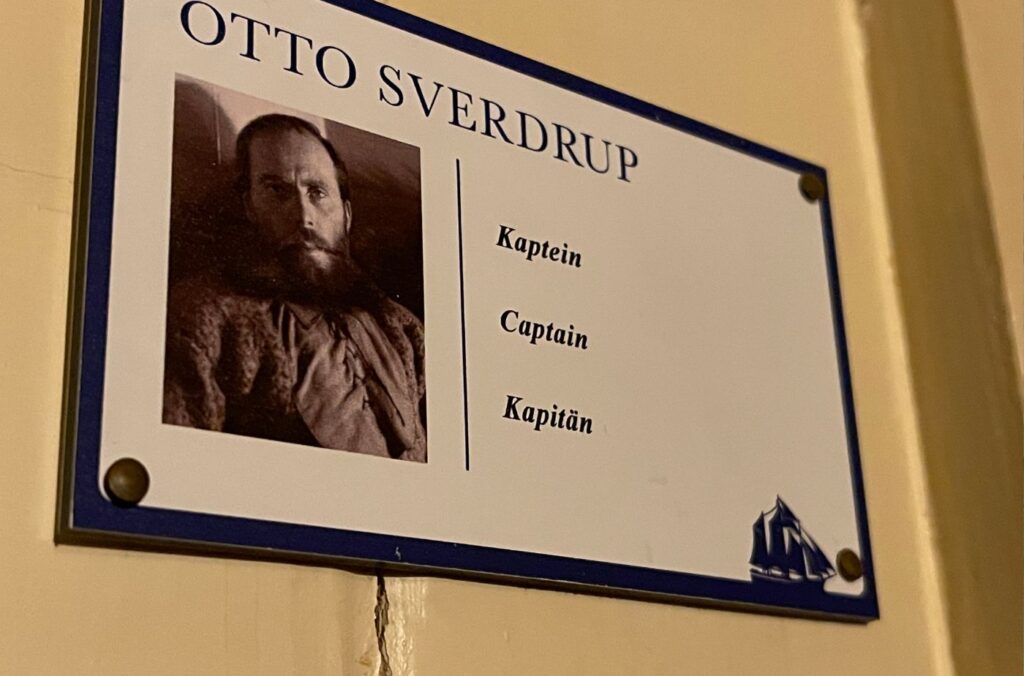
The Fram Museum in Oslo was established to preserve and celebrate Norway’s polar exploration heritage. Its centrepiece, the wooden polar ship Fram, is renowned as the strongest wooden ship ever built and a symbol of Norway’s heroic age of exploration. Fram carried legendary explorers Fridtjof Nansen, Otto Sverdrup, and Roald Amundsen on groundbreaking Arctic and Antarctic expeditions in the late 19th and early 20th centuries, setting records for farthest north and south voyages. After Fram returned to Norway in 1914, the vessel was left exposed to the elements for years. Polar explorer Otto Sverdrup led a tireless campaign throughout the 1920s to save the ship, resulting in a complete restoration by 1930.
Maybe I’ll get into it for another article, but for now, if you’re interested in reading up on the expeditions or the ship, I highly recommend checking out Wikipedia. Click here
Modern Times
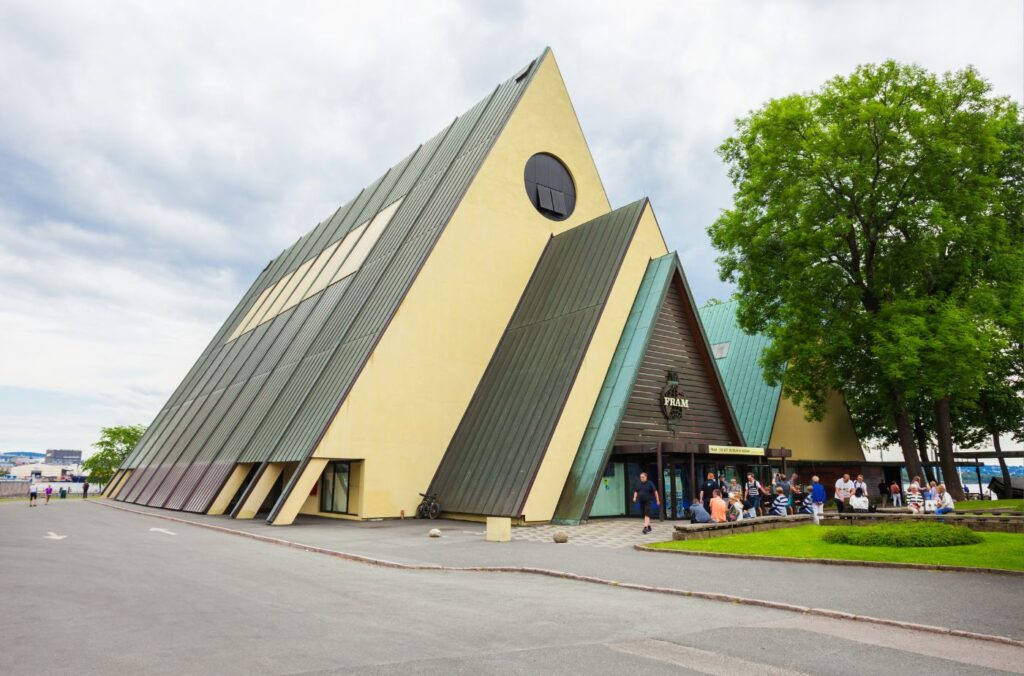
Over the decades, the Fram Museum has expanded and modernised significantly. A significant addition came in 2013 with the opening of the Gjøa Building, an extension linked to the original hall by an underground tunnel. This new wing houses the Gjøa, the first ship to sail through the entire Northwest Passage (1903-1906 under Amundsen), which had spent 40 years outdoors before getting its own indoor exhibit hall. The two museum buildings now stand side by side in matching architectural style, significantly increasing the exhibition space.
The museum didn’t stop there – in 2018, the Fram exhibition was thoroughly overhauled. The ship’s interior was reimagined “ready for expedition”, with open cabins, recreated workshops, lifelike mannequins, and immersive audio-visual displays added to give visitors a more vivid experience. This innovative redesign earned the Fram Museum the prestigious THEA Award for Outstanding Achievement in 2020, making it a world-class museum experience.
Today, the Fram Museum welcomes hundreds of thousands of visitors annually – over 400,000 in 2024, a record. The museum operates year-round and is one of Norway’s most popular museums. New exhibits have been added on lesser-known polar adventures and technology, including displays on Amundsen’s Maud expedition, the N24/N25 polar aeroplanes, the airship Norge, and the tragic John Franklin Arctic expedition, as well as polar explorers like Henry Larsen and Eivind Astrup.
In addition to preserving artifacts, the museum actively engages in education and research. It hosts the annual Roald Amundsen Memorial Lectures, inviting experts to discuss polar history, and it publishes numerous books on polar exploration each year.
Exhibition & Highlights
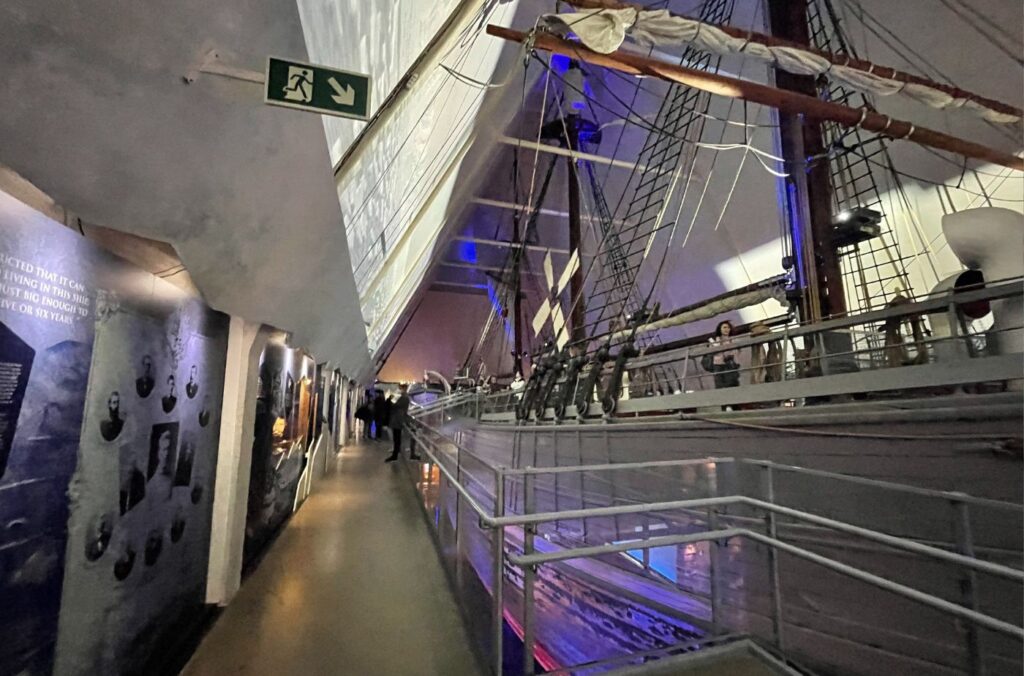
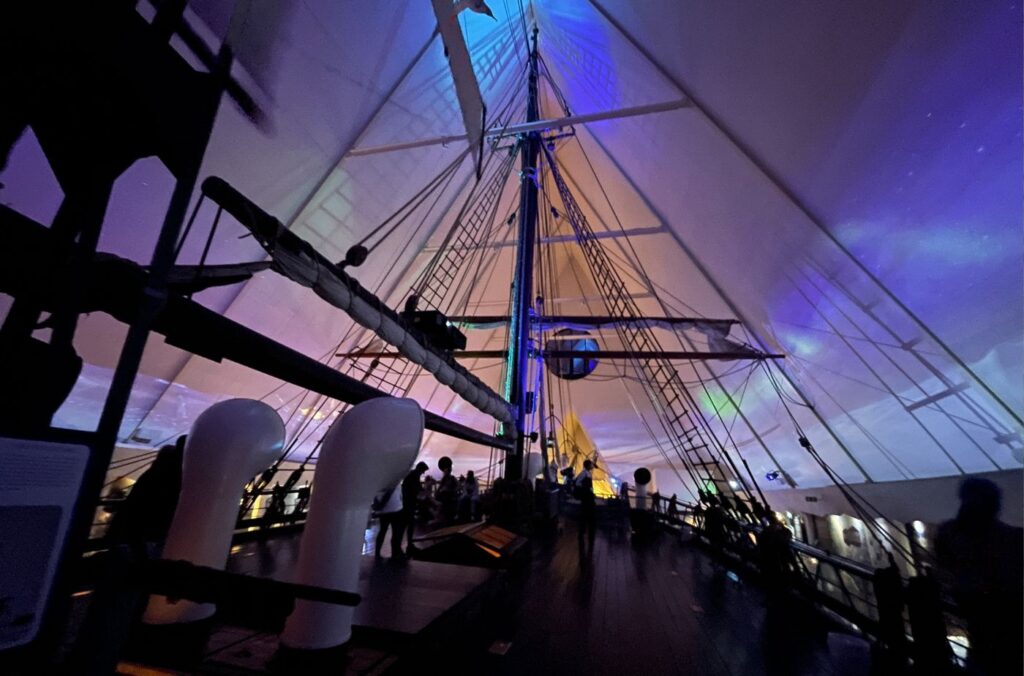
Of course, the leading exhibition is the Fram ship (“Fram” means “forward” in Norwegian). It’s possible to board Fram’s deck and roam freely through the cabins, cargo hold, galley, and engine room. The museum enhances this experience with immersive visuals – a 270-degree panoramic film is projected around the ship, complete with a howling polar storm sequence lasting about 90 seconds. Standing on Fram’s deck amid creaking sounds and flashing lights, you genuinely feel the drama of an Arctic expedition.
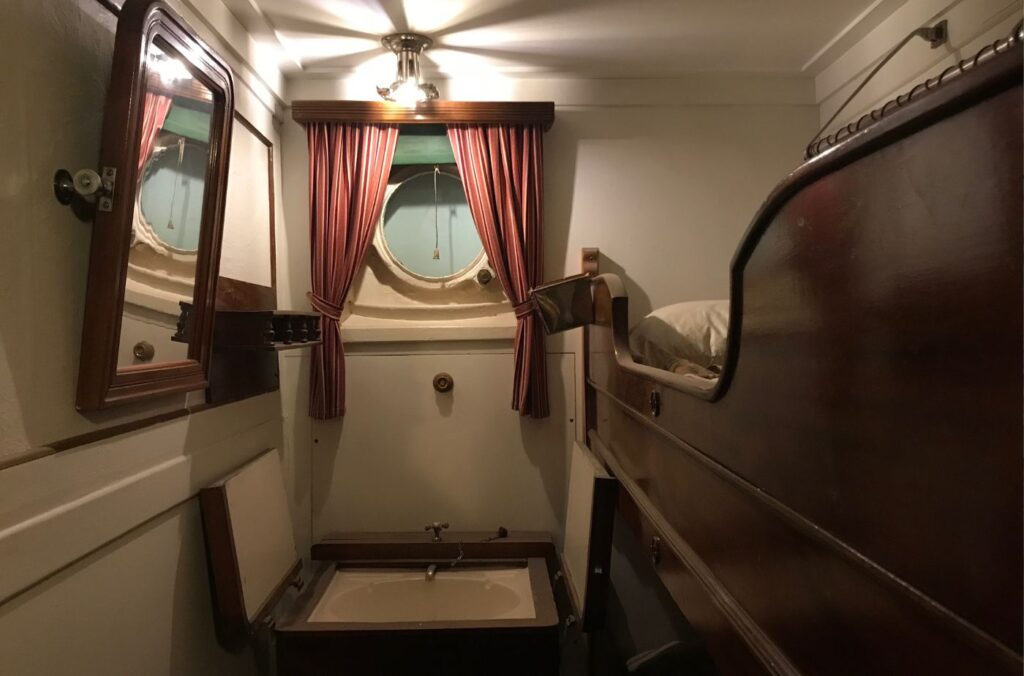
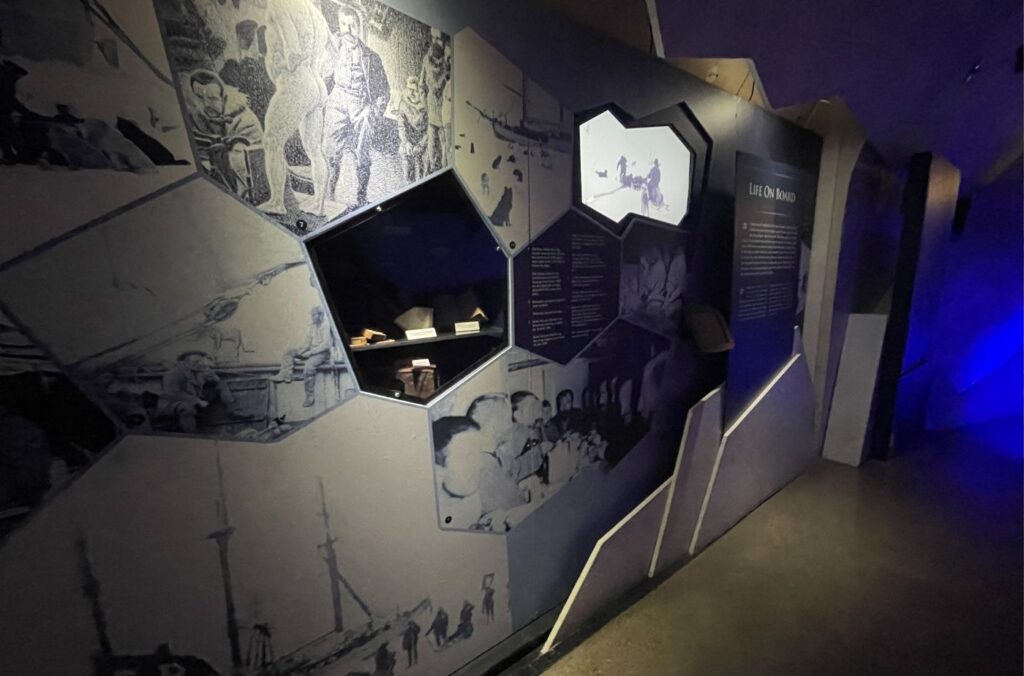
The Fram’s interiors have been restored to their appearance during Otto Sverdrup’s 1890s expedition, and many original objects are on display. Informative panels explain the three great expeditions of the Fram. The ship itself remains an awe-inspiring artifact – the strongest wooden ship ever built, which reached farther north and south than any vessel before. Don’t miss peering into the crew’s cabins, with personal belongings laid out, or the massive wooden rudder and iron-clad hull, designed to withstand crushing ice. The museum even features a chilling “trapped in ice” chamber, a small walk-through simulator that lets you feel the bite of polar cold and hear the groan of ice pressing against the hull.

The Gjøa, the first ship to navigate the Northwest Passage, is displayed in a separate hall, connected to the main museum by a tunnel. In this photo, Gjøa’s wooden hull is visible alongside other exhibits – including a hanging model of the Norge airship that flew over the North Pole. The Gjøa building opened in 2013, specifically to house this historic 70-foot vessel. Thanks to careful restoration (completed in 2017), visitors can now go on board Gjøa as well, walking the same decks where Amundsen and his six crewmates lived during their three-year Arctic journey. Around the ship, engaging exhibits tell the story of the Northwest Passage expedition and its challenges. This hall also showcases other fascinating artifacts and stories from polar history.
Together, the Fram and Gjøa exhibits present a comprehensive panorama of Norway’s polar exploits, from wooden ships and dog sleds to early aviation. There are also life-size dioramas, historic photos, and even some representations of polar wildlife that add atmosphere to the galleries. Whether you’re a history buff or not, these authentic vessels and well-curated displays really bring the Age of Exploration to life.
In addition to the ships themselves, the Fram Museum offers several interactive experiences that are hits with visitors of all ages. An essential stop is the introductory film that provides an overview of polar exploration history, helping set the context before you see the exhibits. Throughout the museum, multi-touch screens and videos delve into specific stories, and many displays are designed to be hands-on. The highlight for many is the 4D simulator ride, the North Pole Flight Simulator. This new attraction (installed in 2025) lets you virtually join Roald Amundsen’s daring 1926 flight over the North Pole. You sit in a movie theatre with archival footage, and CGI recreates the polar flight.
Practical Information
Opening Hours
The museum is open year-round (including Mondays). Hours vary by season, and it’s worth checking their official website when planning your trip. From the 1st of October to the 30th of April, the museum is open from 10 am to 5 pm. From the 1st of May to the 30th of September, the museum is open from 9:30 am to 6 pm.
You need at least an hour here.
Check their current opening hours on the official website: https://frammuseum.no/
Tickets
Check the website for the most up-to-date ticket prices. As of 2025, the ticket price is 180 NOK for adults, 140 NOK for seniors, and 70 NOK for children. If you are planning to visit multiple museums on Bygdøy, consider a combo ticket with the Kon-Tiki Museum and/or the Maritime Museum. Oslo Pass holders get free entry to the Fram Museum.
You can view current ticket prices here: https://frammuseum.no/the-museum/the_museum-opening_hours___prices/
Getting Here
The Fram Museum is located on the Bygdøy peninsula, about 5km west of central Oslo. It’s easily reached by public transport. Bus 30 runs frequently from downtown to Bygdøynes, the bus stop right in front of the museum, in about 15-20 minutes.
In summer, a boat from Oslo’s City Hall pier shuttles visitors to Bygdøy in a scenic 10-minute ride, dropping you a short walk from the museum entrance. The ferry departs roughly every 20-30 minutes in the summer from Pier 3 by City Hall.
Accessibility
The museum is fully wheelchair accessible, with ramps and lifts available between levels. There are also a small number of wheelchairs for visitors to borrow. Companions of disabled visitors enter free of charge.
Cafe & Shop
There is a café inside the museum, called Framheim Café. It is designed as a series of seven cozy wooden cabins inspired by historic polar wintering huts. The café serves light meals and snacks, as well as hot and cold drinks. In the warm weather, you can also enjoy outdoor seating in a patio overlooking the Oslofjord.
The museum shop here is excellent. Billed as having the world’s largest selection of polar literature for sale, it’s a paradise for history buffs – you can browse through the shelves on polar expeditions, including many published by the museum itself. The museum also offers a wide range of souvenirs and high-quality gifts, including polar bear toys, clothing, hats, flags, and exclusive memorabilia.
Guided Tours
The museum can be easily explored self-guided at your own pace – all exhibits have detailed English descriptions so that you won’t miss out.
For a deeper insight, you can book a guided tour. The Fram Museum offers guided tours by arrangement, which last about an hour. A standard guided tour costs around 3,000 NOK per group and must be booked in advance. The tour fee is separate from admission.
Fram Museum Oslo
The Fram Museum is more than a collection of old ships – it’s an immersive journey into the golden age of exploration. With world-class storytelling, hands-on experiences and two beautifully preserved vessels, it’s one of Oslo’s top attractions for travellers. If you’re travelling above the Arctic Circle, or have an interest in Norwegian history, this museum is a must-see!