
The Swedish Royal Family Through History: A Tour of Sweden’s Royal Landmarks
Sweden’s story is deeply intertwined with the Swedish monarchy. For over a thousand years, kings and queens have shaped Sweden’s history, and many of their most pivotal moments unfolded in the capital. I wanted to put together an article that traces the royal family’s history from medieval beginnings to the modern monarchy and point you to places in Stockholm where their history lives on. Hopefully you’ll enjoy this guide and learning about the royal family! Let’s get going.
The Swedish Royal Family Through History: A Tour of Sweden’s Royal Landmarks
Be sure to read my detailed travel guide for Stockholm, including practical information and things to do.
Medieval Origins and the Founding of Stockholm
The roots of Sweden’s monarchy reach back over a millennium. Early kings from different clans ruled the lands of Svea (in central Sweden) and Götaland (in the south), long before Sweden was a unified kingdom. Their names and locations are mentioned in the Norse sagas, but the first clear descriptions of Swedish kings come after Christianity arrived in the 11th century. By then, kings were elected from noble families, and they fought for the throne. As one dynasty triumphed over another, the monarchy’s power grew, and the idea of a unified Sweden took hold.
Arguably, the oldest royal site in Sweden is the Royal Mounds at Gamla Uppsala. In the past, these 6th-century burial chambers were believed to be either the tombs of the Norse gods Thor, Odin, and Freyr, or the tombs of mythical kings from those early times. Excavations in the 19th century proved they contained the bodies of ancient royals, including at least one woman. For many centuries, the area that is today called Gamla Uppsala was the location of the “Thing”, or the central meeting place.
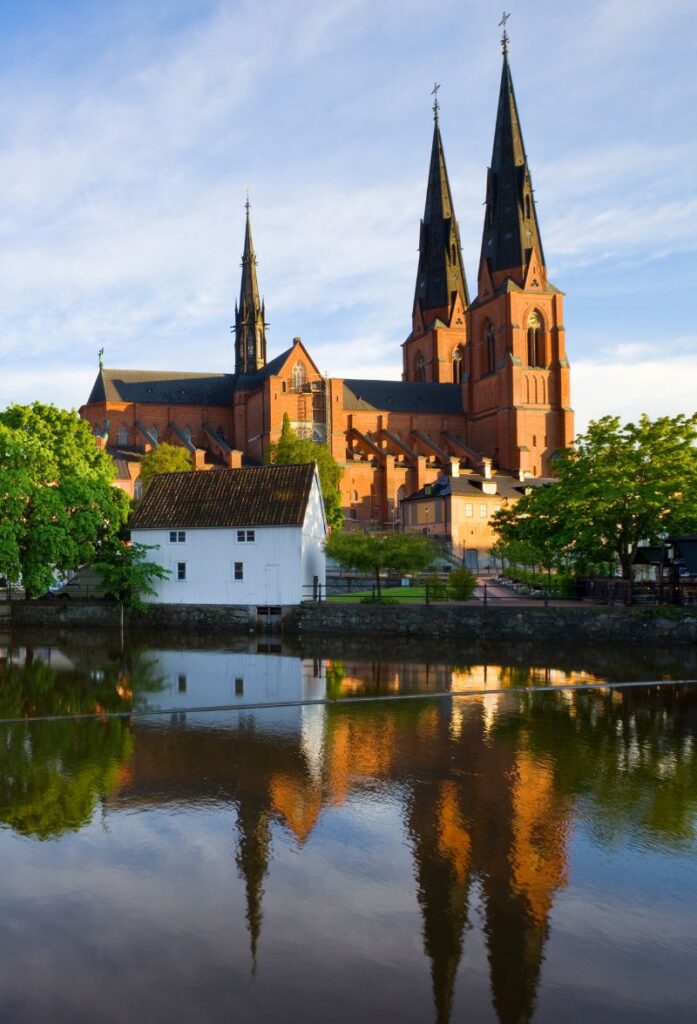
Uppsala
Uppsala is one of Sweden’s most important historic cities. You can read my overview of Uppsala’s history via the link below.
During the Viking Age, the city of Sigtuna was the main settlement in Sweden. Sigtuna was supposedly founded by King Erik the Victorious in 980 CE, and claims to have Sweden’s oldest high street. The first Swedish coins were made in Sigtuna, which flourished as a commercial and political centre. However, in the 13th century, changes and power struggles made it time for a new capital.
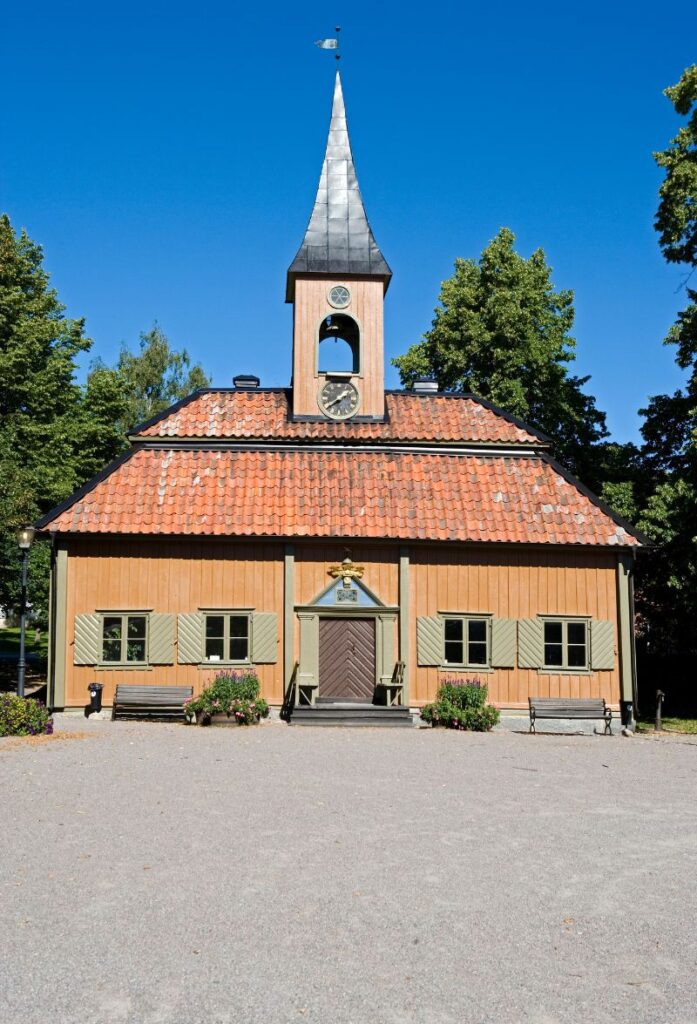
Sigtuna
You can read my travel guide for Sigtuna via the link below.
Amid the power struggle, Stockholm was born. The city’s traditional founding date is 1252, when statesman Birger Jarl first mentioned ‘Stockholm’ in official letters. Birger Jarl is credited as Stockholm’s founder because he chose the site – a strategic island between Lake Mälaren and the Baltic Sea – to build a fortified town. You can see a statue of Birger Jarl on Riddarholmen Island in Stockholm; take my self-guided walk of Gamla Stan!
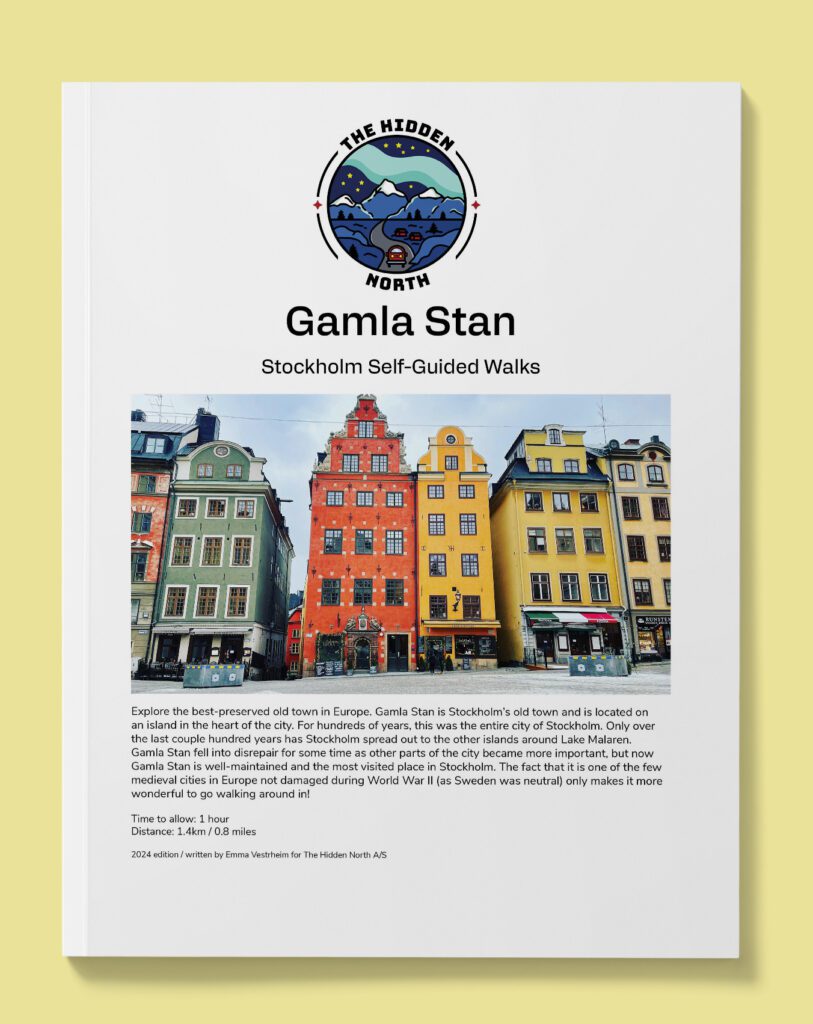
Gamla Stan Self-Guided Walking Tour
When in Stockholm, be sure to do my self-guided walking tour of Gamla Stan!
Under Birger’s influence, his son Valdemar was even elected king, and the family’s rise helped consolidate a Swedish kingdom. By the late 13th century, Stockholm was growing into the kingdom’s political centre. In Gamla Stan, the narrow cobbled streets and cellars still echo this era.
Riddarholmen Church, one of Stockholm’s most prominent churches, also dates from this period and holds special significance. This 14th-century abbey church became the first royal burial church – essentially Sweden’s royal pantheon. Stepping inside, you can see the tombs of King Magnus Ladulås (died 1209) and many later monarchs. In fact, fifteen Swedish monarchs are buried in Riddarholmen Church, from Gustavus Adolphus (1594-1632) to Gustav V (1858-1950). A notable exception is Queen Kristina, who famously abdicated and moved to Rome – she’s buried in the Vatican instead! We’ll learn more about her later.
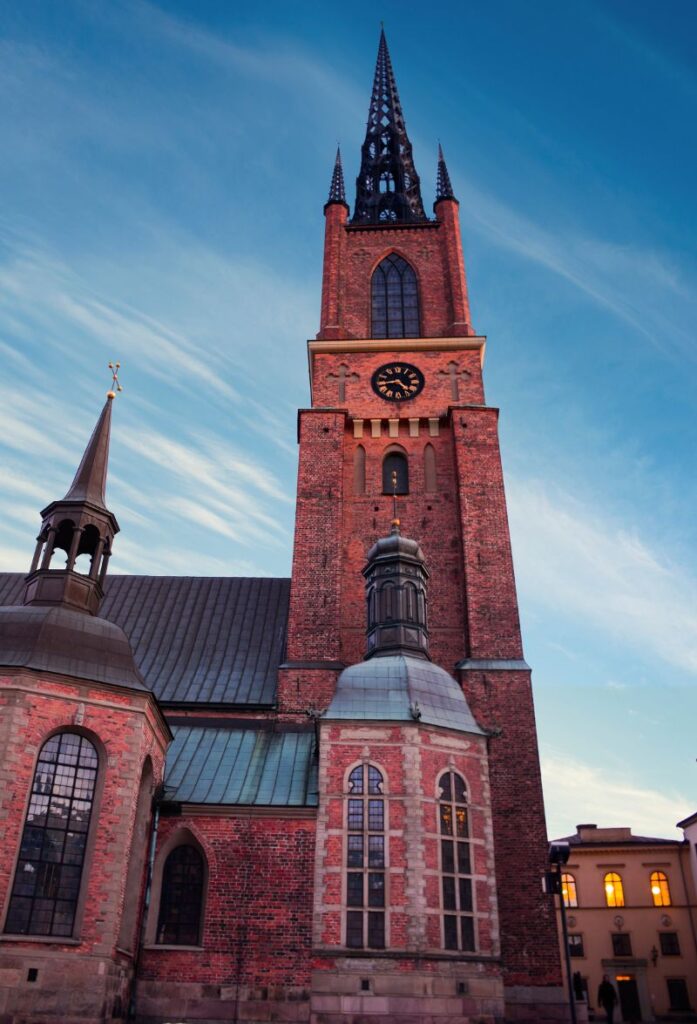
Riddarholmen Church
Riddarholmen Church is one of the most important historic sites in Sweden. You can read a detailed overview of it below.
The Vasa Era: Independence and the 16th Century
By the early 16th century, Sweden was caught in a Nordic union under Danish domination – a situation many Swedes resented. Before we move on to the struggle for independence, it’s worth mentioning Kalmar Slott – the medieval castle (dating back to the 12th century) that was built as a lone fortified tower. It was known as the ‘key to the kingdom’ due to its strategic location near the border of Sweden and Denmark. It was at Kalmar Castle in 1397 that the Kalmar Union between Sweden, Norway, and Denmark was agreed upon. Queen Margrethe I of Denmark was the mastermind of this pact, which unified the countries under a common monarch and a standard foreign policy, primarily to serve as a counterweight to the German Hanseatic League.
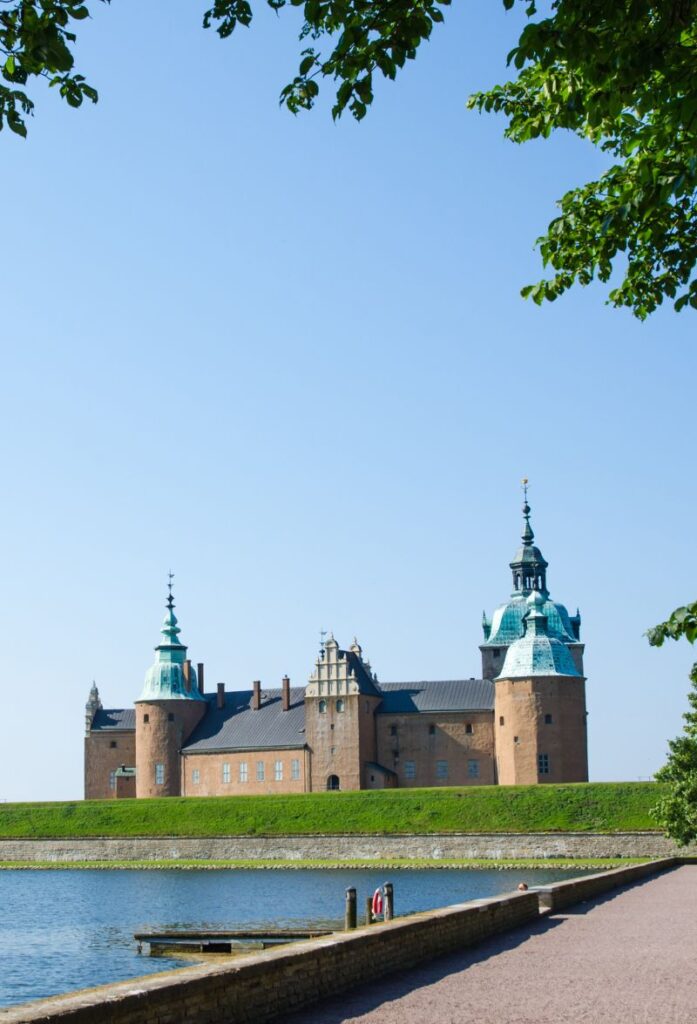
Kalmar Castle
You can find my guide for Kalmar Castle below.
The breaking point came with the tragic Stockholm Bloodbath of 1520, right in the heart of Gamla Stan. Over three days in November 1520, the Danish King Christian II (who had just been crowned king of Sweden) ordered the execution of around 90 Swedish nobles and officials in Stockholm’s main square, Stortorget. The bloodbath’s victims included the father of a young nobleman called Gustav Eriksson Vasa.
Gustav Vasa fled Stockholm, rallied the Swedish people, and led a war of liberation against Danish rule. He seized power in 1521, after a two-year struggle, and Sweden became independent. On the 6th of June 1523 (now Sweden’s national day), Gustav Vasa was elected King of Sweden, marking the end of the Kalmar Union. This was a turning point that ushered in a new royal dynasty – the Vasa dynasty – and made Stockholm the capital of a sovereign Sweden. Gustav Vasa’s reign is often considered to be the birth of modern Sweden. He centralised royal authority, introduced the Protestant Reformation (taking control of the wealthy Catholic Church in the process), and transformed Sweden into a hereditary monarchy in which the crown passed from father to son.
Gustav Vasa broke with the Catholic Church, introducing the Protestant Reformation to Sweden. Through a 1544 parliament act, he made the monarchy hereditary, and by the time of his death in 1560, he had created a powerful, centralised nation state. Vasa is buried in Uppsala Cathedral alongside his three wives (yes, that’s right!). Uppsala Cathedral is also where King Erik IX, Sweden’s patron saint, is buried, and where royal coronations were held until the 17th century.
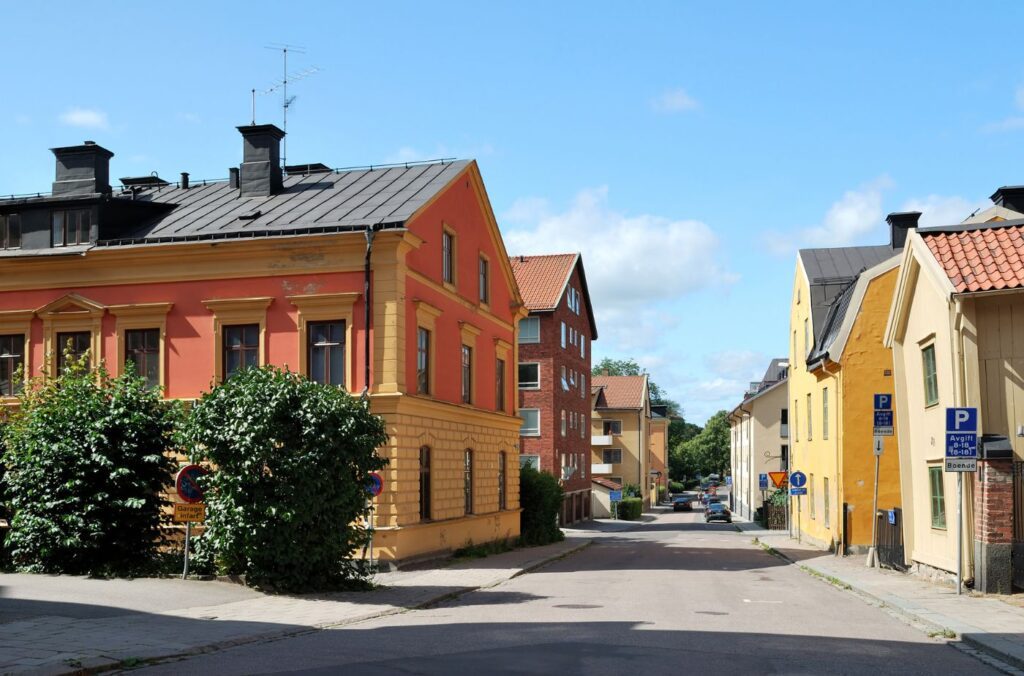
Uppsala Travel Guide
You can find my travel guide for Uppsala below.
You can still sense Gustav Vasa’s impact around Stockholm. In the Old Town, the remnants of the medieval Tre Kronor Castle (Three Crowns Castle) – which Gustav Vasa expanded as his royal residence – lie underneath today’s Royal Palace. (A museum in the Palace’s cellar, Tre Kronor Museum, showcases those old castle ruins and artifacts from Gustav’s time.) On the island of Djurgården, the popular Vasa Museum offers another vivid connection: it displays the massive 17th-century warship Vasa, named after the royal house founded by Gustav Vasa. Although the Vasa ship itself set sail long after Gustav’s death (it infamously sank in 1628), it symbolises the grand ambitions of the Vasa kings in building Sweden’s naval power. Standing before the ship’s towering, ornamented hull, you get a feel for the era’s pomp – and the might of the monarchy that Gustav Vasa established.

Vasa Museum
Read all about the Vasa Museum below.
Sweden’s Great Power Era (17th Century)
The 1600s saw Sweden become a significant European power, led by forceful monarchs of the Vasa line and their successors. King Gustav II Adolf, who reigned 1611-1632, turned Sweden into a military heavyweight during the Thirty Years’ War, earning the nickname ‘The Lion of the North’. Under his rule, Stockholm grew in stature as an imperial capital. At Gustav Adolfs Torg, a central square named in his honour, you’ll find an equestrian statue of the king. Erected in 1791, it was Sweden’s first ever equestrian statue.
Gustav Adolf II’s daughter, Queen Kristina, is one of Stockholm’s most intriguing royal figures. She inherited the throne in 1632 as a child and gained fame for her brilliant mind and unorthodox ways. Kristina loved philosophy, science, and art – she even lured the philosopher René Descartes to Stockholm, though he caught a cold in the castle and died shortly after. Kristina also defied gender norms by dressing in masculine styles, and she shocked Europe by abdicating her throne in 1654, converting to Catholicism and moving to Rome. Stockholm’s royal court was stunned, but Kristina had her reasons: she refused to marry and produce an heir, and felt constrained by her role. Her ornate silver throne and coronation robes are on display at the Royal Armoury Museum in the Royal Palace.
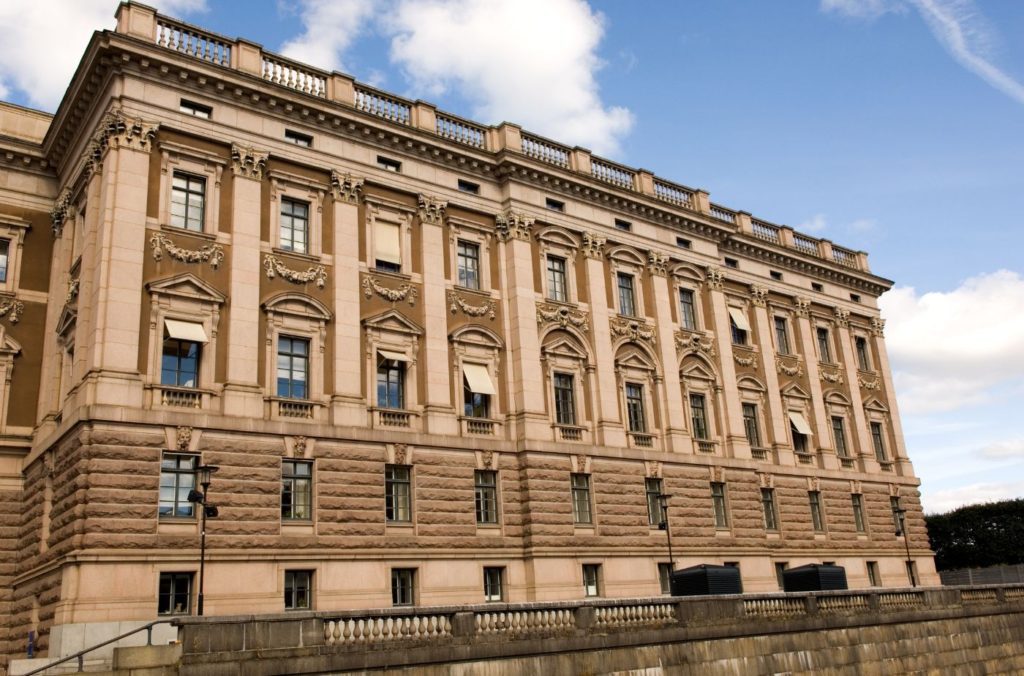
Stockholm Royal Palace
Read about Stockholm Royal Palace in detail via the link below.
After Kristina’s abdication, the throne passed to her cousin Karl X Gustav, and a new royal house (the House of Palatinate- Zweibrücken) continued Sweden’s significant power era. His son, Karl XI, and especially his grandson, Karl XII, carried on Sweden’s military campaigns. Karl XII, ruling from 1697 to 1718, was a famed warrior king who spent most of his reign in battle during the Great Northern War. Though courageous, his relentless wars ultimately drained Sweden. In Stockholm, Karl XII is immortalised by a dramatic statue in Kungsträdgården. The bronze king points boldly towards the east – towards Russia, his greatest adversary – with a sword in hand.
In 1697, tragedy struck Stockholm: a raging fire destroyed the ancient Tre Kronor Castle, the medieval fortress-turned-palace that housed kings for centuries. Plans for a grand new Baroque Palace were quickly drawn up by architect Nicodemus Tessin the Younger. Construction of the current Stockholm royal palace began on the same site that year. War delayed its completion, but by 1754, the immense square palace as we see it today was finally finished. This is one of the largest palaces in Europe, with over 600 rooms. Although the royals later moved their royal residence elsewhere, the Stockholm Palace is the official workplace of the King. It is possible to visit the royal palace today.
Enlightenment and Palace Life
The 18th century brought significant changes to Sweden’s monarchy – and some of Stockholm’s most beautiful royal landmarks date from this time. After the death of warrior king Karl XII in 1718 (he left no heirs), the era of absolute monarchy gave way to the Age of Liberty. His sister Ulrika Eleonora became queen but was forced to sign a new constitution in 1719 that significantly reduced royal power and strengthened the parliament (Riksdag). For half a century, from 1719 to 1772, Sweden was primarily run by elected officials, with the king serving as a figurehead. It was a time of flourishing arts, science, and early democratic ideals. In Stockholm, the Riksdag (Parliament) met at the House of Nobility (Riddarhuset) – you can still see these buildings in Gamla Stan. The monarchy’s reduced role didn’t stop the royals from enjoying court life, however. Lovisa Ulrika, the queen consort in the mid-1700s (and the sister of Prussia’s Frederick the Great), was a great patron of the arts and sciences. She and her husband, King Adolf Frederick, moved into the newly completed Stockholm Palace in 1754, filling it with culture and intrigue.
Royal architecture from this period is splendid. A must-see is Drottningholm Palace, located just outside the city on Lovön island – so important that we’ll give it special attention. Built in the late 1600s for Queen Hedvig Eleonora, Drottningholm was further embellished in the 18th century by Lovisa Ulrika and then Gustav III. Today, Drottningholm Palace is a UNESCO World Heritage site and the private home of the current King and Queen (though much of it is open to the public). You can reach it by a scenic boat ride. Walking up the gravel path, you’ll see a vision straight out of a Baroque fairy tale: a yellow palace with a copper roof, perfectly symmetrical, overlooking formal terraced gardens and a tree-lined lakefront. The palace’s interiors are opulent, featuring period furnishings and painted ceilings. One wing contains the Drottningholm Court Theatre, an exquisite 1766 wooden theatre preserved with its original stage machinery – they still perform 18th-century operas here in summer! Also on the grounds is the whimsical Chinese Pavilion, a rococo mini-palace given to Lovisa Ulrika as a surprise birthday gift in 1753. Its playful, oriental-inspired decor delighted the royals of the day and makes for a charming visit now.
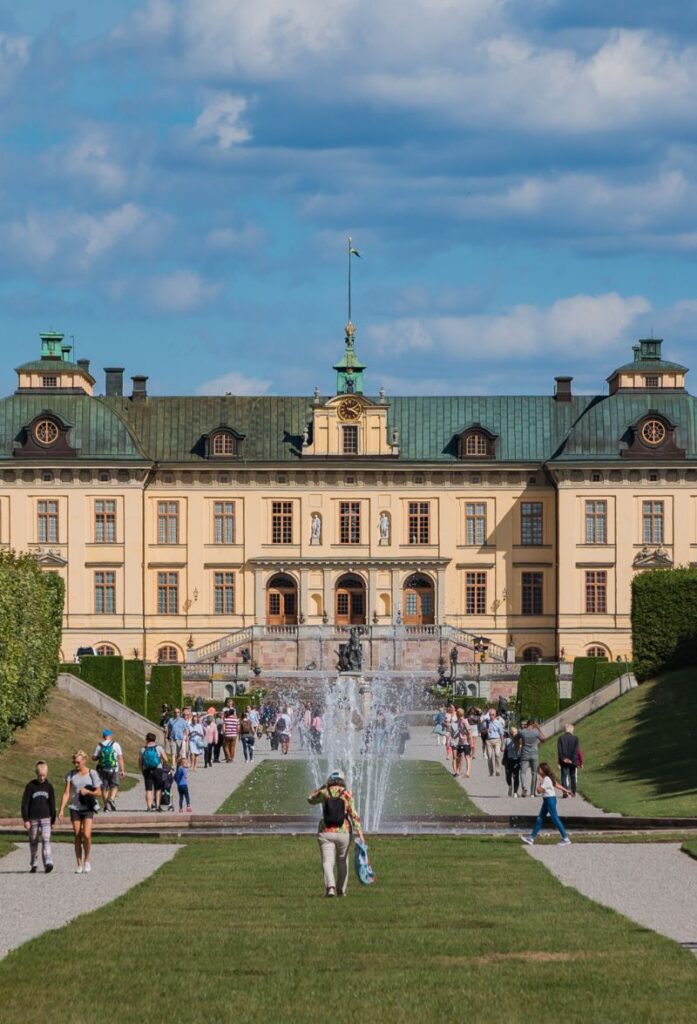
Drottningholm Palace
You can find my guide for Drottningholm Palace below.
In the mid-18th century, Sweden swung back toward royal authority under the brilliant (and dramatic) King Gustav III. In 1772, Gustav III – a son of Lovisa Ulrika – was unhappy with the limitations of his power, so he staged a coup d’état. Without bloodshed, he seized control from the parliamentary government and enacted a new constitution that strengthened the monarchy (while retaining some checks). Gustav III’s reign became known as the Gustavian era, a time of cultural renaissance in Stockholm. The King, a passionate patron of the arts, founded academies for music, art and literature. He also commissioned Sweden’s first proper opera house – the Royal Opera – which opened in 1782 next to Gustav Adolfs Torg. Gustav loved to host masquerade balls and theatrical performances.
In 1781, Gustav III commissioned a theatre at his summer palace, Gripsholm Slott; it is considered a masterpiece of neoclassical interior design.
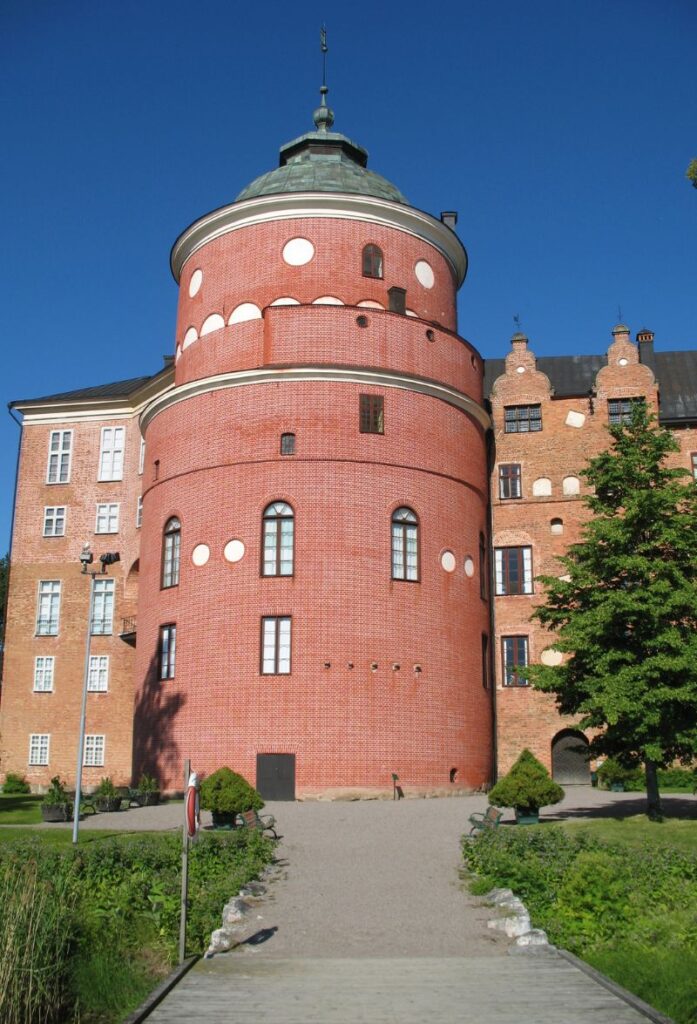
Gripsholm Castle
You can find my guide for Gripsholm Castle below.
The Gustavian Era ended in high drama. On the 16th of March 1792, King Gustav III was assassinated at a masquerade ball at the Royal Opera House. A group of conspiratorial noblemen, angry at his autocratic style, had plotted against him. During the masked ball, one of them shot the king in the back; Gustav III died of his wound days later. This sensational event – immortalised in the opera Un ballo in maschera – took place on the very spot where today’s Royal Swedish Opera stands (the original building was later replaced). If you attend an opera or ballet there, imagine the candlelit foyer in 1792 filled with masked courtiers and the panic on that fateful night. Gustav III’s death was a turning point that once again curtailed royal power and ushered in more reforms. He is buried at Riddarholmen Church with a simple inscription. But around Stockholm you’ll find tributes: Gustav III’s Pavilion in Haga Park (a lovely neoclassical retreat he built north of the city), and a bronze statue of Gustav III on Skeppsbron waterfront, gazing out to the sea.
The Bernadotte Dynasty
In the 19th century, Sweden’s monarchy underwent a big final plot twist – a change of dynasty – and gradually transformed into the ceremonial institution it is today. After Gustav III’s son was deposed and his elderly uncle Karl XIII took the throne without an heir, Sweden’s parliament decided to solve the succession crisis unexpectedly. In 1810, they elected a French marshal, Jean-Baptiste Bernadotte, as Crown Prince, who was elected as King Karl XIV Johan in 1818. Thus began the House of Bernadotte, the royal family that still reigns in Sweden.
This colourful choice brought a dash of Napoleonic France to Stockholm – Karl Johan had been one of Napoleon’s generals! He adapted quickly, learning Swedish and even adopting the Lutheran faith. Legend says that when he first arrived in Stockholm, crowds were curious if the Frenchman had a tattoo (supposedly “Death to Kings”) from his revolutionary days – but if he did, it stayed hidden. King Karl XIV Johan proved a stabilising figure, and under him, Sweden entered a long period of peace.
Throughout the 1800s, the Bernadotte kings (Karl Johan and his successors, Oscar I, Karl XV, and Oscar II) presided over a Sweden that was rapidly modernising. They had to share more power with the elected Riksdag, especially after a new liberation constitution in 1809 gave parliament significant authority. Much of the monarchy’s focus in the 19th century was “trying to retain power in a society that was becoming increasingly liberal”, as one historian notes.
Over time, the royal role became more symbolic. King Oscar II (reigned 1872-1907) was the last Bernadotte to wield any political influence, and even he had to accept political governance toward the end of his life. During Oscar II’s reign, Sweden peacefully dissolved its union with Norway in 1905. Oscar II was also a patron of culture and science; he helped fund the Nobel Prizes and left his mark on Stockholm by supporting institutions like the Nordic Museum. His face (sporting impressive sideburns) still graces some statues and plaques around the city.
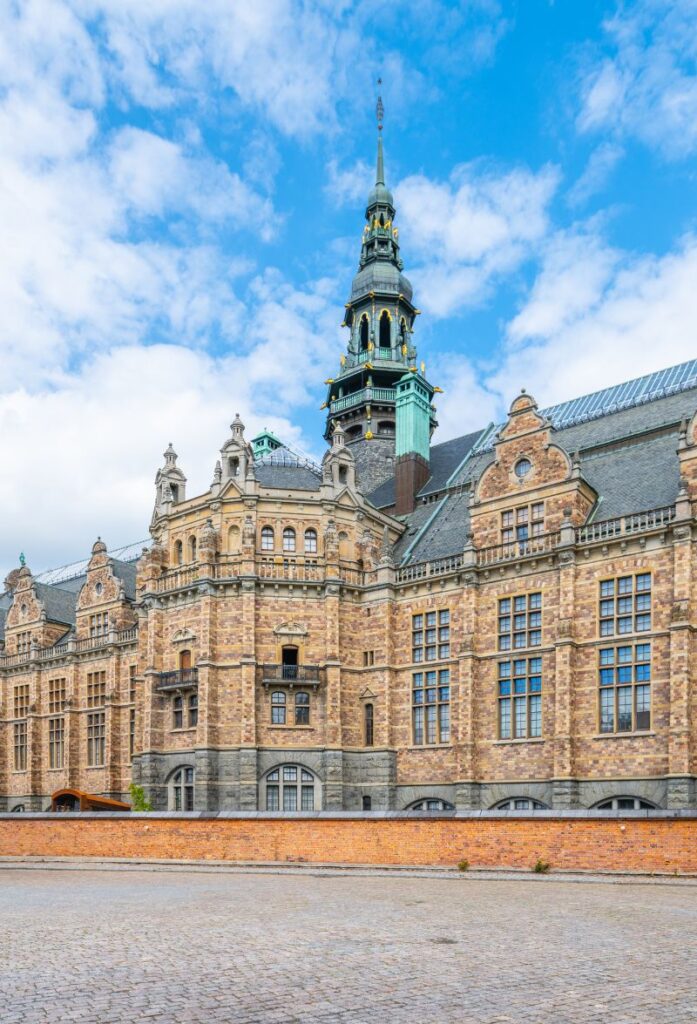
Nordic Museum
You can find my guide for Nordic Museum below.
By the 20th century, Sweden’s monarchy had become purely constitutional. King Gustaf V (1907–1950) saw the expansion of democracy – by 1921, Sweden had full universal suffrage and parliamentary rule. Gustaf V generally stayed above politics, but in 1914, he made a famous exception: the so-called Courtyard Speech in the Royal Palace courtyard, in which he sided with a crowd of farmers calling for greater defence funding. This sparked a political crisis, as the king’s meddling forced the liberal government to resign. It was a last flexing of royal muscle – and it sparked debate that ultimately further limited the monarchy’s powers. During World War II, Gustav V maintained Sweden’s neutrality, though controversy remains about his alleged sympathies.
The current King’s grandfather, Gustaf V Adolf (reigned 1950-1973), was beloved as a scholarly, down-to-earth king. By his time, the Swedish royal family had fully adapted to its ceremonial role, focusing on duties such as state visits, ceremonial openings, and charity work. A major constitutional reform in 1974 removed the last formal executive powers from the monarch, making the King purely a figurehead of state.
The Royal Family Today
And so we arrive at today’s monarchy. King Carl XVI Gustaf, who ascended the throne in 1973, is the longest-reigning Swedish king to date. He and Queen Silvia raised their family in a more modern, informal style (by royal standards), and have generally kept the monarchy popular by “staying out of politics and serving as national symbols,” much like other European royals. In 1980, Sweden even changed its succession law to absolute primogeniture, meaning the King’s eldest child – Crown Princess Victoria – is next in line, regardless of gender. The Swedish royal family today is relatively small (the King, his three children, and their families) and aims to be approachable. For instance, the Royal Palace now opens its doors annually for a major National Day celebration, and the young royals often mingle with crowds at public events.
One delightful aspect of the modern monarchy is that many royal residences and sites are accessible to visitors. The Bernadotte family’s main home is Drottningholm Palace (that gorgeous Baroque palace we discussed), not the city palace. They moved there in 1981 for a more private life, but you can tour Drottningholm’s state rooms year-round and stroll its gardens alongside the royal family’s own backyard. In Stockholm city, the Royal Palace in Gamla Stan is used for official ceremonies and is also essentially a living museum: you can wander through the lavish State Apartments, see the Royal Armoury (don’t miss King Gustav III’s bullet-pierced masquerade costume on display!), and even descend to the Tre Kronor Museum in the cellars for a peek at medieval foundations. The Stockholm Cathedral next door – a medieval church with a splendid baroque interior – is where many royal weddings have taken place, including the King’s marriage to Silvia in 1976 and Crown Princess Victoria’s wedding in 2010. In the cathedral, you can also see the famous wooden statue of Saint George and the Dragon, carved in 1489, which symbolises Sweden’s struggle against foreign tyranny (and which some say represents Sten Sture’s victory over the Danes – a nice tie back to those independence battles!).
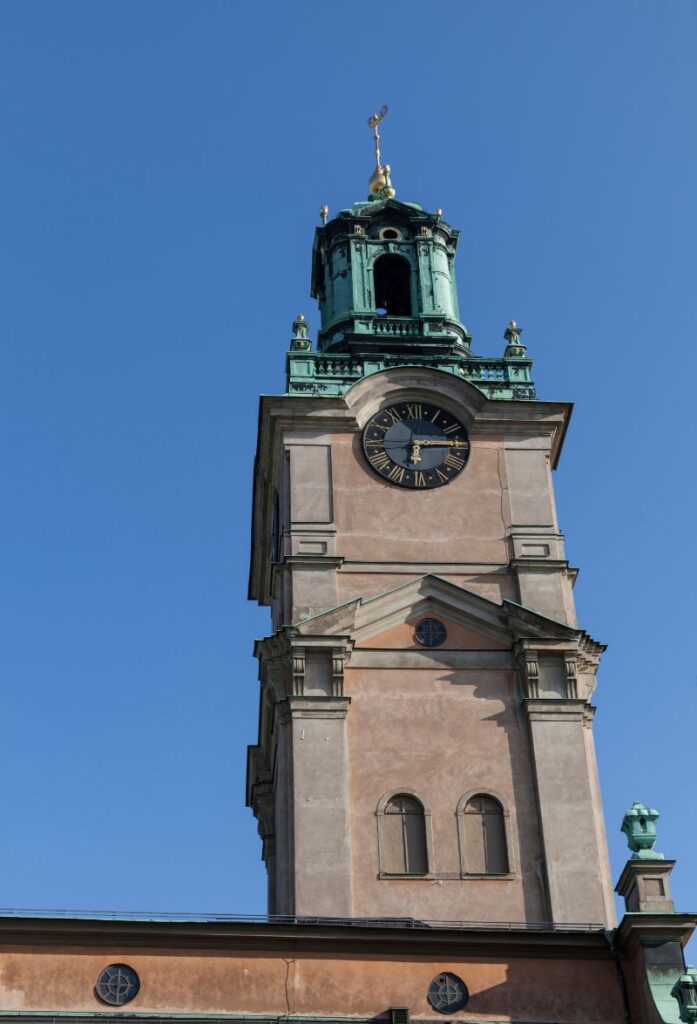
Stockholm Cathedral
You can find my guide for Stockholm Cathedral below.
Royal Sites in Stockholm
Visiting these sites, you’ll gain a richer appreciation of how Sweden’s royal family evolved and how they left their mark on Stockholm’s cityscape. From Viking-age legends to Bernadotte kings, and from medieval fortresses to splendid palaces, the Swedish monarchy’s journey is written all over Stockholm. Enjoy your exploration of Royal Stockholm – a place where every corner has a story, and you’re invited to walk in the footsteps of kings and queens past and present.
Be sure to read my detailed travel guide for Stockholm, including practical information and things to do.