
The Danish Royal Family Through History: A Tour of Denmark’s Royal Landmarks
Steeped in more than a millennium of history, the Danish monarchy stands among Europe’s oldest and most enduring institutions. From Viking rune stones to regal palaces, the legacy of the Danish Royal Family weaves through the very foundations of Denmark’s national identity.
In this article, I’ll cover a journey across Denmark’s royal terrain—visiting majestic sites where monarchs once governed, celebrated and rested. These landmarks reveal not just the opulence of royal life but also the subtle role the monarchy has played in shaping Denmark’s cultural and architectural heritage.
Prepare to wander through grand halls, stroll into expansive gardens and trace the footsteps of kings and queens—each landmark offering a chapter in the unfolding story of royalty, power and legacy in the land of Denmark.
The Danish Royal Family Through History: A Tour of Denmark’s Royal Landmarks
Be sure to read my detailed travel guide for Copenhagen, including practical information and things to do.
Viking Age Beginnings: Kings Gorm, Harald, and the Birth of Denmark
The Danish monarchy can trace its origins back over 1,000 years to the Viking Age. In the 10th century, King Gorm the Old and Queen Thyra had the royal seat at Jelling, which became the cradle of Christianity for a new, unified Denmark. From King Gorm, the millennium-long chain of Danish monarchs has continued to this day.
Gorm’s son was Harald Bluetooth, probably one of the most recognisable Kings abroad. Yes, this is where the name Bluetooth comes from! The Bluetooth icon is also his initials. Anyway, he famously united the Danish realm and converted it to Christianity – an achievement he proudly proclaimed on a large runestone at Jelling. The inscription on the stone declares that he “won for himself all Denmark and Norway and made the Danes Christians”. This moment, recorded on the Jelling runestones, marks the birth of the Danish kingdom and the country’s transition from Norse paganism to Christianity in the year 956. Visitors to Jelling can see these two runestones between massive burial mounds and a small white church, today a UNESCO World Heritage Site, illustrating Denmark’s Viking roots and Harald’s legacy.

Jelling
Jelling is a small town located in the west of Denmark. It is home to the Jelling Stones, considered to be one of the most important historic sites in Denmark. Jelling is easy to visit if you’re close to Billund (Legoland!).
Early Danish kings soon expanded their influence. Harald Bluetooth’s son, Sweyn Forkbeard, and grandson, Cnut the Great, even ruled parts of England in the early 11th century, showcasing Viking Denmark’s reach. At home, King Harald established Roskilde on Zealand as a royal city and built a Christian church there. In the Middle Ages, Roskilde grew into Denmark’s spiritual centre and later its royal burial place.
The impressive Roskilde Cathedral, begun in the 12th century, became the mausoleum for the Danish royal family from the 15th century onwards. Except for one since the Reformation, nearly every Danish King and Queen has been buried at Roskilde Cathedral. Walking inside this UNESCO World Heritage site, you’ll find 39 royal tombs in a patchwork of chapels – a literal timeline of Danish royalty in stone. Among them is Queen Margrethe I, who in 1397 united Denmark, Norway and Sweden under the Kalmar Union. Queen Margrethe is often called the most powerful figure in Scandinavian history, ruling an empire that stretched across the Nordic world. Her ornate sarcophagus lies prominently in the cathedral’s nave, a testament to her legacy. Not far away, in other chapels, lie kings of later eras – such as Christian IV and Frederik II, whom we will meet again later. Let’s get back to medieval times.
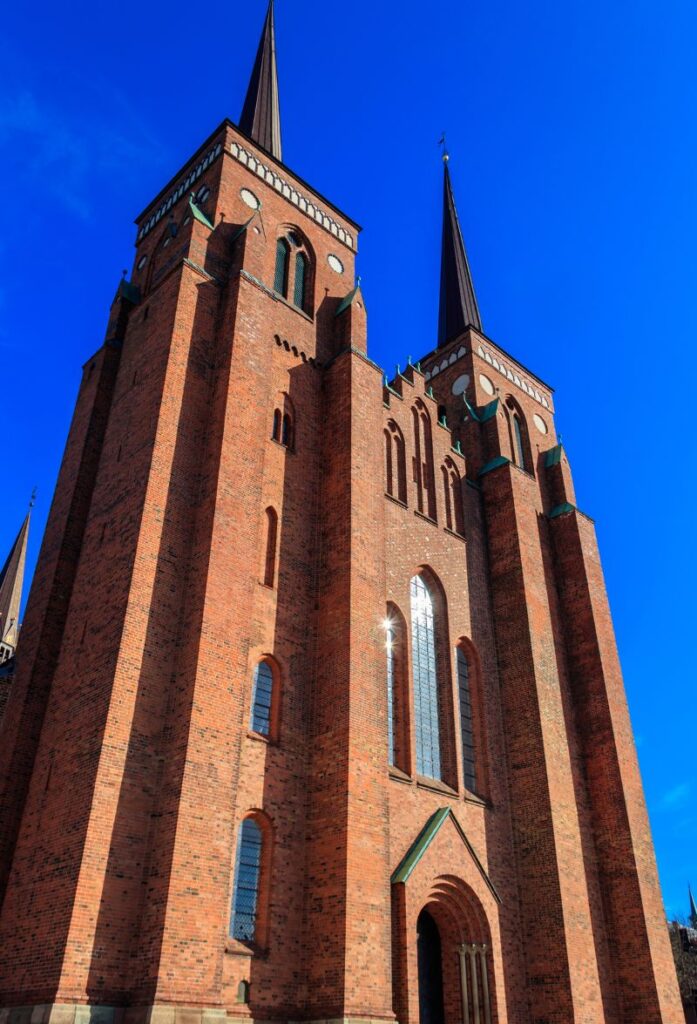
Roskilde Cathedral
You can read my detailed guide for Roskilde Cathedral by clicking the link below.
Medieval Consolidation: Cathedrals, Castles, and the Rise of Copenhagen
As Denmark’s monarchs solidified in medieval times, they left their mark on cities and fortresses across the realm. In the 12th century, King Valdemar I and his ally, Bishop Absalon, strengthened royal power and expanded Danish territory along the Baltic coast. Absalon, who was Valdemar’s trusted advisor, established a new stronghold on the east coast of Zealand that would become Denmark’s capital. In 1167, Absalon built a castle on a small island by the harbour – the birth of Copenhagen.
Though the first fortification was later demolished, its foundations survive. Today, under Christiansborg Palace in central Copenhagen, you can visit the ruins of Absalon’s castle – thick stone walls from the 12th century, discovered by archaeologists and now open to the public. By the 15th century, a larger Copenhagen Castle on the same site had become the principal residence of Denmark’s kings and seat of government. This makes Slotsholmen island in Copenhagen a unique spot where you can literally walk on layers of royal history: from medieval castle ruins to the 20th-century Christiansborg Palace above. It’s a tangible reminder that Copenhagen’s origins are deeply tied to the Danish crown.
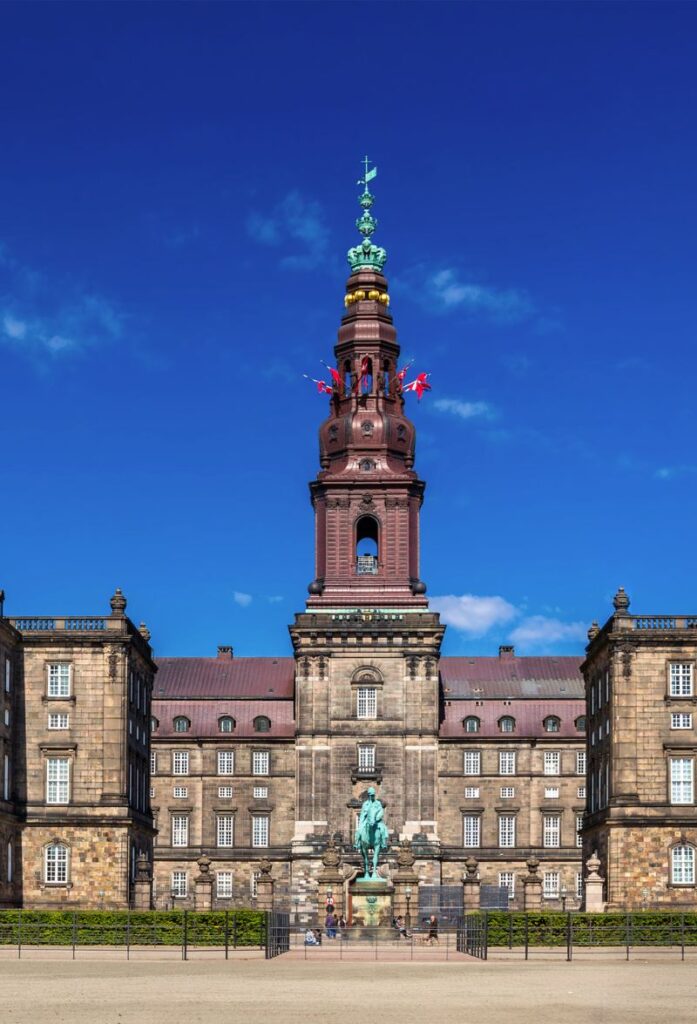
Christiansborg Palace
Today Christiansborg Palace is one of the most popular places to visit in Copenhagen, thanks to its various museums. You can read my guide to Christiansborg Palace below.
Denmark’s medieval kings also built and fortified castles to secure their realm. A prime example is Koldinghus in Jutland, founded in 1268 by King Erik Glipping (Eric V) as a frontier fortress. Koldinghus guarded Denmark’s southern border against the Duchy of Schleswig and, over the centuries, served as a royal residence and meeting place for state affairs. Several medieval kings expanded the castle – King Christian III turned it into a comfortable Renaissance residence in the 1500s, and King Christian IV later added an enormous tower adorned with statues of mythical giants. Though a devastating fire in 1808 left Koldinghus in ruins for many years, it has since been restored and now functions as a museum. Visitors can wander through its preserved ruins and rebuilt halls, seeing everything from old banquet rooms to Denmark’s most extensive silver collection. Koldinghus Castle – the last royal castle in Jutland – offers a vivid story of rise, fall, and resurrection.
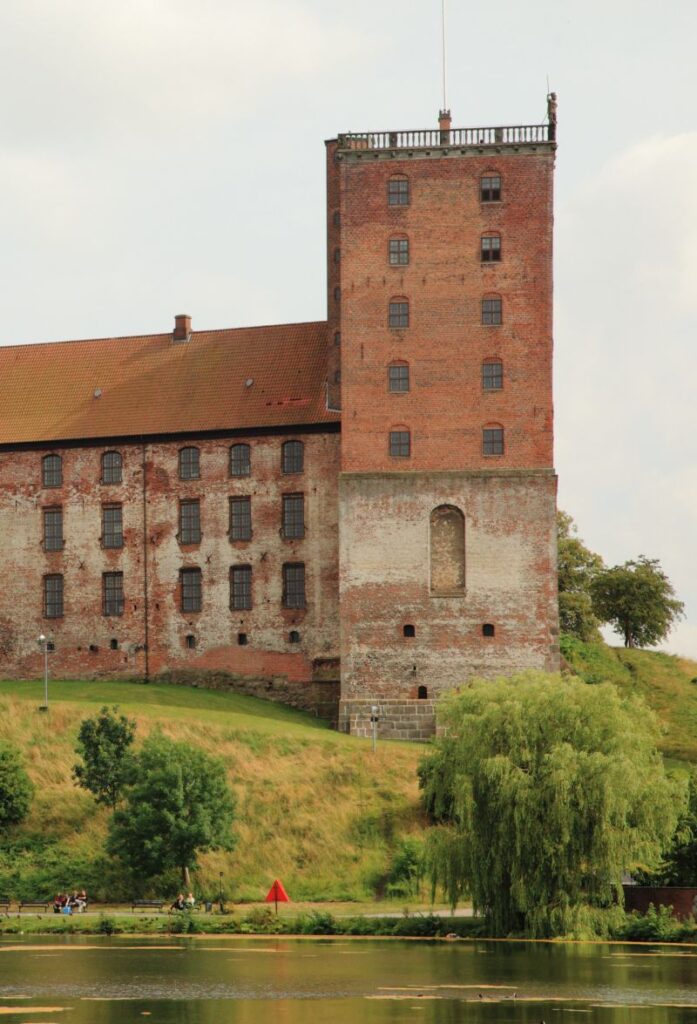
Koldinghus Castle
You can read my guide for Koldinghus Castle below.
Another site echoing medieval royal power is Nyborg Castle on Funen, close to Odense, where Denmark’s first parliament (the Danegård) met in the 1200s. And on the island of Bornholm, the ruins of Hammershus fortress stand as a reminder of battles between kings and archbishops. Each of these old stones has its tale. But by the late Middle Ages, Roskilde and Copenhagen were the two main royal hubs. In 1443, Copenhagen officially replaced Roskilde as the kingdom’s capital, reflecting the crown’s growing emphasis on trade and coastal defence. Under the House of Oldenburg (which took the throne in 1448), Denmark entered the Renaissance era poised to become a Northern European power, complete with splendid castles and a famously flamboyant King.
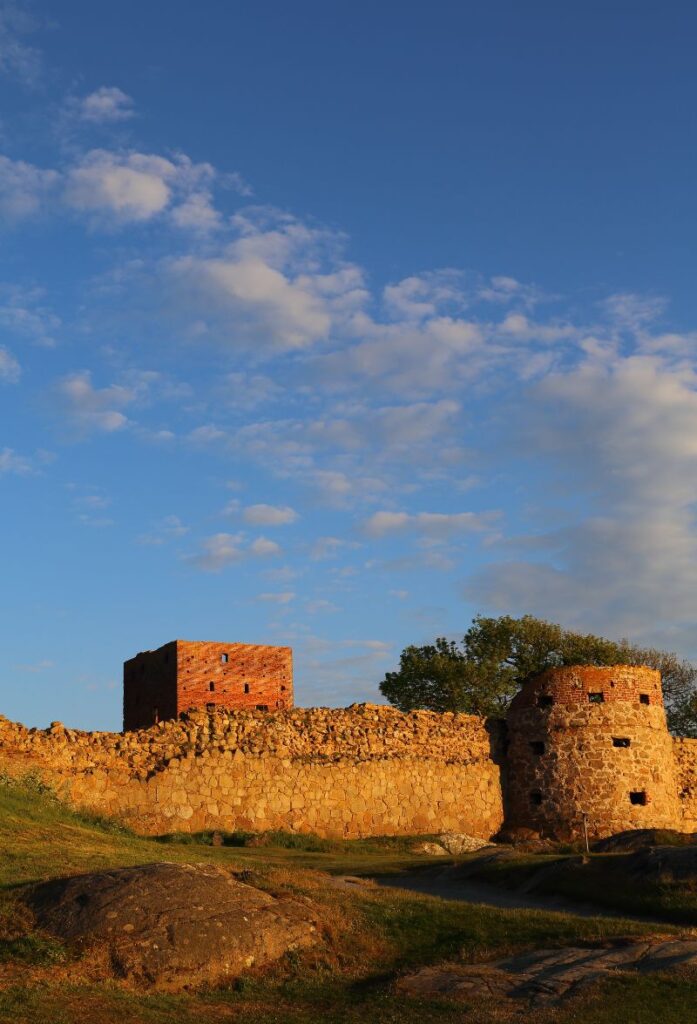
Bornholm Travel Guide
Bornholm is a must-see on a trip to Denmark, and you can read my guide for this island below.
Renaissance Glory Under King Christian IV: Castles, Towers, and the Age of Hamlet
The late 1500s and early 1600s were a high point in Danish royal history, epitomised by King Christian IV. Christian IV (1588-1648) is one of Denmark’s most beloved and colourful monarchs, remembered primarily as a ‘builder king who transformed the skyline of his cities. He commissioned dozens of ambitious projects that visitors can still admire today. In Copenhagen alone, Christian IV’s legacy includes the Round Tower (a 36-metre-tall brick observatory with a spiral ramp, completed in 1642), the distinctive Stock Exchange (completed in 1640), the fortress-like Rosenborg Castle, and the canal district of Christianshavn. Strolling through Copenhagen’s historic centre, you are never far from Christian IV’s initials “C4” inscribed on a building – a testament to how he literally built himself into Denmark’s heritage.
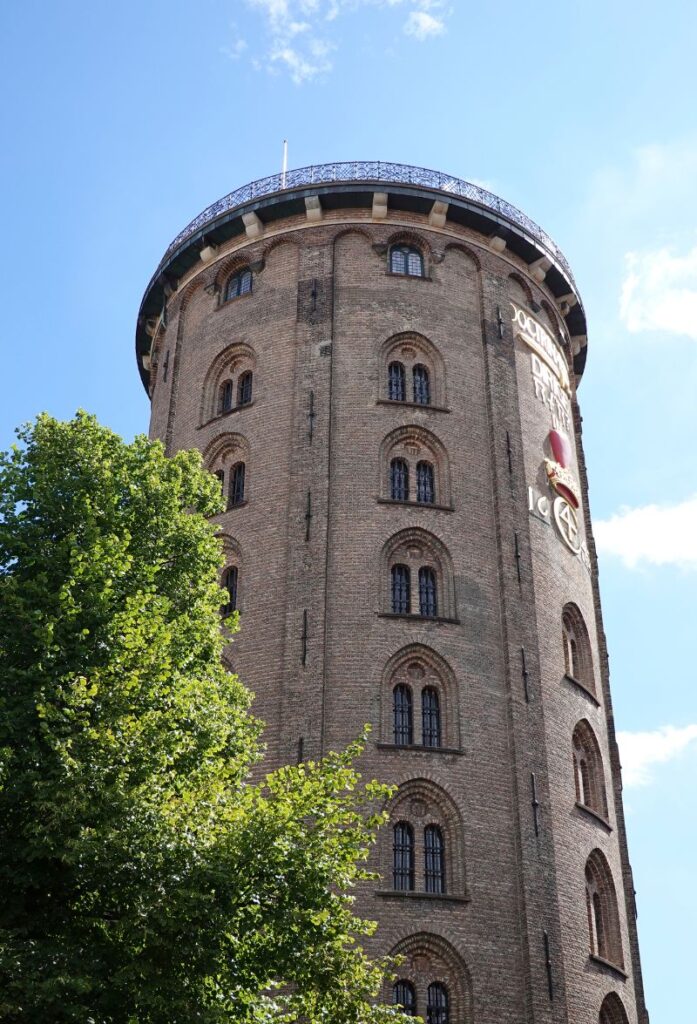
The Round Tower
The Round Tower is located in the heart of Copenhagen, and is a nice climb up for a panoramic view over the city. You can find my guide for the Round Tower below.
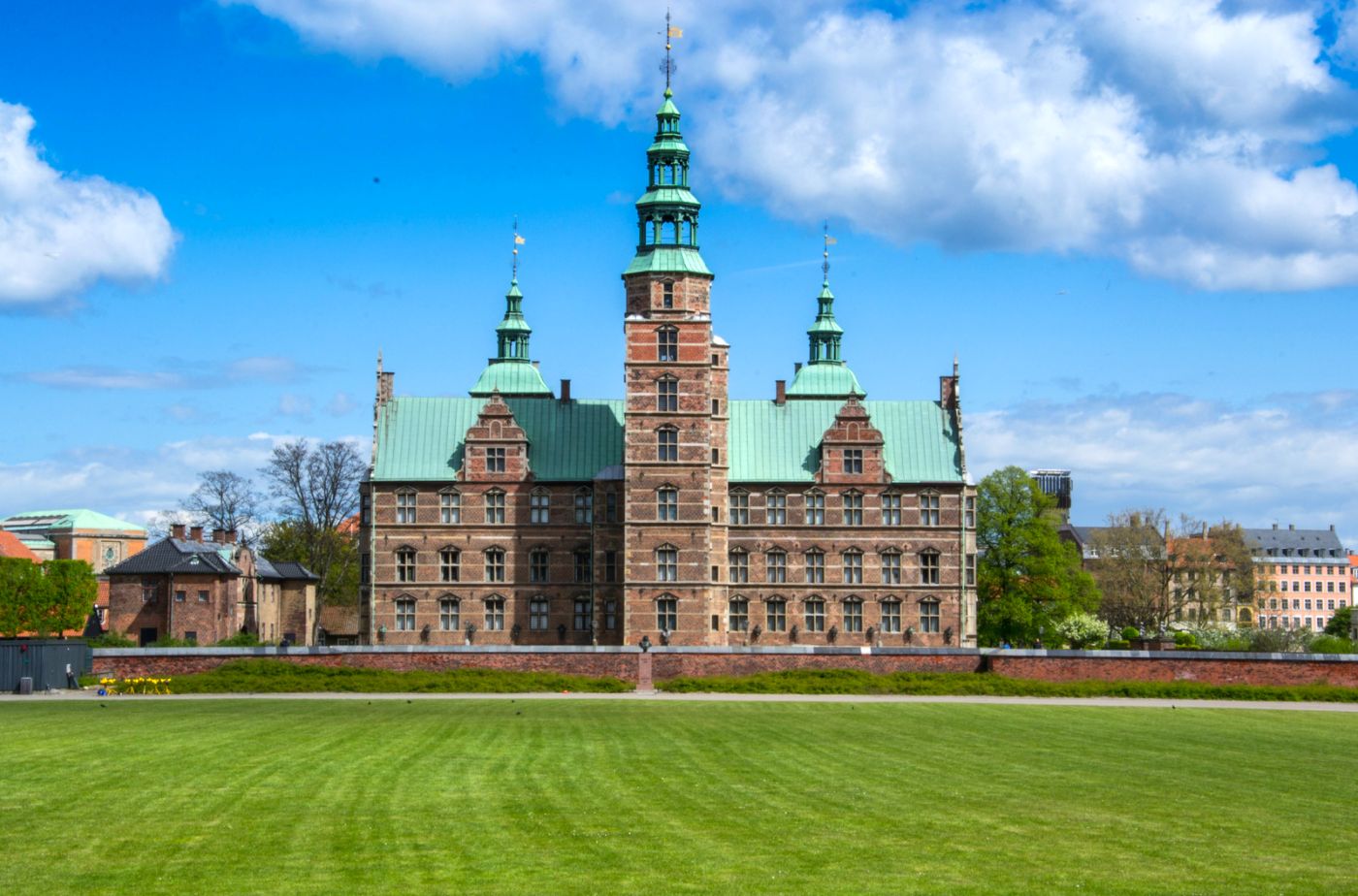
One of Christian IV’s gems is Rosenborg Castle, a fairytale-like castle set in the King’s Garden in central Copenhagen. Built as Christian’s summer palace in the Dutch Renaissance style, Rosenborg exudes royal charm with its copper rooftops and moat. Christian IV actually died here in 1648, at his own request. Today, Rosenborg Castle is a museum where you can see the Danish Crown Jewels and royal regalia up close – including Christian IV’s own crown and bloodstained battle clothes (!) preserved from a naval fight. It’s a fascinating stop to imagine life in the royal court in the 17th century.
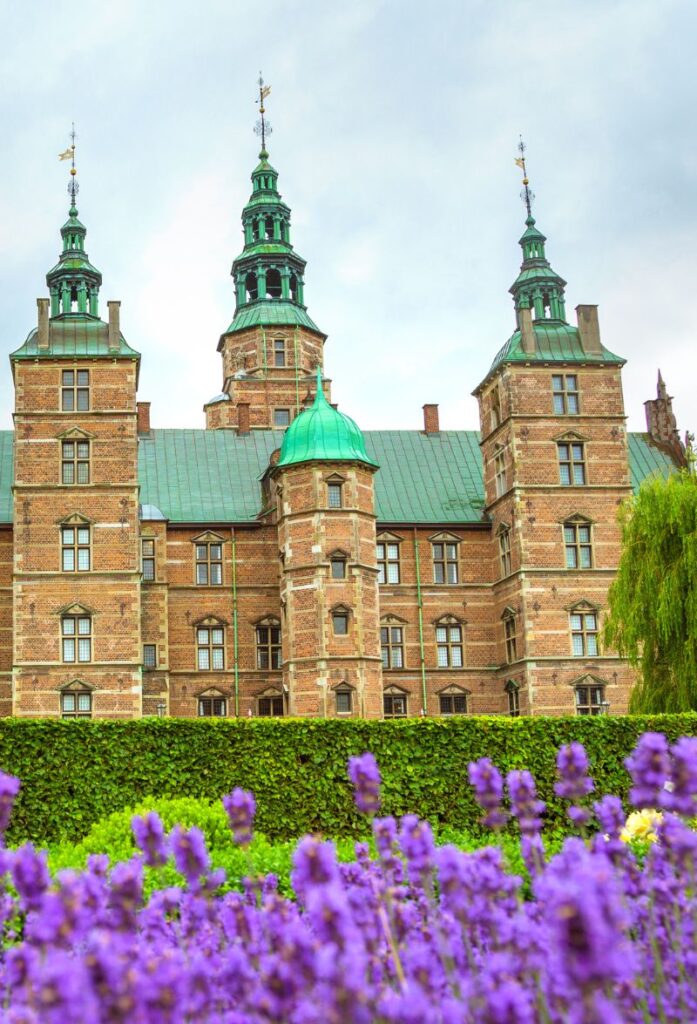
Rosenborg Castle
Rosenborg Castle is Christian IV on steroids – everything the King is famous for, but amplified. You can read my guide for Rosenborg Castle below.
Beyond Copenhagen, Christian IV also built the opulent Frederiksborg Castle in Hillerød, North Zealand. Frederiksborg was constructed in the early 1600s as the largest Renaissance castle in Scandinavia. Built across three small islets on a lake and reached by a grand bridge, the castle is a marvel of Dutch Renaissance architecture, featuring ornate gables, a Neptune fountain, and the Knight’s Chapel. Christian IV used Frederiksborg for lavish parties and as a symbol of his dynasty’s glory. Although a fire gutted much of the interior in 1859, it was rebuilt and now houses the Museum of National History, filled with portraits and treasures from 500 years of Danish history. In fact, the castle’s chapel survived the fire intact and is still used for royal anointing ceremonies (Danish monarchs were traditionally anointed here up to the 19th century). Wandering Frederiksborg’s furnished rooms and Baroque gardens offers a royal time warp – you can easily imagine King Christian IV presiding over a banquet in the great hall or strolling the grounds.
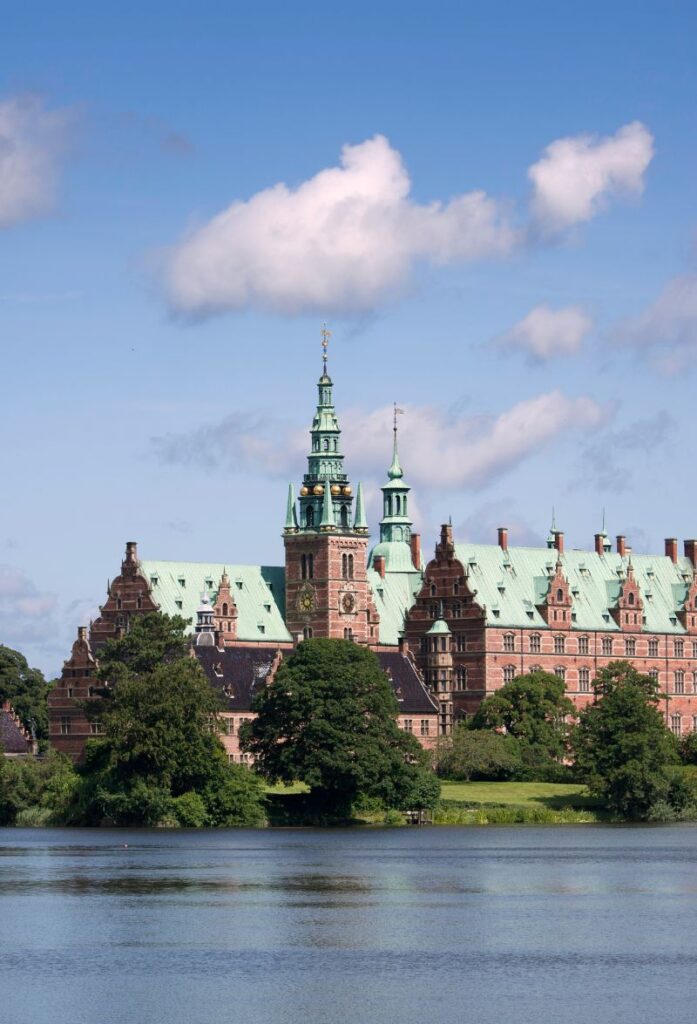
Frederiksborg Castle
You can find my guide for Frederiksborg Castle below.
No mention of the Danish Renaissance is complete without Kronborg Castle, the famed “Hamlet’s Castle” at Helsingør (Elsinore). Kronborg guards the narrow Øresund Strait between Denmark and Sweden. Originally a fortified stronghold called Krogen built by King Eric of Pomerania around 1420, it was transformed by Christian IV’s father, Frederik II, into a magnificent Renaissance castle from 1574 to 1585. Kronborg’s formidable bastions and cannon batteries allowed the Danish crown to control shipping into the Baltic Sea and collect lucrative tolls from passing vessels – a massive source of royal wealth. The castle’s strategic importance made it a symbol of Denmark’s power in the 16th and 17th centuries. It also made Kronborg a setting of literary legend: William Shakespeare immortalised it as “Elsinore” in Hamlet, and to this day Kronborg embraces that fame with Hamlet performances in its courtyard every summer.
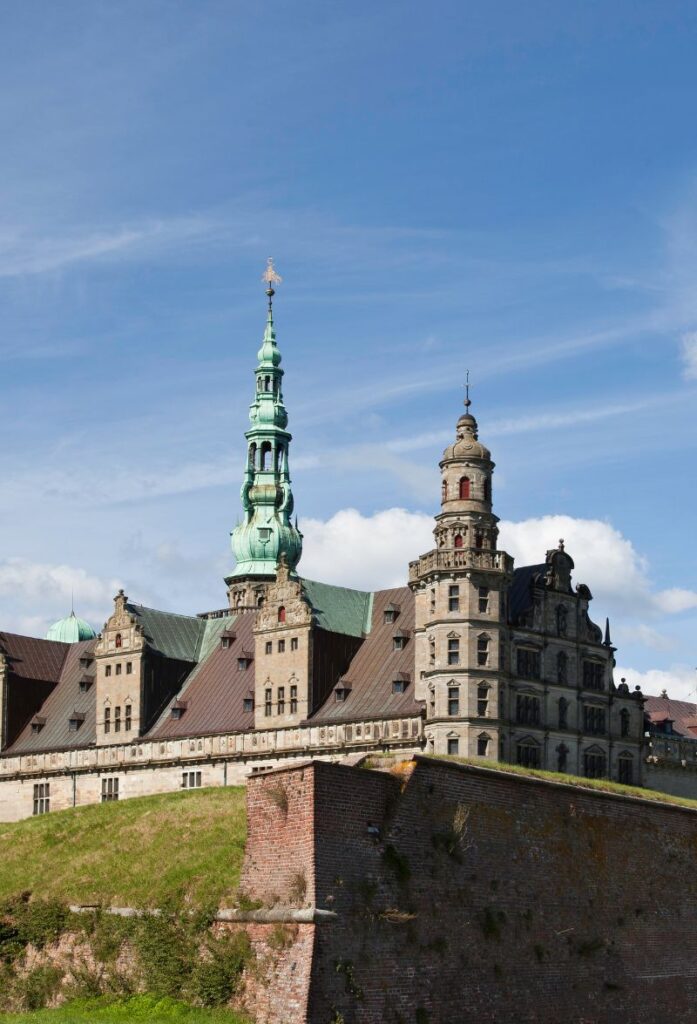
Kronborg Castle
You can find my guide for Kronborg Castle below.
Visiting Kronborg Castle is like stepping onto the stage of history. You can walk through its royal apartments adorned with tapestries, stand in the massive ballroom (once one of Europe’s largest!), and descend into the spooky casemates where the legendary figure Holger Danske is said to sleep until Denmark needs him. Remarkably, after a devastating fire in 1629, King Christian IV rebuilt Kronborg to its former design, so the castle today looks much as it did in Shakespeare’s time. From Kronborg’s ramparts, you can gaze across the water to Sweden – only 4km away – and appreciate why this castle was vital. For 400 years (approx 1429 – 1857), every ship entering or leaving the Baltic had to pay dues at Kronborg, financing the Danish Crown’s golden age. No wonder UNESCO recognises Kronborg as a cultural treasure of “outstanding significance” in Northern Europe.
Palaces of Absolute Monarchy: Baroque Splendour and Royal Traditions
Denmark became an absolute monarchy in 1660 under King Frederik III, shifting the royal family’s role and residences in the following centuries. The era of absolute kings (approx 1660 to 1848 saw the construction of elegant palaces and the flourishing of court culture. One key site from this period is Christiansborg Palace in Copenhagen – not just one palace, but actually the third incarnation of a palace on that site.
After the medieval Copenhagen Castle was deemed outdated and demolished, King Christian VI built the first Christiansborg Palace in grand Baroque style in the 1730s. It was intended as a monumental residence befitting an absolute monarch. Unfortunately, the original Christiansborg burned down in 1794. A second palace erected in its place burned in 1884, so today’s Christiansborg Palace is from 1928. It houses the Danish parliament, the Supreme Court, and the Prime Minister’s offices, yet the Royal Family still uses parts of it for official functions. It’s possible to visit the Royal Reception Rooms inside (still used for banquets and ceremonies), the Royal Stables with historic houses and carriages, and even the ruins of earlier castles underneath (as mentioned before).
This layered complex truly symbolises the evolution from royal absolutism to today’s constitutional monarchy, all on a single site. When you stand in the Throne Room at Christiansborg, you’re in the very spot Danish kings once received homage – and yet downstairs lie the stones of Absalon’s 12th-century fortress. Few places capture Denmark’s royal continuity as Christiansborg does.
Christiansborg Palace
Today Christiansborg Palace is one of the most popular places to visit in Copenhagen, thanks to its various museums. You can read my guide to Christiansborg Palace below.
After the fire at Christiansborg in 1794, the royal family had to find a new home in Copenhagen. They moved just a few blocks away to Amalienborg Palace, which remains the primary royal residence to this day. Amalienborg isn’t a single palace but a harmonious set of four Rococo mansions arranged around an octagonal courtyard. Built in the 1750s for aristocrats, these mansions were purchased by the crown when Christiansborg went up in flames, and by 1794, King Christian VII and his family had moved in. The elegant square is open to the public (you might recognise the equestrian statue of King Frederik V at its centre), and it’s famous for the Royal Life Guards who stand watch in their bearskin hats. Every day at noon, crowds gather to watch the Changing of the Guard here – a delightful ceremonial display as the guards march from their barracks at Rosenborg, accompanied by music, to relieve the post in front of Amalienborg.
If the royal standard is flying above one of the palaces, it means the monarch is in residence. Don’t miss the small Amalienborg Museum (located in Christian VIII’s Palace), which offers an intimate peek into 150 years of royal domestic life and displays treasures of the Glücksburg family. In its rooms, preserved as they were for kings like Christian IX and Queen Louise, you’ll learn how Denmark’s 19th-century royals became related to most of Europe’s monarchies – Christian IX was nicknamed “the father-in-law of Europe” because his children sat on the thrones of Britain, Greece, Russia, and beyond. Amalienborg may be a living palace, but it doubles as a museum of a royal family that helped shape Europe’s royal networks.
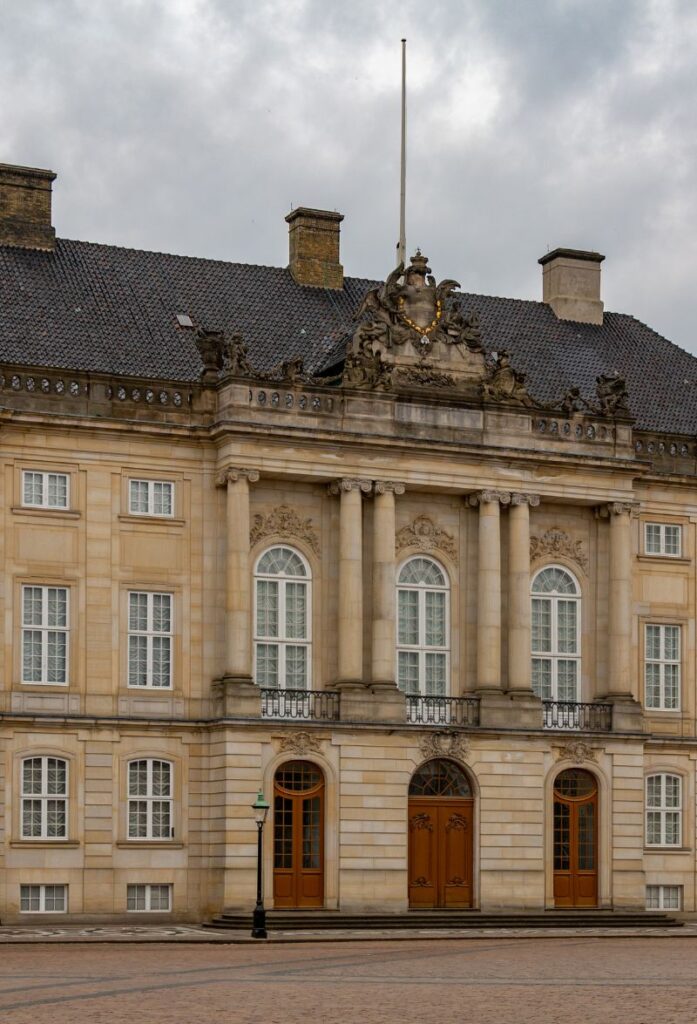
Amalienborg Palace
You can find my guide for Amalienborg Palace below.
Not far from Amalienborg stands Frederik’s Church, also known as the Marble Church, with its great dome – part of the same Frederiksstaden district built to celebrate the 300th anniversary of the royal House of Oldenburg in the 18th century. Another short walk away is Nyhavn canal, which was dug on the orders of King Christian V. In Copenhagen, even the charming canals and city layout have royal backstories! A little north of the city, you find Fredensborg Palace, an idyllic Baroque palace built by King Frederik IV in the 1720s and named the “Palace of Peace” after the Great Northern War. To this day, Fredensborg is a favoured spring and autumn residence for the royals and the site of important state visits. While the palace itself isn’t regularly open to the public, its lovely palace gardens can often be visited in summer.
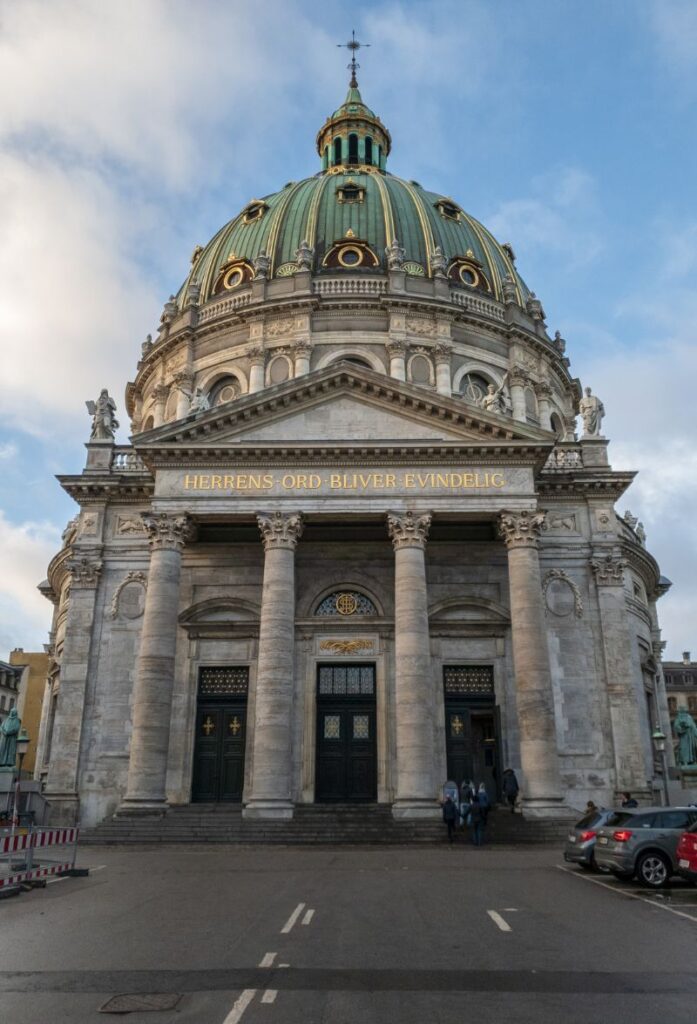
Marble Church
You can find my guide for the Marble Church below.
On the island of Funen, the Egeskov Castle (though not a royal castle but a noble estate) showcases Renaissance splendour and ties into the broader noble culture of Denmark’s past. And in Jutland’s Aarhus, Marselisborg Palace (built 1902) serves as the royal family’s summer home, where the changing of the guard also occurs when the monarch is in residence. These sites round out a nationwide map of royal residences that tourists can explore, each with its own story and style. From moated fortresses to Rococo mansions, Denmark’s royal family has dwelled in remarkably diverse surroundings, many of which are well-preserved and visitor-friendly.
From Absolute to Constitutional: Modern Monarchy and Living Traditions
The 19th century brought enormous changes for the Danish royal family. In 1849, following peaceful reform movements, King Frederik VII agreed to a new constitution that ended absolute monarchy and established a democratic constitutional monarchy. The king relinquished direct power and became a ceremonial head of state, as Denmark transitioned to parliamentary governance. Unlike some nations, Denmark’s shift was smooth and even left room for royal influence in culture and philanthropy. The monarchy’s motto became “The King’s Law is the Love of the People”, emphasising a close relationship with the populace. Kings continued to alternate between the names Frederik and Christian for generations (a tradition dating back to the early 16th century), and the royal lineage passed in 1863 to the House of Glücksburg – a branch of the Oldenburgs that still sits on the throne today.
One Glücksburg king, Christian IX (r. 1863–1906), earned fame as the aforementioned “in-law of Europe.” The family ties he arranged mean that the Danish royals are cousins with many other European royals – for instance, Britain’s King Charles III and Denmark’s Queen Margrethe II share descent from Christian IX. Inside the Amalienborg Museum, you can see how Christian IX and Queen Louise’s four children went on to become King of Denmark, King of Greece, Queen of Great Britain (through their daughter Alexandra, consort of Edward VII), and Empress of Russia (through their daughter Dagmar, or Maria Feodorovna). This makes for a fascinating family tree on display, underlining Denmark’s nickname as the “oldest monarchy in Europe” with over 1000 years of continuity.
The Royal Family Today
The current Danish royal family remains hugely popular and continues many traditions that travellers can witness. For example, Rosenborg Castle’s Treasury, where the crowns and jewels are shown to the public, or the Royal Guard ceremonies in Copenhagen, or the annual public appearances of the royals on balconies during birthdays and jubilees. In 1972, Denmark celebrated the accession of Queen Margrethe II, the first female sovereign since Margrethe I over 600 years prior. Known for her artistic flair (she’s an accomplished painter and costume designer) and warm personality, Margrethe II modernised the monarchy’s image while respecting its traditions. Recently, a historic milestone occurred: in January 2024, Queen Margrethe II abdicated after 52 years on the throne – the first Danish monarch to voluntarily abdicate in nearly 900 years.
Her eldest son was immediately proclaimed King Frederik X, ushering in a new reign. The abdication ceremony took place at Christiansborg Palace, with tens of thousands gathering in Copenhagen to cheer the new king and honour Margrethe’s service (Denmark doesn’t have a coronation ritual; instead, the transition is marked by a simple signing and proclamation, as per the constitution’s tradition since 1849). This event underlines that the Danish monarchy, while ancient, continues to evolve in the 21st century.
Modern Royal Attractions
For tourists, what does this modern monarchy mean? It means that the pageantry and history are very much alive. You might catch a glimpse of the royal family during special events, such as the annual Queen’s Birthday celebration on April 16, when the royal family appears on the balconies of Amalienborg to wave to crowds in a sea of Danish flags. Or you might explore the Royal Danish Yacht Dannebrog docked in Copenhagen, which still carries the royals on summer tours of the kingdom. And of course, every day at noon, the Royal Life Guard marching through Copenhagen remains a beloved sight, linking everyday city life with a tradition that goes back centuries
Experience Royal History Across Denmark
Denmark’s royal family is woven into the very fabric of the nation, from its earliest Viking kings to the present day. What makes exploring Denmark’s royal history so rewarding is how tangible it is – you can stand where kings stood, see what they built, and even witness some of their rituals continued today. The whole country is dotted with destinations that bring the chronicles to life. In Jutland, you walk among Viking rune stones at Jelling and the fortified halls of Koldinghus. On Funen, you might visit Nyborg’s ramparts or wander the manicured gardens of Valdemars Castle (a minor royal manor). On Zealand, you can pack several centuries into one trip: marvel at Roskilde Cathedral’s royal tombs, tour the palatial rooms of Frederiksborg, feel the sea breeze at Kronborg’s battlements, and end your day in Copenhagen watching the sun set over Rosenborg Castle’s towers. Each site is not just a static monument but a storybook: Kronborg conjures Shakespearean drama and Renaissance grandeur, Rosenborg displays the crown jewels that symbolise a nation’s sovereignty, and Amalienborg embodies the living, breathing monarchy as a modern institution.
Perhaps most importantly, Denmark’s royal history isn’t kept behind glass – it’s part of the everyday scenery. Danes and visitors alike relax in the King’s Garden outside Rosenborg, or bike along the ramparts of Kastellet (a star fortress built by King Frederik III), often without realising they’re on royal historic ground. Yet the information plaques and guided tours are there to enrich the curious traveller’s understanding. Even the Danish Royal Guard – while a tourist favourite for its uniforms – serves as a reminder that this monarchy has remained unbroken since the days of Gorm and Harald. It’s pretty awe-inspiring when you consider it: the Danish monarchy is one of the world’s oldest, over 1000 years old and still going strong.
So, whether you’re a history buff, a castle enthusiast, or just someone who loves a good story, the trail of Denmark’s royal family will not disappoint. From Viking burial mounds to Renaissance castles, Baroque palaces, and modern royal residences, you can traverse the timeline of kings and queens through the sites they’ve left behind. It’s history made accessible – and often scenic – in this kingdom of Hamlet’s castles and storyteller kings. As you tour these places, you not only learn about Denmark’s past; you become part of an ongoing narrative that links the present-day Danish royal family to their legendary ancestors. And in doing so, you’ll gain a deeper appreciation for how the history of the Danish royal family has shaped the culture and landmarks of Denmark we visit today.
Be sure to read my detailed travel guide for Copenhagen, including practical information and things to do.