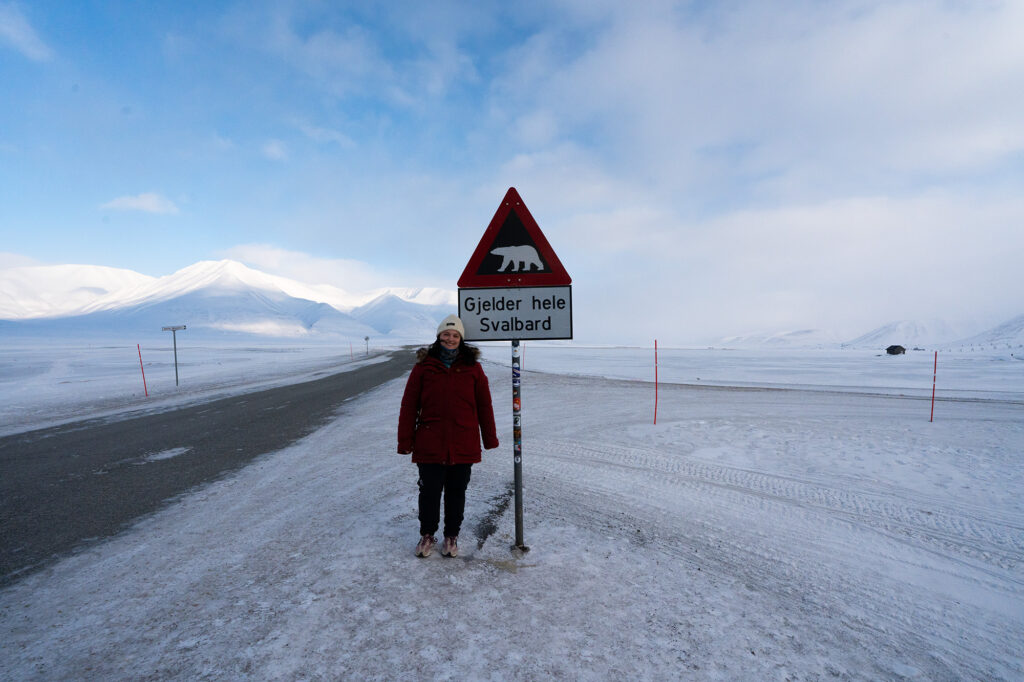
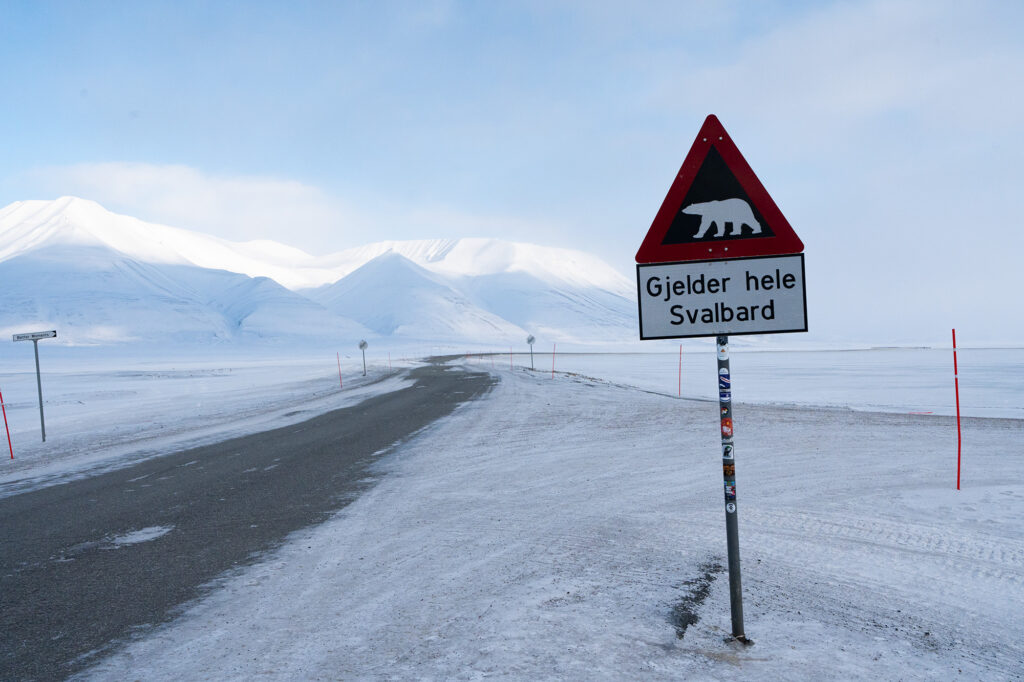
Svalbard is quickly becoming a popular tourist destination, and I completely understand why. It is a wild and rugged archipelago far removed from the rest of the world, and Norway did an excellent job of protecting its nature early on, so tours and development are limited. But how do you actually see polar bears in Svalbard?
Many people coming to Svalbard come with one thing on their mind: polar bears! It is hard to avoid them; every souvenir features a polar bear, and many expedition tour websites include photos of polar bears – there’s even one greeting you when you arrive at the airport (it’s stuffed, don’t worry!). I completely understand that’s what people are looking for – when I took guests to Svalbard in 2023, we were advised not to talk up polar bears too much, but you would always have the group asking about them. When I did my full-day snowmobile excursion in 2024, the guides were looking for polar bears so we could see them and weren’t in danger.
But let’s be honest, seeing polar bears is incredibly rare. There aren’t many of them, especially considering the size of the archipelago and frozen sea, and they tend to avoid people. Also, it is forbidden to seek polar bears as they are endangered. That’s why when you search “polar bear tour Svalbard”, nothing with that title comes up. But, no doubt, any excursion out into the wildness has these animals on their mind.
So, how can you boost your chances of seeing a polar bear in Svalbard? I’ve put together this guide based on my experience and online resources. If you plan a trip to Svalbard, this guide will help you get the best chance possible.
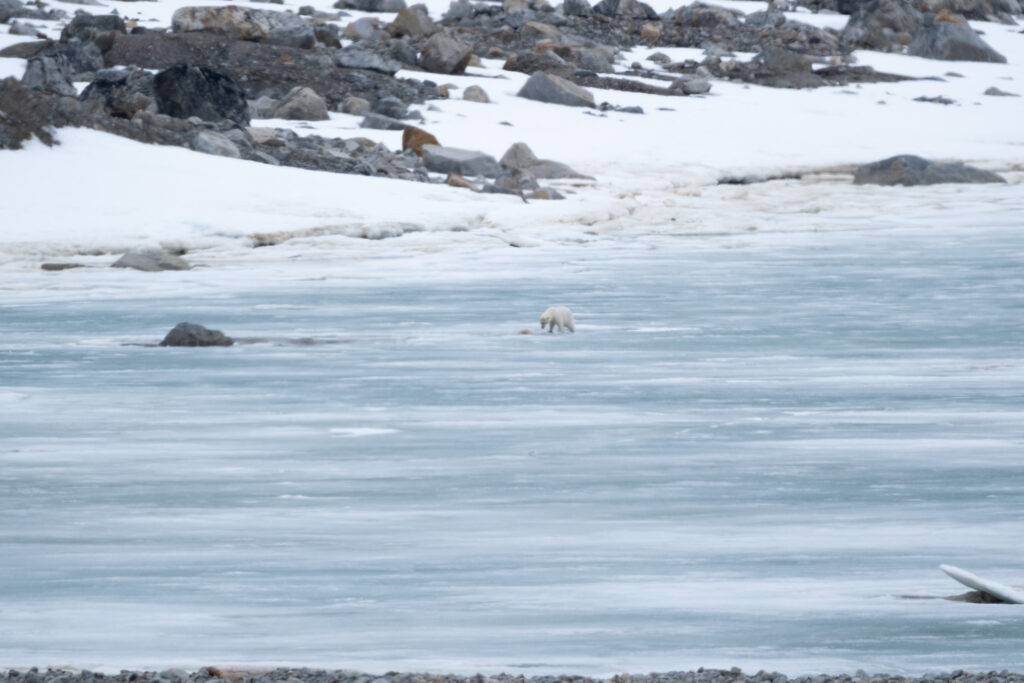
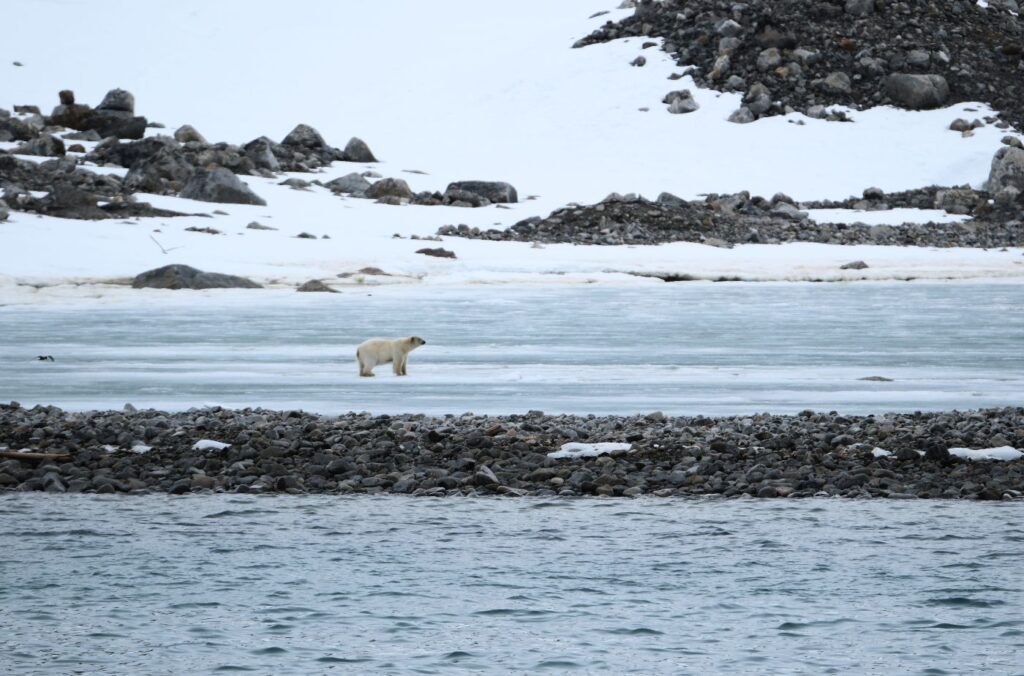
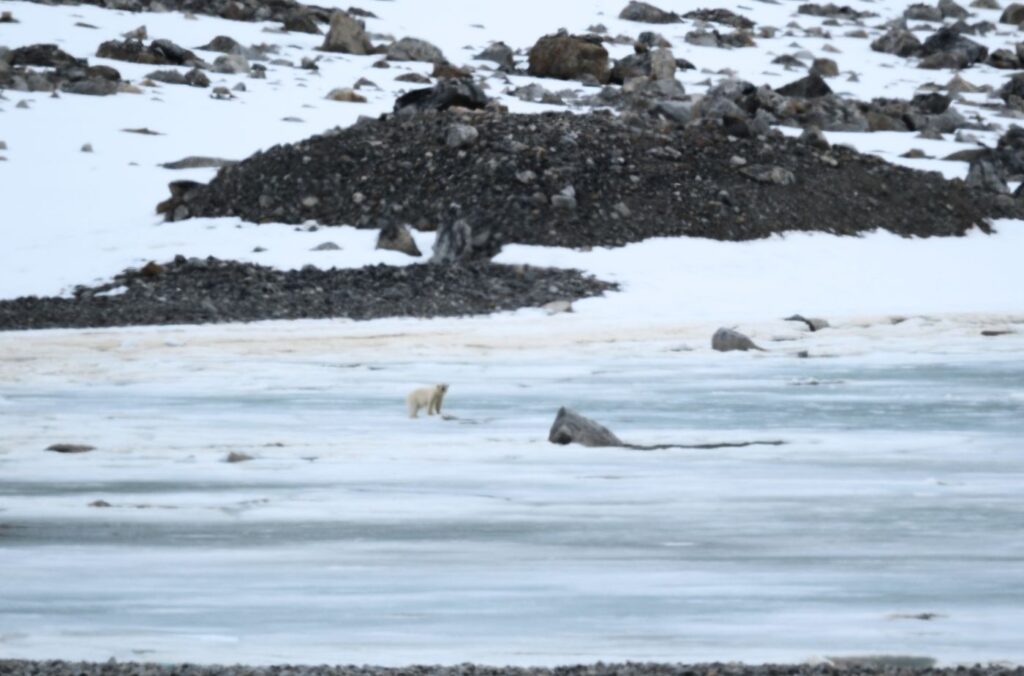
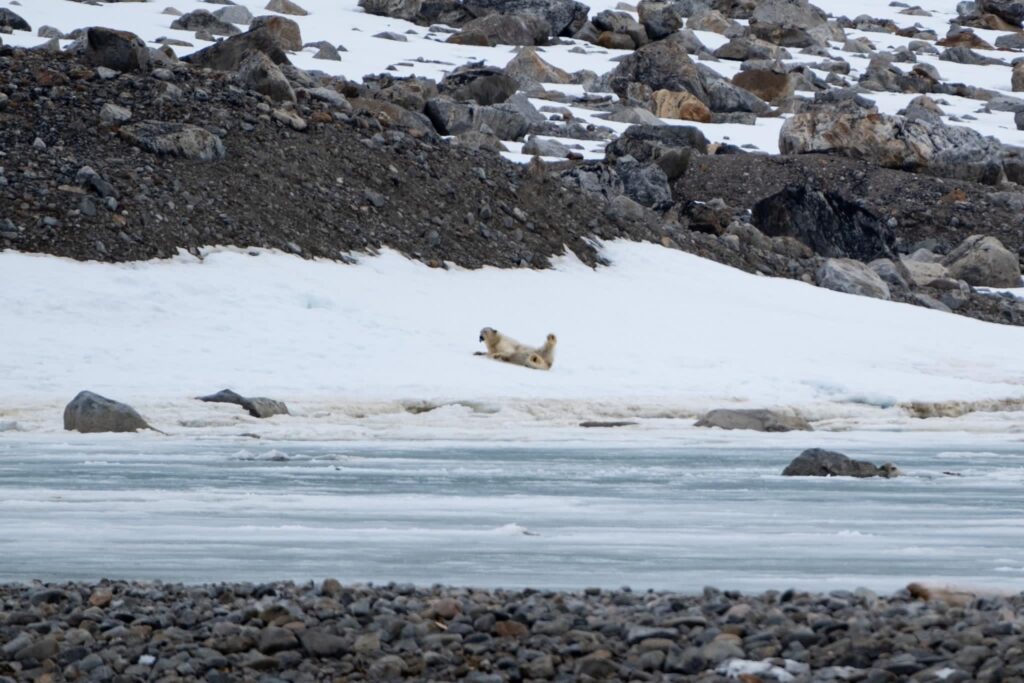
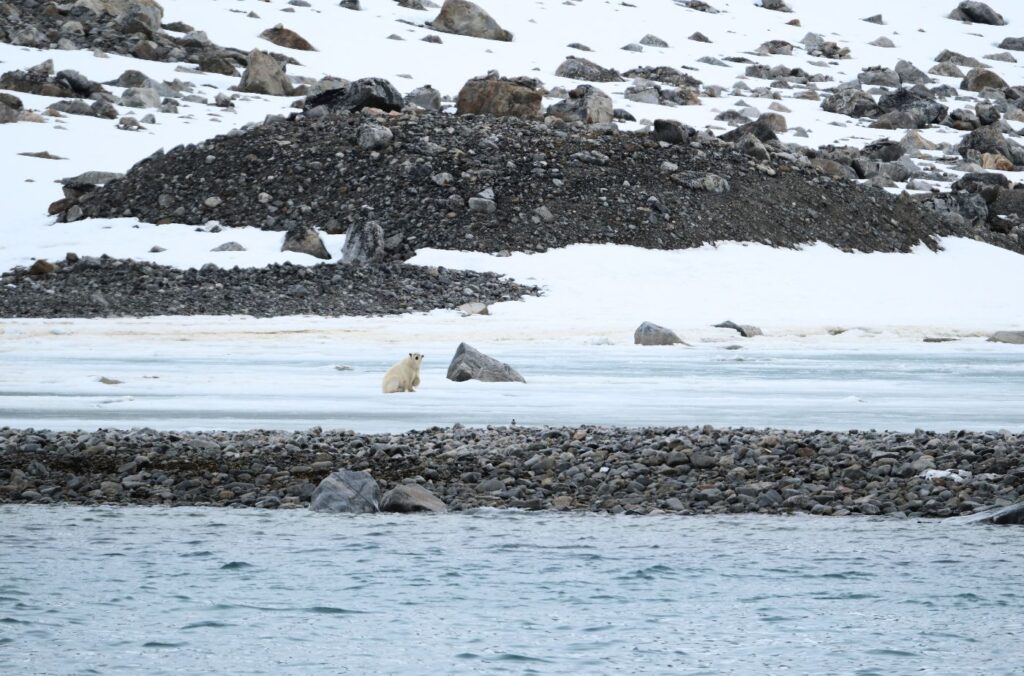
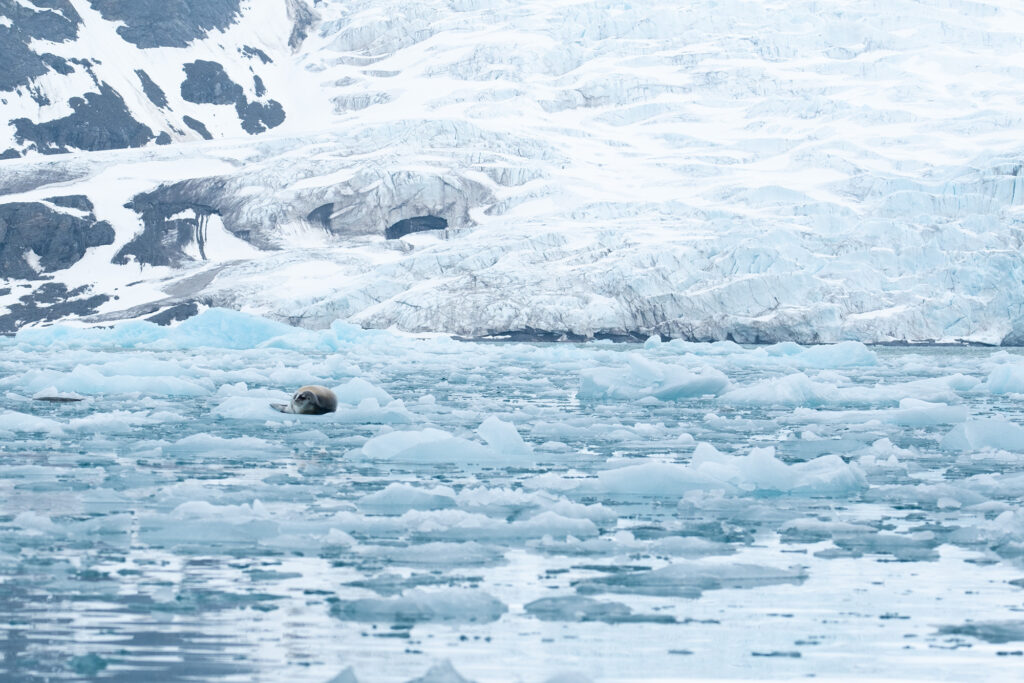
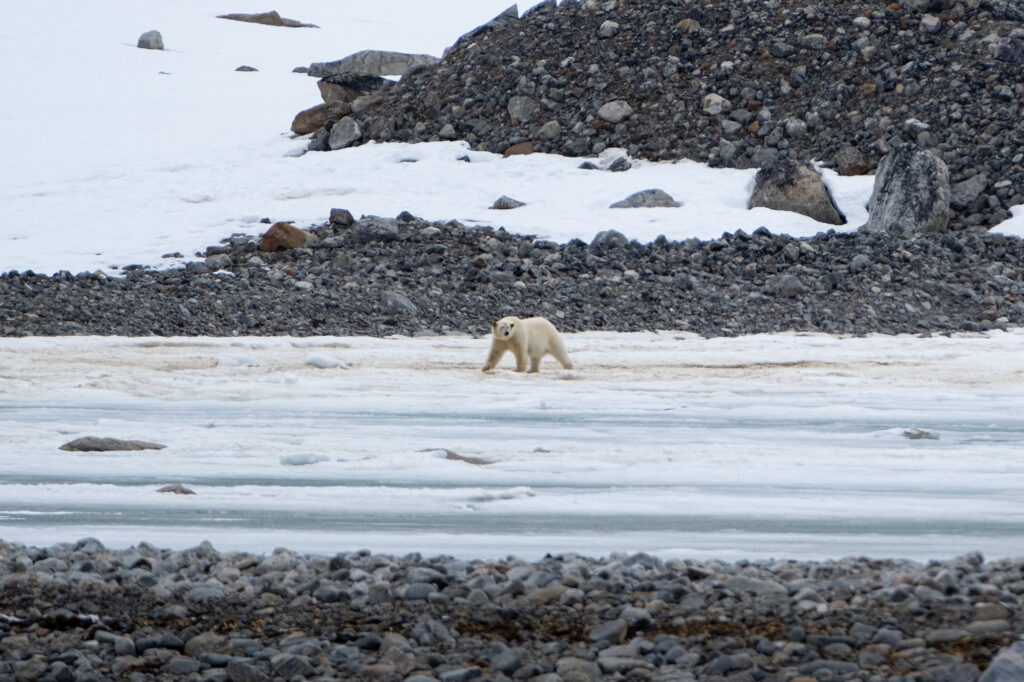
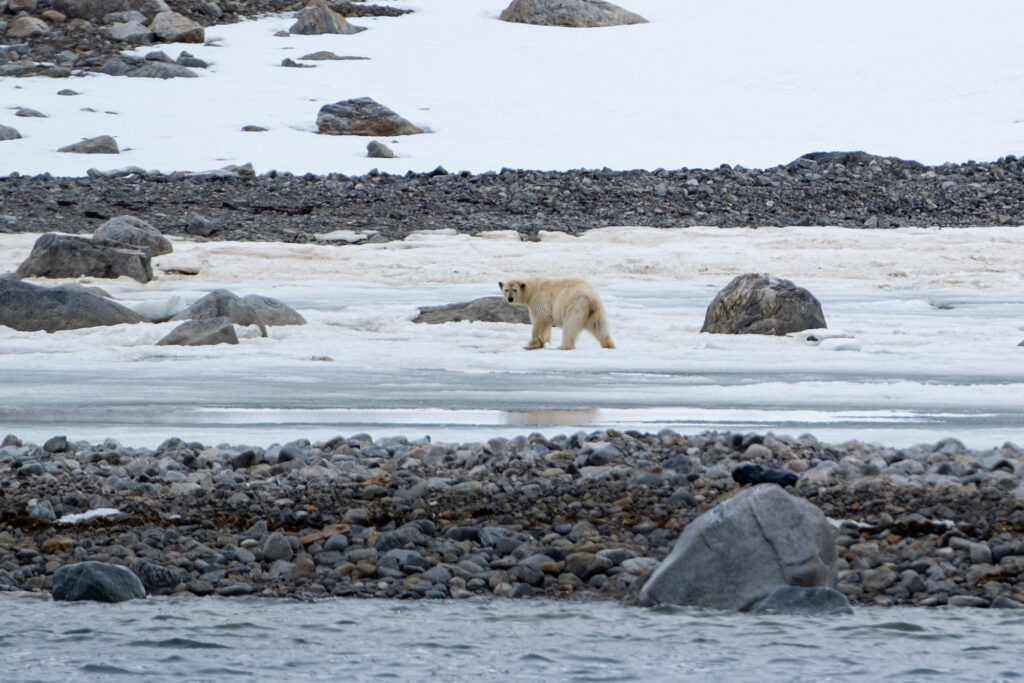
All these photos are filmed with a 300mm lens, showing just how far away we were.
Polar Bears in Svalbard – The Reality
Svalbard is famed as being one of the world’s best places to encounter wild polar bears, thanks to its high Arctic location and abundant sea ice. It is unknown how many polar bears are in Svalbard, but estimates say about 3,000 live in the Svalbard and Barents Sea region, with approximately 300 living on Svalbard year-round. Some migrate between Svalbard and Franz Josef Land. This means the number of polar bears fluctuates significantly throughout the year. Polar bears depend on sea ice for hunting seals, and Svalbard’s shifting ice floes serve as prime hunting grounds. However, in recent years, polar bears have been observed spending more time on land and finding alternative food sources, such as reindeer and eggs from bird cliffs.
Sightings of polar bears are never guaranteed – these are wild, wide-ranging animals, and there aren’t many. Local companies stress that polar bear safaris “do not exist” in Svalbard and that bears are unpredictable. Therefore, any encounter is a rare bonus.
Also, polar bears are dangerous! Getting close to them is unsafe, and any excursion that sees them immediately starts reacting. When I went with my group in 2023, we were not allowed to go on land if a polar bear had recently been spotted in the general area. Any time we went on land, we had a whole expedition team with rifles, scouting the area and standing guard, in case a polar bear was to appear. When we did see polar bears, we had to stay on our ship and view them from there, meaning you need a good zoom lens. Some people were disappointed by this, but it’s important to remember that it’s for our safety and to protect this endangered species.
There are no polar bear safaris on Svalbard, unlike in other places like Canada (Churchill has polar bear trips!) and Alaska.
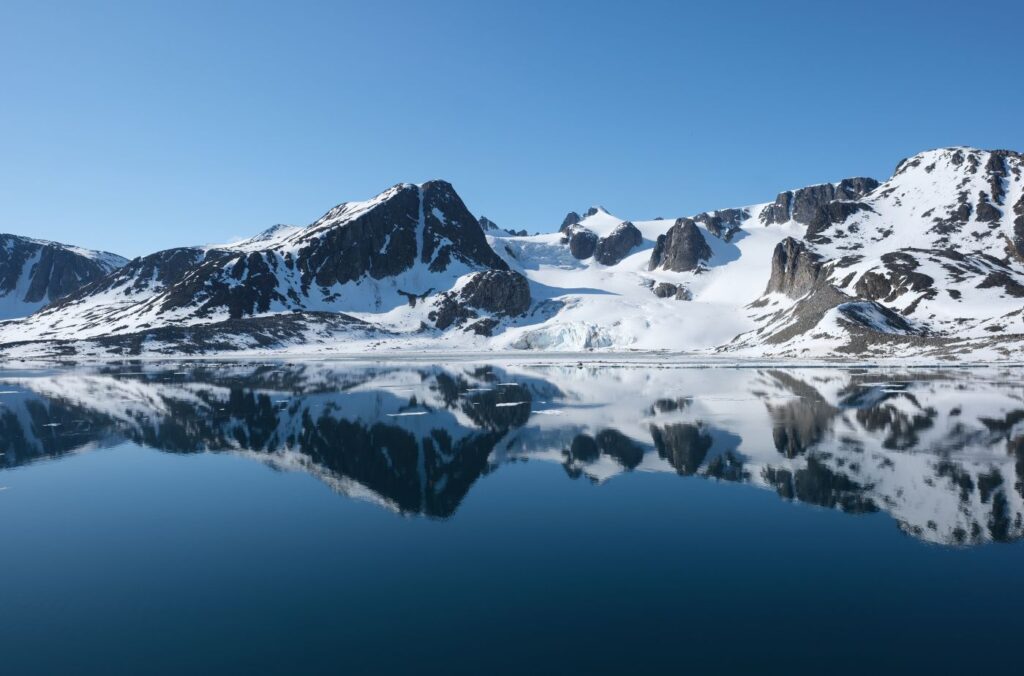
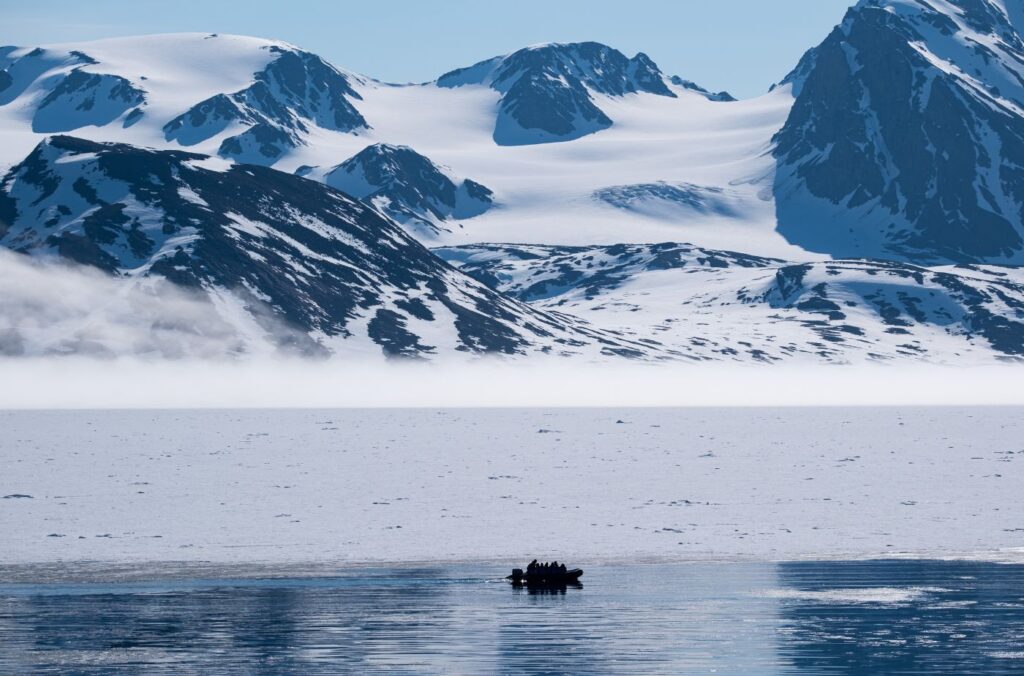
This is what the northern part of Svalbard looks like - just amazing! Location: Breibogen
Guests out on a zodiac in Alicehamna.
Polar bear rolling in the snow
When to Go
Spring (March-May)
Daylight returns to Svalbard during this time, and the archipelago thaws out. Polar bears emerge from their winter resting and return to the pack ice in May to hunt seals. The ice edge breaks up by late May, and boat cruises can reach remote coasts. This is also when bear cubs appear after denning in winter. Cruises at this time aren’t guaranteed; if the sea ice is still too thick, cruises cannot circumnavigate.
Summer (June-September)
This is the peak season for wildlife and cruising. With 24-hour daylight from April to August and warmer temperatures, boats and zodiacs can explore the far north and into fjords. By late June/early July, the pack ice has largely melted, concentrating marine life (seals, walruses) and attracting bears to ice edges. Many expeditions sail through July and August to search for wildlife along glaciers or swim between ice floes.
Guides say that polar bears will spend most of the summer in the north and the east, where the pack ice (and seals) hang out. When their food runs out, you’ll only start seeing them in the west and south, particularly towards human settlements. This is typically around August.
Autumn (September-October)
Early autumn brings first sunsets, crisp air, and bright tundra colours. Visitor numbers drop after mid-September, and many migratory birds and whales have left. Polar bear sightings become rarer (some bears return to forming sea ice), but walruses and reindeer are still active. Travel is possible, but cruise and tour schedules wind down by mid-October. If you go this season, check for the last available Arctic cruises or land-based excursions.
Winter (November-February)
Most visitors do not come for polar bears in the deep winter, mainly because it is entirely dark 24/7! Dogsledding and snowmobile trips, as well as northern lights tours, are more popular instead.
How to Boost Your Chances of Seeing Polar Bears
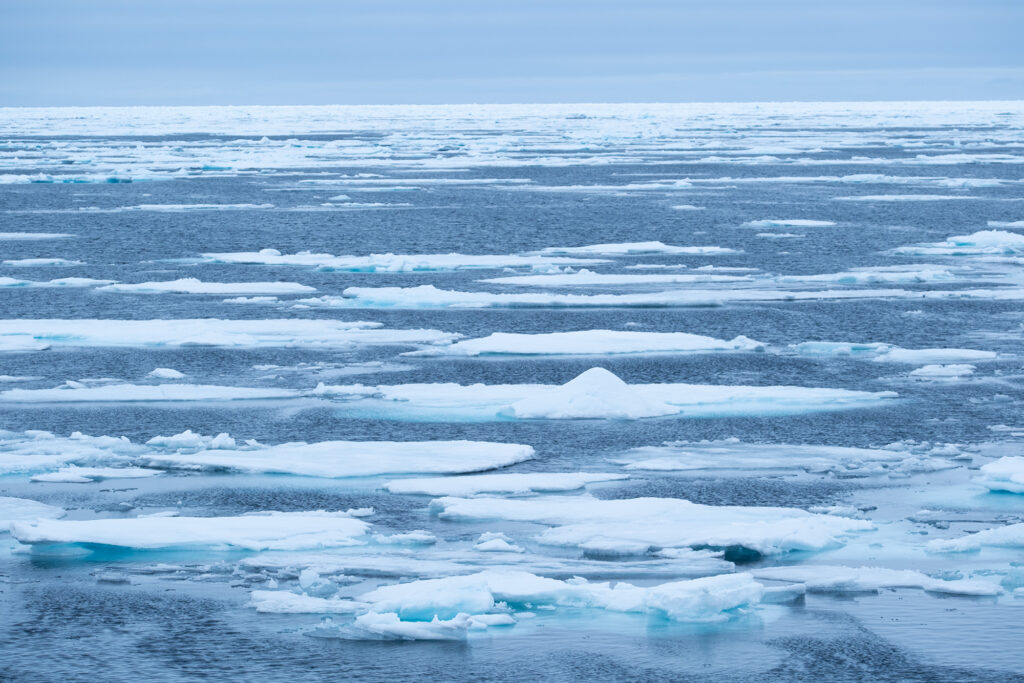
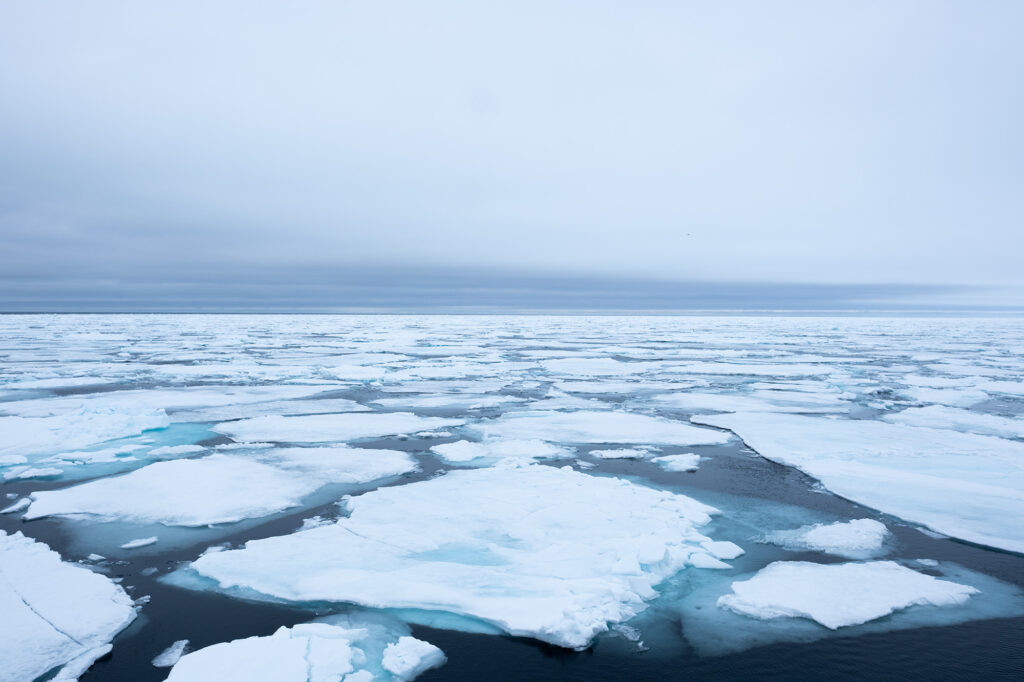
Sea ice - 80 degrees north!
Sea ice - 80 degrees north!
Be in the Right Place at the Right Time!
Polar bears can be seen anywhere on Svalbard, but most sightings occur away from human settlements. They are often sighted on land in the north and east of the archipelago, hunting on the sea ice that extends from the north of Svalbard to the North Pole. Throughout the summer, the sea ice usually moves away from the land, and by late August, it can be 50 miles north of Svalbard, making it hard to reach.
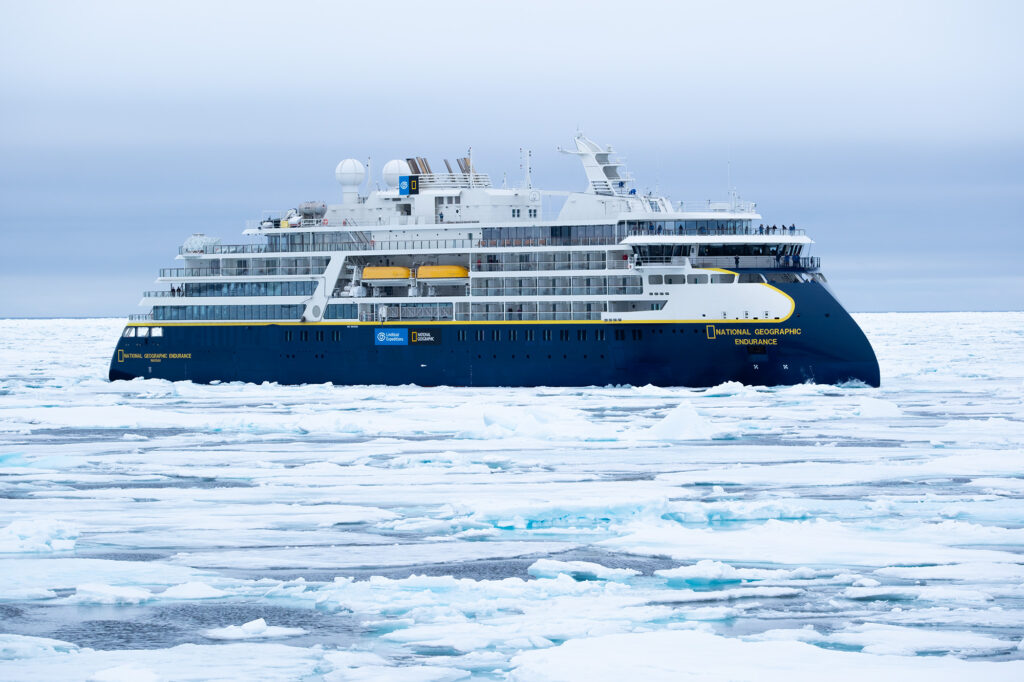
National Geographic out in the sea ice
Take a Multi-Day Cruise
This is the best way to increase your chances. I would find a cruise that takes you out in the wild for at least three days, heading to the northern part of the archipelago, where the national parks are. If you can find a cruise that includes a trip into the pack ice, that will increase your chances even further. Ideally, I’d choose a cruise that circumnavigates. Any larger cruise ship that only visits Longyearbyen and maybe Ny-Ålesund has a minimal chance of seeing polar bears.
Small, ice-strengthened ships sail Svalbard’s fjords and sea channels from late spring to early autumn. These multi-day cruises allow landings by zodiac boats and hikes, maximising wildlife chances. Guides search for bears along glacier fronts, pack ice edges, and coastal plains. Sightings may include bears on ice flows (hunting seals) or strolling onshore.
Expect to spend many hours on deck scanning the horizon—polar bear spotting requires patience. If a bear is spotted, the ship stops and may deploy zodiacs, depending on the safety of the guests and the bears.
In general, the longer and more northern your cruise, the better your odds.
Land-Based Options
If you prefer to stay ashore, there are a few land-based approaches. In spring and winter, guided snowmobile safaris can reach remote camps on glaciers and sea ice. For example, there are multi-day trips to Svalbard’s east coast (I did a day-trip there!). The waters there freeze from the mainland, attracting polar bears. These tours often involve camping. Likewise, dog-sled adventure trips through Adventdalen or over pack ice might stumble upon bears, though encounters are rare. If you book a day-trip from Longyearbyen, the chances of seeing a bear are rare.
Within the settlements, you cannot legally search for bears alone. Any hikes or skiing outside town require an armed guard and are strictly regulated. In summer, you can join local boat or kayak tours that wander near coastlines and beaches – occasionally bears may be seen onshore during these excursions. A few small lodges or basecamps on the outskirts of Longyearbyen offer polar-bear-safe cabins and have night watches during summer to keep bears away. Remember that video of a polar bear outside a hotel that went viral? That’s rare and pure luck, though it was a close call for the man in the video.
Overall, land-based sightings are opportunistic – rely on local experts and follow all safety rules.
Safety Precautions
Regulations
Svalbard has strict wildlife laws. Under the Svalbard Environmental Protection Act, disturbing, pursuing, or attracting polar bears is illegal. New rules from 2025 require keeping at least a 300 metre distance from any bear, or 500 metres from March to June. Approaching closer or trying to chase bears for photos is prohibited and can incur fines. Always follow your guide’s instructions and do not walk off alone into bear country. If a bear appears unexpectedly, travellers are obliged to retreat immediately.
Guides & Firearms
Never travel outside settlements without an experienced guide. All Arctic guides carry polar bear deterrents – typically flares and rifles – and are trained for polar bear encounters. In fact, by Norwegian law, anyone leaving a settlement must carry a legal polar bear deterrent; firearms are considered the most effective. The guide maintains a polar bear watch at camps and on hikes, ready to ward off curious bears.
Wildlife Risks
Remember that a polar bear is the Arctic’s apex predator. Bears can move silently, climb and run fast – a bear’s presence must always be taken seriously. To avoid surprise encounters, you should always travel in groups, make noise while hiking, and constantly scan the surroundings. Use binoculars or field glasses rather than getting closer. If a bear is spotted, follow the guide’s evacuation plan. Never run or scream, as this can trigger a chase response. In short, respect the bear’s space as if it could appear anywhere.
Keep A Safe Distance
On ships and boats, maintain non-disturbance distances as well. AECO guidelines say zodiacs should stay well away from any bear on ice or land. Do not cut off a bear’s escape route or allow a bear to approach you. Photographers should use long lenses instead of creeping closer. If you encounter a bear from shore (e.g. on a beach), retreat calmly. Always assume the rule of thumb: “a polar bear’s behaviour should not be altered because of your presence”.
Photography Tips
Wildlife operators note that “polar bear photographs are taken from a distance with a telephoto lens”. In practice, a 300mm-600mm lens (full frame equivalent) is a minimum. A tripod is necessary, especially if you’re on a ship. Sunlight reflecting off ice can fool your exposure meter, so consider slightly underexposing (–1/3 to –1 EV) to retain fur detail.
Bring lots of extra batteries (cold drains them fast) and memory cards (you’ll shoot a lot!). A fast shutter speed (1/1000s or quicker) will freeze sudden movements like this bear’s leap. If you’re in a moving Zodiac, brace your elbows on hardpoints, use continuous autofocus, and shoot in burst mode. Glare reduction filters (polarisers) can help with reflections on water and snow. Finally, respect your guides’ instructions: for safety and ethics, you may be limited in how close you can get, so plan to fill the frame with your zoom, not by moving closer.
Most camera phones will not work.
Ethical Wildlife Viewing
Do not Bait or Approach
Never lure, feed, or intentionally attract bears. This includes not leaving food scraps around, not using sound or scent to call in bears, and not chasing them for a better look. Following or seeking out bears is explicitly forbidden.
Respect Distance Rules
As noted, maintain far more than the minimum legal distance (300–500m). Even if you see a bear at sea, stay on the boat and watch through optics. Don’t try to get off for a selfie. Only land on shore under guidance and after confirming no bears are nearby. Keep noise low and sudden movements minimal if a bear is in view.
Responsible Operators
Choose tour companies that are members of IAATO (International Association of Arctic Tour Operators) or AECO. These operators follow strict guidelines for minimal wildlife impact. They brief guests on etiquette, enforce no-approach rules, and ensure that every polar bear encounter is done with maximum safety for the animal and people. A truly ethical operator will never allow the harassment of bears for entertainment.
Leave No Trace
Avoid flash photography (it can startle bears) and do not travel when baby seal pups are present (it disturbs the bear-seal ecosystem). To preserve the wilderness, follow all biosecurity rules (clean boots, etc.). Always take all your rubbish with you. Remember: We are guests in the polar bear’s territory. Observing quietly and at a distance is the best way to ensure these animals remain wild and unafraid of humans.
Additional Tips
Bring Binoculars
It is rare to see a polar bear very close. Bring a good pair of binoculars, and if you are a photographer, a long telephoto lens is needed, with 300mm being the minimum.
Clothing & Gear
Even in summer, Svalbard is cold. Pack windproof and waterproof layers (Gore-Tex shell, warm fleece), thermal underwear, gloves (with thin liners for camera use), and a hat. Sunglasses and sunscreen are necessary (the glare off ice is intense in summer). Bring binoculars and a star chart (winter) or a map of constellations. Don’t forget prescription medicines and seasickness pills if you’re on a boat.
Choose the Right Tour
Longer itineraries boost your chances – many travellers spend 10–14 days in Svalbard for a good wildlife window. Smaller expedition ships (50–100 guests) with attentive guides can offer more flexible cruising, though larger ships may be cheaper. Check that your operator has experienced naturalist guides and a strong safety record. Read reviews on seeing wildlife in Svalbard to set realistic expectations. If you’re a photographer, ask about group size (smaller is generally better) and whether evening photo debriefs are held. Also, look for specialty trips (some focus on photography or specific wildlife).
A seal by a glacier - Svalbard is an amazing place!
Realistic Expectations
Seeing a polar bear is never guaranteed. The official Svalbard tourism site reminds us that a bear sighting is “a rare and valuable bonus”, not a certainty. Many visitors never spot one; others may only see one from a distance. Plan to enjoy the Arctic scenery, glaciers, whales, walruses, Arctic foxes, reindeer and seabirds. If a polar bear does appear, it will likely be at a distance (often with binoculars or a long lens). Remain positive and embrace the adventure – Svalbard offers many experiences beyond the bears.
Don't Go to Svalbard Just to See a Polar Bear
If you spend your time in Svalbard only wanting to see polar bears, you’ll miss out on so much of the archipelago. The wildlife on Svalbard is amazing, beyond polar bears, and the landscape is incredible. So, go with the attitude of hoping to see as much as possible, rather than just seeing this one thing.
If all you want to see is a polar bear, I recommend going to Churchill, Canada, which has dedicated polar bear excursions.
Be Flexible
Arctic weather changes fast. Tour schedules can shift if ice conditions are bad. Stay adaptable and remember that each Arctic trip is unique. Even without a bear, you’ll return with memories of icebergs, snowy peaks, 24-hour sun or dancing auroras – and probably start dreaming of coming back again.
The photo I'm most proud of (besides the one of the polar bear rolling in snow!)
How to See a Polar Bear in Svalbard
I have been to Svalbard twice, one of those trips being a circumnavigation. I was lucky enough to see polar bears during the circumnavigation, but it was only towards the end of the trip and when a lot of panic was setting in! When you look at how few polar bears there are, the distance and safety requirements, and just how big the archipelago is, you start to understand that it is difficult.
Svalbard has so much to offer; polar bears are just one part. Plan a fantastic trip to Svalbard, and look forward to seeing all the wildlife and magnificent landscapes. If you see a polar bear, that’s a precious bonus.
VisitSvalbard wraps it up perfectly: The longer you stay on Svalbard, the greater your chances of experiencing the rich Arctic wildlife. It is a rare and valuable bonus if you are among the lucky few who get to see a polar bear.