
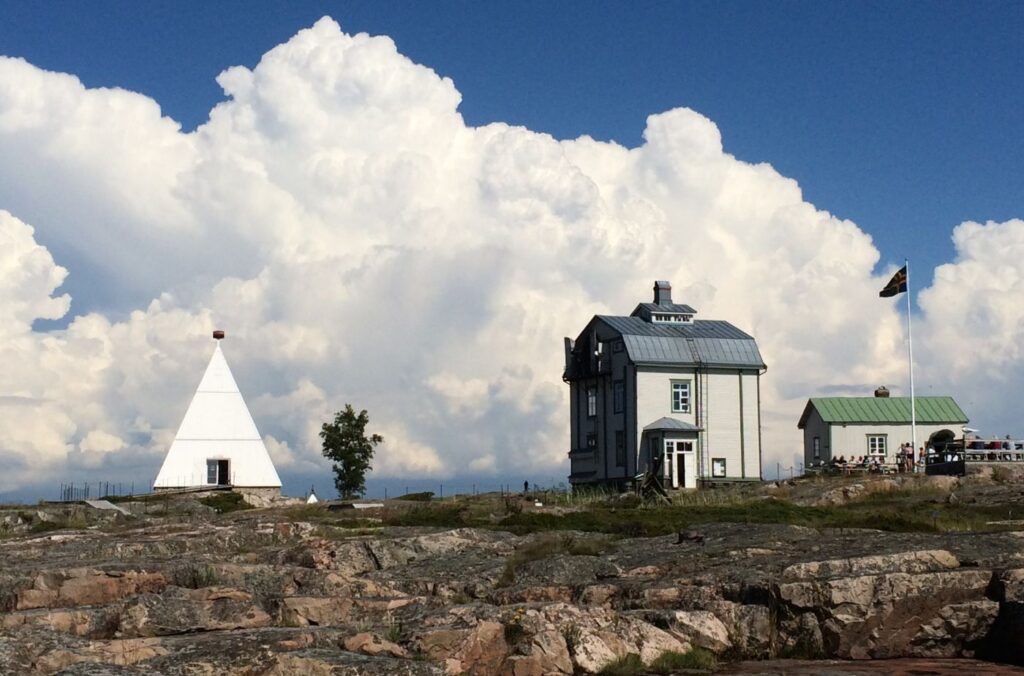
The Åland Islands are a small group of islands that belong to Finland. They were awarded a wide degree of autonomy in 1921, which settled a dispute between Sweden and Finland. Åland has its own parliament and special tax status in the European Union. Many Ålanders have a tighter connection to Sweden than to Finland, and Swedish is the language spoken here. The archipelago consists of 80 inhabited islands and 6,000 uninhabited islands. For a long time, seafaring has been important for Åland.
Latitude: 60 degrees north
Population: 30,000
Here’s an overview of some of the best things to see and do in Åland
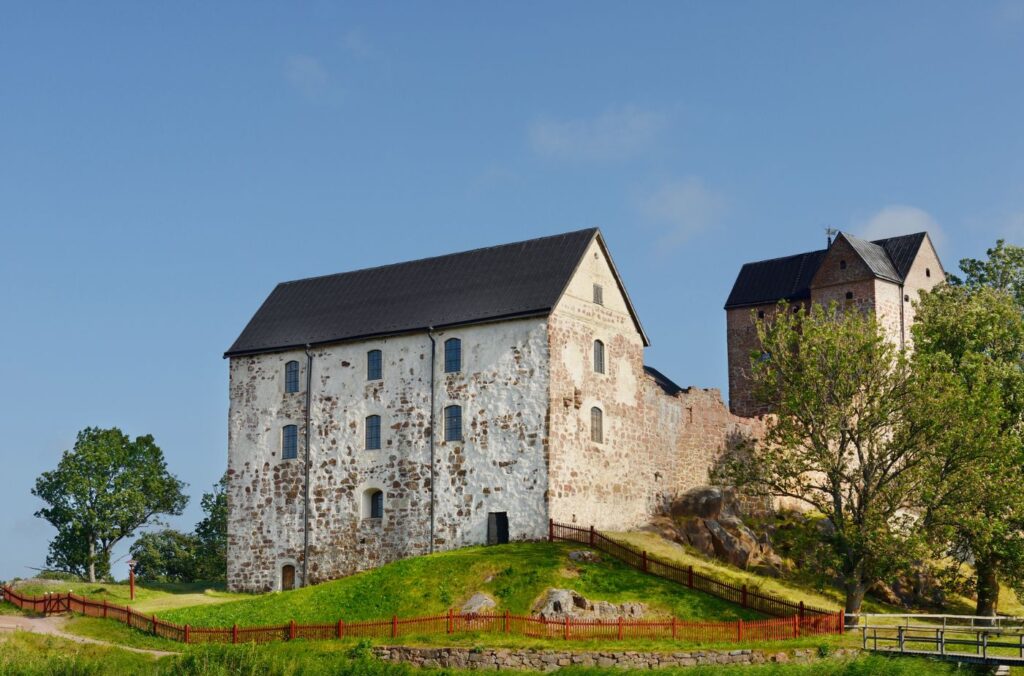
Explore the medieval Kastelholm Castle, dating back to the 1300s, which once hosted Swedish Kings and even imprisoned one (Erik XIV). This is Åland’s only medieval castle, and it’s located to Sund’s stone church, another important historic building. Close by is Vita Bjorn, which served as Åland’s prison for 200 years, and is now a museum showing prison conditions.
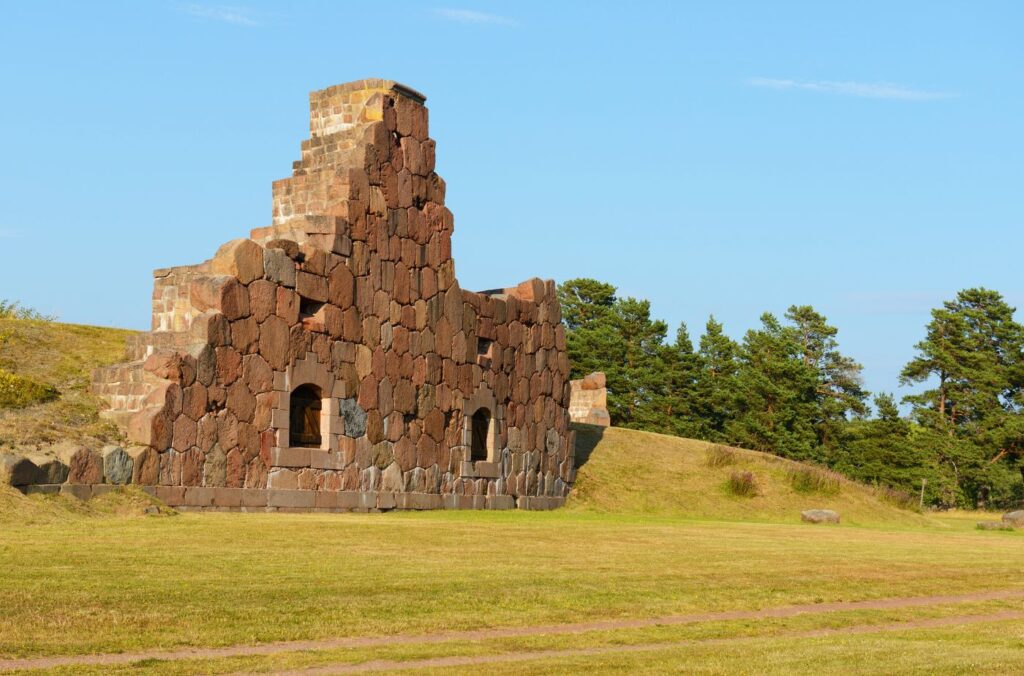
Visit the atmospheric ruins of Bomarsund, a massive Russian fortress bombarded and destroyed during the 1854 Crimean War. A new visitor centre provides a virtual look at its history, after which you can walk among the 870-hectare heritage area. Don’t miss the shallow beach nearby or the scenic hiking trail on Prasto Island.
The Åland Maritime Museum features exhibits on the island’s sailing history, model ships, and kids’ activities. Just outside, board the museum ship Pommern – a preserved 1903 four-masted cargo sailing ship built in Glasgow.
Located in eastern Mariehamn, this is a living maritime museum with wooden boat builders, a smithy, and artisans at work. You’ll find SALT, a crafts cooperative in a red salt shed selling local textiles, ceramics, woodwork, and jewellery, and Guldviva, which offers handcrafted Åland silver jewellery.
This museum traces the evolution of the archipelago over millennia through a permanent exhibition that will take you from the first human settlement during the Stone Age to the Middle Ages and the Christian influence. The museum also has exhibitions on the period during Russian rule and how Åland became autonomous. In the same building, there is the Åland Art Museum, exhibiting the work of contemporary Ålandic artists.
This open-air museum, located south of Kastelholm, has a vast collection of 18th and 19th-century Ålandic countryside buildings and towering windmills.
This is considered Åland’s main religious centre in the Middle Ages. The church was initially built in the 12th century, but was rebuilt in the 15th century.
The stone church of Jomala, called Sankt Olof Kyrka, is believed to have been built in the second half of the 13th century and is considered one of the oldest still-functioning stone churches on the archipelago, and one of the oldest in Finland.
Åland has some local food traditions. You must try Åland’s black bread (a sweet rye loaf) and Ålandspannkaka (pancake with cardamom, served with stewed prunes and whipped cream) – these are as much part of daily life as the fika breaks. Don’t leave without trying a traditional Åland fish meal: many casual spots serve fried Baltic herring with mash, or Åland’s fish soup rich with salmon and dill.
Åland is known for its apple production. More than 40 apple producers are here, and it’s common to find the apples from mid-August through to October. You can find apples for sale at Ofvergårds farm, apple mulled wine and other farm products.
Looking to go for a hike or take part in a unique experience? Here are my recommendations!
This is a tiny islet outside the entrance to Marieholm’s harbour, and features a historic pilot’s cabin and beacon. In the summer, ferry boats run there daily, and a café serves the famous Åland pancake.
This is Åland’s most famous “Cave Trail” in Geta. This 5km loop leads you through forest and up bare red-granite outcrops to panoramic clifftop views. Discover weathered caves and dramatic rock formations along the way – it’s even a popular spot for bouldering.
In summer, you can join a seal safari, cruising to remote skerries to spot grey seals in their natural habitat.
Åland is ideal for cycling, and it’s popular to cycle the Åland Archipelago Trail. Many visitors bring or rent bikes and spend 3-5 days touring the different islands.
The Åland archipelago has been inhabited for at least 7,500 years, first by seal hunters who camped on these rocky isles after the Ice Age. Over millennia, a unique maritime culture developed. By Viking times, Ålanders were trading and raiding along Baltic routes; gravesites and placenames hint at Viking Age activity. In the 12th-14th centuries, stone churches were built on many islands as Christianity took over. Åland was long part of the Kingdom of Sweden, and its strategic location made it a crossroads of Nordic commerce and conflict.
In 1809, Sweden ceded Finland and Åland to the Russian Empire. Åland suddenly became the western outpost of Russia – and to fortify it, the Russians built the massive Bomarsund Fortress in the 1830s. However, during the Crimean War, Anglo-French forces attacked Åland; Bomarsund fell in 1854 after a fierce battle involving 14,000 troops and naval bombardment. The post-war Treaty of Paris (1856) declared Åland permanently demilitarised. Under Russian rule, Åland’s importance as a postal and trade station grew. The Eckero Post & Customs House was built in 1828 to impress travellers at the new western border of Russia.
In the late 19th and early 20th centuries, Åland was famed for its sailing ship fleets. Local shipowner Gustaf Erikson owned dozens of huge windjammers that circled the globe, carrying grain from Australia to Europe. Mariehamn was their home port – one of the last places on earth with a fleet of commercial sailing vessels. The Pommern, now a museum ship, is a treasured era relic.
When Finland gained independence from Russia in 1917, Åland’s overwhelmingly Swedish-speaking population faced a dilemma. Most locals wished to reunite with Sweden, fearing their language and culture might be at risk in Finland. The issue went to the newly formed League of Nations, which in 1921 decided that Åland would remain part of Finland, but as an autonomous, self-governing region with its Swedish language and customs protected. This compromise – often called the “Åland example” has been remarkably successful. Åland has its own parliament and government, controls many of its laws (except foreign affairs & defence), and remains demilitarised.
Today, Åland is home to 30,000 people, roughly 40% of whom live in the capital, Mariehamn. The official language is Swedish, and you’ll hear it everywhere. The elected Parliament of Åland handles everything from education to healthcare and environmental policy. Only those with Åland home rights (usually by birth or long residency) can buy property or vote in local elections—a rule to preserve the islands’ heritage.
Economically, farming and fishing sustained the population for centuries, while shipping brought wealth. Today, shipping and trade drive the economy (about 40% of Åland’s economy is shipping-related), and Åland-based shipping companies like Viking Line operate internationally.
The autonomy arrangement gave Åland special EU status –outside the EU VAT zone, allowing duty-free sales on ferries that stop there.
Ferries: Ferries connect Åland with both Sweden and Finland. You can take large ferries from Turku or Naantali in Finland to Åland operated by Viking Line, Tallink Silja or Finnlines. From Sweden, the shortest route is the Eckero Linjen ferry from Grisslehamn to Eckero, which only takes 2 hours. Viking Line and Tallink Silja operated direct ferries from Stockholm to Mariehamn in about 5-6 hours.
Flying: Mariehmn Airport has daily connections to both Sweden and Finland. Finnair operates flights to Helsinki (often via Turku) year-round. From Sweden, there is a flight operated by Air Leap/Populair from Stockholm.
Driving: Having a car is the best way to explore Åland. The ferries from Sweden and Finland have space for vehicles, making it easy to drive here. No buses are operating from Sweden and Finland to Åland.
Buses & Public Transport – Åland has a modest bus network, with five rural bus lines heading out to different areas. Mariehamn has city buses that are free of charge. However, the best way to get around is with your own car.
Ferries – Åland’s inhabited islands are connected by local ferries – essentially small car ferries. As a foot passenger, you can ride free of charge on the ferries, but if you come with a car, there will be a fee. Thank you for reaching out.
Bikes—Åland is covered in cycle paths, making cycling a popular way to get around. You can easily rent bikes—Ro-No Rent is the biggest shop.
Walking – Everywhere in Mariehamn, it is 10-20 minutes on foot.
Torggatan is the main shopping street in Mariehamn. Here, you’ll find design stores, souvenir shops, and general shops.
Ålands Delikatess – they make treats like black bread, jam, and the famous Åland honey.
Merikorttelin Kauppa – The Maritime Quarter Shop has maritime memorabilia and books on Åland history.
SALT is a cooperative run by local artisans where you can buy textiles, hand-blown glass, pottery, forged ironware, and more. Everything is made on-site or on the island.
Guldviva – This is the local jewellery workshop known for its silver pieces – its signature pendant is a seafoam flower.
Eckero Handifact Village – Located at the old post house, they have exhibitions and craft sales.
Amalias Lemonade Factory – Located in Lemland, this small factory makes traditional soft drinks. They produce over thirty flavours. You can tour the factory, taste samples, and buy bottles to take home.
Mercedes Choclaterie – Located in the same building as the Lemonade Factory, this is a local chocolatier creating chocolate with Åland cream, butter, and local flavours like sea-buckthorn or blueberry.
Mattas Gårdsmejeri – This is a farm shop where you can buy organic cheeses and even delicious ice cream made from their own cows milk.
Cafes & Bakeries
Café Viktor is set in a 19th-century wooden house and offers home-baked pastries, light lunches, and quality coffee.
Svarta Katten – a cosy café in the heart of Mariehamn known for its fresh-baked cakes and local ingredients.
Uffe på Berget – located in Finstrom, this is an iconic hilltop tower café from 1965.
Many cafes serve the famous Åland pancake – a must-try dessert with cardamom and topped with cream and prune jam.
Casual Eateries & Pubs
Pub Niska – Located in the maritime quarter, this pub is known for its unique Åland-style pizza called plåtbröd – thin, crispy flatbread pizzas topped with local ingredients like smoked perch or black rye croutons. It’s the brainchild of a famous local chef.
Stallhagen Brewery is a craft brewery that runs a rustic gastropub. It serves generous portions of local fish, lamb, and farm veggies that pair perfectly with its beers.
Indigo – located in Mariehamn, this restaurant is located in an old building and has a restaurant focusing on local flavours.
High End & Gourmet
Smakbyen – located near Kastelholm- is run by award-winning chef Michael Bjorklund and showcases Nordic cuisine with Ålandic produce – think juniper-smoked fish, roast lamb with seasonal vegetables, and creative desserts. Smakbyen also has its own distillery and even offers cooking classes.
Restaurant Nautical is known for its upscale dining, especially seafood.
HavsVidden Resort – Located in Geta, this clifftop restaurant offers fine dining with panoramic sea views, showcasing local game and fish.
Kvarter 5 – Located in Mariehamn, this is a Nordic restaurant with a sophisticated twist.
Camping & Cottages
Degersand Resort & Camping – located in Eckero and set by the best sandy beach in Åland. There are tent and caravan pitches with sea views, but also cute cottages and glamping tents. There’s an on-site beach restaurant and a wood-fired sauna by the shore.
Snacko Canvas Hotel – Located in Geta, they have pre-pitched luxury tents with absolute beds and breakfast hampers.
Guesthouses & B&Bs
Jomala Gård is a charming countryside B&B located 10km from Mariehamn in a converted 17th-century farm school. Click here to view rates & book
Bjornhofvda Gård – Located in Eckero, this is a boutique B&B experience. The British-Ålandic hosts have decorated it like an interior magazine, blending rural charm with a touch of English country style. Known for its excellent farm-to-table dinners and occasional high teas, it’s a hit in town. Click here to view rates & book
Guesthouse Enigheten – Located in Foglo, it’s an inn that has welcomed travellers since the 1600s. Click here to view rates & book
Mid-range Hotels
Hotel Pommern – Located in Mariehamn, this is a popular four-star option with an in-house bistro and even a Finnish sauna for guests. It also rents bicycles. Click here to view rates & book
Park Alandia Hotel – a long-running hotel known for its friendly service and nice pub on-site. Click here to view rates & book
Strandnas Hotel – located on the edge of Mariehamn, this hotel has simple, clean rooms with private bathrooms and breakfast included. Click here to view rates & book
Hotel Brudhall – On the island Kokar, this hotel has nautical-themed rooms and a well-reviewed restaurant. Click here to view rates & book
High End & Luxury
Hotel Arkipelag – Located in Mariehamn, this resort-style hotel on the waterfront has an outdoor pool, saunas, a nightclub, and sea-view rooms. Click here to view rates & book
Havsvidden Resort – Located in the far north of Åland, this remote resort has private cliff-top villas with huge windows facing the Baltic. They have a sauna and an indoor pool. There’s also a nice restaurant here. Click here to view rates & book