
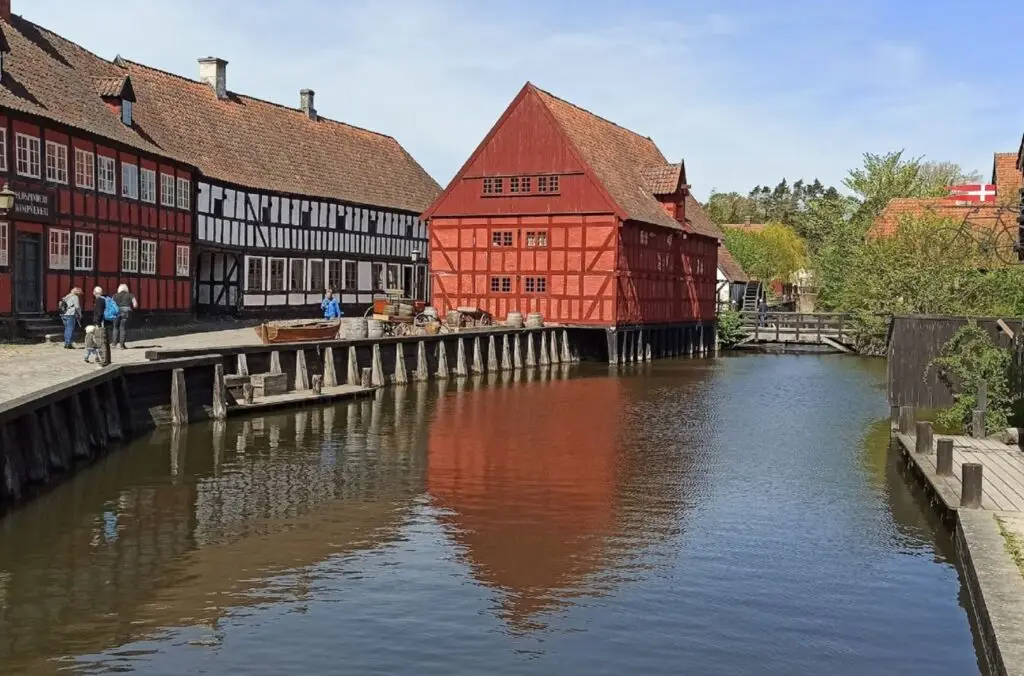
Aalborg is a vibrant city that beautifully blends Viking heritage, medieval charm, and modern innovation. Located on the Limfjord in northern Jutland, it’s Denmark’s fourth-largest city and the capital of North Jutland. Once known for shipyards and cement factories, Aalborg has reinvented itself with bold architecture, world-class street art, and a sparkling waterfront while still honouring its rich history. A European survey even found Aalborg’s residents to be the most satisfied on the continent – a testament to its high quality of life.
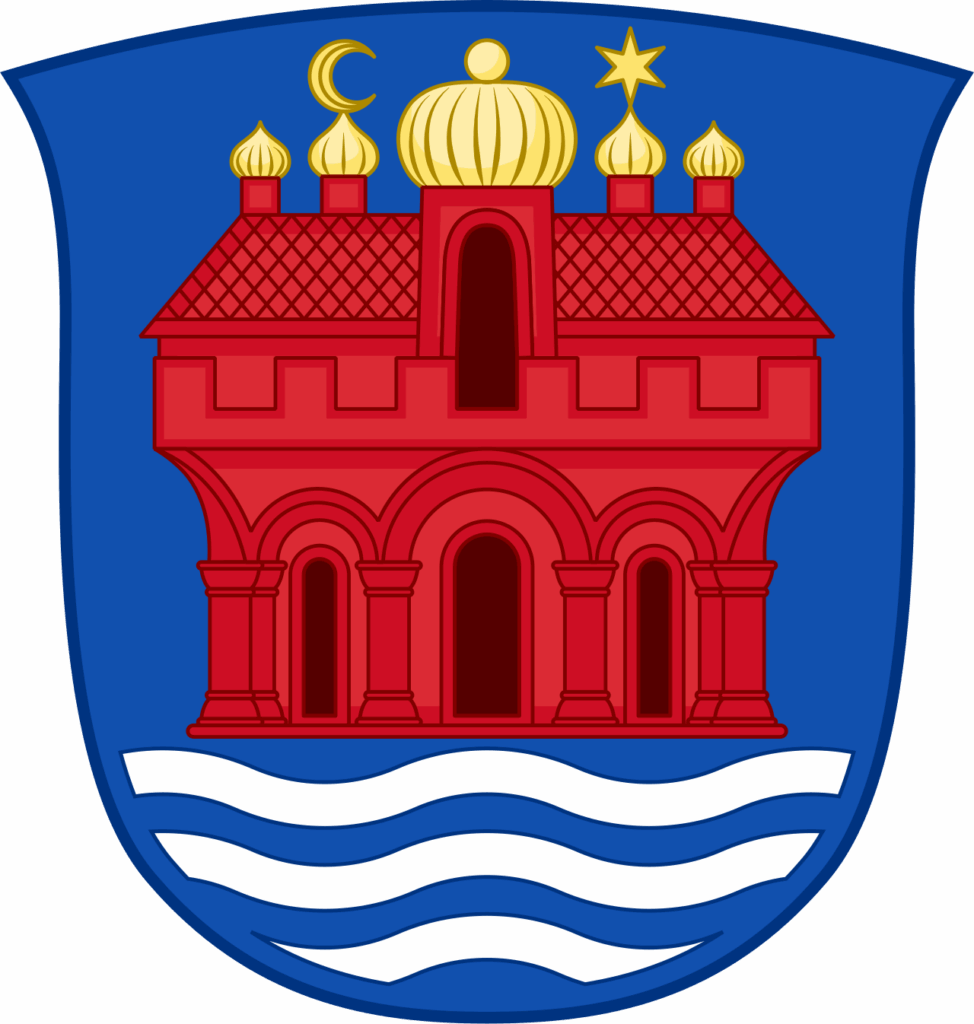
Aalborg Coat-of-arms
Here’s an overview of some of the best things to see and do in Aalborg
Stroll along Aalborg’s revitalised harbourfront to admire modern icons like the Utzon Center – an arts and architecture hub designed by Jørn Utzon (of Sydney Opera House fame) – and Musikkens Hus (House of Music), a striking silver-toned concert hall that is home to the Aalborg Symphony Orchestra. These bold buildings sit alongside historic brick warehouses, symbolising Aalborg’s blend of old and new. Keep an eye out for student housing in converted silos and Musikkens Plads, where locals relax by the water.
Explore one of Scandinavia’s street art capitals – Aalborg’s city centre is an open-air gallery with over 50 large-scale murals on building facades. International artists like El Mac and Phlegm have left their mark. You can discover colourful murals on a self-guided walk (using an interactive map) or join a guided street art tour to learn the stories behind each piece. The vibrant street art adds a creative, modern vibe to the city’s historic streets.
Wander the cobbled lanes of Aalborg’s historic centre to find medieval and Renaissance landmarks. Budolfi Cathedral, a white-stucco 14th-century church, and Ålborghus Castle, a half-timbered 16th-century fortress by the harbour, recall the city’s Danish royal past. Don’t miss Jens Bang’s House (1624) – a lavish Renaissance merchant’s house – and the Monastery of the Holy Ghost (1431), one of Denmark’s oldest preserved convent buildings. Many of these sites are free to view from outside and create a charming atmosphere, especially when illuminated during long winter nights.
Aalborg boasts excellent museums. Lindholm Høje Museum, just north of the city, showcases a Viking and Iron Age burial ground with 682 stone graves and ship settings. You can walk among the ancient stone circles on a hill overlooking the city and then visit the museum’s exhibits on Viking life (the outdoor site is free, the museum has a fee). In town, pop into the Aalborg Historical Museum for a peek at local history, or descend via elevator to the Gråbrødrekloster Museum, an underground museum built around medieval monastery ruins (a hidden gem under the main square).
Meet animals from polar bears to African elephants at Aalborg Zoologiske Have, the city’s top-paid attraction. The zoo is open year-round (with indoor enclosures and cosy cafes for winter) and is renowned for its successful polar bear breeding program. Children will love the feeding sessions and the petting farm area. At Christmas, the zoo grounds transform with festive lights and markets. It’s an easy 20-minute walk from the city centre, adjacent to the large Mølleparken city park.
Looking to go for a hike or take part in a unique experience? Here are our recommendations!
Please note – the links provided are affiliate links. I only recommend experiences that I have researched and/or tested and focus on providing unique, local things to do!
Just a 5-minute ferry ride from Aalborg’s harbour lies Egholm, a small rural island in the Limfjord perfect for an easy hike. A 10 km trail encircles the island’s coastline, leading you past grazing fields, bird-rich wetlands and beaches with fantastic views back towards Aalborg’s skyline. The terrain is flat and suitable for all – you can shorten the loop or even cycle it. Pack a picnic (in summer, a tiny cafe operates by the ferry landing) and enjoy the peaceful, car-light environment. Egholm is accessible year-round; in winter it’s brisk but beautiful, and in spring the meadows bloom with wildflowers.
About 12 km north of the city, Hammer Bakker is a large forested highland known for its rolling hills and ravines formed in the Ice Age. There are three marked hiking trails through these woods, which are filled with heather, pines, and wildlife like deer. The trails vary from a few kilometres to longer loops, so you can choose a gentle walk or a more challenging hike. Expect some short steep sections as you go up the forested hills (the reward is occasional clearings with lovely views). The area is quiet, making it ideal for a meditative nature walk or a trail run. In autumn, Hammer Bakker’s foliage turns golden, and in winter it’s serene for a snowy trek (just wear sturdy boots). You can reach the trailheads by car or by bus from Aalborg.
A half-hour drive south of Ålborg takes you to Rebild Bakker National Park, a heathland of picturesque hills adjoining Denmark’s largest forest, Rold Skov. The heather-clad hills of Rebild Bakker are famous – in summer they carpet the slopes in purple blooms, while other seasons bring lush green, autumn reds, or a dusting of snow. Well-maintained trails lead past spring-fed creeks, clear forest lakes, and lookouts over the Lindenborg Valley.
Meanwhile, Rold Skov’s 80 km² of woodland offers hikes under towering beech and spruce trees; you might encounter hidden Bronze Age burial mounds and “robbers’ dens” legend to have sheltered highwaymen in centuries past.
Denmark has a strong beer culture, and Ålborg is no exception. With the Aalborg Beerwalk, you can taste your way around the city’s pubs at your own pace. Purchase a Beerwalk kit (around 159 DKK) and you’ll get a set of six vouchers and a souvenir tasting glass – this allows you to enjoy six specialty beers at select pubs in the centre.
Follow our road-trip guides for scenic trips around Aalborg
We currently do not have any self-guided walks available in Aalborg
Watch our YouTube videos featuring Aalborg
The area around Aalborg has been settled for over 1,000 years. During the Iron Age and Viking Age, there was a thriving community here thanks to its strategic location between Himmerland (to the south) and Vendsyssel (to the north). Archaeological finds, including a 5th century Iron Age grave, show to how important Aalborg was in older times. By 1050, the name “Alabu” was recorded on coins, and a 1075 chronicle noted it as a significant harbour for ships heading to Norway.
In the Middle Ages, Aalborg emerged as a notable market town. It received royal trading privileges, and a booming herring fishery in the Limfjord brought wealth and international traders. The old city layout dates to this era – by 1500, Budolfi Church stood at the towns centre. Aalborghus Castle was built in 1550 under King Christian III, cementing the town’s status as a northern stronghold. By the 17th century, wealthy merchants like Jens Bang built elaborate residences – his stone house from 1624 still stands.
Aalborg became industrialised in the late 19th and early 20th centuries. A rail bridge was built in 1869, connecting Aalborg to the national railway and spurring economic growth. Factories and yards sprang up: Aalborg Portland cement works took advantage of local chalk deposits and grew into a global cement exporter, earning the city the name “Cement City”. Shipbuilding also became a major employer, along with a thriving tobacco factory and spirits distillery producing the famous Aalborg Akvavit liquor.
During World War II, Aalborg’s strategic airport was seized by German forces during the very first hours of the invasion of Denmark, and the city was under occupation. A notable resistance group called the Churchill Club, formed by local teenage boys, carried out sabotage against the Nazis.
In the post-war decades, Aalborg’s industry gradually declined. A key turning point in the change of Aalborg was the establishment of Aalborg University in 1974, which injected new life into the region.
Today Aalborg is known for its high tech industries like wind turbine manufacturing and modern energy. The waterfront has been re-developed: where shipyards once stood are now cultural centres and modern apartments.
The community is shaped by its 20,000+ university students.
The city prides itself on its high livability; in fact, an EU study crowned Aalborg’s citizens the happiest in Europe.
(Historical note: The city’s name is officially spelled “Aalborg” (with a double A) in Danish, a choice made by the city council in defiance of a 1948 spelling reform that would have changed it to Ålborg. Locals proudly stick with “Aalborg,” although you might see it written as “Ålborg” – both are correct, so don’t let the spelling variation confuse you.)
Fly: Aalborg airport is located 6km northwest of the city centre and has frequent flights to Copenhagen as well as some other European cities.
Drive: Aalborg is located on the E45 highway, making it easily reachable by car. It takes 6 hours to drive to Hamburg in Germany, and about 4 hours to get to Copenhagen.
Train: Denmark has an excellent rail network with direct trains linking Aalborg to Copenhagen; the journey takes about 4 hours. There are also direct trains heading into Germany.
Ferry: The ferry from Kristiansand in Norway to Hirtshals in Denmark is located only 60km north of Aalborg, so it’s an easy connection.
Aalborg is compact and highly walkable. Most attractions are within a 20 minute walk of each other. The city’s layout is pedestrian-friendly, with car-free shopping streets (Algade, Bispensgade) and plenty of crosswalks. For longer distances or bad weather, use the local buses. The bus network (operated by NT) is extensive; routes crisscross the city and suburbs. In 2023, Ålborg introduced the Plusbus BRT line, a high-frequency electric bus route with a dedicated lane that zips through the city, connecting key points like the downtown, the new university hospital, Aalborg University campus in the east, and the shopping hubs.
Aalborg’s main shopping street runs through the city centre along Algade and Bispensgade, two pedestrian-only streets. Venture off the main streets to discover Aalborg’s independent shops. Gravensgade is nicknamed “Little Paris” for its local boutiques.
Art lovers would like Galleri Wolfsen, or Keramikeren for handmade pottery by local artists. Aalborg also has some nice second hand shops, incuding Brugthandel Aalborg.
Aalborg’s farmers market typically takes place on Saturday’s at Gammeltorv.
Cafes & Bakeries
Penny Lane Cafe is a whimsical cafe known for its cosy atmosphere and pastries. It’s filled with vintage knick-knacks and has a nice seating area. Behag Din Smag (“Please Your Taste”) is Aalborg’s go-to specialty coffee shop.
Casual Eateries
We Feat is a trendy cafe known for healthy bowls, wraps and smoothies. We Feat specialises in fresh, organic ingredients. Aalborg Street Food is a market in a converted warehouse on the harbour. There are 16 stalls with cuisines from all over the world. Sogaards Bryghus Gastropub is a popular place to try local beers while having a good meal.
Hos Isidor Henius is where you go if you want to experience classic Danish smørrebrød. Hos Isidor Henius specialises in beautiful open-faced sandwiches on dark rye bread, artfully piled with toppings like pickled herring, roast beef with remoulade, or shrimp and egg. It’s named after a famous aquavit distiller, so naturally the custom is to wash down your smørrebrød with a cold beer and a snaps (Danish aquavit).
High End & Unique Eats
Duus Vinkjælder is located in the wine cellar under Jens Bang’s house. They serve Danish classics like schnitzel, steaks, and hearty stews, plus a good selection of wines and beers.
Ålborg’s most iconic fine dining restaurant, Mortens Kro has been a leader in the city’s gourmet scene since chef Morten Nielsen opened it in 1997. It offers modern Nordic cuisine in a luxurious setting – think designer furnishings, a fireplace lounge, and a Champagne bar. The cuisine is inventive yet grounded in Danish ingredients.
All my hotel recommendations are based on research and experience. I don’t recommend somewhere unless I think it is wonderful! The Hidden North focuses on accommodation that provides good quality for price or offer local or unique experiences.
Camping
If you love the outdoors, consider staying at Aalborg Camping & Cabin Island in the city’s west end. Set in a green oasis by the Limfjord, this campground has spaces for tents, caravans, and a unique island with 30 cosy wood cabins.
You’ll wake up to rabbits hopping about and birds singing – surprisingly peaceful for being within the city! The site is next to Vestre Fjordpark (great for a morning dip) and has its own little marina. Facilities include modern showers, a communal kitchen, and even a breakfast buffet in summer.
In Denmark, many campgrounds (including this one) offer heated service buildings so camping is feasible even in cooler months (though winter camping is only for the hardy). If you’d rather be by the sea, there are also several beachside campgrounds within 30–40 minutes of Ålborg (like Nibe Camping to the west or Hals Camping on the east coast). These are popular in July with families and have cabins for hire if you want more comfort.
Lodges & B&Bs
Ålborg has charming B&Bs that provide a personal touch. A standout is Casa Corner, a beautiful 1905 manor house converted into a B&B. Located by Mølleparken (walking distance to downtown and the zoo), it offers elegant rooms with antique furnishings and modern amenities. The included breakfast, served in a stately dining room, gets rave reviews for its homemade jams and freshly baked rolls. Staying at Casa Corner feels like a step back in time – in a good way.
Chains & Mid-Range
Another popular mid-range pick is Hotel Cabinn Aalborg, known for its capsule-style compact rooms at rock-bottom rates. Cabinn’s concept is “all the essentials, no frills” – rooms are small (bunk-bed style in some) but functional with en-suite bathroom, and the location is top-notch (right on the waterfront and steps from the Utzon Center).
Click here to view rates & book
Kompas Hotel Aalborg (formerly a seamen’s home) is another mid-range option, offering newly renovated rooms near the harbour, with free parking and a decent breakfast. Also, Scandic Aalborg City is a reliable 4-star on the edge of downtown (by Kildeparken) – often used for conferences, it’s very close to the train station and has family rooms. Mid-range hotels in Ålborg typically provide amenities like free Wi-Fi, breakfast buffet, and on-site bars, and most are within walking distance of attractions given the compact city centre.
High End & Unique Properties
While Ålborg isn’t overflowing with five-star hotels, it does have a few upscale accommodations for those seeking extra comfort. The Hotel Comwell Hvide Hus is a landmark high-rise hotel overlooking Kildeparken. Built in 1969, it’s been thoroughly updated with sleek, modern interiors and all 198 rooms have balconies (the higher floors offer stellar views of the city and fjord. Its peaceful park-side location and on-site restaurant (focusing on Nordic cuisine) make it a favourite for business travellers and couples alike.
Click here to view rates & book
Radisson Blu Limfjord Hotel is another upper-tier option, situated by the Limfjord bridge; it features stylish rooms, some with water views, and even a casino on-site. For a boutique feel, Mortens Kro Restaurant & Suites offers a couple of exclusive suites above its fine dining restaurant – a chance to stay in a very chic setting with personalised service (and perhaps indulge in room service from one of the best kitchens in town).
Click here to view rates & book
If you have a car or don’t mind being slightly outside the centre, Hotel Scheelsminde is an elegant manor house hotel 5 km south of downtown. It has beautifully decorated rooms, a spa, and an excellent restaurant (Bühlmann’s) – great for a romantic retreat. High-end options ensure you’re well taken care of, with amenities like air conditioning (not standard in all Danish hotels), fitness rooms, and concierge services.